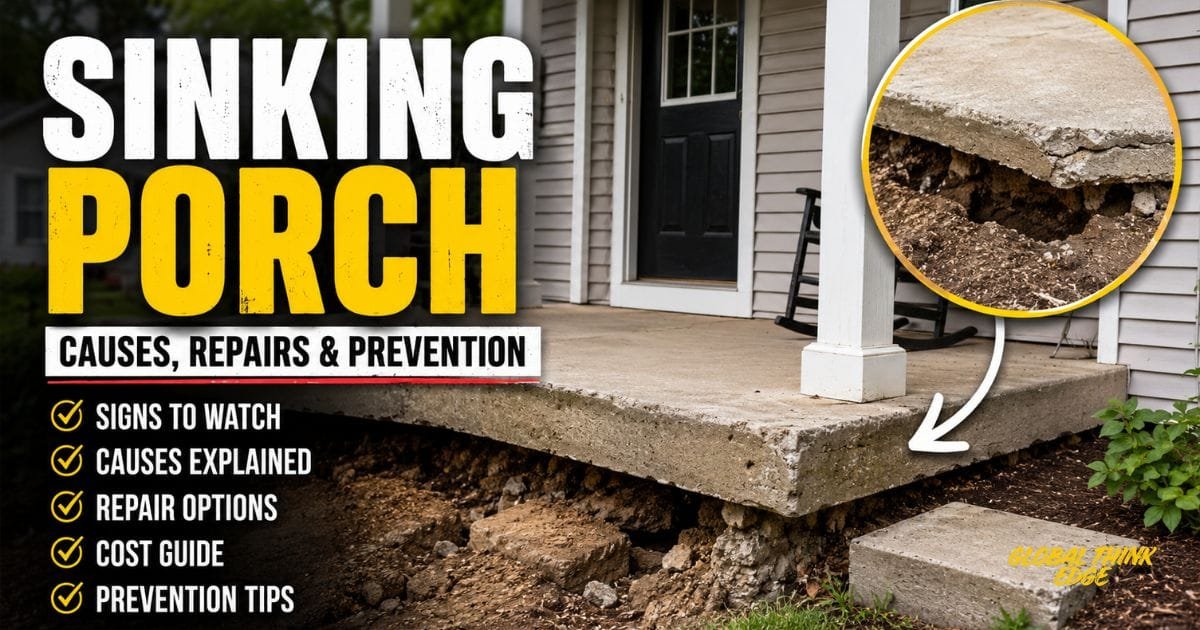
Sinking Porch: Practical Guide Contains Repair Solutions
Introduction
A sinking porch is more than just an eyesore; it can signal underlying structural issues that may affect your home’s safety and value. Whether your porch is made of concrete, wood, or brick, gradual settling often results from unstable soil, poor drainage, ageing foundations, or deteriorating support structures.
Ignoring the problem can lead to uneven surfaces, cracked concrete, leaning columns, and costly foundation damage. The good news is that most sinking porches can be repaired successfully when the cause is identified early.
This guide explains why a sinking porch happens, how to recognize the warning signs, the most effective repair methods, expected costs, and practical ways to prevent the issue from returning.
What Is a Sinking Porch?
A sinking porch is a porch that gradually settles lower than its original position because the ground or supporting structure beneath it can no longer provide adequate support.
This issue can develop over several months or many years. While some settlement is normal for older homes, noticeable movement usually indicates an underlying problem that requires attention.
Different porch types experience sinking differently:
Concrete slab porches often develop cracks or uneven sections.
Wooden porches may sag due to weakened posts or rotting footings.
Roofed porches can place additional stress on structural supports, increasing the risk of settlement.
Understanding which type of porch you have is the first step toward selecting the correct repair solution.
Common Signs Your Porch Is Sinking
A sinking porch rarely happens overnight. Most homeowners notice several warning signs before the damage becomes severe.
Uneven or Sloping Surface
If your porch no longer feels level or water consistently pools in one area, the foundation underneath may be settling.
Cracks in Concrete or Brick
Visible cracks often appear when one section of the porch moves while another remains stable. Small hairline cracks may seem harmless, but widening cracks deserve immediate attention.
Gaps Between the Porch and House
A noticeable space where the porch connects to the home often indicates that the porch has shifted away from the main structure.
Leaning Columns or Railings
Support columns that appear tilted may signal movement beneath the porch foundation. This issue should never be ignored because it can affect the roof above.
Sticking Doors or Windows
When settlement extends toward the home’s foundation, nearby doors and windows may become difficult to open or close properly.
Why Does a Sinking Porch Happen?
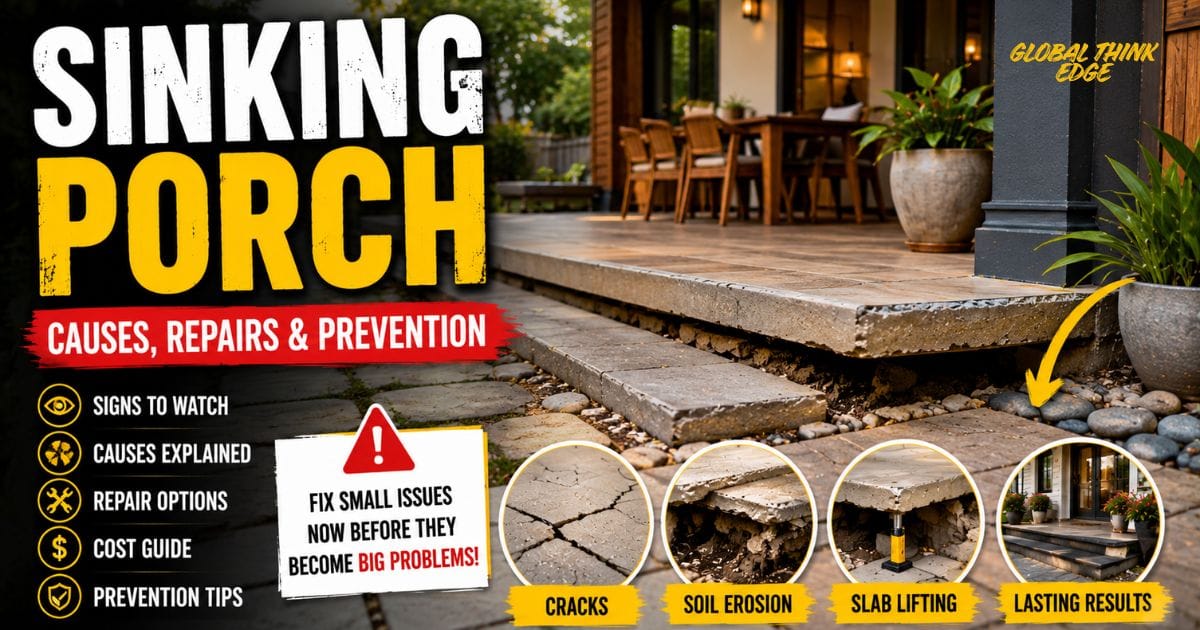
Several factors can contribute to porch settlement. In many cases, more than one issue is involved.
Poor Soil Compaction
If the soil beneath the porch was not compacted properly during construction, it can gradually compress under the structure’s weight, causing the porch to sink.
Water Drainage Problems
Poor drainage is one of the most common causes of porch settlement. Overflowing gutters, clogged downspouts, or improper grading allow water to wash away supporting soil.
Soil Erosion
Heavy rainfall and underground water movement slowly remove soil beneath concrete slabs and footings, leaving empty spaces that can no longer support the porch.
Foundation Settlement
Sometimes the problem extends beyond the porch itself. If the home’s foundation is settling, the attached porch may also shift or sink.
Damaged Wooden Supports
Wooden posts and footings exposed to moisture can rot over time. As these structural components weaken, the porch begins to sag.
Seasonal Weather Changes
In colder climates, repeated freeze-thaw cycles cause soil expansion and contraction. Over time, this movement destabilises the porch foundation.
Is It the Porch or the Home’s Foundation?
One of the biggest concerns homeowners face is determining whether only the porch is affected or whether the entire home’s foundation is moving.
The following comparison can help.
| Porch Settlement | Foundation Problem |
| Damage limited to the porch | Cracks appear throughout the home |
| The porch slopes independently | Floors inside become uneven |
| Few structural symptoms indoors | Doors and windows stick throughout the house |
| Easier and less expensive to repair | Usually requires professional foundation repair |
If multiple areas of your home show signs of movement, schedule a professional inspection before beginning porch repairs.
Choosing the Right Repair Method
The best repair depends on the porch’s construction and the cause of settlement.
Concrete Slab Porches
Concrete porches often respond well to lifting techniques that restore the slab without replacing it.
Two common solutions include the following:
Mudjacking
Polyurethane foam injection
Both methods fill the empty spaces beneath the slab and raise it back to its original level.
Elevated Wooden Porches
Wood porches usually require inspection of support posts, beams, joists, and concrete footings. Damaged components should be repaired or replaced before additional structural issues develop.
Roofed Porches
A covered porch places extra weight on support columns. Contractors often install temporary supports before replacing footings or damaged posts to protect the roof structure during repairs.
Brick or Masonry Porches
Brick porches may need foundation stabilisation before damaged mortar joints and cracked bricks can be repaired. Fixing cosmetic damage without addressing settlement rarely provides a lasting solution.
Can You Repair a Sinking Porch?
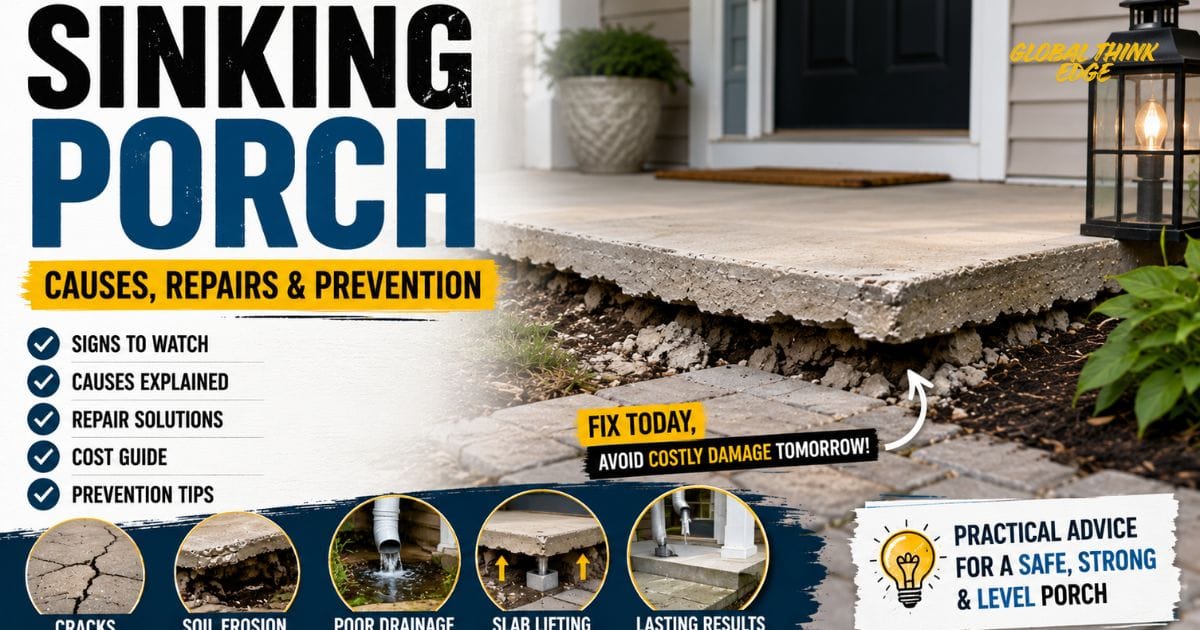
In most cases, yes. A sinking porch can often be repaired without a complete replacement, provided the damage is identified early. The right solution depends on the condition of the foundation, the type of porch, and the severity of the settlement.
Minor settling usually requires levelling techniques, while extensive structural damage may call for rebuilding certain sections. A professional inspection helps determine the safest and most cost-effective approach.
Effective Repair Methods for a Sinking Porch
Several proven methods are available to restore a sinking porch. Choosing the right one ensures long-term stability.
Mudjacking
Mudjacking involves pumping a cement-based slurry beneath a concrete slab to lift it back into place. It is a practical option for porches with minor to moderate settlement and stable surrounding soil.
Polyurethane Foam Injection
This modern repair technique injects lightweight expanding foam beneath the slab. The foam fills underground voids, lifts the concrete, and hardens quickly. Because it adds very little weight, it is often preferred for long-lasting results.
Piering and Underpinning
If the porch is sinking due to foundation movement, contractors may install steel or helical piers beneath the structure. These piers transfer the load to stronger soil or bedrock, providing a permanent solution.
Replacing Footings and Support Posts
For wooden porches, damaged footings or rotted support posts should be replaced. Installing new concrete footings and pressure-treated posts restores structural strength and prevents further movement.
Repair or Replace: Which Option Makes Sense?
The following comparison can help homeowners decide.
| Repair the Porch | Replace the Porch |
| Minor or moderate settlement | Severe structural damage |
| The foundation remains stable | Multiple failing structural components |
| Lower overall cost | Higher upfront investment |
| Faster completion | Longer construction time |
| Extends porch lifespan | Creates an entirely new structure |
If more than half of the porch requires rebuilding, replacement may provide better long-term value.
How Much Does It Cost to Repair a Sinking Porch?
Repair costs vary depending on the size of the porch, construction materials, and the repair method used.
Common factors affecting cost include:
Extent of settlement
Type of foundation
Repair materials
Labor rates in your area
Accessibility of the porch
Drainage improvements, if required
Simple levelling projects typically cost far less than foundation stabilization or complete porch reconstruction. Requesting multiple estimates from qualified contractors can help you compare options and avoid unnecessary expenses.
Can You Fix a Sinking Porch Yourself?
Small cosmetic issues, such as sealing minor cracks or improving drainage around the porch, are reasonable DIY projects.
However, lifting a concrete slab, replacing structural posts, or repairing foundations requires specialized equipment and technical knowledge. Attempting these repairs without experience can worsen the damage and create serious safety risks.
If your porch shows significant movement, leaning columns, or large cracks, professional repair is the safest choice.
How to Prevent a Porch from Sinking Again
Preventive maintenance can significantly extend the life of your porch.
Maintain Proper Drainage
Ensure gutters and downspouts direct water away from the porch foundation. Standing water is one of the leading causes of soil erosion.
Keep Soil Stable
Avoid excessive watering near the porch and fill low areas where water tends to collect.
Inspect the Porch Regularly
Check for new cracks, uneven surfaces, loose railings, and gaps at least once or twice each year.
Repair Small Problems Early
Addressing minor cracks or drainage issues promptly helps prevent costly structural repairs later.
Avoid Excessive Loads
Heavy planters, hot tubs, or large storage items can place unnecessary stress on porch foundations that were not designed for extra weight.
When Should You Call a Professional?
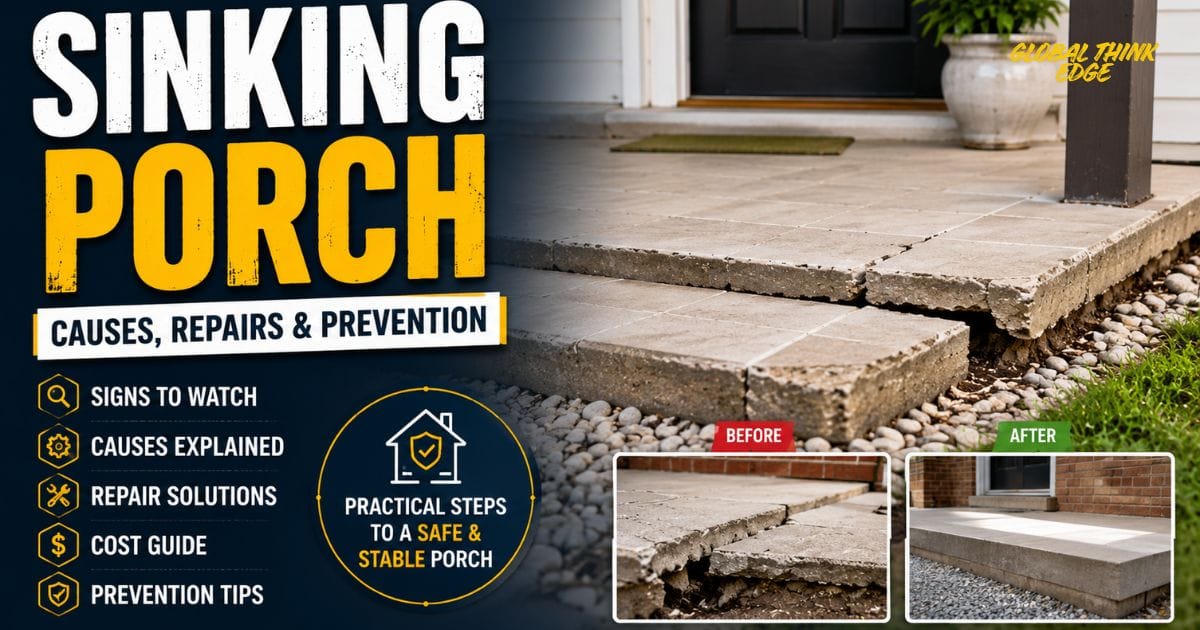
While small cosmetic repairs can wait, some warning signs require immediate attention.
Contact a foundation or structural repair specialist if you notice:
Large or widening cracks
Rapid settlement
Leaning support columns
Gaps between the porch and the house
Soft or unstable ground beneath the porch
Multiple structural issues appearing throughout the home
Early intervention usually reduces repair costs and prevents more extensive damage.
Frequently Asked Questions
What causes a sinking porch?
The most common causes include poor soil compaction, water erosion, drainage issues, foundation settlement, rotting wooden supports, and seasonal soil movement.
Can a sinking porch be repaired without replacing it?
Yes. Many sinking porches can be restored using concrete levelling, foam injection, mudjacking, or foundation stabilization without requiring full replacement.
Is mudjacking better than foam lifting?
Both methods are effective. Mudjacking is generally more affordable, while polyurethane foam injection is lighter, cures faster, and often provides longer-lasting performance.
Can a sinking porch damage my home’s foundation?
A sinking porch does not always indicate foundation damage. However, if both the porch and the house show signs of movement, a professional inspection is recommended.
How long do porch repairs take?
Most levelling projects are completed within one day, while foundation repairs or structural rebuilding may take several days depending on the extent of the damage.
Key Takeaways
A sinking porch is often caused by unstable soil, poor drainage, or foundation movement.
Early warning signs include cracks, uneven surfaces, leaning columns, and gaps between the porch and the house.
Modern repair methods such as foam injection, mudjacking, and pier systems can restore many porches without full replacement.
Routine inspections and proper water management help prevent future settlement.
Professional evaluation is the safest option when structural damage or foundation movement is suspected.
Conclusion
A sinking porch is not just a cosmetic concern; it can compromise your home’s safety, curb appeal, and long-term value. Identifying the underlying cause is the first step toward choosing the right repair solution.
Whether your porch needs simple levelling, new support footings, or foundation stabilization, acting early can save time and money while preventing further structural damage. Regular maintenance, effective drainage, and periodic inspections will help keep your porch stable for years to come, ensuring it remains a safe and attractive entrance to your home.
