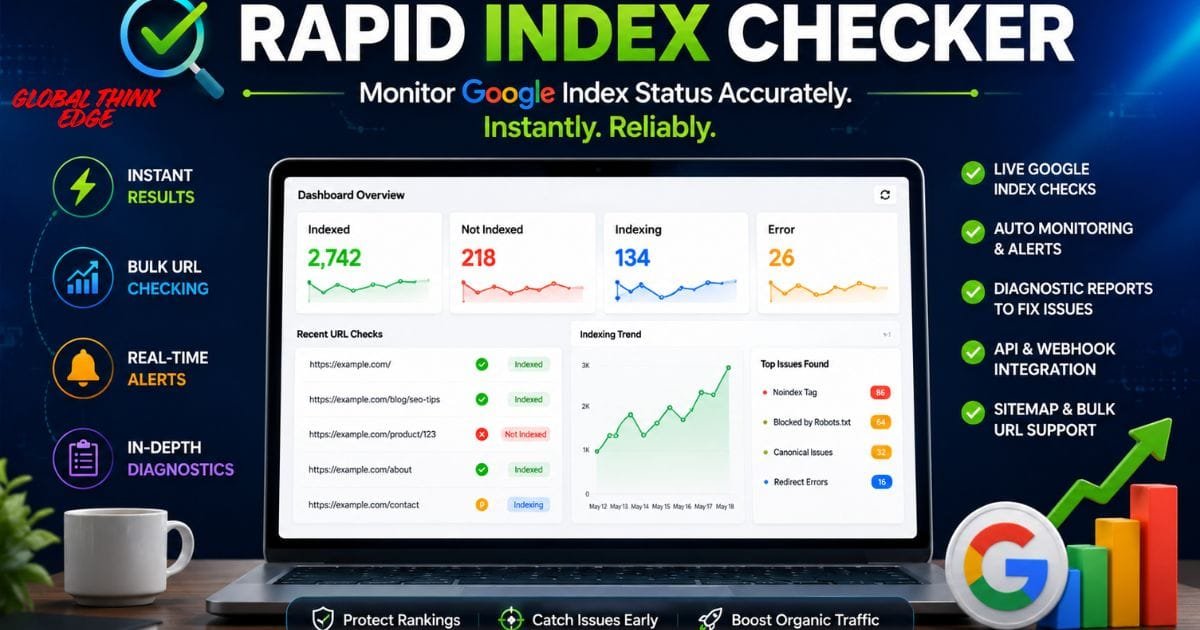
Rapid Index Checker: Essential Smart Google Index Checks
Why Rapid Index Checker Matters for Modern SEO
A Rapid Index Checker helps website owners, SEO professionals, agencies, and businesses verify whether their web pages are actually indexed by Google. While creating quality content is essential, it delivers little value if search engines cannot find and display your pages in search results.
Unlike manual checks, a Rapid Index streamlines the verification process by providing quick insights into index status, highlighting potential indexing issues, and helping you monitor important URLs over time. This allows you to detect problems early and protect your organic visibility.
Understanding Google Indexing
Google first discovers a page through crawling and then decides whether it should be included in its search index. A page may be crawled without being indexed, which means it won’t appear in search results even if it exists on your website.
Regular index monitoring ensures that your most valuable pages remain visible to potential visitors.
Why Live Verification Is Valuable
Search results change frequently. Pages can become deindexed because of technical errors, website updates, duplicate content, or indexing policies. Live verification provides a more current picture of your page’s visibility instead of relying solely on historical reports.
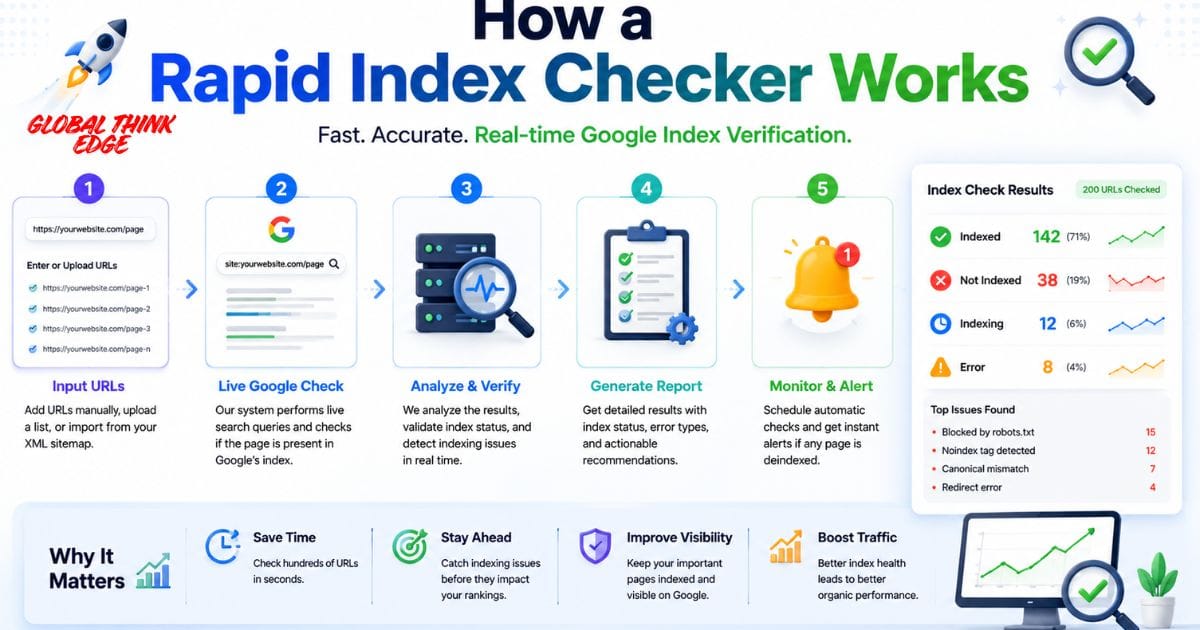
How a Rapid Index Checker Works
A Rapid Index Checker performs live index verification by checking whether specific URLs currently appear in Google’s searchable index. Many advanced platforms also examine technical signals that influence indexability.
Core Verification Process
URL Analysis
The tool evaluates one or multiple URLs to determine their indexing status.
Live Search Validation
Instead of assuming a page is indexed, it verifies whether the page can actually be found in Google’s search results.
Diagnostic Reporting
When problems are detected, the platform may identify technical factors preventing successful indexing.
Continuous Monitoring
Many solutions automatically monitor important pages on scheduled intervals, eliminating the need for repeated manual checks.
Essential Features of a Rapid Index Checker
Different tools provide different capabilities, but the strongest platforms combine speed, automation, and technical diagnostics.
Real-Time Index Verification
Instantly determine whether important pages remain indexed after publishing updates, migrations, or technical changes.
Bulk URL Checking
Large websites often manage hundreds or thousands of pages. Bulk verification enables users to check many URLs simultaneously, significantly reducing manual work.
Indexability Diagnostics
Advanced tools help identify common issues such as the following:
Robots.txt restrictions
Noindex directives
Canonical conflicts
Redirect chains
Duplicate content signals
Sitemap inconsistencies
Server response errors
Automated Monitoring
Scheduled scans continuously verify important URLs without requiring manual intervention. This is particularly useful for large websites and active content publishers.
Alerts and Notifications
Some platforms notify users immediately when valuable pages disappear from Google’s index, allowing faster investigation and recovery.
XML Sitemap Support
Importing XML sitemaps allows entire websites to be monitored instead of adding URLs individually.
API and Webhook Integration
Businesses managing large SEO operations often connect Rapid Index with internal dashboards, reporting systems, or automated workflows through APIs and webhooks.
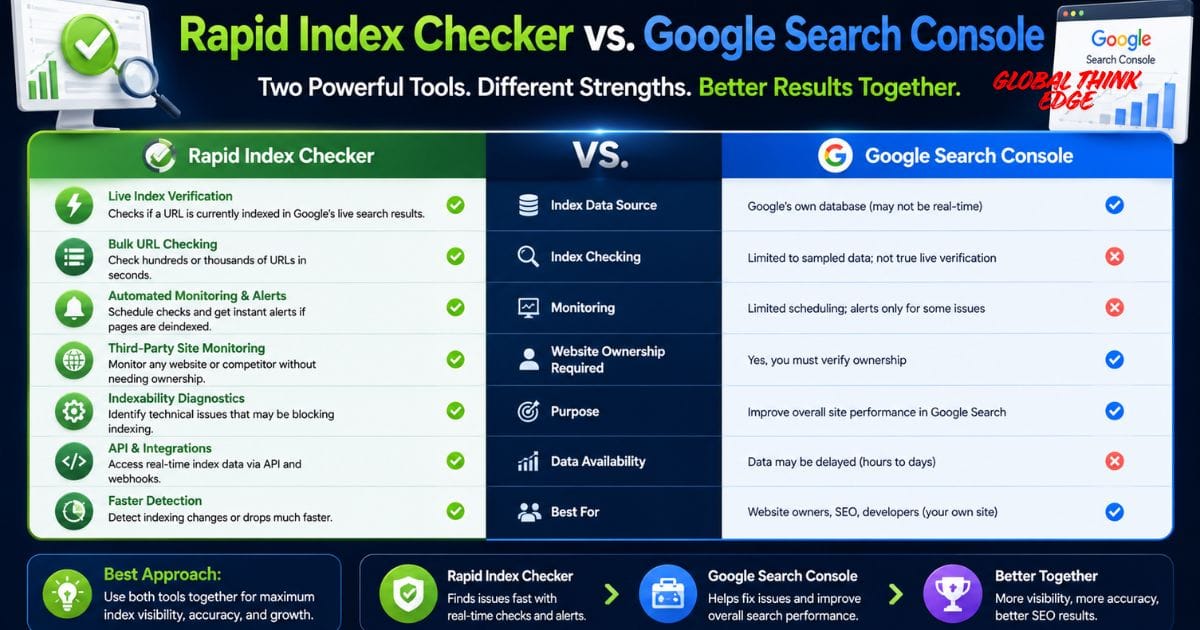
Rapid Index Checker vs. Google Search Console
Both tools provide valuable information, but they serve different purposes.
| Feature | Rapid Index Checker | Google Search Console |
| Live index verification | ✔ | Limited |
| Bulk URL monitoring | ✔ | Partial |
| Automated scheduling | ✔ | Limited |
| Third-party website monitoring | ✔ | ✘ |
| Technical indexing reports | ✔ | ✔ |
| Ownership required | No (for many features) | Yes |
| API support | Available on many platforms | Available |
Using both together often provides the most complete understanding of a website’s indexing health.
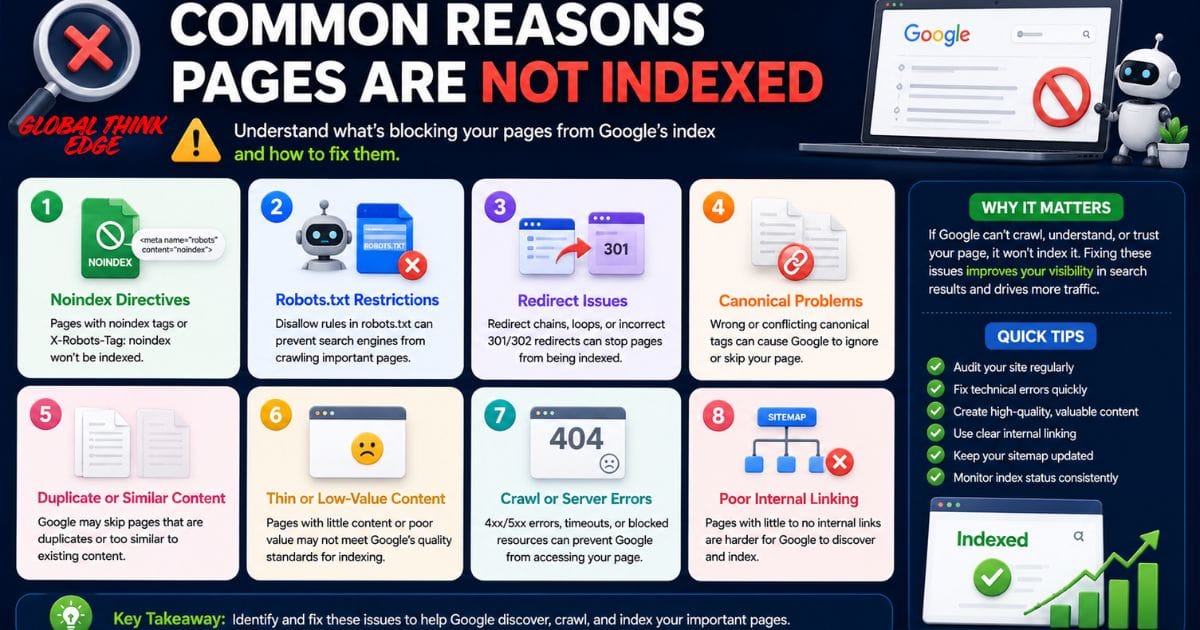
Common Reasons Pages Are Not Indexed
Understanding why Google excludes pages is just as important as checking whether they are indexed.
Technical Barriers
Incorrect robots.txt rules, noindex tags, broken redirects, and server errors frequently prevent successful indexing.
Duplicate or Thin Content
Google may ignore pages that offer little unique value or closely resemble existing content.
Poor Internal Linking
Pages that receive few internal links are harder for search engines to discover and evaluate.
Website Quality Signals
Low-quality content, excessive duplication, or poor user experience may reduce indexing priority.
Who Benefits Most from Using a Rapid Index Checker?
Several industries rely on frequent index monitoring.
SEO Agencies
Agencies can track client websites, identify indexing issues early, and provide transparent reporting.
E-commerce Stores
Product pages constantly change. Monitoring helps ensure valuable listings remain searchable.
Publishers and Blogs
News websites and blogs publish content regularly, making continuous index verification especially valuable.
Enterprise Websites
Large organizations manage thousands of pages, making manual index checks impractical.
SaaS Companies
Software businesses depend on educational content and landing pages to attract organic traffic, making indexing an ongoing priority.
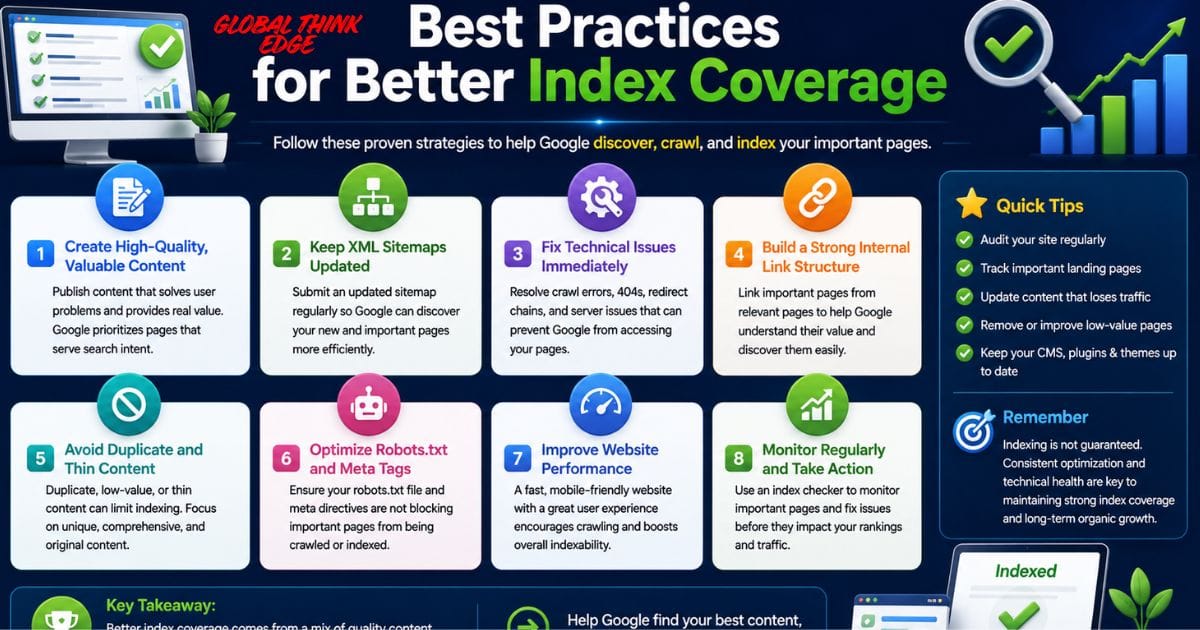
Best Practices for Better Index Coverage
Improving indexing requires more than simply checking status.
Maintain High-Quality Content
Publish original, useful content that satisfies user intent.
Keep XML sitemaps updated.
Submit current sitemaps so search engines can discover new pages more efficiently.
Resolve Technical Errors Quickly
Fix crawl issues, redirect problems, and duplicate content before they affect visibility.
Monitor Important URLs Regularly
Track landing pages, product pages, and high-performing articles to catch indexing changes early.
Strengthen Internal Linking
A logical internal linking structure improves crawl efficiency and page discovery.
Choosing the Right Plan
Many Rapid Index platforms offer flexible pricing suitable for different users.
Free Plans
Ideal for testing features or monitoring a limited number of URLs.
Lite Plans
Suitable for freelancers and small website owners with modest monitoring needs.
Professional Plans
Designed for SEO specialists managing multiple projects with advanced reporting requirements.
Team and Business Plans
These plans typically include collaboration features, larger URL limits, automation, API access, and enterprise-level monitoring.
Credit-Based Options
Some providers allow users to purchase additional checks without upgrading to a higher subscription tier.
Final Thoughts
A Rapid Index Checker has become an essential resource for anyone who depends on search visibility. Rather than waiting to discover indexing problems after traffic declines, you can monitor important URLs proactively, diagnose technical issues, and respond before rankings are affected.
When combined with high-quality content, sound technical SEO, and Google Search Console, a rapid index provides a more complete strategy for maintaining healthy index coverage and maximising long-term organic growth. Regular monitoring, automation, and actionable diagnostics help ensure your most valuable pages stay visible where they matter most in Google’s search results.
Frequently Asked Questions
How do I know if my page is indexed by Google?
You can search using the ‘site:’ operator or use a rapid index checker for faster and more comprehensive verification.
Can I check multiple URLs at the same time?
Yes. Most professional tools support bulk URL checking, making them ideal for larger websites.
Do I still need Google Search Console?
Yes. Google Search Console remains an essential SEO tool, while a rapid index complements it with live verification, automation, and broader monitoring capabilities.
Can I monitor websites that I don’t own?
Many rapid index platforms allow monitoring of public URLs without requiring website ownership.
Does the tool support XML sitemaps?
Most advanced solutions can import XML sitemaps to simplify large-scale monitoring.
Can a rapid index checker improve organic traffic?
While the tool itself does not increase rankings, it helps identify indexing issues quickly so valuable pages remain eligible to appear in Google Search, supporting stronger organic performance.
