AI Search Visibility Metrics KPIs: Smart Ways to Win
Why AI Search Visibility Metrics KPIs Matter More Than Traditional SEO Metrics
Search behavior is changing rapidly. Millions of users now rely on AI-powered search platforms to get direct answers instead of clicking through multiple web pages. Tools such as ChatGPT, Google AI Overviews, Perplexity, and Microsoft Copilot summarise information from trusted sources, making brand visibility more important than website rankings alone.
This shift has introduced a new way to measure digital marketing performance. AI search visibility metrics KPIs help businesses understand how often their brand appears in AI-generated responses, whether the information is accurate, and how that visibility contributes to awareness, trust, and conversions.
Unlike traditional SEO, where rankings and organic traffic are the primary indicators of success, AI search evaluates authority, relevance, credibility, and content quality. A website can receive valuable exposure even if users never visit it directly because AI assistants may recommend the brand within their responses.
For marketers, SEO professionals, and business owners, tracking AI visibility is becoming an essential part of measuring online success.
What are AI search visibility metrics KPIs?
AI search visibility metrics are KPIs that evaluate how effectively a brand performs across AI-powered search engines and answering platforms. These metrics focus on visibility, citations, authority, sentiment, and business impact rather than only website traffic.
Instead of asking, “How many people clicked my page?”, businesses should also ask the following:
How often does AI recommend my brand?
Is my content being cited as a trusted source?
Does AI describe my business accurately?
How do I compare with competitors across AI-generated responses?
Answering these questions provides a much clearer picture of your digital presence in the age of AI search.
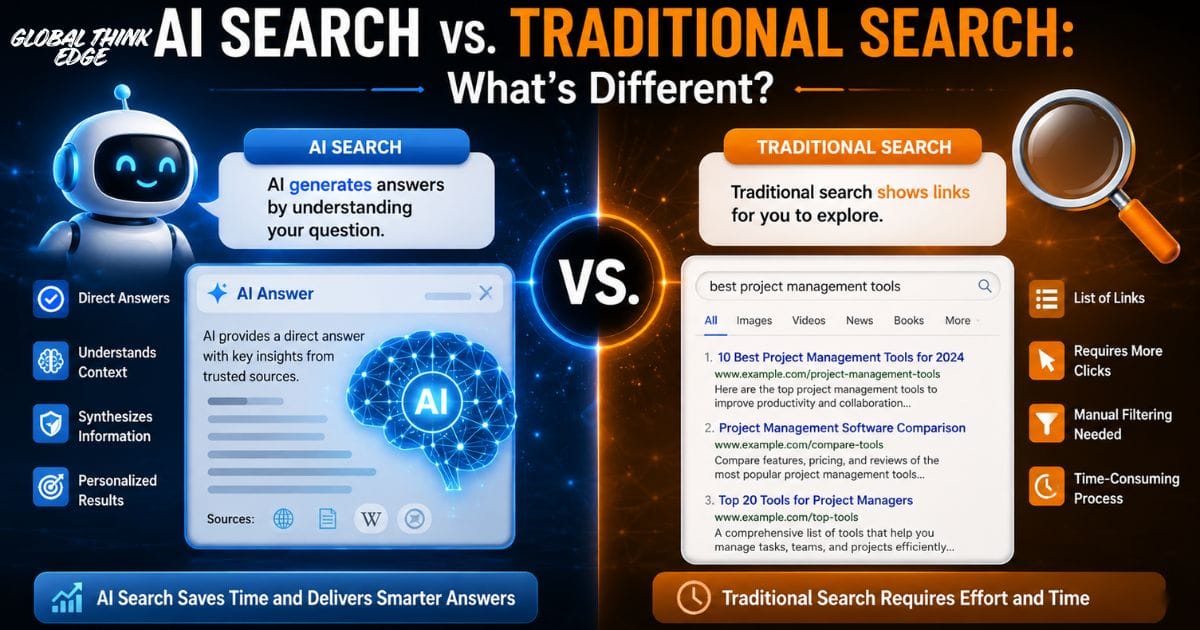
AI Search vs. Traditional Search: What’s Different?
Traditional search engines rank web pages and encourage users to click links. AI-powered search platforms generate complete answers by combining information from multiple authoritative sources.
This difference changes the way success should be measured.
| Traditional SEO | AI Search Optimization |
| Keyword rankings | Brand appearances in AI responses |
| Organic traffic | AI visibility rate |
| Click-through rate | Citation frequency |
| Backlinks | Source authority |
| Search impressions | Prompt coverage |
| Average position | Entity recognition |
Traditional SEO still matters, but AI visibility adds another layer of measurement that businesses cannot afford to ignore.
Why Traditional Traffic Reports Are No Longer Enough
Analytics platforms like Google Analytics can measure visitors arriving on your website, but they cannot fully capture how AI platforms influence purchasing decisions.
For example, an AI assistant may recommend your software, mention your research, or compare your services with competitors without generating a website visit. Even without a click, that recommendation increases brand awareness and may influence future purchasing decisions.
This is why relying only on organic traffic can leave important performance data unnoticed.
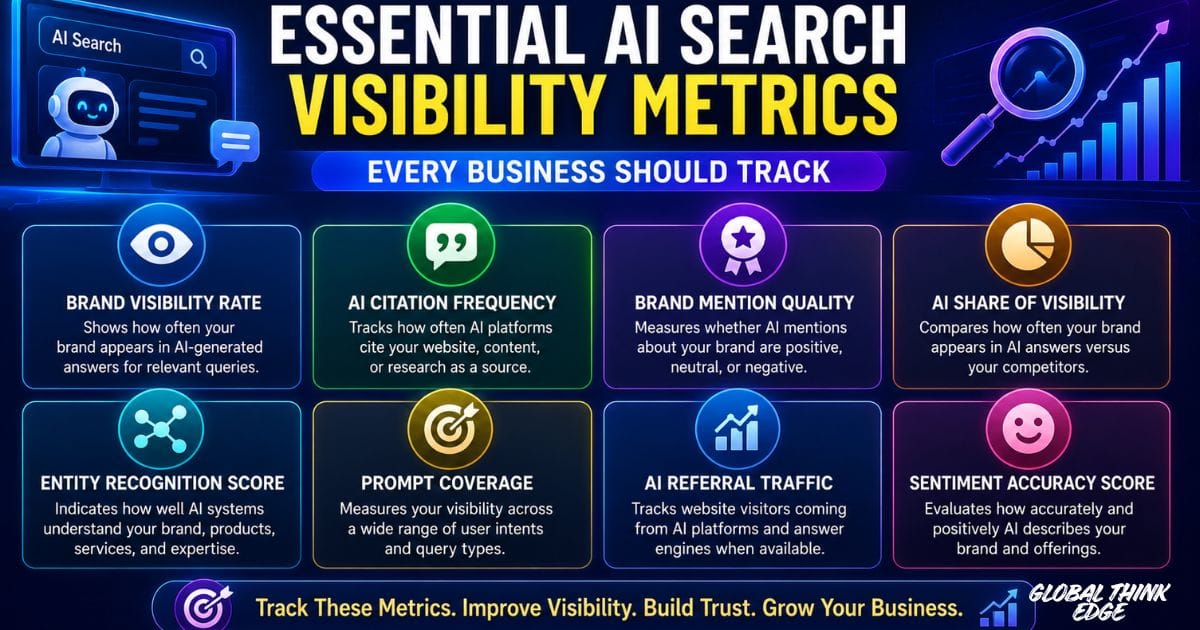
Essential AI Search Visibility Metrics Every Business Should Track
No single KPI tells the complete story. The most effective reporting combines multiple indicators to measure visibility, authority, and business impact.
Brand Visibility Rate
‘Brand Visibility Rate’ measures how frequently your company appears in AI-generated answers for relevant prompts.
A rising visibility rate usually indicates that AI systems recognize your content as reliable and relevant.
Monitor this metric across informational, commercial, and comparison queries to gain a complete understanding of your market presence.
AI Citation Frequency
Citation Frequency tracks how often AI platforms reference your website, research, reports, or published content when generating responses.
Frequent citations generally indicate:
Strong topical authority
High-quality content
Trustworthy information
Well-structured articles
Consistent publishing
Rather than chasing hundreds of citations, focus on earning references from authoritative pages that demonstrate expertise.
Brand Mention Quality
Appearing in AI responses is valuable, but accuracy matters just as much as visibility.
Evaluate every mention according to its quality.
| Mention Type | Business Impact |
| Positive | Builds trust and credibility |
| Neutral | Improves awareness |
| Incorrect | May damage reputation |
| Incomplete | Reduces authority |
Reviewing mention quality regularly helps identify outdated or inaccurate information that should be corrected across your website and other trusted sources.
AI Share of Visibility
AI Share of Visibility compares how frequently your brand appears against competitors across a defined set of prompts.
For example, if your company appears in 45 out of 100 relevant AI-generated responses while competitors appear less frequently, your share of visibility is relatively strong.
Tracking this KPI over time helps measure competitive growth instead of isolated performance.
Entity Recognition Score
Modern AI systems understand organizations, products, and people as entities rather than simple keywords.
A strong entity profile helps AI platforms recognize:
Your brand
Products and services
Industry expertise
Leadership team
Related topics
Customer solutions
Consistent branding, structured content, and authoritative mentions improve entity recognition over time.
Prompt Coverage
Many businesses monitor only a small list of keywords. AI search requires broader measurement because users ask questions in many different ways.
Evaluate your visibility across prompts such as the following:
Educational questions
Product comparisons
Buying recommendations
Industry definitions
Troubleshooting queries
Local searches
Expert recommendations
Greater prompt coverage indicates stronger topical authority across your niche.
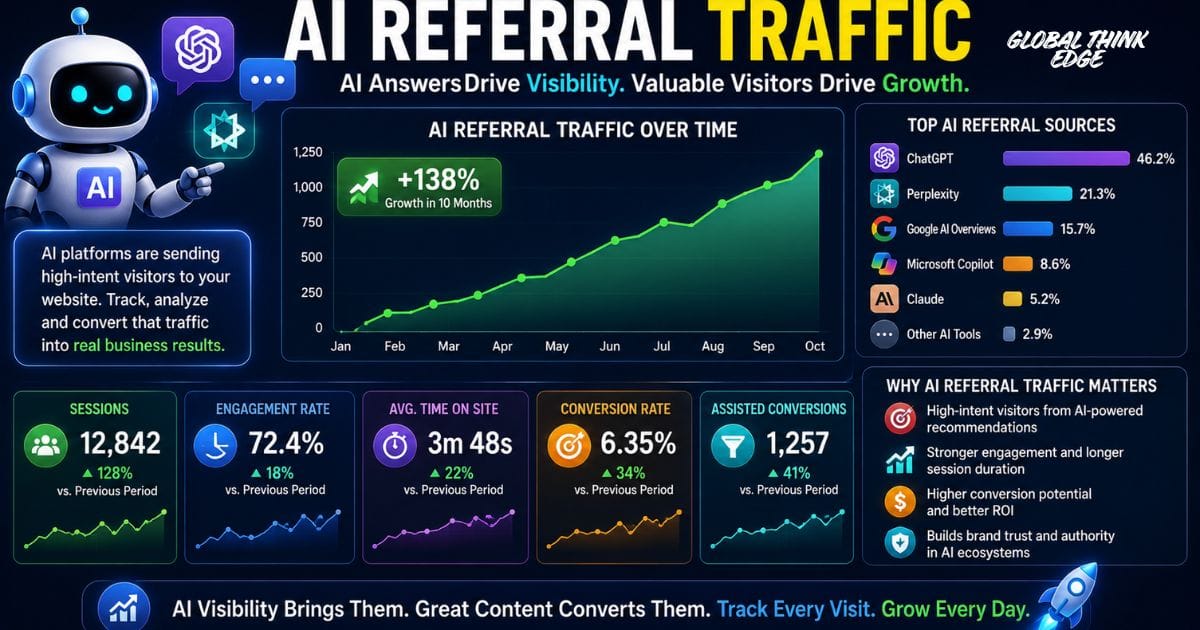
AI Referral Traffic
Although AI search often creates zero-click experiences, referral traffic still matters.
Measure visitors arriving from AI-powered platforms whenever attribution is available.
Helpful indicators include:
Session growth
Engagement rate
Average time on page
Conversion rate
Assisted conversions
Referral traffic should be analysed alongside visibility metrics rather than treated as the only measure of success.
Sentiment Accuracy Score
Not every AI mention benefits your business.
Sentiment accuracy evaluates whether AI describes your products, services, or expertise correctly.
Monitor:
Positive recommendations
Neutral descriptions
Negative statements
Outdated information
Factual inaccuracies
Maintaining accurate information across your website, business profiles, and trusted publications helps improve this KPI while strengthening user trust.
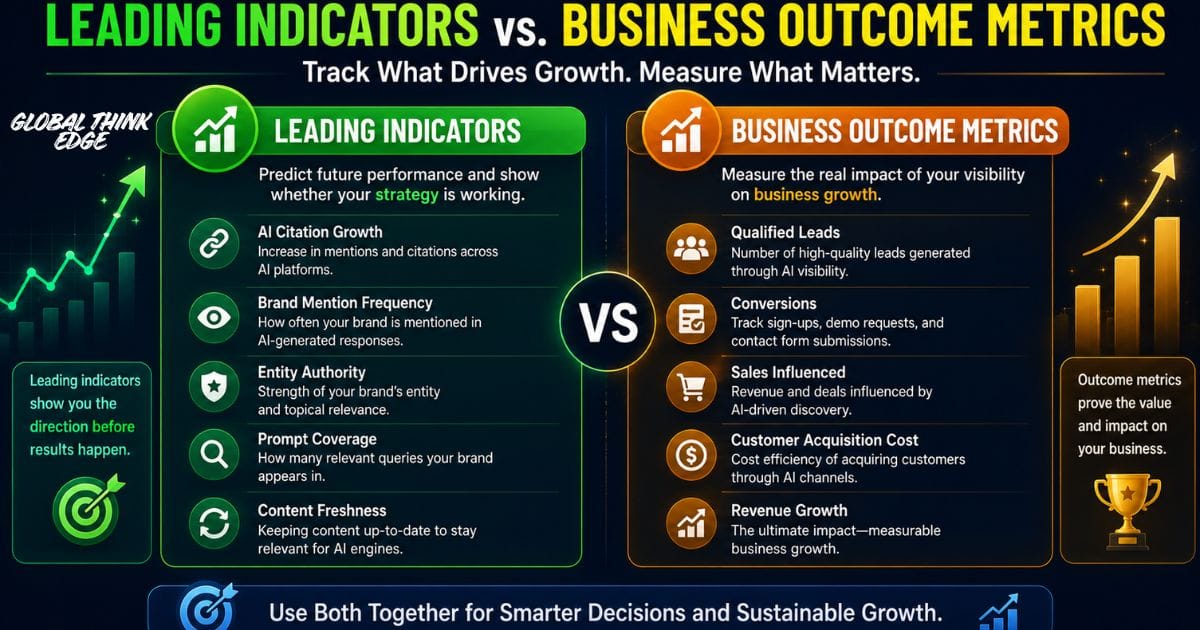
Leading Indicators vs. Business Outcome Metrics
Successful AI search reporting balances leading indicators, which predict future performance, with business outcome metrics, which measure real commercial results.
Leading Indicators
Leading indicators show whether your AI visibility strategy is moving in the right direction before revenue increases.
Key examples include:
AI citation growth
Brand mention frequency
Entity authority
Prompt coverage
Content freshness
Topical authority
High-quality backlinks
Expert references
Improving these metrics often leads to stronger visibility across AI-powered search platforms over time.
Business Outcome Metrics
Business metrics connect AI visibility to measurable results.
Track indicators such as the following:
Qualified leads
Contact form submissions
Product demo requests
Newsletter subscriptions
Assisted conversions
Sales influenced by AI discovery
Customer acquisition cost
Revenue growth
Monitoring both categories helps marketers understand not only how visible a brand is, but also whether that visibility supports business goals.
How AI Models Choose Sources
Understanding how AI systems select information helps businesses create content that earns more visibility.
Most AI-powered search platforms prioritize sources that demonstrate the following:
Expertise and first-hand knowledge
Accurate and updated information
Clear website structure
Strong topical authority
Trusted backlinks and citations
Consistent brand information
Helpful answers that fully satisfy user intent
Publishing detailed, factual, and well-organised content increases the likelihood that AI systems will reference your website.
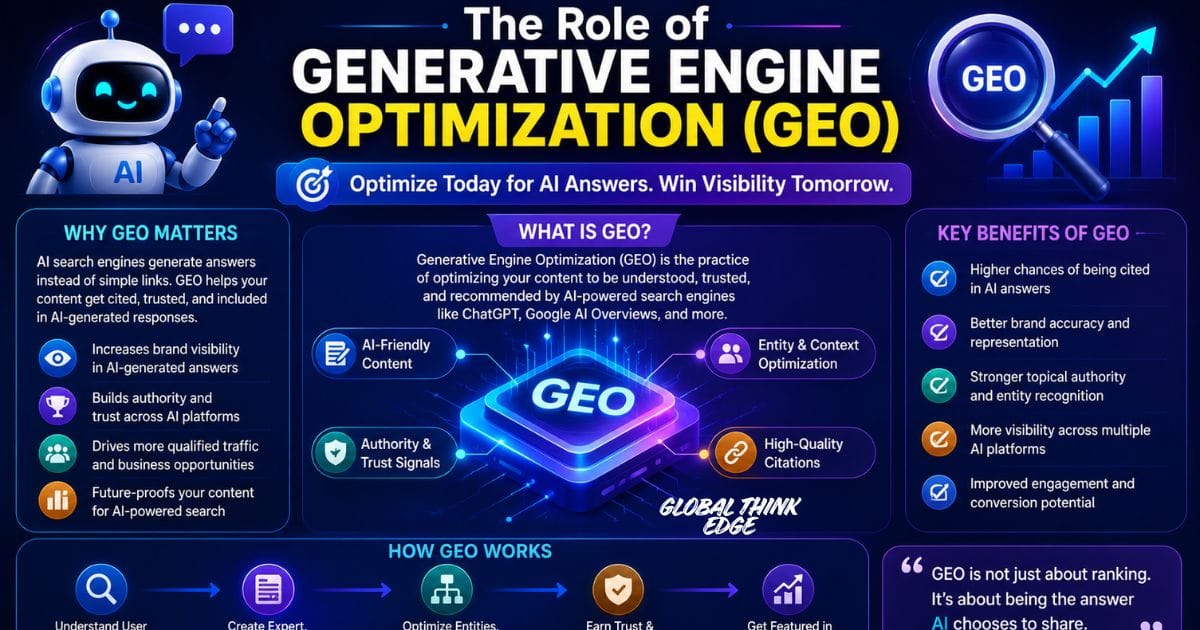
The Role of Generative Engine Optimization (GEO)
Generative Engine Optimisation (GEO) expands traditional SEO by optimising content specifically for AI-generated responses.
Instead of focusing only on keyword rankings, GEO aims to improve the following:
AI citations
Brand mentions
Entity recognition
Answer quality
Contextual relevance
Multi-platform visibility
Businesses that combine SEO with GEO are better prepared for the future of AI-powered search.
Building an AI Search Performance Dashboard
A reporting dashboard makes it easier to evaluate progress and identify areas for improvement.
An effective dashboard should include:
| KPI | Purpose |
| Brand Visibility Rate | Measures AI exposure |
| Citation Frequency | Tracks trusted references |
| Prompt Coverage | Monitors search intent coverage |
| Entity Recognition | Evaluates brand understanding |
| Sentiment Accuracy | Measures brand perception |
| AI Referral Traffic | Identifies website visits from AI platforms |
| Conversion Rate | Connects visibility to business results |
| Competitor Comparison | Benchmarks market performance |
Reviewing these metrics monthly allows businesses to identify trends rather than relying on isolated data points.
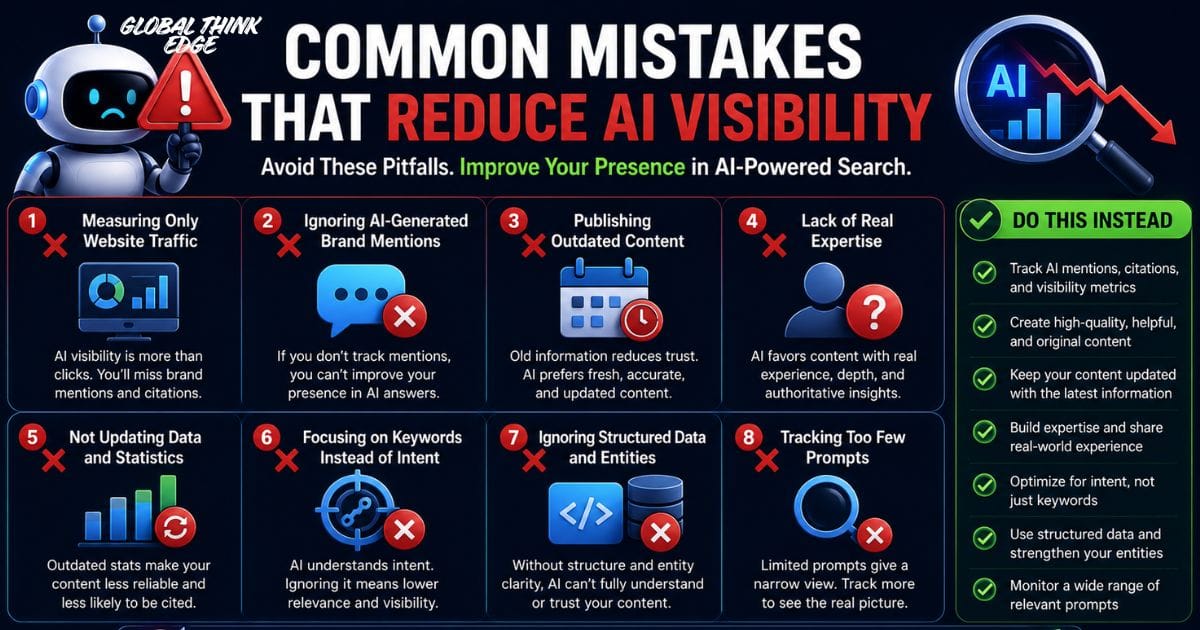
Common Mistakes That Reduce AI Visibility
Many businesses struggle to improve AI visibility because they focus on outdated SEO practices.
Avoid these common mistakes:
Measuring only website traffic.
Ignoring AI-generated brand mentions.
Publishing outdated content.
Covering topics without real expertise.
Failing to update statistics and research.
Targeting keywords instead of user intent.
Ignoring structured data and entity optimisation.
Tracking too few prompts.
Correcting these issues can significantly improve how AI platforms interpret and recommend your content.
Best Practices for Improving AI Search Visibility
Improving AI visibility requires consistency rather than quick fixes.
Follow these proven practices:
Publish original, experience-based content.
Update important articles regularly.
Build topical authority instead of isolated pages.
Use descriptive headings and logical content structure.
Support claims with trustworthy sources.
Strengthen your brand entity across the web.
Monitor competitor visibility trends.
Track AI KPIs every month and refine your strategy based on performance.
Small improvements made consistently often produce stronger long-term results than frequent, large-scale changes.
Key Takeaways
AI search visibility extends beyond traditional rankings and traffic.
Multiple KPIs provide a more accurate performance assessment than any single metric.
Entity authority, citation frequency, and prompt coverage are becoming increasingly important.
Generative engine optimisation complements traditional SEO strategies.
Regular reporting helps businesses identify opportunities and maintain long-term growth.
Conclusion
AI-powered search is reshaping how people discover information, compare products, and make purchasing decisions. As this technology evolves, AI search visibility metrics and KPIs provide businesses with a more complete way to measure digital success than traditional SEO metrics alone.
By tracking brand visibility, citation frequency, entity recognition, prompt coverage, sentiment accuracy, and business outcomes, organizations can understand how AI platforms perceive and recommend their content. Combining these insights with a strong SEO and Generative Engine Optimisation (GEO) strategy helps build long-term authority, improve trust, and increase visibility across AI-driven search experiences.
Businesses that begin measuring these KPIs today will be better prepared for the future of search, where credibility, expertise, and helpful content matter just as much as rankings and clicks.
Frequently Asked Questions
Are AI search visibility metrics replacing traditional SEO?
No. AI visibility metrics complement traditional SEO by measuring how brands perform in AI-generated answers alongside search rankings.
Which KPI should businesses monitor first?
Start with Brand Visibility Rate, Citation Frequency, Prompt Coverage, and Entity Recognition because they provide a balanced view of AI performance.
Can a brand benefit from AI visibility without receiving website clicks?
Yes. AI recommendations increase brand awareness, credibility, and purchase consideration even when users do not immediately visit your website.
How often should AI KPIs be reviewed?
Monthly reporting is sufficient for most businesses. Competitive industries may benefit from weekly monitoring.
Which AI platforms should marketers include?
Track visibility across major AI-powered search experiences such as ChatGPT, Google AI Overviews, Microsoft Copilot, Perplexity, and other widely used answer engines relevant to your audience.
Is referral traffic the most important KPI?
No. Referral traffic is valuable, but it should be analysed alongside citations, visibility, sentiment, and business outcomes for a complete performance picture.
Does publishing more content automatically improve AI visibility?
Not necessarily. High-quality, authoritative, and regularly updated content is far more effective than publishing a large quantity of low-value articles.
How long does it take to improve AI search visibility?
Results vary depending on competition, website authority, and content quality. Consistent optimisation usually delivers measurable improvements over several months rather than a few weeks.
