
How to Clean Quartzite Countertops: Best Expert Tips
Why Proper Quartzite Countertop Care Matters
Quartzite countertops have become one of the most popular choices for modern kitchens and bathrooms because they combine natural elegance with outstanding durability. Formed from sandstone under extreme heat and pressure, quartzite is harder than granite and highly resistant to scratches. However, despite its strength, it is still a natural stone that requires proper maintenance.
Many homeowners assume quartzite can handle any household cleaner, but using acidic or abrasive products can slowly damage the protective sealer. Once the sealer wears away, liquids may seep into the stone, leading to stains that are much harder to remove.
Learning how to clean quartzite countertops correctly helps preserve their shine, prevents costly repairs, and extends their lifespan. With the right daily habits and occasional maintenance, your countertops can continue looking as beautiful as the day they were installed.
Understanding Quartzite Before You Clean It
Before choosing any cleaning product, it helps to understand what makes quartzite different from other countertop materials.
Quartzite is a natural metamorphic stone, whereas engineered quartz is a man-made product mixed with resins. Because quartzite is natural, it contains microscopic pores that can absorb moisture if the surface is not properly sealed.
This is why quartzite maintenance focuses on:
Protecting the stone’s sealer
Preventing moisture absorption
Cleaning without scratching the surface
Preserving the natural polish
Reducing long-term wear
Once you understand these characteristics, choosing safe cleaning methods becomes much easier.
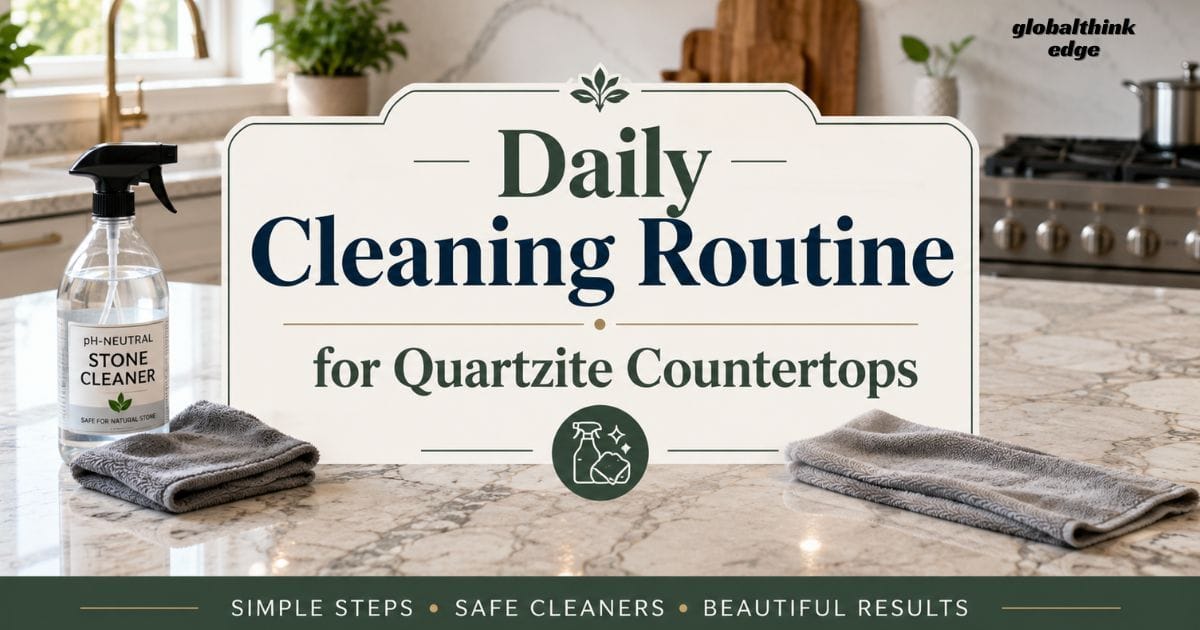
Daily Cleaning Routine for Quartzite Countertops
Daily cleaning is the simplest way to keep quartzite looking fresh while preventing dirt buildup.
Remove Dust and Loose Debris
Start by wiping away crumbs, dust, or food particles using a dry microfibre cloth. This prevents tiny particles from scratching the surface while cleaning.
Clean Using Warm Water
For most everyday messes, warm water alone works surprisingly well.
Lightly dampen a microfibre cloth and wipe the countertop using gentle circular motions.
Avoid using excessive water because standing moisture may eventually weaken the protective sealer.
Use a pH-neutral cleaner.
If grease or fingerprints remain, apply a cleaner specifically designed for natural stone.
Alternatively, mix a few drops of mild dish soap with warm water.
A small amount is enough. Too much soap can leave a dull film behind.
Wipe Dry Immediately
Once the surface is clean, dry it completely using a fresh microfibre towel.
Drying helps prevent the following:
Water spots
Mineral deposits
Soap residue
Streaks
This simple step also keeps the countertop naturally shiny.
What Can You Use to Clean Quartzite Countertops?
Choosing safe products is one of the most important parts of quartzite maintenance.
The following cleaners are considered safe for routine use.
| Cleaning Product | Safe for Quartzite | Best Use |
| Warm water | ✔ Yes | Daily cleaning |
| Mild dish soap | ✔ Yes | Removing grease |
| pH-neutral stone cleaner | ✔ Yes | Regular maintenance |
| Stone-safe cleaning wipes | ✔ Yes | Quick cleanups |
| Microfiber cloth | ✔ Yes | Everyday wiping |
Whenever possible, purchase cleaners labelled specifically for natural stone rather than general-purpose kitchen cleaners.
Cleaning Products You Should Never Use
Some household cleaners may seem harmless but can slowly damage quartzite by breaking down its protective seal.
Avoid using:
Vinegar
Lemon juice
Bleach
Glass cleaner
Ammonia
Bathroom cleaners
Abrasive powders
Steel wool
Rough scrubbing pads
Although quartzite itself is highly durable, the sealer protecting it is much more sensitive.
Replacing a damaged sealer is far easier than repairing permanent stains inside the stone.
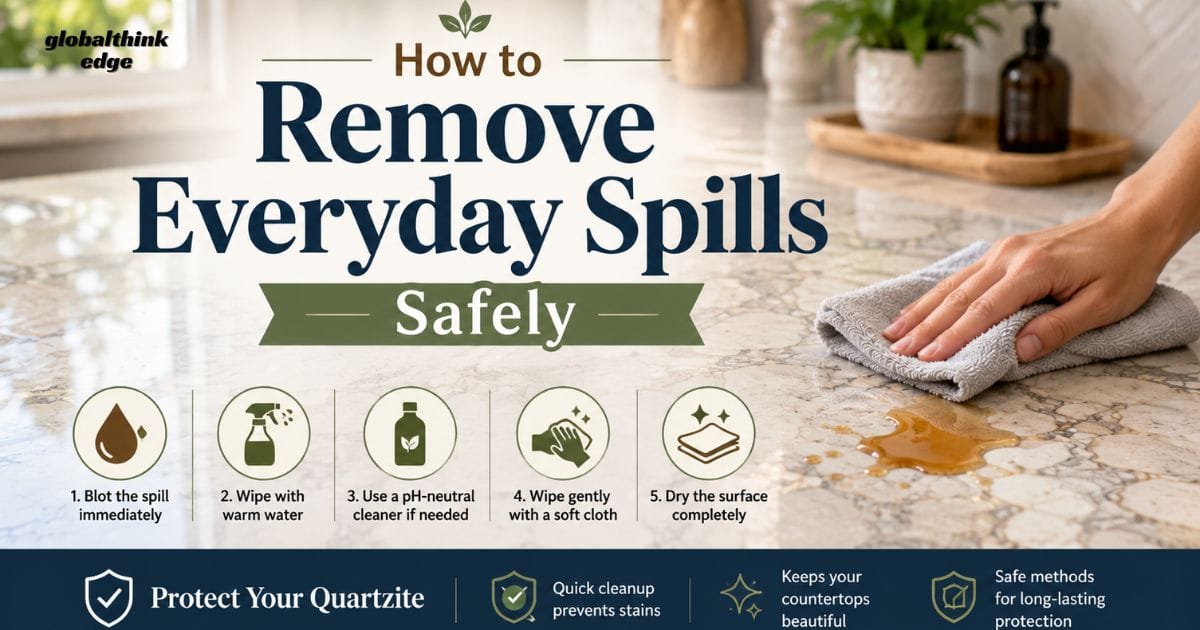
How to Remove Everyday Spills Safely
Accidents happen in every kitchen.
Coffee, tea, fruit juice, cooking oil, and sauces should always be wiped up as soon as possible.
Follow these simple steps:
Blot the spill instead of rubbing it.
Wipe with warm water.
Use a pH-neutral cleaner if necessary.
Dry the surface completely.
Quick cleanup prevents stains from penetrating the stone.
Removing Tough Stains from Quartzite
Sometimes stains remain even after routine cleaning.
The safest removal method depends on the stain type.
Oil-Based Stains
Grease, butter, cooking oil, and cosmetics can darken natural stone.
To remove them:
Apply a stone-safe degreaser.
Allow it to sit for several minutes.
Wipe gently with a microfibre cloth.
Repeat if necessary.
Never scrub aggressively.
Food and Beverage Stains
Coffee, wine, tea, tomato sauce, and berries may leave noticeable marks if left overnight.
Most fresh stains can be removed with:
Warm water
Mild dish soap
pH-neutral stone cleaner
If the stain remains, avoid experimenting with acidic cleaners.
Instead, move to a deeper cleaning method.
Deep Cleaning Using the Poultice Technique
For stains that have soaked beneath the surface, professionals often recommend using a stone poultice.
A poultice works by drawing contaminants out of the microscopic pores inside the quartzite.
Basic process:
Clean the stained area.
Apply the prepared poultice evenly.
Cover with plastic wrap.
Leave it for 24-48 hours.
Remove the dried poultice.
Wipe the surface clean.
Very old stains may require more than one application, but this method is much safer than using harsh chemicals.
How to Remove Hard Water Spots
Homes with hard water often develop white mineral deposits around sinks and faucets.
Instead of reaching for vinegar, which can weaken the sealer, use this safer approach:
Spray warm water onto the affected area.
Apply a pH-neutral stone cleaner.
Gently wipe using a microfibre cloth.
Dry immediately.
Consistent drying after every cleaning significantly reduces future mineral buildup.
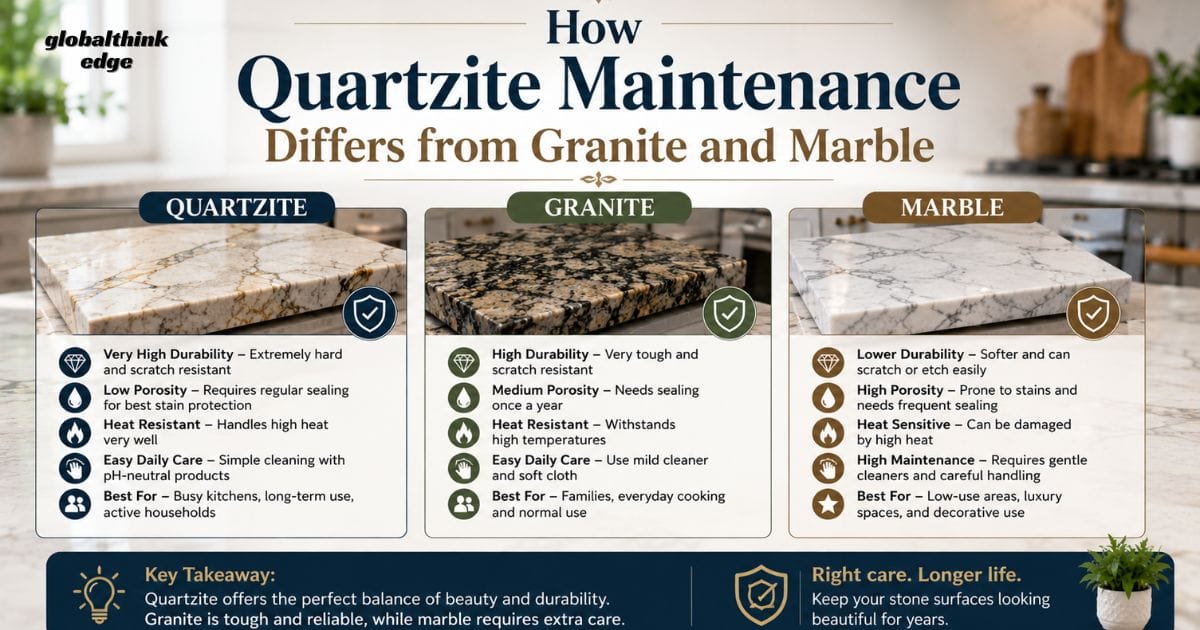
How Quartzite Maintenance Differs from Granite and Marble
Although these natural stones may look similar, their maintenance needs are slightly different.
| Feature | Quartzite | Granite | Marble |
| Scratch Resistance | Excellent | Excellent | Moderate |
| Heat Resistance | Excellent | Excellent | Good |
| Acid Sensitivity | Low (sealed) | Low | High |
| Sealing Required | Yes | Yes | Yes |
| Daily Maintenance | Easy | Easy | Moderate |
| Stain Resistance | Very Good (sealed) | Good | Lower |
Quartzite offers an excellent balance of durability and elegance, making it one of the easiest natural stones to maintain when cleaned correctly.
How to Tell If Your Quartzite Countertops Need Sealing
One of the easiest ways to protect quartzite is to ensure the sealer is still doing its job. Over time, normal use gradually wears down the protective layer, making the stone more likely to absorb liquids.
Fortunately, you can check this at home in just a few minutes.
Perform the Water Drop Test
The water drop test is the quickest way to determine whether your quartzite needs resealing.
Follow these steps:
1. Clean and dry the countertop.
2. Place a few drops of water on the surface.
3. Leave them for 10–15 minutes.
4. Wipe away the water.
Results:
Water beads on the surface: The sealer is still effective.
Water darkens or soaks into the stone: it’s time to reseal the countertop.
Testing every six months helps prevent unexpected staining.
How to Seal Quartzite Countertops
Sealing creates an invisible barrier that helps resist moisture, oils, and food stains.
Although many homeowners hire professionals, sealing quartzite is a manageable DIY project when you follow the instructions carefully.
Step 1: Clean the surface.
Remove grease, crumbs, and residue using a pH-neutral stone cleaner. Allow the countertop to dry completely before applying any sealer.
Step 2: Apply a Penetrating Stone Sealer
Use a high-quality penetrating sealer designed specifically for natural stone. Apply an even coat with a clean cloth or applicator pad.
Step 3: Let the Sealer Absorb
Allow the product to penetrate the stone for the amount of time recommended by the manufacturer.
Step 4: Wipe Away Excess Sealer
Buff away any excess product using a dry microfibre cloth to prevent streaks or hazy spots.
Step 5: Allow Proper Curing Time
Avoid heavy use until the sealer has fully cured according to the product instructions.

How Often Should Quartzite Be Sealed?
The frequency depends on the stone’s porosity, kitchen usage, and the quality of the previous sealer.
| Kitchen Usage | Recommended Sealing Schedule |
| Light use | Every 18–24 months |
| Average household | Every 12–18 months |
| Heavy daily cooking | Every 6–12 months |
Instead of relying only on a schedule, repeat the water drop test occasionally for a more accurate assessment.
How to Keep Quartzite Countertops Clean and Shiny
Quartzite naturally has a beautiful finish that doesn’t require waxes or artificial polishes. Regular care is the key to maintaining its appearance.
For long-lasting shine:
Clean spills immediately.
Wipe countertops daily with a microfibre cloth.
Dry the surface after cleaning.
Use cutting boards during food preparation.
Place trivets under hot cookware.
Avoid leaving standing water near sinks.
Reseal the surface when needed.
Consistent care preserves the natural brilliance of the stone without the need for harsh polishing products.
Common Mistakes to Avoid
Even high-quality quartzite can lose its appearance if cared for incorrectly.
Avoid these common mistakes:
Using vinegar or lemon juice as a cleaner.
Cleaning with bleach or ammonia.
Scrubbing with steel wool or abrasive pads.
Allowing coffee, wine, or oil spills to sit for long periods.
Cutting directly on the countertop.
Placing extremely hot pots directly on the surface.
Ignoring signs that the sealer has worn away.
Preventing these habits will significantly extend the life of your countertops.
Simple Habits That Extend Quartzite’s Lifespan
Small daily habits make a noticeable difference over time.
Use coasters beneath drinks.
Place mats under appliances that trap moisture.
Clean food spills immediately after cooking.
Avoid dragging heavy cookware across the surface.
Check the seal once or twice each year.
Use only products formulated for natural stone.
These preventive measures help maintain both the appearance and structural integrity of quartzite.
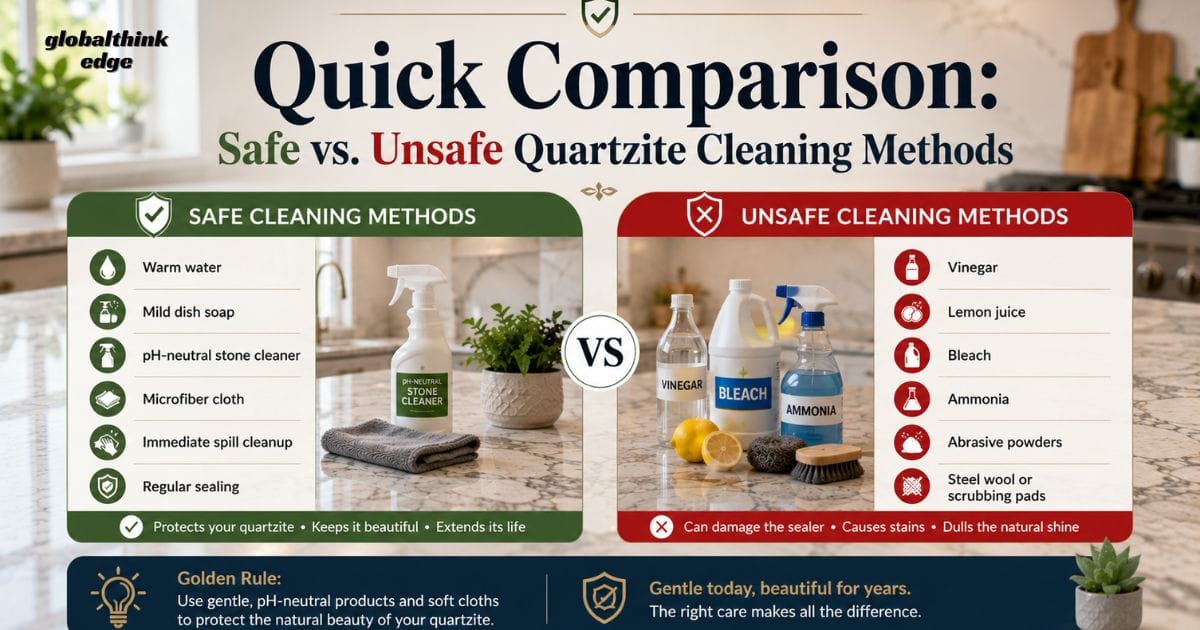
Quick Comparison: Safe vs. Unsafe Quartzite Cleaning Methods
| Safe Practices | Practices to Avoid |
| Warm water | Vinegar |
| Mild dish soap | Lemon juice |
| pH-neutral stone cleaner | Bleach |
| Microfiber cloth | Steel wool |
| Immediate spill cleanup | Letting spills sit overnight |
| Regular sealing | Ignoring the sealer |
Following the safe practices consistently will reduce maintenance and keep your countertops looking newer for longer.
Key Takeaways
Quartzite is highly durable but still requires routine maintenance.
Clean daily using warm water and a microfibre cloth.
Use only pH-neutral cleaners or mild dish soap.
Avoid acidic and abrasive household cleaners.
Remove spills as quickly as possible.
Test the sealer regularly using the water drop method.
Reseal the countertop when water begins soaking into the surface.
Preventive care is more effective than stain removal.
Frequently Asked Questions
Can I use Clorox wipes on quartzite countertops?
It’s generally best to avoid disinfecting wipes containing bleach or harsh chemicals unless the manufacturer specifically states they are safe for natural stone.
Is quartzite harder to maintain than granite?
Not necessarily. Both stones require periodic sealing, but quartzite follows a very similar maintenance routine and is easy to care for with the right products.
Can I place hot pans directly on quartzite?
Quartzite is highly heat-resistant, but using trivets or heat pads is still recommended to protect both the stone and its protective sealer.
What is the safest cleaner for quartzite?
A pH-neutral natural stone cleaner is the safest option for routine cleaning. Warm water and a small amount of mild dish soap also work well for everyday maintenance.
How do I restore dull-looking quartzite?
First, clean the surface thoroughly with a pH-neutral cleaner. If the countertop still appears dull, perform the water drop test. In many cases, resealing restores the stone’s rich, natural appearance.
Final Thoughts
Understanding how to clean quartzite countertops is essential for protecting one of the most valuable features in your kitchen or bathroom. While quartzite is exceptionally durable, it still benefits from regular care, gentle cleaning products, and periodic sealing.
A simple daily routine, prompt spill removal, and the occasional water drop test can prevent stains, preserve the protective sealer, and maintain the stone’s natural shine for years. By following these best practices and avoiding harsh chemicals, you’ll keep your quartzite countertops looking elegant, clean, and ready to handle everyday life.
With consistent maintenance, quartzite remains one of the most reliable and visually stunning countertop materials available, making it a worthwhile investment for any home.
