
Priority Infrastructure Plan: Key Facts for Strategic Growth
A Priority Infrastructure Plan (PIP) is a strategic framework for identifying, prioritizing, sequencing, and funding infrastructure needed to support planned growth. It connects development with transport, water, sewerage, stormwater, parks, and other essential services.
In Queensland, terminology matters: older planning documents may refer to Priority Infrastructure Plans, while current local-government planning uses Local Government Infrastructure Plans (LGIPs).
What Is a Priority Infrastructure Plan?
A priority infrastructure plan identifies infrastructure requirements and establishes priorities for delivering them alongside urban development. Its core purpose is to make sure essential infrastructure is available where and when growth occurs.
A PIP can help determine:
- Which infrastructure is needed
- Where it should be provided
- When it should be delivered
- What service level is required
- How it can be funded
The approach connects infrastructure investment with population growth, land use, service requirements, and long-term development.
What Does PIP Stand For?
PIP stands for Priority Infrastructure Plan. The term is associated with infrastructure-planning frameworks that coordinate development with higher-order infrastructure and investment.
Is a Priority Infrastructure Plan Still Used Today?
The answer depends on the jurisdiction. In Queensland, Local Government Infrastructure Plans (LGIPs) are now the current local-government infrastructure planning framework. Older documents can still use PIP terminology.
PIP vs LGIP
PIP means Priority Infrastructure Plan, while LGIP means Local Government Infrastructure Plan. They should not automatically be treated as identical terms.
A Priority Infrastructure Area (PIA) is different again: it identifies a geographic area where infrastructure provision is prioritized to support development.
How Does a Priority Infrastructure Plan Work?
The process generally follows this sequence:
- Assess existing infrastructure and capacity.
- Establish population, employment, and land-use assumptions.
- Forecast future infrastructure demand.
- Identify areas requiring priority investment.
- Determine infrastructure networks and service standards.
- Schedule projects and estimate costs.
- Arrange funding and coordinate delivery.
- Monitor conditions and update planning.
This turns infrastructure planning into a coordinated growth strategy rather than a collection of isolated projects.
What Are the Key Components of a Priority Infrastructure Plan?
Existing Infrastructure Assessment
Planners examine roads, water systems, sewerage, stormwater, parks, and community facilities to identify capacity gaps and constraints.
Planning Assumptions
Population growth, employment, housing, land use, and development patterns help determine how much infrastructure future communities may require.
Infrastructure Demand Forecasting
Forecasting converts expected growth into infrastructure requirements. More residents and businesses can increase demand for transport, water, wastewater, drainage, parks, and community facilities.
Priority Infrastructure Areas
A PIA provides a spatial focus by identifying areas where infrastructure can efficiently support existing and forecast development.
Desired Standards of Service
Desired Standards of Service (DSS) establish expected infrastructure performance or capacity. They help determine whether existing or proposed infrastructure can adequately serve future demand.
Schedule of Works
A Schedule of Works adds timing to infrastructure planning. It can identify projects, locations, infrastructure networks, delivery periods, and investment requirements.
Funding
Depending on the framework, funding can involve government budgets, infrastructure charges, developer contributions, public-private partnerships, or other investment.
What Is a Priority Infrastructure Area?
A Priority Infrastructure Area is a geographic area where infrastructure provision is prioritized to support planned growth.
PIP vs PIA
- PIP: Infrastructure planning framework
- PIA: Geographic priority area within the planning process
PIAs can be influenced by population growth, employment, existing infrastructure, development suitability, network capacity, and future demand.
What Is Trunk Infrastructure?
Trunk infrastructure is higher-order infrastructure that provides broader network or service benefits rather than serving only one individual development.
Depending on the planning framework, it can include major transport infrastructure, water and sewerage networks, stormwater systems, parks, and community infrastructure.
The distinction between trunk and non-trunk infrastructure can affect planning, funding, and development requirements.
What Infrastructure Does a Priority Infrastructure Plan Cover?
Coverage varies by jurisdiction, but common categories include:
- Transport: roads, public transit, freight connections, and mobility networks
- Water: supply systems and future capacity
- Wastewater: sewerage collection and treatment
- Stormwater: drainage and flood management
- Parks and community facilities: public spaces and supporting facilities
- Utilities and digital connectivity: where relevant to the planning framework
How Are Infrastructure Projects Prioritized?
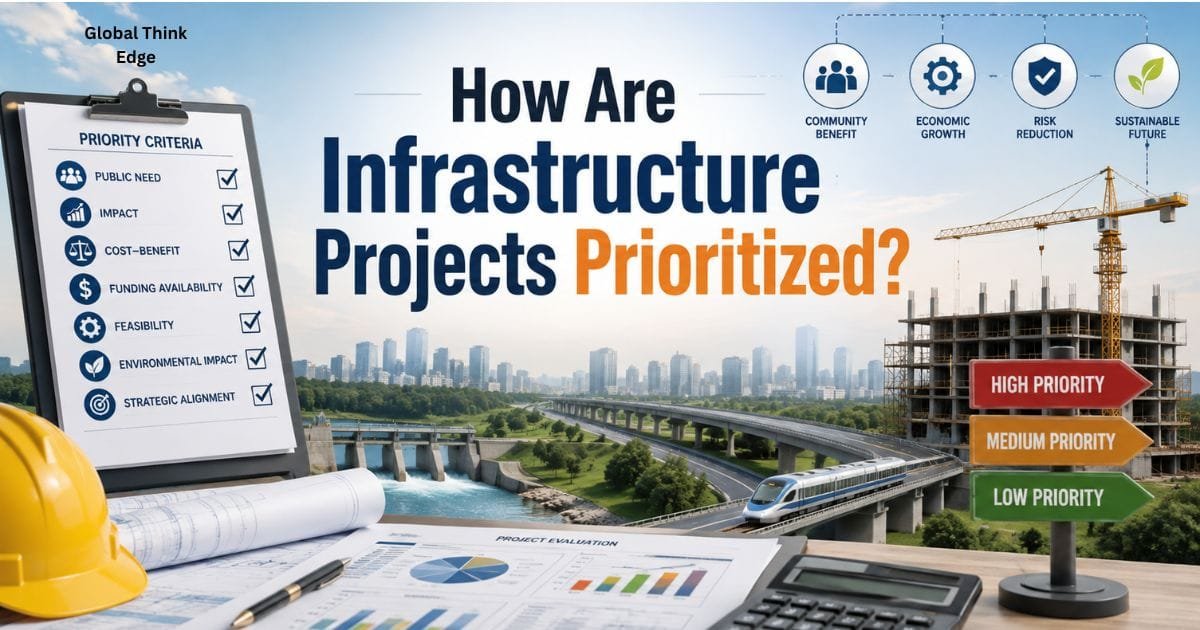
Projects are not normally ranked by cost alone. Common considerations include:
- Population and employment growth
- Existing infrastructure capacity
- Service gaps and urgency
- Accessibility and connectivity
- Economic benefits
- Environmental impacts
- Climate and disaster risk
- Social equity
- Financial feasibility
GIS can strengthen this process by mapping population, infrastructure gaps, accessibility, hazards, development patterns, and service coverage.
How Are Priority Infrastructure Projects Funded?
Funding depends on the applicable planning and legal framework. Common mechanisms include government funding, infrastructure charges, developer contributions, and public-private partnerships.
Infrastructure charges can help recover certain infrastructure costs associated with development, while public investment may support infrastructure providing wider community benefits.
How Does Infrastructure Planning Affect Property Development?
Infrastructure planning can influence where and when development occurs. If adequate infrastructure is unavailable, development may require additional works, face infrastructure-related conditions, incur charges, or be sequenced differently.
For developers, a clear plan can provide better visibility into network capacity, infrastructure requirements, delivery timing, and potential costs.
Why Is a Priority Infrastructure Plan Important?
A well-designed plan coordinates urban growth with infrastructure supply. It can:
- Improve resource allocation
- Reduce infrastructure gaps
- Support economic development
- Improve access to public services
- Strengthen long-term investment decisions
- Support climate resilience
- Encourage coordinated development
How Does a Priority Infrastructure Plan Support Sustainable Development?
Sustainable infrastructure planning balances economic, environmental, and social needs.
It can support productivity while encouraging efficient land use, resilient infrastructure, sustainable transport, environmental protection, and access to essential services.
What Challenges Can Affect Infrastructure Planning?
Common challenges include:
- Funding constraints
- Inaccurate growth forecasts
- Policy changes
- Land availability
- Environmental restrictions
- Construction cost increases
- Supply-chain problems
- Labor shortages
- Project delays
- Coordination between agencies
Climate and disaster risks can add further uncertainty, making regular review important.
How Is Technology Changing Infrastructure Planning?
Modern planning increasingly uses GIS, data analytics, AI, digital twins, and smart sensors.
These technologies can improve demand forecasting, infrastructure mapping, asset management, maintenance planning, and scenario analysis. However, technology works best when supported by sound growth assumptions, service standards, funding plans, and risk assessment.
What Is the Difference Between PIP, PIA, LGIP, and Trunk Infrastructure?
| Term | Meaning |
| PIP | Priority Infrastructure Plan; terminology associated with earlier planning frameworks |
| PIA | Priority Infrastructure Area: a geographic area prioritized for infrastructure |
| LGIP | Local Government Infrastructure Plan: the current Queensland local-government framework |
| Trunk Infrastructure | Higher-order infrastructure serving broader development needs |
Priority Infrastructure Plan Example
Imagine a municipality expecting significant population growth. Planners first assess existing roads, water, sewerage, drainage, parks, and community facilities. They then compare projected demand with current capacity.
The resulting plan can identify infrastructure gaps, prioritize projects, establish delivery timing, estimate costs, and coordinate investment with development.
Frequently Asked Questions
What is a Priority Infrastructure Plan?
It is a strategic framework for identifying, prioritizing, sequencing, and funding infrastructure needed to support planned growth.
What is the difference between PIP and LGIP?
PIP means Priority Infrastructure Plan, while LGIP means Local Government Infrastructure Plan. In Queensland, LGIP is the current local-government framework, while PIP appears in older planning material.
What is a Priority Infrastructure Area?
A PIA is a geographic area where infrastructure provision is prioritized to support existing or forecast development.
What is trunk infrastructure?
It is higher-order infrastructure intended to provide broader network or service benefits.
Does infrastructure planning affect developers?
Yes. Infrastructure requirements, development conditions, timing, network capacity, and applicable infrastructure charges can affect development feasibility and cost.
Key Takeaways
A priority infrastructure plan connects growth forecasts with infrastructure needs, locations, timing, service standards, and funding. The most important concepts are PIA, trunk infrastructure, demand forecasting, infrastructure charges, project sequencing, and the distinction between historical PIP terminology and current LGIP frameworks.
Priority Infrastructure Plan explained: discover PIP, PIA, LGIP, trunk infrastructure, funding, and how strategic planning supports sustainable growth.
