Startup Booted: Key Facts & Winning Funding Secrets
What Does Startup Booted Mean?
Startup Booted is commonly used to describe a startup built around self-funded or revenue-first growth, but the phrase itself is not a standard financing term. The established business term is bootstrapping, which means building a company with founder resources, customer revenue, and other internal resources instead of relying primarily on outside equity investment.
The phrase can also refer to StartupBooted, a business consulting brand that offers services such as pitch deck development, financial modeling, budgeting, and fundraising strategy.
This distinction matters because someone searching for “Startup Booted” may be looking for either the business concept or the StartupBooted company.
Startup Booted vs. Bootstrapped Startup
A bootstrapped startup is a company that grows primarily through founder funding and money generated by the business. The founders generally avoid selling equity to outside investors during the bootstrapping stage. The U.S. Small Business Administration also describes self-funding as bootstrapping and notes that it allows owners to retain control while taking on the financial risk themselves.
“Startup Booted,” however, can be a broader search phrase. It may point to the bootstrapping concept, a startup resource, or the StartupBooted brand.
| Term | Meaning |
| Startup Booted | A search phrase that can refer to self-funded startup growth or the StartupBooted brand |
| Bootstrapped startup | A company primarily funded through founder resources and business revenue |
| VC-backed startup | A company that receives equity investment from outside investors |
| Self-funded business | A business financed through the owner’s resources |
Using the correct term is useful when researching startup finance because bootstrapping describes a funding method, while a brand name describes a particular company or service.
How the Startup Booted Model Works
The revenue-first approach starts with a simple objective: get customers and generate cash before depending on external investors.
A founder may begin with personal savings, existing skills, a small product, or a service that can generate early sales. Revenue is then reinvested into product development, marketing, hiring, or other business needs.
The basic cycle looks like this:
Founder resources → Product or service → Paying customers → Revenue → Reinvestment → Growth
This model encourages founders to validate demand early instead of spending heavily before customers show that they want the product.
J.P. Morgan describes bootstrapping as starting and growing a company through personal finances or operating revenue rather than outside investment. It notes that this approach can fit businesses that do not require extensive inventory or large upfront capital.
Where the Money Comes From
A Startup Booted or bootstrapped approach can use several internal funding sources.
Founder Savings
Personal savings are often used to cover initial expenses such as software, equipment, registration, development, or marketing.
Customer Revenue
Early customers can become the main source of growth capital. Instead of waiting for an investment round, the business uses collected revenue to fund its next stage.
Reinvested Profit
When the company generates more cash than it needs for immediate operations, some of that money can be reinvested into growth.
Prepayments and Deposits
Some businesses can improve cash flow by collecting deposits or advance payments before delivering a product or service.
Non-Dilutive Funding
Certain grants and other non-equity funding sources can provide capital without requiring the founder to sell ownership. The exact eligibility and conditions vary by program.
The important point is that not every self-funded company uses the same funding mix. A precise funding history is more informative than simply calling a company “bootstrapped.”
Why Founders Use a Startup Booted Strategy
The biggest attraction is control.
When founders do not sell equity to outside investors, they generally retain greater ownership and decision-making authority. The SBA similarly notes that self-funding allows owners to retain complete control, although the financial risk remains with them.
Other potential benefits include:
- Greater control over product decisions
- Less equity dilution
- More freedom over business priorities
- Strong attention to cash flow
- Pressure to validate customers early
- Greater flexibility over the timing of future fundraising
- Less dependence on investor expectations
Bootstrapping can also encourage careful spending. Every major expense has a direct effect on the company’s available cash, which makes budgeting and financial monitoring especially important.
The Main Risks of Startup Booted Growth
Self-funded growth does not remove financial risk. It often places more of that risk on the founder.
The first challenge is limited capital. A company with insufficient cash may struggle to hire employees, build technology, purchase inventory, or enter a new market quickly.
The second challenge is slower expansion. If competitors have substantial funding, a bootstrapped company may need to grow at a different pace.
The third is founder financial exposure. Personal savings or income may be committed to the business, so a failed experiment can have consequences beyond the company itself.
Cash-flow management is therefore critical. A company can have strong sales and still experience financial pressure if customers pay late or expenses arrive before revenue is collected.
Shopify and Investopedia both highlight the trade-off: bootstrapping can preserve ownership and control, but founders must manage resources carefully and accept more of the financial burden.
Startup Booted vs. VC Funding
The difference is mainly about where capital comes from and how ownership is affected.
A bootstrapped company primarily uses founder resources and business revenue. A venture-backed startup receives capital from outside investors, normally in exchange for an ownership stake.
| Factor | Bootstrapped Approach | VC-Backed Approach |
| Main capital source | Founder resources and revenue | Outside investors |
| Equity dilution | Usually limited during bootstrapping | Equity is typically exchanged for investment |
| Founder control | Generally higher | Shared with investors according to agreements |
| Growth resources | Limited by internal cash generation | Access to larger external capital |
| Financial pressure | Concentrated more heavily on founders/company | Shared partly with investors |
| Fundraising timing | More optional | Often central to growth strategy |
Neither structure automatically determines whether a company will succeed. The appropriate funding model depends on the company’s capital needs, revenue potential, market timing, and growth requirements.
When Bootstrapping Can Make Sense
Bootstrapping can be practical when a startup can reach paying customers without major upfront investment.
Examples can include:
- SaaS products
- Consulting businesses
- Digital services
- Content businesses
- Productized services
- Niche software
- Small e-commerce operations
Businesses that require expensive laboratories, manufacturing facilities, large inventories, or years of development before revenue may face different financing requirements.
The key question is not simply “Can I avoid investors?” A better question is “Can this business reach meaningful revenue with the resources available?”
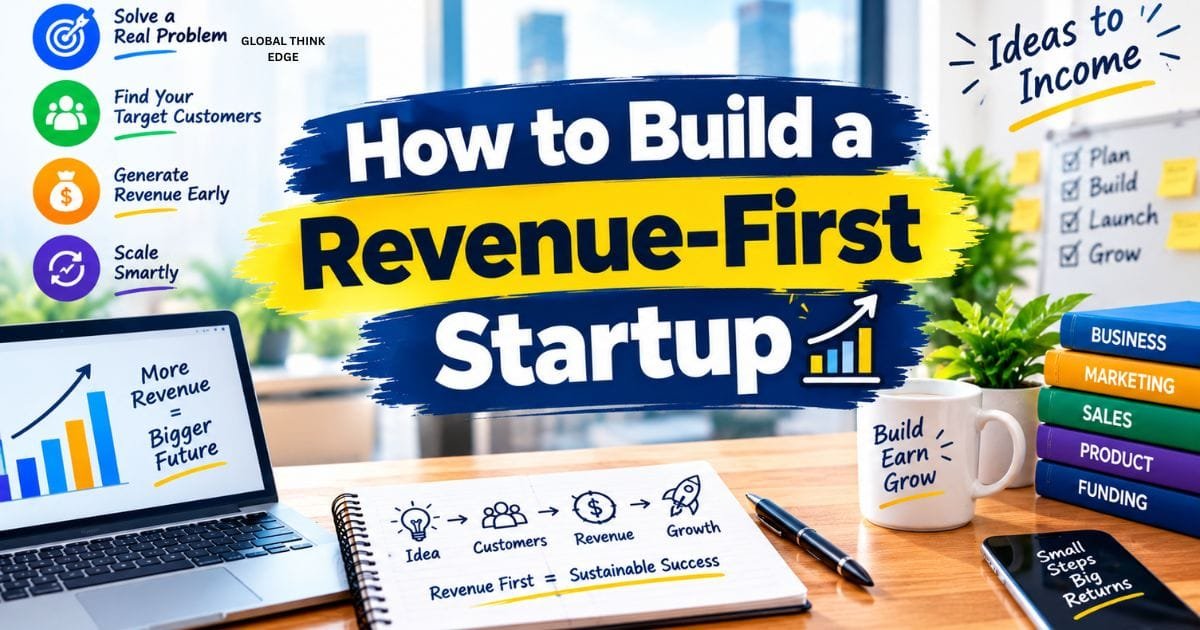
How to Build a Revenue-First Startup
A practical Startup Booted strategy can begin with a narrow problem and a clearly defined customer.
1. Validate the Problem
Find out whether potential customers actually experience the problem you want to solve.
2. Build the Smallest Useful Offer
Avoid spending heavily on features that customers have not requested.
3. Get the First Paying Customers
Revenue provides stronger evidence than interest alone. Focus on customers who are willing to pay for the solution.
4. Track Cash Flow
Monitor money coming in, money going out, operating expenses, and available cash.
5. Reinvest Carefully
Put revenue back into activities that can improve customer acquisition, retention, delivery, or profitability.
6. Measure Unit Economics
Track metrics such as customer acquisition cost, gross margin, retention, recurring revenue, and payback period where relevant.
7. Reconsider Funding When Necessary
If outside capital can materially accelerate a validated opportunity, fundraising can become a strategic option rather than an emergency response.
What Is StartupBooted.com?
StartupBooted.com is a separate entity from the general concept of bootstrapping. Its website presents StartupBooted as a consulting and startup-support service. Its publicly listed offerings include pitch deck design, financial modeling and budgeting, fundraising strategy, business planning, market research, and financial analysis.
This distinction is important for searchers because Startup Booted and bootstrapped startup can produce similar search results while referring to different things.
If you are researching the company itself, review its own service and contact information rather than assuming that the brand name represents the general definition of bootstrapping.
Key Takeaways About Startup Booted
- Startup Booted is not a universally standardized financing term.
- Bootstrapping is the established term for building a business primarily with founder resources and internal revenue.
- A revenue-first model can help founders retain more control and limit early equity dilution.
- Self-funding also concentrates financial risk on the founder and business.
- Cash flow, customer demand, margins, and operating costs are central to the model.
- StartupBooted.com is a separate consulting brand offering startup and fundraising-related services.
- A startup can begin by bootstrapping and later raise outside capital when additional funding becomes useful.
Final Verdict
The clearest way to understand Startup Booted is to separate the phrase from the established concept of bootstrapping. If the phrase is being used to describe a funding strategy, it generally points toward revenue-first, founder-controlled growth. If it refers to StartupBooted.com, it means a specific business that provides startup consulting and financial services.
For founders, the practical issue is not the label. It is whether the business can validate demand, generate enough cash, manage risk, and grow with the resources available. When those conditions change, the company’s financing strategy can change with them.
