Repmold: Meaning, Uses, Manufacturing Process, and Key Facts
What Is Repmold?
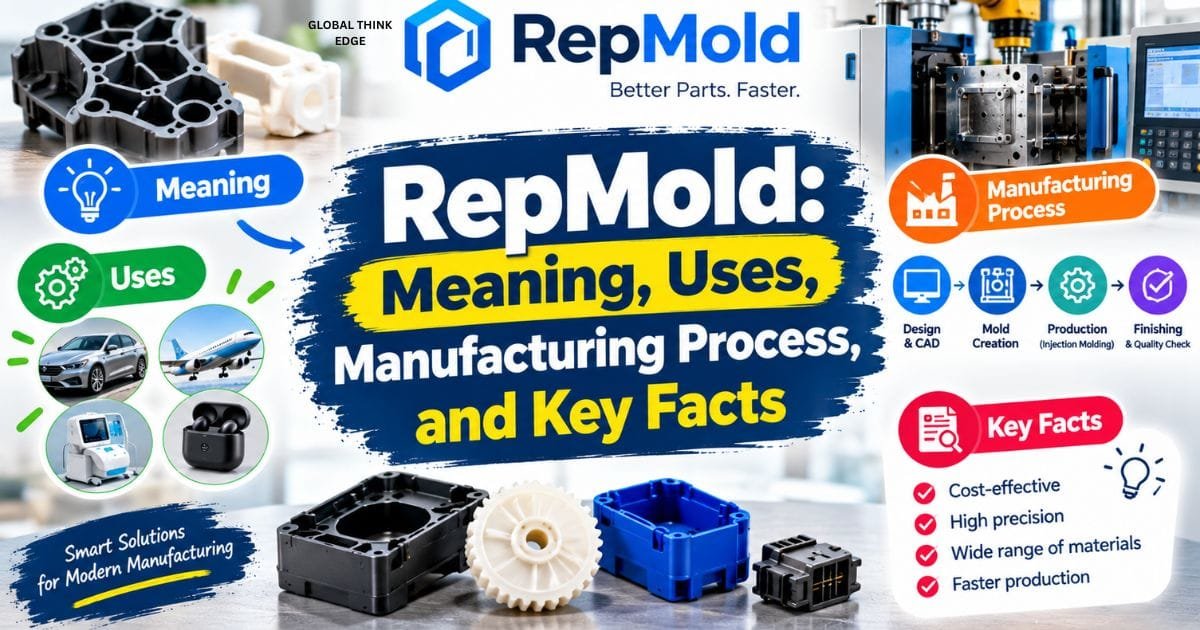
Repmold generally refers to a reproduction or rapid molding concept used to create duplicate parts, prototypes, or molded components from an existing design or model. The term can relate to manufacturing workflows involving molds, digital designs, prototyping, and plastic injection molding.
Because “Repmold” is not a universally standardized manufacturing term, its exact meaning depends on the context in which it appears. It may describe a molding approach, a product or service name, or a business entity.
For users researching Repmold, the important idea is reproduction: creating accurate physical parts from a reference model, digital design, or existing component.
Why Repmold Matters in Manufacturing
Manufacturers often need to reproduce a component without designing every part from scratch. A molding workflow can reduce repeated design work and make it easier to produce multiple consistent copies.
Reproduction molding can be useful for:
- Prototype development
- Replacement parts
- Product testing
- Small production runs
- Design validation
- Custom components
- Manufacturing preparation
The exact process depends on the material, mold type, production volume, and required level of precision.
How Does Repmold Work?
A typical reproduction molding workflow starts with a physical component, 3D model, CAD file, or other reference design. The reference is then used to create a mold or manufacturing pattern.
The basic process usually involves design, mold preparation, material forming, removal, inspection, and finishing.
1. Create or Capture the Reference Design
The first step is identifying the shape that needs to be reproduced.
A manufacturer may work from:
- A physical part
- CAD data
- A 3D scan
- Engineering drawings
- A digital prototype
When a physical object is available but no CAD file exists, 3D scanning can help convert the object’s geometry into digital information.
2. Prepare the Mold
The mold determines the shape of the final component. Its design must account for dimensions, material behavior, wall thickness, cooling, release, and other manufacturing requirements.
Simple prototypes may use relatively inexpensive mold materials, while high-volume production can require durable tooling.
3. Form the New Part
The selected manufacturing material is introduced into or formed against the mold.
For plastic injection molding, heated plastic is injected into a mold cavity under controlled pressure. After the material cools and solidifies, the component can be removed.
Other molding methods may use resin, silicone, rubber, composite materials, or other substances.
4. Remove and Inspect the Part
After molding, the finished component is separated from the mold and checked against the original specifications.
Manufacturers may inspect:
- Dimensions
- Surface quality
- Shape accuracy
- Structural defects
- Fit and compatibility
- Material consistency
This stage helps identify problems before larger production begins.
Repmold and Rapid Prototyping
Repmold concepts can overlap with rapid prototyping, but the two terms are not identical.
Rapid prototyping focuses on quickly producing a physical representation of a design so engineers can test and improve it. Reproduction molding focuses more specifically on creating parts from an established reference.
A company may use both approaches during product development.
For example, an engineer could create a digital model, produce an initial prototype, modify the design, and then create a mold for repeated reproduction.
Repmold vs. Traditional Manufacturing
| Factor | Repmold-Style Molding | Traditional Machining |
| Main approach | Forms material using a mold | Removes material using cutting tools |
| Repeated parts | Efficient once tooling exists | Requires machining for each part |
| Complex shapes | Often suitable | Can require multiple operations |
| Initial tooling | May be required | Usually lower tooling dependency |
| Prototype use | Common in selected workflows | Also widely used |
| Production volume | Often useful for repeated parts | Useful across many production volumes |
Neither method is automatically better for every project. The correct choice depends on geometry, material, quantity, tolerances, cost, and production requirements.
What Materials Can Be Used?
The material depends on the molding technique.
Common molding-related materials include:
- Thermoplastics
- Silicone
- Rubber
- Epoxy and other resins
- Composite materials
- Certain casting materials
Plastic injection molding is particularly important when manufacturers need large numbers of consistent parts.
Material selection affects durability, flexibility, heat resistance, appearance, chemical resistance, and manufacturing cost.
Material Selection Matters
A mold that works well for one material may not be appropriate for another. Materials behave differently during heating, cooling, curing, shrinking, and solidification.
For that reason, manufacturers normally consider the final part’s intended environment before selecting a molding material.
Repmold in Product Development
Reproduction molding can support several stages of product development.
A development team may first create a digital design, then manufacture a prototype to check the shape and functionality. Once the design is confirmed, molding can provide a practical route toward repeated production.
This approach can help teams identify problems before committing to expensive large-scale manufacturing.
Common Product Development Uses
Repmold-style workflows may be relevant when producing:
- Enclosures
- Mechanical components
- Consumer products
- Automotive parts
- Industrial components
- Replacement pieces
- Custom prototypes
The actual suitability depends on the component’s geometry and production requirements.
Benefits of Repmold
The main advantage of reproduction molding is repeatability. Once suitable tooling has been created, the same basic geometry can be reproduced multiple times.
Other potential benefits include:
- Consistent part dimensions
- Faster repeated production
- Reduced manual fabrication
- Support for complex shapes
- Efficient prototype reproduction
- Better transition from prototype to production
For high-volume manufacturing, the economics can become particularly attractive because tooling costs are distributed across many parts.
Limitations to Consider
Repmold-style manufacturing also has limitations.
Creating tooling can require an initial investment in design, materials, machining, or specialized equipment. Molded parts can also experience defects such as warping, shrinkage, flash, air pockets, or surface imperfections if the process is not properly controlled.
The process may also be unsuitable when every part requires a substantially different geometry.
Therefore, manufacturers should evaluate the expected production volume and technical requirements before selecting a molding strategy.
Is Repmold a Company or Manufacturing Term?
Repmold can refer to different things depending on the source. In manufacturing discussions, it may describe a reproduction molding concept. Online references may also use similar wording for specific companies, services, or organizations.
One example mentioned in search-oriented material is Repmold-Trans SRL, associated with Moldova. That business reference should not automatically be treated as the definition of Repmold itself.
This distinction matters because a search for “Repmold” can produce both technical manufacturing information and entity-specific results.
Repmold and Digital Manufacturing
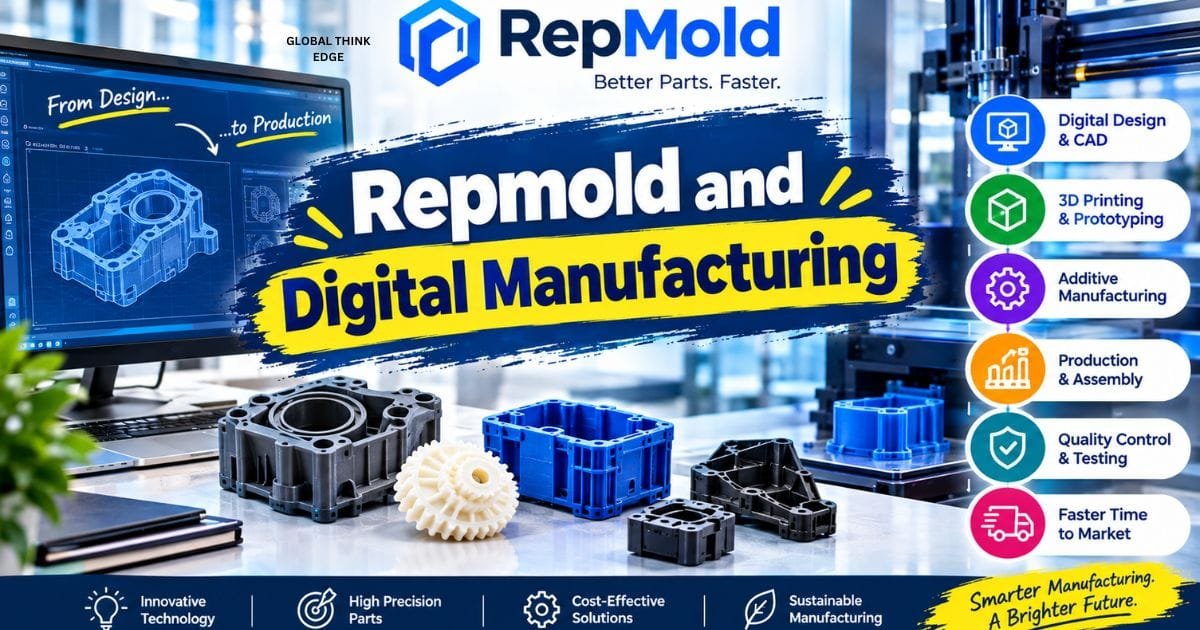
Modern molding workflows increasingly connect physical manufacturing with digital design.
CAD software, 3D scanning, computer-aided manufacturing, and additive manufacturing can all contribute to the preparation of molds and prototypes.
A typical digital workflow may look like this:
Reference part → 3D scan or CAD model → digital mold design → tooling → molding → inspection → production
This connection can make reproduction workflows more measurable and easier to modify.
What Should You Check Before Using a Repmold Process?
Before choosing a molding solution, evaluate the following:
- Part geometry: Complex shapes may require specialized tooling.
- Material: Select a material that matches the product’s application.
- Quantity: Production volume strongly affects tooling economics.
- Tolerance: Determine how accurately dimensions must be reproduced.
- Surface finish: Decide what appearance the finished component requires.
- Tooling cost: Include mold design, manufacturing, maintenance, and replacement.
- Production time: Consider both tooling lead time and cycle time.
- Quality control: Establish inspection requirements before production begins.
These factors help determine whether molding is practical for a particular application.
Final Verdict
Repmold is best understood as a reproduction-oriented molding concept connected with manufacturing, prototyping, and the creation of repeated physical parts. Its exact meaning can vary because the term is not a universally standardized technical definition.
For manufacturing applications, the central idea is straightforward: use a reference design and suitable molding process to reproduce consistent components efficiently. Digital tools such as CAD and 3D scanning can further improve this workflow by connecting physical parts with accurate digital models.
When evaluating any Repmold-related service or process, verify the specific company, technology, material, tooling method, tolerances, and intended production volume rather than assuming every reference to “Repmold” describes the same thing.
