Plangud: Brilliant Planning With Top Productivity Tools
What Is Plangud?
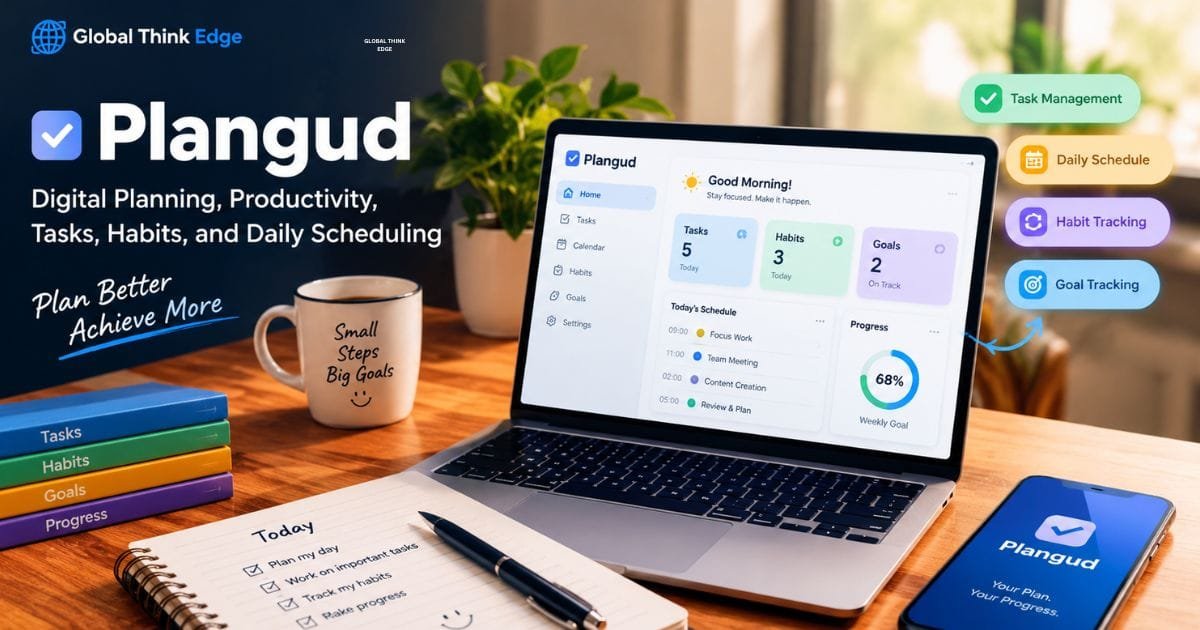
Plangud is described in the productivity context as a digital planning platform for organizing tasks, managing daily schedules, tracking habits, and working toward goals. Its main purpose is to bring everyday planning activities into a more structured digital workflow.
The name can be confusing because online references may use “Plangud” differently. Some descriptions connect it with productivity and planning, while others use the term in a broader context. For that reason, specific features should be checked against the exact Plangud product or website being discussed.
For users searching for a productivity solution, the most relevant Plangud functions are task organization, scheduling, habit tracking, goal management, and progress review.
How Does Plangud Work?
Plangud’s planning concept centers on connecting daily actions with larger objectives. Instead of keeping a task list, calendar, habit tracker, and goals completely separate, users can organize them around one workflow.
A practical planning process looks like this:
- Define the main goal.
- Break it into smaller tasks.
- Assign tasks to suitable days or time periods.
- Track recurring habits.
- Review progress and adjust the plan.
This approach answers three useful questions: What needs to be done, when should it happen, and why does it matter?
Task Management for Everyday Work
Task management is a core part of digital productivity. A structured system helps users turn broad responsibilities into clear actions, set priorities, and monitor completion.
For example, “launch a website” is not one practical task. It can become a sequence of smaller actions:
- Research competitors
- Register a domain
- Choose hosting
- Create the site structure
- Prepare content
- Test important pages
- Publish the website
Smaller tasks are easier to schedule and complete. They also make progress more visible.
How to Prioritize Tasks
A long task list does not automatically create productivity. Prioritization helps users decide what deserves attention first.
A simple system is:
- High priority: work that directly affects today’s main outcome
- Deadline-based: tasks that cannot be delayed
- Routine: recurring responsibilities
- Optional: work that can wait
This keeps planning focused instead of turning it into another source of clutter.
Daily Schedule Planner and Time Management
A daily schedule planner adds timing to a task list. Instead of simply recording what needs to be done, users decide when important work should happen.
This distinction matters because unfinished tasks can remain on a list indefinitely. Giving important work a realistic time block creates a stronger link between planning and execution.
A balanced day might include focused work, meetings, routine tasks, personal commitments, breaks, and a short review period. The goal is not to fill every minute but to create a schedule that can actually be followed.
Why Time Blocking Helps
Time blocking assigns a specific period to a task or activity. For example, “write an article” can become a 60-minute research block followed by a 90-minute writing block.
This can reduce context switching and make large projects easier to manage.
A realistic schedule should also leave room for unexpected work. A plan with no flexibility can quickly fail when one meeting or task takes longer than expected.
Habit Tracking for Consistent Progress
Habit tracking focuses on repeated behaviors rather than one-time tasks. It is useful for activities such as reading, exercise, learning, saving, or maintaining a regular work routine.
The connection between habit tracking and planning is important. A recurring activity can become part of a normal daily schedule instead of remaining an intention.
For example:
Goal: Improve professional skills
Habit: Study for 30 minutes on weekdays
Daily task: Complete one lesson
Weekly review: Check progress and adjust the plan
This structure turns a broad goal into manageable actions.
Why Small Habits Matter
Large goals often depend on repeated small actions. Tracking those actions helps users see whether their routine is supporting the result they want.
A missed day does not necessarily mean failure. The useful question is whether the overall pattern is becoming more consistent.
Goal Tracking and Progress Monitoring
Goal tracking gives daily planning a long-term purpose. A task explains what you need to do now, while a goal explains the result you are trying to achieve.
A useful goal structure includes:
- A specific objective
- A target date
- Smaller milestones
- Supporting tasks
- Regular progress reviews
For example, someone aiming to publish 20 articles in one month can divide the target into weekly milestones and daily writing tasks.
Progress tracking also reveals problems early. If a goal repeatedly falls behind, the user can change the workload, deadline, or strategy instead of continuing with an unrealistic plan.
Who Can Benefit From Plangud?
Plangud can be relevant to students, professionals, creators, and other users who need a more organized planning workflow.
Students can organize assignments, revision sessions, exams, and recurring study habits.
Professionals can manage projects, deadlines, meetings, recurring responsibilities, and career goals.
Content creators can divide research, writing, editing, publishing, and promotion into trackable tasks.
Small teams may benefit from shared planning when the specific platform supports collaboration.
The exact suitability depends on the features offered by the particular Plangud service. Users should not assume that every productivity feature associated with the term is available in every version.
Plangud vs Traditional Planning Methods
Different planning methods solve different problems. A digital platform may be more flexible than paper, but that does not automatically make it the best choice for every user.
| Method | Best For | Main Limitation |
| Paper planner | Simple personal planning | Limited automation |
| Calendar | Appointments and time-based events | Less suitable for complex task lists |
| Basic task list | Quick task capture | Weak connection to long-term goals |
| Habit tracker | Repeated behaviors | Usually narrower in scope |
| Digital planning platform | Connected tasks, schedules, habits, and goals | Depends on available features |
The potential advantage of Plangud is integration. When planning elements work together, users can move from a goal to a task, from a task to a schedule, and from repeated actions to measurable progress.
Productivity Tools: What Should You Check?
The best productivity tool is the one that fits the user’s actual workflow. Before relying on Plangud or any similar platform, check the features that matter most.
Look at:
- Task organization and priorities
- Calendar or scheduling support
- Habit tracking
- Goal and milestone tracking
- Progress reports
- Ease of use
- Collaboration features, if needed
- Data and privacy information
- Availability across the devices you use
A long feature list is less important than usability. If a system takes too much effort to maintain, users may stop using it consistently.
How to Use Plangud More Effectively
Start small. Add your most important projects, recurring habits, and upcoming commitments rather than trying to document every part of your life.
Next, choose a few priorities for the day. Give important tasks realistic time slots and leave some space for unexpected work.
At the end of the day, review incomplete tasks. Reschedule only what still matters instead of automatically carrying everything forward.
Once a week, review your goals, completed tasks, habits, and upcoming deadlines. Remove outdated items and adjust priorities.
This creates a simple cycle: plan, act, review, and improve.
Is Plangud Worth Using?
Plangud can be useful for users who want a structured way to connect tasks, schedules, habits, and goals. Its strongest potential value is the ability to organize everyday actions around a larger planning workflow.
However, users should verify the exact Plangud product before relying on specific claims about features, pricing, integrations, or availability. The term is not used consistently across all online references.
That verification step is especially important when choosing a productivity platform for important personal or professional work.
Final Verdict on Plangud
Plangud, in the productivity context, refers to a digital planning approach or platform associated with task management, daily scheduling, habit tracking, goal tracking, and organized productivity.
Its basic value is straightforward: connect what you need to do today with what you want to accomplish over time.
For users comparing productivity tools, the key question is not whether Plangud sounds useful. It is whether the specific service provides the features, usability, transparency, and reliability that match their workflow.
Because the term can have different meanings online, checking the exact source and current product information is the safest way to evaluate it.
