Top UX Agencies Specializing in AI in 2026: Elite Picks
Introduction: Why AI-Focused UX Agencies Matter More Than Ever
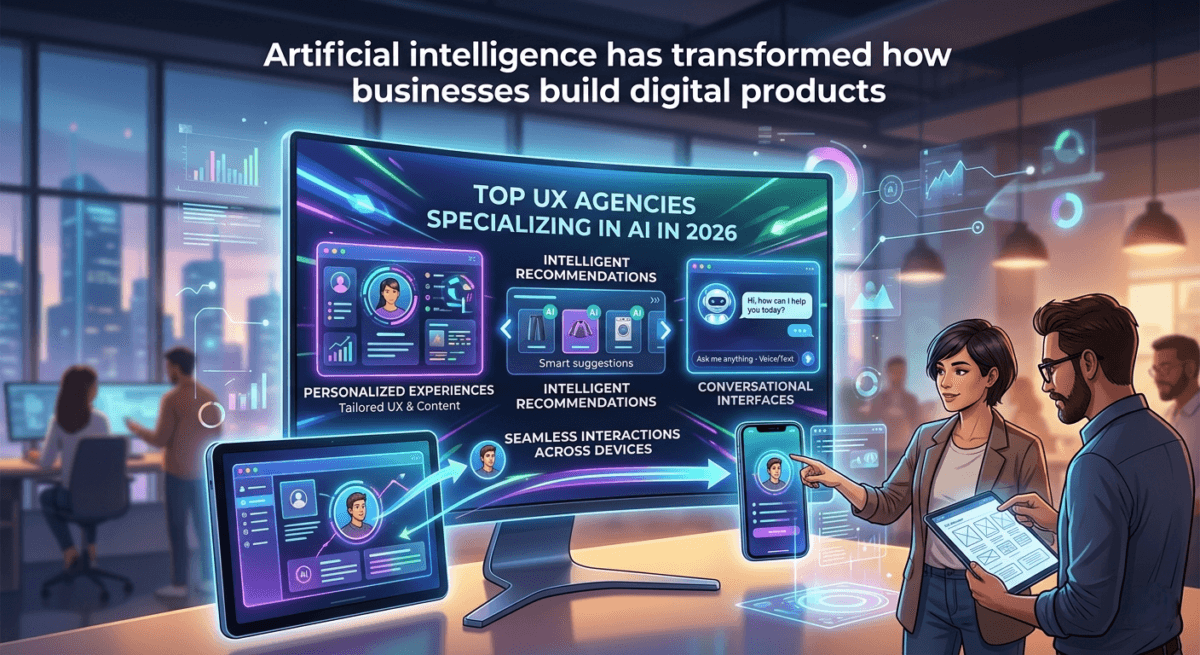
Artificial intelligence has transformed how businesses build digital products. Top UX agencies specializing in AI in 2026: users expect personalised experiences, intelligent recommendations, conversational interfaces, and seamless interactions across devices. As a result, companies increasingly rely on specialized UX agencies that understand both user-centred design and AI technologies.
Unlike traditional design firms, AI-focused UX agencies create experiences that adapt to user behaviour, improve through data, and support advanced technologies such as generative AI, machine learning, predictive analytics, and AI assistants. Choosing the right agency can significantly improve user satisfaction, engagement, and business performance.
What Sets Top UX Agencies Specializing in AI in 2026 Apart From Traditional Design Firms?
Traditional UX agencies primarily focus on usability, visual design, and customer journeys. AI UX agencies go further by designing experiences around intelligent systems.
They understand how users interact with AI-powered features and ensure those interactions remain intuitive, transparent, and trustworthy. Their teams often collaborate with data scientists, AI engineers, and product strategists to create products that balance technology with human needs.
Essential Skills of Leading Top UX Agencies Specializing in AI in 2026
Human-Centered AI Design
Top agencies prioritise user needs while integrating advanced AI capabilities. Their designs help users understand how AI-generated outputs are created and how they can be controlled.
AI Product Strategy
Successful agencies help businesses identify where AI creates real value rather than adding unnecessary complexity.
Data-Driven User Research
They analyse behavioural data, conduct usability testing, and continuously refine experiences based on real-world interactions.
Key Factors Used to Evaluate Top UX Agencies Specializing in AI in 2026
Industry Experience
Agencies with extensive experience across healthcare, finance, SaaS, education, and e-commerce often deliver stronger results because they understand industry-specific challenges.
Technical Collaboration
The best firms work effectively with machine learning teams and software engineers, ensuring AI functionality aligns with user expectations.
Innovation and Thought Leadership
Leading agencies regularly publish research, explore emerging technologies, and contribute to top UX agencies specializing in AI in 2026 design best practices.
Proven Client Results
Case studies demonstrating increased conversions, improved retention, or higher engagement provide valuable evidence of expertise.
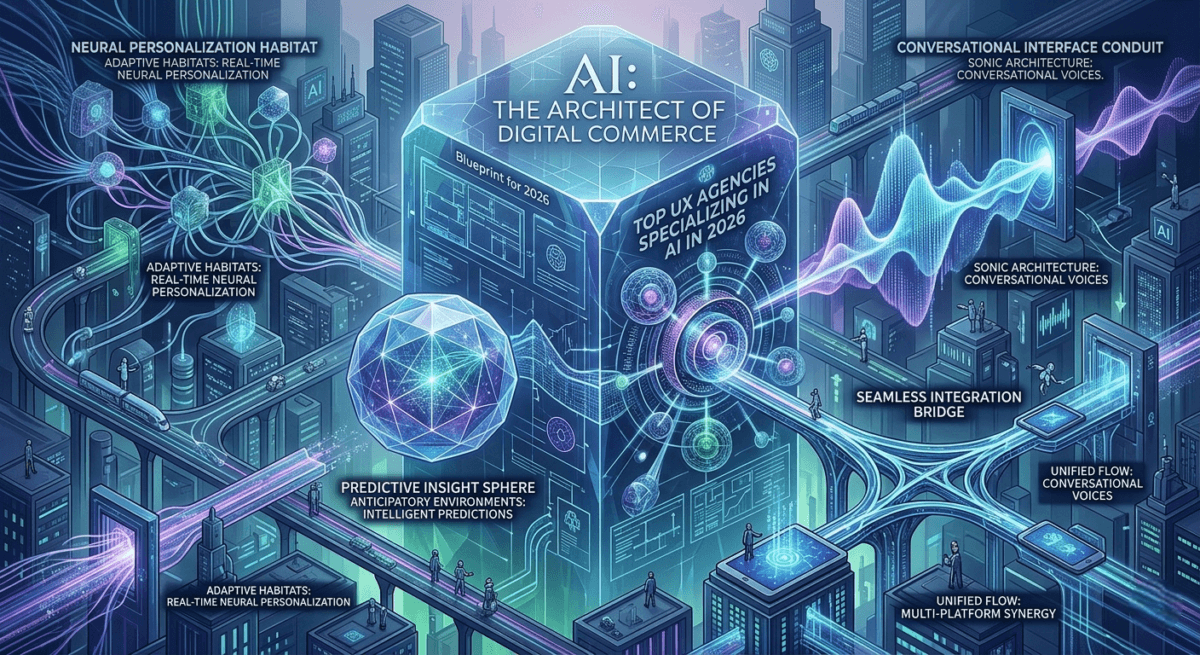
Top UX Agencies Specializing in AI in 2026
UX Studio
Known for combining user research with AI product design, UX Studio helps organisations create intelligent digital experiences that remain user-friendly and accessible.
IDEO
IDEO continues to lead innovation by applying design thinking principles to AI-powered products and services.
Frog
Frog specialises in digital transformation projects that integrate AI, customer experience strategy, and advanced product design.
Designit
Designit focuses on creating scalable AI experiences that improve customer engagement while supporting long-term business goals.
Momentum Design Lab
This agency works closely with startups and enterprises developing AI-powered software, analytics platforms, and intelligent applications.
Clay
Clay combines visual excellence with modern AI product design, making it a popular choice for technology companies and innovative startups.
Beyond
Beyond delivers enterprise-level UX solutions that integrate machine learning, automation, and personalised user experiences.
AKQA
AKQA leverages emerging technologies to build digital products that balance creativity, functionality, and AI-driven innovation.
Work & Co
Known for product-focused design, Work & Co helps companies launch AI-enabled experiences that prioritise usability and performance.
Fantasy
Fantasy specialises in futuristic product experiences and often works with organisations developing next-generation AI technologies.
Emerging and Shaping Top UX Agencies Specializing in AI in 2026
Agentic AI Interfaces
Modern top UX agencies specializing in AI in 2026 systems increasingly perform tasks independently. UX designers must create interfaces that help users monitor, guide, and control autonomous AI actions.
Multimodal Experiences
Users now interact through text, voice, images, gestures, and video. Agencies that understand multimodal design create more natural and engaging experiences.
Explainable AI Design
Transparency has become a critical requirement. Users want to know why an AI system made a recommendation or decision. Leading agencies design interfaces that clearly communicate AI reasoning.
Adaptive User Interfaces
AI-powered products can now personalise layouts, content, and workflows based on user behaviour, creating more efficient experiences.
Ethical AI Experiences
Responsible design is becoming a competitive advantage. Agencies increasingly focus on privacy, fairness, accessibility, and bias reduction.
How Much Does an AI UX Agency Cost in 2026?
Pricing varies depending on project complexity, agency reputation, and business requirements.
Small Projects
Basic AI UX consulting and design engagements typically range from $10,000 to $50,000.
Mid-Sized Product Design
AI product design projects often fall between $50,000 and $200,000.
Enterprise Programs
Large-scale AI transformation initiatives can exceed $250,000 due to extensive research, testing, and implementation requirements.
Organisations should evaluate agencies based on business outcomes rather than hourly rates alone.
Top UX agencies specializing in AI in 2026 vs. an In-House Design Team
Benefits of Hiring an Agency
Access to specialized AI expertise
Faster project execution
Broader industry knowledge
Scalable design resources
Benefits of Internal Teams
Deep organizational knowledge
Continuous collaboration
Long-term product ownership
Many successful companies combine both approaches by using agencies for strategic guidance while maintaining internal design teams.
Common Mistakes When Selecting an AI UX Agency
Choosing Based Solely on Visual Design
Beautiful interfaces do not guarantee effective AI experiences.
Ignoring AI Expertise
Agencies without AI experience may struggle with complex machine learning workflows and intelligent systems.
Overlooking User Research
Strong AI products require continuous testing and validation with real users.
Focusing Only on Cost
The cheapest option often results in higher long-term expenses due to poor usability and redesign requirements.
Conclusion
The best UX agencies specialising in AI in 2026 go beyond traditional design – combining human-centred design, technical expertise, ethical AI practices, and data-driven decision-making to build products users genuinely trust.
As AI shapes nearly every digital experience, working with an agency skilled in explainable AI, adaptive interfaces, multimodal interactions, and autonomous systems gives businesses a clear competitive edge in 2026 and beyond.
Frequently Asked Questions
What are the top UX agencies specializing in AI in 2026?
An AI UX agency specializes in designing user experiences for products that incorporate artificial intelligence, machine learning, automation, or generative AI technologies.
Why is AI UX different from traditional UX?
AI UX focuses on designing interactions with intelligent systems that learn, adapt, and generate outputs, creating unique usability and trust challenges.
How do AI UX agencies test their designs?
They use usability testing, behavioural analytics, prototype validation, AI performance evaluation, and continuous user feedback.
What industries benefit most from AI UX design?
Healthcare, finance, e-commerce, education, SaaS, logistics, and customer service industries commonly benefit from AI-focused UX strategies.
What trend will define AI UX in the coming years?
Agentic AI and explainable AI are expected to become dominant trends as users demand greater transparency and control over intelligent systems.
