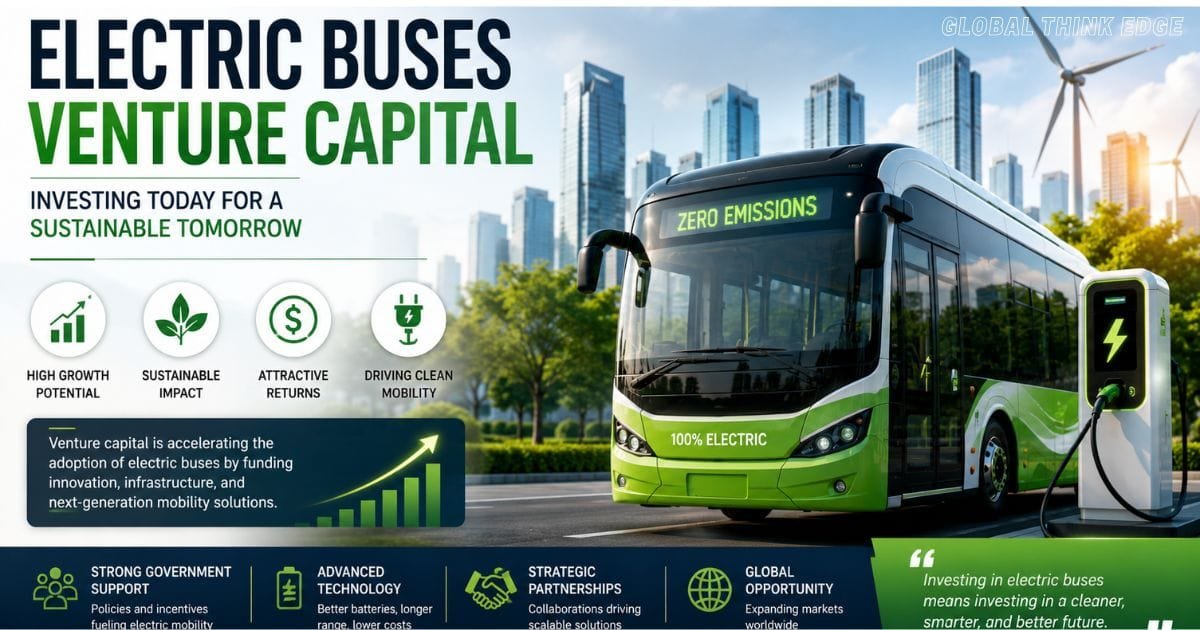
Electric Buses Venture Capital: Proven Market Growth 2026
Understanding the Role of Venture Capital in Electric Bus Growth
Electric buses venture capital is transforming public transportation worldwide. As governments, transit agencies, and private operators seek cleaner alternatives to diesel-powered fleets, venture capital has emerged as a major force behind this transition.
Electric bus venture capital funding enables startups and established mobility companies to develop advanced battery technology, expand fleets, improve charging infrastructure, and enter new markets. Investors see significant opportunities in the growing demand for sustainable transportation solutions and the global push toward carbon reduction.
The increasing flow of capital into the sector reflects confidence in the long-term potential of electric mobility and smart transportation systems.
Why Investors Are Focusing on Electric Bus Companies
Several factors make electric bus businesses attractive to venture capital firms and institutional investors.
Rising government support for zero-emission transportation
Strong demand for sustainable public transit
Advances in battery efficiency and charging technology
Growing urbanization worldwide
Long-term revenue opportunities through fleet leasing and service contracts
Many investors view electric buses as a critical component of the clean energy transition, creating opportunities for both environmental impact and financial returns.
Market Trends Shaping Electric Bus Investments
The electric bus market continues to expand across Asia, Europe, Africa, North America, and Latin America.
Several trends are influencing investment decisions:
Expansion of Zero-Emission Transit Programs
Cities are adopting ambitious climate goals that require public transportation systems to reduce emissions. Electric buses help transit authorities meet these targets while improving air quality.
Growth of Fleet-as-a-Service Models
Instead of purchasing vehicles outright, operators increasingly rely on fleet-as-a-service solutions. These models reduce upfront costs and attract venture capital because they generate recurring revenue streams.
Improvements in Battery Technology
Battery innovation has significantly increased vehicle range while reducing charging times. As performance improves, electric buses become more practical for a wider range of routes and operating conditions.
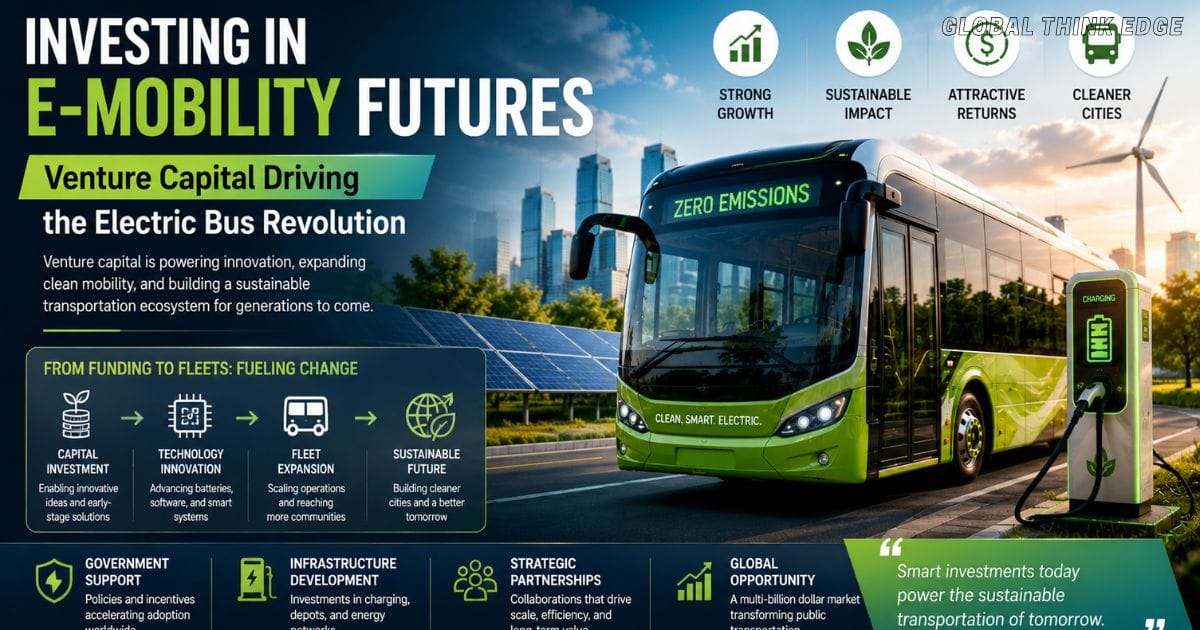
How Venture Capital Supports Electric Bus Startups
Electric buses venture capital startups often require substantial funding before reaching profitability. Venture capital provides the resources necessary to scale operations and compete effectively.
Investment capital typically supports:
Vehicle Development and Manufacturing
Companies use funding to design and manufacture new electric bus models that meet evolving market demands.
Charging Infrastructure Expansion
A successful electric bus ecosystem depends on reliable charging networks. Venture-backed companies frequently invest in depot charging systems and fast-charging solutions.
Market Expansion
Funding allows businesses to enter new regions, establish partnerships, and secure contracts with transportation agencies.
Research and Innovation
Continuous innovation remains essential in a competitive market. Venture capital helps companies improve battery systems, software platforms, and fleet management technologies.
Key Investment Models in the Electric buses venture capital Sector
The electric bus industry attracts funding through multiple investment structures.
Venture Capital Funding
Early-stage investors support innovative startups with high growth potential.
Private Equity Investments
Private equity firms often invest in mature companies seeking large-scale expansion.
Infrastructure Financing
Some investors focus on charging stations, energy management systems, and supporting infrastructure rather than vehicles themselves.
Strategic Corporate Investments
Automotive manufacturers, energy providers, and technology companies frequently invest in electric mobility businesses to strengthen their market positions.
Challenges Investors Consider Before Funding Electric Bus Companies
Despite strong growth potential, investors carefully evaluate several risks.
High Capital Requirements
Manufacturing electric buses and building charging infrastructure require substantial financial resources.
Supply Chain Constraints
Battery materials and electronic components can face shortages, affecting production schedules.
Regulatory Uncertainty
Government incentives and transportation policies vary across regions, influencing market conditions.
Technology Evolution
Rapid innovation can make existing technologies less competitive if companies fail to adapt.
Successful investors balance these risks against the long-term growth opportunities within the industry.
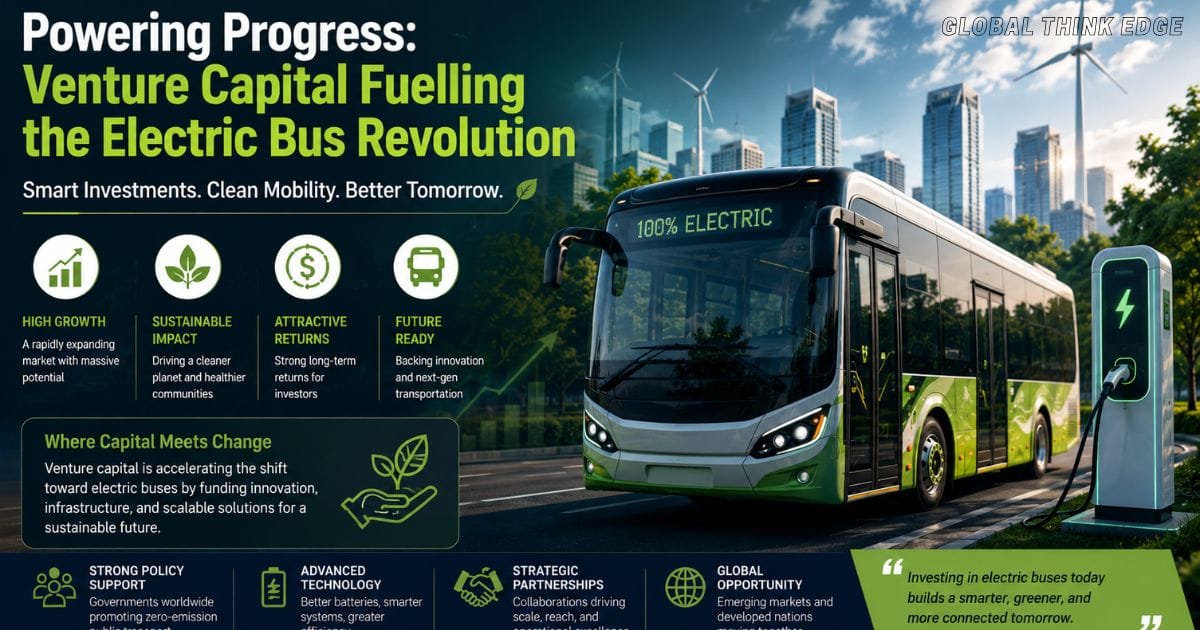
Future Electric Bus Deployment Plans and Expansion Targets
Electric buses venture capital adoption is expected to accelerate significantly during the coming decade.
Many transportation agencies have announced plans to replace diesel fleets with zero-emission alternatives. Investors continue funding projects that support:
Large-scale fleet deployments
Smart charging infrastructure
Battery recycling initiatives
Renewable energy integration
Cross-border expansion into emerging markets
As funding increases, more operators can transition to electric transportation without bearing the full financial burden of fleet ownership.
The Global Impact of Electric buses venture capital
Electric buses venture capital is helping create cleaner cities and more sustainable transportation networks.
Investment-driven expansion delivers several benefits:
Reduced greenhouse gas emissions
Lower operating costs for transit operators
Improved urban air quality
Enhanced passenger experience
Increased innovation throughout the transportation sector
These advantages contribute to stronger public support for electric mobility initiatives worldwide.
Conclusion
Electric buses venture capital plays a crucial role in advancing sustainable transportation. Through funding, innovation, and strategic partnerships, investors are accelerating the adoption of zero-emission transit solutions across global markets.
As technology improves and demand continues to grow, venture capital will remain a key driver of fleet expansion, infrastructure development, and industry transformation. Companies that successfully combine innovation, scalability, and operational efficiency are likely to attract significant investment opportunities in the years ahead.
FAQs
What is electric bus venture capital?
Electric buses venture capital refers to investment funding provided to companies that develop, manufacture, operate, or support electric bus transportation solutions.
Why are investors interested in electric bus companies?
Investors are attracted by growing demand for clean transportation, government support, technological advancements, and long-term market growth potential.
How does venture capital help Electric buses venture capital startups?
Venture capital provides funding for product development, manufacturing, infrastructure expansion, market entry, and research initiatives.
What are the biggest challenges in Electric buses venture capital investing?
Major challenges include high capital costs, supply chain issues, regulatory changes, and rapidly evolving technology.
What is the future outlook for electric bus investments?
The outlook remains highly positive due to increasing adoption of zero-emission transportation, expanding infrastructure investments, and stronger environmental policies worldwide.
