How to Clean Cork Flooring: Simple Secrets for Lasting Care
Why Proper Cork Floor Cleaning Matters
Cork flooring is a popular choice because it is comfortable underfoot, naturally insulating, and environmentally friendly. Unlike many hard flooring materials, cork has a soft cellular structure that provides warmth and reduces noise. However, this same structure makes it more sensitive to moisture, harsh chemicals, and abrasive cleaning tools.
Learning how to clean cork flooring the right way helps preserve its protective finish, prevents premature wear, and keeps the floor looking beautiful for years. Regular maintenance also reduces scratches, protects against stains, and minimizes the need for costly repairs or refinishing.
Whether your floor has a polyurethane finish or another protective coating, following the correct cleaning routine will extend its lifespan while maintaining its natural appearance.
Understanding Your Cork Flooring Before Cleaning
Before you begin cleaning, it’s important to know what type of cork flooring you have. The cleaning method depends largely on whether the floor is sealed or unsealed.
Sealed Cork Flooring
Most modern cork floors come with a protective finish that resists moisture and everyday dirt. These floors are easier to maintain and can safely be cleaned with a slightly damp microfibre mop and a pH-neutral floor cleaner.
Unsealed Cork Flooring
Unsealed cork absorbs moisture much more easily. Excess water can cause swelling, discolouration, or permanent damage. These floors require extra care and should only be cleaned with minimal moisture.
Knowing your floor’s finish helps you choose the safest cleaning method and avoid accidental damage.
Supplies You Need for Safe Cork Floor Cleaning
Using the right tools is just as important as using the right technique. Fortunately, you don’t need expensive equipment.
Keep these supplies ready before you start:
Soft-bristle broom
Vacuum with a hard-floor setting
Microfiber dust mop
Microfiber wet mop
Bucket of clean water
pH-neutral cork floor cleaner
Soft microfiber towels
Spray bottle (optional)
Avoid Using
Never clean cork flooring with:
Steel wool
Abrasive scrub brushes
Bleach
Ammonia-based cleaners
Strong alkaline detergents
Oil soaps that leave residue
Excessive water
These products can wear away the protective finish and permanently damage the cork surface.
Step-by-Step Guide to Cleaning Cork Flooring
Following a consistent process makes cleaning safer and more effective.
Remove Dust and Loose Dirt
Always begin by removing loose debris.
Use a soft broom or a vacuum designed for hard floors. Dirt, sand, and tiny stones can scratch the finish if left on the surface while mopping.
Pay special attention to entryways, hallways, and areas beneath furniture where dirt often collects.
Prepare a Gentle Cleaning Solution
Fill a bucket with warm water and add the recommended amount of a pH-neutral floor cleaner.
Avoid making the solution stronger than directed. ‘More clean’ does not mean a cleaner floor. Instead, it may leave behind a sticky film that attracts additional dust.
If you’re unsure about a new cleaner, test it first on a small hidden area.
Mop with Minimal Moisture
Dip the microfibre mop into the cleaning solution and wring it thoroughly.
The mop should feel slightly damp, never dripping wet.
Work in small sections across the room. This allows you to control moisture and prevents water from sitting on the floor for too long.
Avoid pouring water directly onto the cork surface.
Clean Tough Spots Carefully
Sticky residue or dried spills sometimes need extra attention.
Spray a small amount of cork-safe cleaner directly onto the affected area.
Allow it to sit for a minute before gently wiping it with a soft microfibre cloth.
Never scrape the floor using metal tools or abrasive pads.
Patience is much safer than aggressive scrubbing.
Dry the Surface
Although only a small amount of moisture should remain after mopping, drying the floor is still a good habit.
Use a clean microfibre towel to remove any remaining dampness.
Proper drying helps protect the finish and reduces the chance of moisture penetrating tiny gaps between planks or tiles.
How Often Should You Clean Cork Flooring?
Consistency is more important than deep cleaning.
Here’s a practical maintenance schedule.
| Cleaning Task | Recommended Frequency | Purpose |
| Dust or vacuum | Daily or every other day | Prevent scratches from dirt |
| Damp mop | Once each week | Remove light grime |
| Spot clean spills | Immediately | Prevent stains and swelling |
| Deep inspection | Every month | Identify wear before it worsens |
| Reapply protective finish (if recommended) | Every few years | Extend floor life |
Following this routine keeps dirt from building up while reducing unnecessary wear.

Homemade Cleaning Solutions: Are They Safe?
Many homeowners prefer natural cleaning products. While some homemade solutions can be used carefully, others may damage cork flooring.
Mild Dish Soap Solution
A few drops of gentle dish soap mixed with warm water can work well for occasional cleaning.
Always wring the mop thoroughly before use.
Diluted White Vinegar
Vinegar is often recommended for cleaning many surfaces, but cork flooring requires caution.
A highly diluted vinegar solution may be safe for some sealed floors when used occasionally. However, frequent use can gradually weaken certain protective finishes.
Always follow your flooring manufacturer’s recommendations before using vinegar.
What to Avoid in DIY Cleaners
Avoid homemade mixtures containing:
Lemon juice
Baking soda scrubs
Hydrogen peroxide
Essential oils that leave residue
Concentrated vinegar
Natural ingredients are not automatically safe for every flooring material.
Choosing the Right Commercial Cleaner
Not every floor cleaner is suitable for cork.
When shopping, look for products that are
pH-balanced
Specifically designed for cork or finished wood floors
Residue-free
Non-abrasive
Low in volatile chemicals
Avoid cleaners that promise a glossy finish through wax buildup. Over time, wax can create uneven layers that dull the natural appearance of cork rather than improve it.
Cleaning Common Household Spills
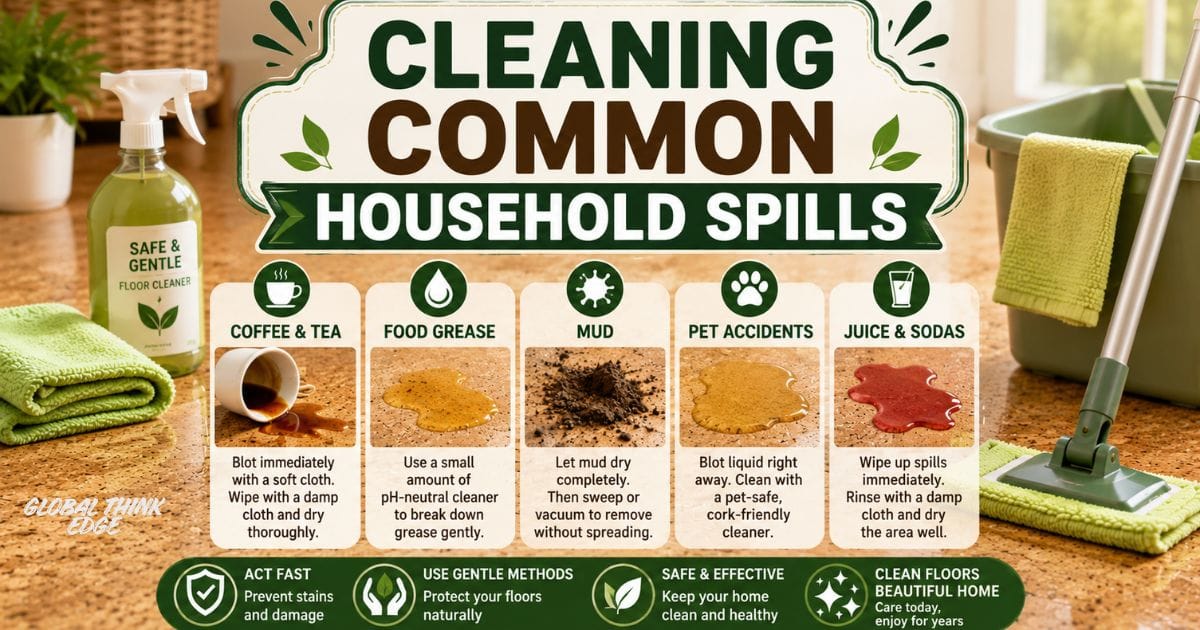
Different spills require slightly different cleaning methods.
Coffee and Tea
Blot the spill immediately with a soft cloth.
Wipe with a damp microfibre cloth and dry the area thoroughly.
Food Grease
Use a small amount of pH-neutral cleaner to break down grease without damaging the finish.
Mud
Allow wet mud to dry before sweeping or vacuuming. Cleaning wet mud often spreads dirt over a larger area.
Pet Accidents
Remove liquid immediately and disinfect using a cork-safe cleaner approved for sealed flooring.
Never allow pet urine to remain on cork flooring, as prolonged exposure can stain the surface and affect the finish.
Cleaning Methods You Should Avoid
Knowing what not to do is just as important as learning the correct cleaning process. Even a single mistake can shorten the life of cork flooring or damage its protective finish.
Can You Steam Clean Cork Flooring?
Steam mops are not recommended for most cork floors.
Although steam cleaners sanitise surfaces without chemicals, they produce high heat and moisture. Steam can seep into seams, causing the cork to expand, warp, or weaken the adhesive beneath the flooring.
If the manufacturer specifically approves steam cleaning for your flooring, follow their instructions carefully. Otherwise, stick to a lightly damp microfibre mop.
Should You Use a Wet Mop?
A soaking wet mop is one of the biggest causes of cork floor damage.
Excess water can penetrate small gaps, leading to swelling, staining, or mould growth. Always wring the mop until it is only slightly damp before cleaning.
Are Robot Vacuums Safe?
Most robot vacuums are safe for cork flooring if they use soft wheels and brushes designed for hard floors.
Regular vacuuming with a robot vacuum can reduce dust buildup, but inspect the wheels occasionally to ensure they are free from trapped grit that could scratch the floor.
Sealed vs. Unsealed Cork Flooring
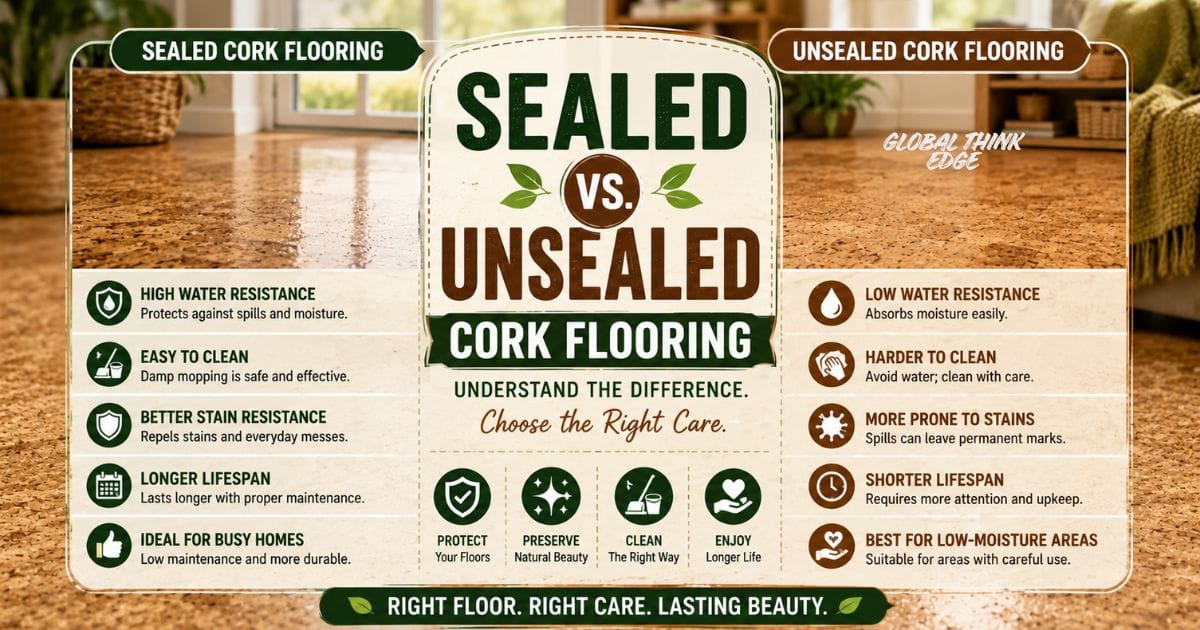
The protective finish makes a significant difference in how you care for cork flooring.
| Feature | Sealed Cork Flooring | Unsealed Cork Flooring |
| Water Resistance | High | Low |
| Damp-mopping | Safe with minimal moisture | Not recommended |
| Stain Resistance | Better | Limited |
| Daily Maintenance | Easier | Requires extra care |
| Lifespan | Longer with proper care | Depends heavily on maintenance |
If you’re unsure whether your floor is sealed, consult the installation paperwork or contact the manufacturer before using any cleaning products.
Simple Ways to Protect Cork Flooring
Cleaning removes dirt, but protection prevents damage before it happens.
Place Mats at Entrances
Entry mats catch sand, gravel, and dust before they reach your floor. This simple habit greatly reduces surface scratches.
Add Furniture Pads
Heavy furniture can leave dents or scratches on cork.
Attach felt pads beneath chair legs, tables, and sofas. Replace worn pads regularly to maintain protection.
Clean Spills Immediately
Cork naturally resists moisture to some extent, but standing liquids can still seep into joints and damage the finish.
Whether it’s water, juice, or pet accidents, wipe spills as soon as they happen.
Maintain Indoor Humidity
Extreme humidity changes can cause cork flooring to expand or contract.
Keeping indoor humidity between 40% and 60% helps maintain its stability throughout the year.
Reduce Direct Sunlight
Prolonged UV exposure may fade cork over time.
Use curtains, blinds, or UV-filtering window films in rooms that receive strong sunlight during the day.
Common Mistakes That Damage Cork Flooring
Many flooring problems are caused by everyday habits rather than poor-quality materials.
Avoid these common mistakes:
Using bleach or ammonia-based cleaners
Allowing water to pool on the surface
Scrubbing with abrasive brushes
Dragging heavy furniture across the floor
Ignoring sand and grit near entrances
Applying wax unless recommended by the manufacturer
Using steam mops without approval
Skipping regular maintenance
Preventing these mistakes is much easier than repairing damaged flooring.
Signs Your Cork Floor Needs More Than Cleaning
Sometimes cleaning alone isn’t enough.
Watch for these warning signs:
Deep Scratches
Surface marks can often be repaired, but deep scratches that expose the cork may require refinishing.
Worn Protective Finish
If water no longer beads on the surface and instead absorbs quickly, the protective coating may be wearing away.
Swelling or Warping
Raised edges or uneven planks usually indicate moisture damage.
Address the source of the moisture before attempting repairs.
Persistent Stains
If stains remain after proper cleaning, the finish may have been damaged or the stain may have penetrated the cork.
Professional refinishing may be the best solution.
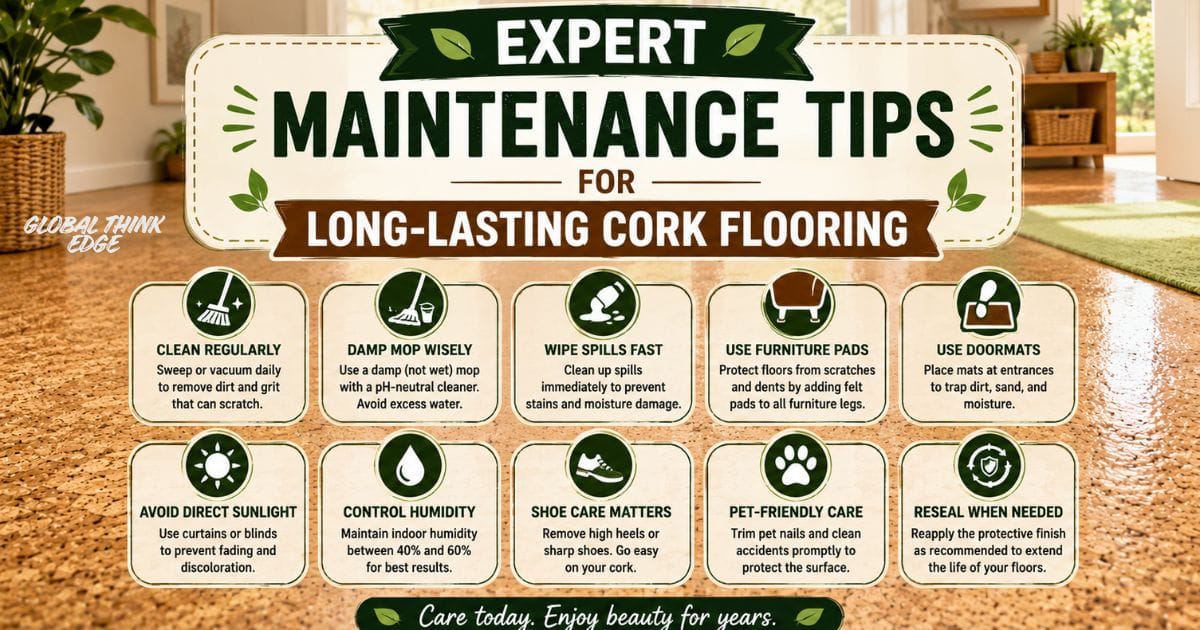
Expert Maintenance Tips for Long-Lasting Cork Flooring
A few preventive habits can add years to the life of your flooring.
Vacuum regularly using the hard-floor setting.
Rotate rugs and furniture occasionally to prevent uneven fading.
Trim your pet’s nails to reduce scratches.
Avoid wearing shoes with sharp heels indoors.
Use breathable rugs instead of rubber-backed mats that trap moisture.
Follow the manufacturer’s recommendations for resealing when necessary.
These small efforts help maintain both the appearance and durability of cork flooring.
Final Thoughts
Learning how to clean cork flooring is about more than keeping it looking tidy. The right cleaning routine protects the floor’s natural beauty, preserves its finish, and helps you avoid costly repairs in the future.
Use soft cleaning tools, apply only minimal moisture, choose pH-neutral cleaning products, and deal with spills as soon as they occur. Regular maintenance combined with simple preventive measures such as using furniture pads, controlling indoor humidity, and keeping dirt off the surface will keep your cork flooring looking its best for decades.
By following these practical care techniques, you can enjoy a clean, comfortable, and durable cork floor while protecting your investment for years to come.
Frequently Asked Questions
Can cork flooring get wet?
Small spills are generally safe if cleaned immediately. However, prolonged exposure to water can cause swelling, staining, and damage, especially on unsealed cork.
What is the best cleaner for cork flooring?
A pH-neutral cleaner specifically designed for cork or finished wood flooring is the safest option. Avoid harsh chemicals and abrasive products.
Is vinegar safe for cork flooring?
A highly diluted vinegar solution may be suitable for some sealed cork floors, but frequent use can affect certain finishes. Always check the flooring manufacturer’s recommendations first.
How often should cork flooring be mopped?
For most homes, damp mopping once a week is sufficient. High-traffic areas may need more frequent cleaning.
Can I use bleach on cork flooring?
No. Bleach can damage the protective finish and discolour the cork.
How long does cork flooring last?
With proper care and regular maintenance, quality cork flooring can last 20 to 40 years or even longer.
Does cork flooring need to be resealed?
Yes. Depending on foot traffic and the type of finish, resealing every few years helps maintain moisture resistance and extends the floor’s lifespan.
