
How to Clean Baseboard Heaters: Smart Tips for Better Heat
Why Cleaning Baseboard Heaters Matters More Than You Think
Baseboard heaters quietly keep your home warm, but they also collect dust, pet hair, lint, and other debris throughout the year. When dirt builds up inside the unit, it can block airflow, reduce heating efficiency, and create unpleasant burning odours when the heater is turned on. In some cases, excessive dust can even affect indoor air quality and increase energy costs.
Learning how to clean baseboard heaters is a simple home maintenance task that helps your heating system work more efficiently, improves comfort, and extends the life of the unit. Whether you have electric or hot water baseboard heaters, regular cleaning keeps them performing as intended while reducing unnecessary wear.
Health Benefits of Regular Cleaning
Dust inside baseboard heaters doesn’t simply stay there. When the heater operates, fine particles can circulate through the room.
Regular cleaning can help:
Reduce airborne dust.
Improve indoor air quality.
Minimise pet hair circulation.
Lower allergen build-up.
Reduce unpleasant odours during the heating season.
Although cleaning won’t eliminate allergies, it contributes to a cleaner and healthier indoor environment.
Know Which Type of Baseboard Heater You Have
Before starting, identify your heating system because the cleaning method varies slightly depending on the design.
Electric Baseboard Heaters
Electric baseboard heaters use internal heating elements and metal fins to warm the surrounding air. Dust often settles between these fins, making regular cleaning essential for proper airflow.
Hot Water Baseboard Heaters
Also called hydronic baseboard heaters, these systems circulate hot water through copper pipes surrounded by aluminum fins. Although they don’t contain electrical heating elements, dust can still collect inside the enclosure and reduce heat circulation.
Why Identification Is Important
Using the correct cleaning method helps prevent accidental damage to delicate fins, electrical components, or piping. A few extra minutes of preparation can save costly repairs later.

Gather Your Cleaning Supplies
You don’t need expensive tools to clean baseboard heaters effectively. Most homeowners already have everything required.
You’ll need:
Vacuum cleaner with a brush attachment
Soft microfiber cloths
Long-handled dusting brush
Small paintbrush or radiator cleaning brush
Mild dish soap
Warm water
Screwdriver (if your heater cover requires removal)
Protective gloves
Flashlight for inspecting hard-to-see areas
Avoid abrasive scrubbers, steel wool, or harsh chemical cleaners because they can scratch painted surfaces or damage delicate metal fins.
Prepare the Heater Safely Before Cleaning
Safety should always come first.
Turn Off the Heating System
For electric units, switch off the heater and, if possible, turn off power at the circuit breaker.
For hot water systems, lower the thermostat and allow the heating system to stop circulating hot water before beginning.
Let the Heater Cool Completely
Never clean a warm heater. Wait until every surface feels cool to the touch before removing covers or reaching inside.
Clear the Area Around the Heater
Move furniture, curtains, toys, and other objects away from the heater. This provides better access and improves airflow once cleaning is complete.
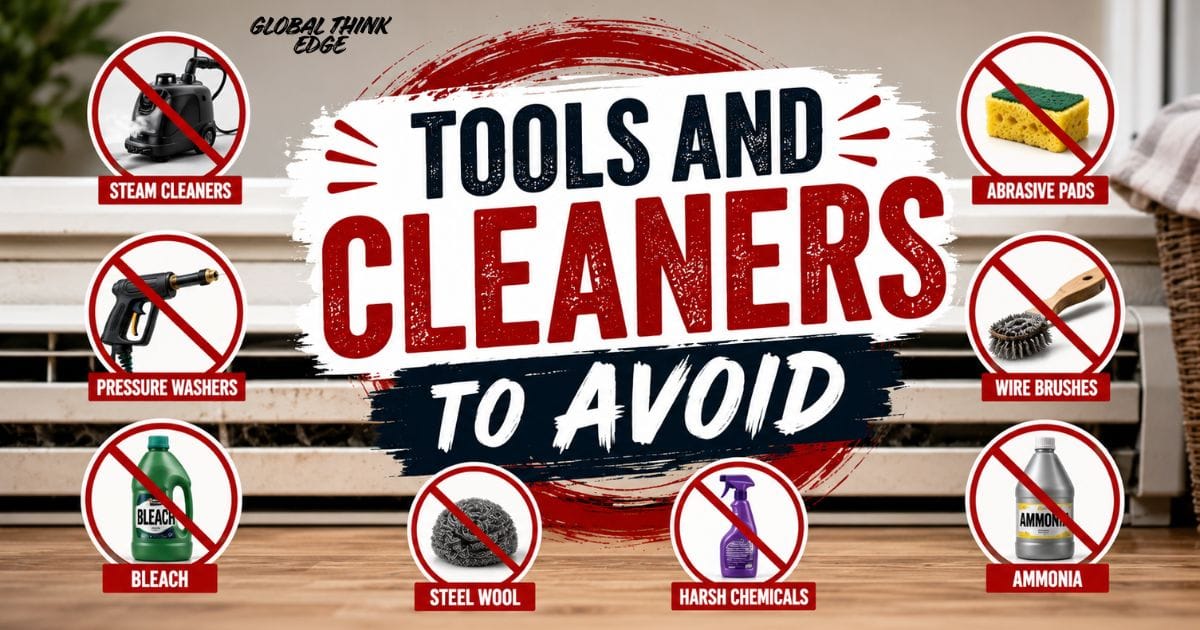
Tools and Cleaners to Avoid
Using the wrong products can shorten the lifespan of your heater or damage sensitive components.
Avoid:
Steam cleaners
Pressure washers
Bleach-based cleaners
Ammonia
Wire brushes
Steel wool
Abrasive scouring pads
Excessive water on electric heaters
Instead, use a soft brush, microfibre cloth, mild dish soap, and a vacuum with a brush attachment.
How to Clean Electric Baseboard Heaters
Electric units require gentle handling because the heating elements and aluminum fins can bend easily.
Remove the front cover carefully.
Many covers lift upward before pulling outward, while others use small retaining clips or screws. Remove the cover slowly to avoid bending the metal.
Set it aside in a safe place.
Vacuum Away Loose Dust and Debris
Using a vacuum with a soft brush attachment, remove loose dust, pet hair, cobwebs, and lint from inside the heater.
Work from one end to the other instead of moving randomly. This helps prevent pushing dirt deeper into the unit.
Pay extra attention to corners where debris often collects.
How to Clean Dust from Baseboard Heaters
Some dust settles deep between the aluminum fins where a vacuum cannot easily reach.
Use a soft paintbrush or radiator brush to loosen trapped dust while vacuuming nearby.
If necessary, use compressed air in short bursts to remove stubborn buildup. Blow dust outward rather than deeper into the heater.
Never spray water directly inside an electric baseboard heater.
Clean Baseboard Heater Fins Without Bending Them
The thin metal fins are designed to transfer heat efficiently.
If they become bent, airflow decreases and heating performance suffers.
Brush gently in the direction of the fins instead of brushing across them. If a few fins are slightly bent, straighten them carefully with your fingers or a fin comb designed for delicate metal fins.
Avoid applying excessive pressure.
Wipe the exterior and reinstall the cover.
Mix a few drops of mild dish soap with warm water.
Dampen a microfibre cloth and wipe the heater housing, cover, and nearby trim.
Dry all surfaces completely before replacing the cover.
Once everything is secure, restore power and test the heater to ensure it operates normally.

How to Clean Hot Water Baseboard Heaters
Hydronic baseboard heaters collect just as much dust as electric models, even though they use hot water instead of heating elements.
Regular cleaning improves airflow and allows heat to circulate more efficiently throughout the room.
Open the heater cover.
Most hot water baseboard covers lift off easily after releasing small clips.
If your model uses screws, remove them carefully and place them somewhere safe for reassembly.
Inspect the inside with a flashlight before cleaning.
Remove Dust from the Interior
Vacuum the enclosure thoroughly using a brush attachment.
Use a narrow radiator brush to clean around the copper pipe and between the aluminum fins.
Take your time around tight spaces where dust tends to accumulate.
Avoid striking or bending the copper tubing.
Clean the pipes, fins, and outer cover.
Use a dry microfibre cloth to wipe exposed pipes and surrounding metal surfaces.
If the exterior cover has stains or fingerprints, clean it using warm water mixed with mild soap.
Dry every component completely before reinstalling the cover.
Moisture left inside the enclosure may encourage corrosion over time.
Check Airflow Before Finishing
Before replacing furniture, make sure nothing blocks the heater.
Leave several inches of open space around the unit so warm air can circulate freely throughout the room.
Proper airflow not only improves heating performance but also helps reduce future dust accumulation.

Expert Tips for Better Results
Expert Tips
Clean baseboard heaters before the heating season begins to prevent the burnt-dust smell that often occurs when the system is switched on after months of inactivity.
Hold the vacuum nozzle close while brushing dust from the fins to keep particles from spreading around the room.
If anyone in your household has allergies or asthma, wear a dust mask during cleaning and vacuum the surrounding floor afterwards.
Avoid using excessive force when cleaning aluminum fins. Bent fins restrict airflow and reduce heating efficiency.
Keep Your Baseboard Heaters Working Efficiently Year-Round
Cleaning is only one part of proper heater care. A few simple maintenance habits can improve heating performance, lower energy consumption, and help your system last longer.
Vacuum During the Heating Season
Dust accumulates quickly, especially in homes with pets or heavy foot traffic. Vacuuming the heater every one to two months during the heating season prevents excessive buildup and keeps airflow unrestricted.
Keep the Area Around the Heater Clear
Avoid placing furniture, curtains, storage boxes, or rugs directly against the heater. Blocked airflow forces the unit to work harder and reduces its ability to heat the room evenly.
Inspect the Heater Regularly
Look for loose covers, bent fins, rust, unusual noises, or signs of wear. Addressing small issues early can prevent more expensive repairs later.
Common Cleaning Mistakes to Avoid
Even though cleaning baseboard heaters is straightforward, a few mistakes can reduce their performance or cause damage.
Cleaning while the heater is still hot.
Forgetting to disconnect power before cleaning electric heaters.
Spraying water directly into electric heating elements.
Using harsh chemicals or abrasive pads.
Bending the aluminum fins while brushing.
Blocking heaters with furniture after cleaning.
Ignoring thick dust buildup until the start of winter.
Avoiding these mistakes helps your heater operate safely and efficiently throughout the year.
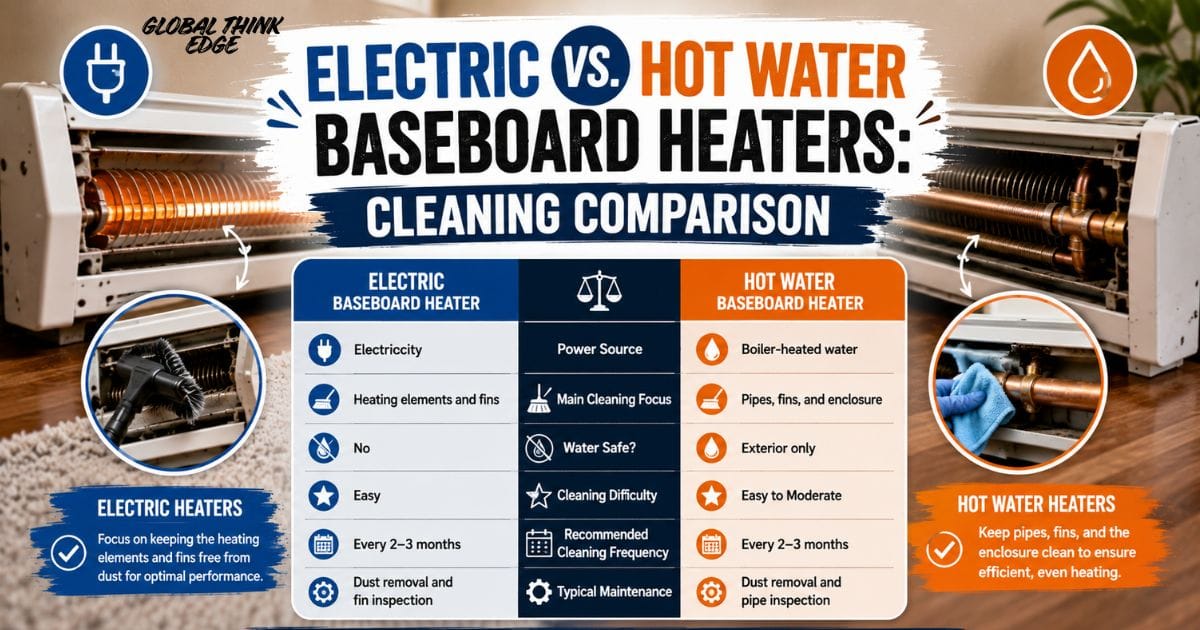
Electric vs. Hot Water Baseboard Heaters: Cleaning Comparison
| Feature | Electric Baseboard Heater | Hot Water Baseboard Heater |
| Power Source | Electricity | Boiler-heated water |
| Main Cleaning Focus | Heating elements and fins | Pipes, fins, and enclosure |
| Water Safe? | No | Exterior only |
| Cleaning Difficulty | Easy | Easy to Moderate |
| Recommended Cleaning Frequency | Every 2–3 months | Every 2–3 months |
| Typical Maintenance | Dust removal and fin inspection | Dust removal and pipe inspection |
Although both systems require similar care, always follow the cleaning method recommended for your specific heater type.
Signs Your Heater Needs More Than Cleaning
Sometimes poor performance isn’t caused by dust alone. Watch for these warning signs:
Rooms remain cold even after cleaning.
The heater produces unusual buzzing, clicking, or rattling sounds.
You notice a burning smell that doesn’t disappear after the first use.
Rust, corrosion, or water leaks appear around the unit.
The heater cycles on and off frequently.
Heat is uneven along the length of the baseboard.
These issues may indicate electrical faults, damaged fins, trapped air in a hydronic system, or failing components. If basic cleaning doesn’t solve the problem, it’s best to contact a qualified heating technician.
Final Thoughts
Knowing how to clean baseboard heaters is one of the simplest ways to improve home comfort and keep your heating system operating efficiently. Regular cleaning removes dust that restricts airflow, reduces unpleasant odours, and helps both electric and hot water baseboard heaters deliver consistent warmth.
By following safe cleaning practices, using the right tools, and performing routine maintenance throughout the year, you can extend the life of your heating system while improving energy efficiency. A few minutes of care every few months can make a noticeable difference in both heating performance and indoor air quality.
Frequently Asked Questions
How often should you clean baseboard heaters?
For most homes, cleaning every two to three months is sufficient. If you have pets, allergies, or live in a dusty environment, monthly dust removal can help maintain better airflow.
Can dirty baseboard heaters affect indoor air quality?
Yes. Dust, pet hair, and other particles trapped inside the heater can circulate through the room when the unit operates. Regular cleaning helps reduce airborne dust and creates a cleaner indoor environment.
What is the easiest way to clean baseboard heaters?
The easiest method is to turn off the heater, let it cool completely, remove the cover, vacuum loose debris, brush between the fins, and wipe the exterior with a damp microfibre cloth.
Can I wash an electric baseboard heater with water?
No. Never pour or spray water inside an electric baseboard heater because moisture can damage electrical components. Use only a slightly damp cloth to clean the outside after the power is turned off.
What is the best tool for cleaning heater fins?
A soft radiator brush, small paintbrush, or vacuum with a brush attachment works well. These tools remove dust without bending the delicate aluminum fins.
Why does my heater smell like something is burning?
A mild burning smell at the beginning of the heating season is usually caused by dust burning off the heating elements. If the odour continues after thorough cleaning, have the heater inspected by a professional.
