
Buy Rental Property Mexico Tsalach Real Estate: Smart Wins
Why Buy Rental Property? Mexico’s Tsalach Real Estate Is a Growing Investment Opportunity
Mexico has become one of the world’s top destinations for rental property investment, thanks to its strong tourism industry, competitive property prices, and growing demand from travellers, retirees, and remote workers. For investors seeking both passive income and long-term appreciation, Buy Rental Property Mexico Tsalach Real Estate is becoming an increasingly popular choice.
Before you Buy Rental Property Mexico Tsalach Real Estate, it is important to understand local ownership rules, rental demand, investment costs, and the factors that influence profitability. Making informed decisions from the beginning can help reduce risks and maximise returns.
This guide explains everything you need to know about buying rental property in Mexico with Tsalach Real Estate, including property types, legal considerations, investment costs, rental strategies, and practical tips to help you invest with confidence.
Why Investors Are Choosing Mexico
Several factors continue to make Mexico an attractive destination for property investors.
Strong domestic and international tourism
Increasing demand for vacation rentals
Growing expatriate communities
Competitive property prices compared with many international markets
Opportunities for both rental income and long-term appreciation
Expanding infrastructure in many popular regions
Unlike investments that depend entirely on market performance, rental properties provide the opportunity to earn regular income while your asset may increase in value over time.
Understanding How Tsalach Real Estate Supports Buyers
Purchasing property in another country can seem complicated, especially for first-time investors. Tsalach Real Estate focuses on guiding buyers through every stage of the investment journey, from identifying suitable properties to completing legal documentation.
Working with experienced professionals reduces uncertainty and helps investors avoid common purchasing mistakes.
Types of Rental Properties Available
Choosing the right property depends on your investment goals, available budget, and preferred rental strategy.
Beachfront Homes
Beachfront properties remain among the most desirable investments because they consistently attract tourists looking for memorable vacation experiences. While the purchase price is often higher, these homes may produce excellent rental income during peak travel seasons.
Modern Condominiums
Condominiums are popular because they combine affordability with convenience. Many developments include security, swimming pools, fitness centres, parking, and shared amenities that increase their appeal to renters.
They are suitable for both short-term vacation rentals and long-term residential leases.
Vacation Villas
Luxury villas attract families, corporate travellers, and larger groups willing to pay premium rental rates. These properties often require higher maintenance but can generate impressive seasonal returns when properly managed.
Urban Apartments
Apartments located in growing cities attract professionals, students, retirees, and remote workers seeking long-term accommodation.
Because demand is less dependent on tourism, apartments often provide more consistent monthly income throughout the year.
Mixed-Use and Commercial Investments
Some investors diversify by purchasing buildings that combine residential and commercial units. This approach creates multiple income streams while reducing dependence on a single rental market.
Choosing the Right Rental Strategy
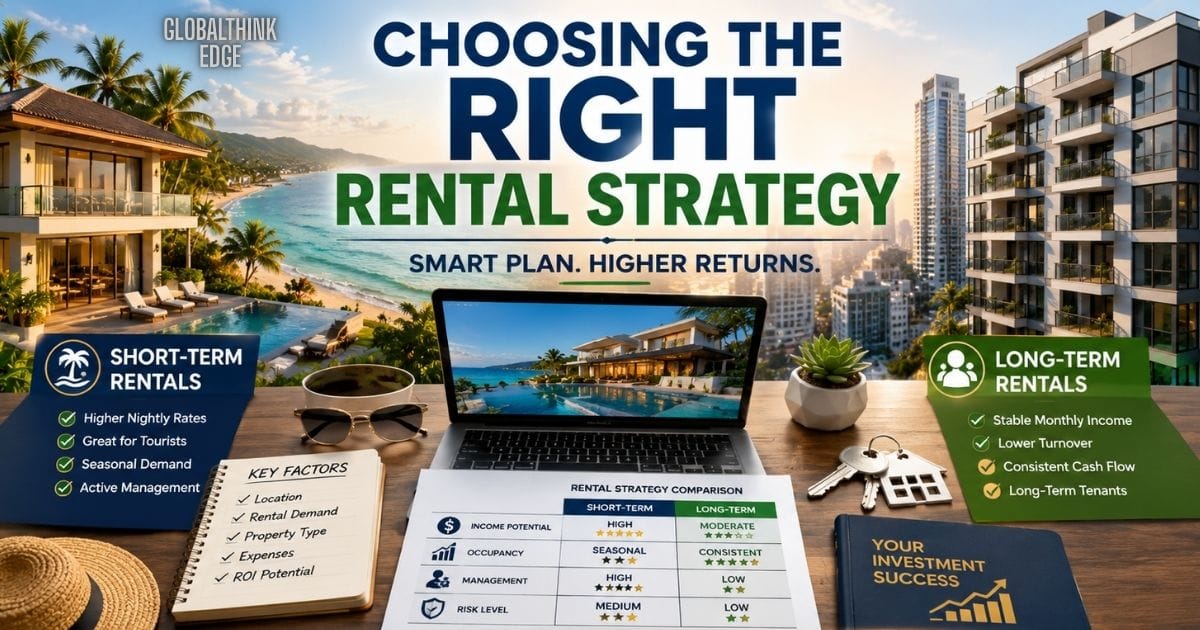
Every investor has different financial goals. Selecting the appropriate rental model is just as important as choosing the property itself.
Short-Term Vacation Rentals
Vacation rentals generally generate higher nightly rates. Properties near beaches, entertainment districts, restaurants, and tourist attractions often experience strong occupancy during holiday seasons.
This strategy requires active management, frequent cleaning, guest communication, and ongoing marketing.
Long-Term Residential Rentals
Long-term rentals provide predictable monthly income with fewer tenant changes. Although monthly returns may be lower than vacation rentals, operating costs and management requirements are often easier to handle.
This strategy suits investors seeking stable cash flow rather than seasonal income.
Hybrid Rental Model
Many experienced investors combine both strategies. They rent properties to vacation guests during high-demand travel seasons and offer longer leases during quieter periods.
This flexible approach helps maximise annual occupancy while reducing vacancy risks.
What Makes a Rental Property Profitable?
Not every property becomes a successful investment. Several factors influence rental performance and long-term profitability.
Location
Location remains the most important factor.
Properties close to beaches, shopping centres, restaurants, airports, hospitals, public transportation, and tourist attractions generally achieve stronger occupancy and higher rental prices.
Property Condition
Well-maintained properties receive better reviews and attract repeat guests.
Modern kitchens, quality furnishings, reliable internet service, energy-efficient appliances, and attractive interiors increase rental appeal.
Rental Demand
Study local occupancy rates before investing.
Areas with year-round tourism or growing residential populations usually provide more stable rental opportunities than highly seasonal destinations.
Market Competition
Compare similar properties within your chosen location.
Review rental prices, amenities, guest ratings, and occupancy levels to understand whether your investment can remain competitive over time.
Professional Management
Even excellent properties may underperform without proper management.
Fast guest communication, regular maintenance, professional cleaning, and prompt issue resolution improve guest satisfaction and increase repeat bookings.

Understanding the Legal Side of Buying Property
Legal preparation protects your investment and reduces future complications.
Before purchasing any property, verify that all ownership records and legal documents are accurate.
Key areas to review include:
Property ownership history
Land registration records
Outstanding debts or liens
Building permits
Local zoning regulations
Rental permissions where required
Working with qualified legal professionals ensures every document is reviewed before ownership transfers.
Budgeting Beyond the Purchase Price
Many first-time investors focus only on the property’s purchase price. In reality, successful investing requires understanding the total cost of ownership.
Your investment budget should also include:
Closing costs
Property taxes
Home insurance
Utility expenses
Maintenance and repairs
Property management fees
Marketing costs
Emergency repair funds
Planning for these expenses helps you calculate realistic rental profits instead of relying on optimistic estimates.
Evaluating Rental Income Potential
Before making an offer, estimate how much income the property could realistically generate.
Ask questions such as:
What is the average occupancy rate?
Does demand remain steady throughout the year?
What rental prices do similar properties charge?
How much will annual operating expenses reduce profits?
Is the neighbourhood growing in popularity?
Rather than focusing only on the highest possible income, calculate conservative estimates based on average occupancy. This approach creates a more reliable investment plan and reduces financial surprises after purchase.
A well-researched investment decision today can continue generating rental income and property appreciation for many years, making careful planning one of the most valuable steps in the buying process.
Choosing the Best Location for Long-Term Returns
The location of your rental property has a direct impact on occupancy rates, rental income, and future resale value. A property in the right neighbourhood can outperform a larger or more expensive property in a less desirable area.
When evaluating locations, consider more than beautiful scenery. Look for areas with strong infrastructure, reliable transportation, healthcare facilities, shopping centres, restaurants, schools, and year-round visitor activity.
Popular Tourist Destinations
Tourist hotspots often deliver strong short-term rental demand because travellers actively search for accommodations close to beaches, attractions, nightlife, and entertainment.
These properties usually achieve higher nightly rates, although occupancy may fluctuate during off-peak seasons.
Growing Residential Markets
Cities experiencing economic growth attract professionals, students, retirees, and remote workers looking for long-term housing. These markets often provide stable rental income and lower vacancy rates.
Future Development Potential
Research planned infrastructure projects before investing. New highways, airports, shopping centres, and commercial developments can increase property values and improve rental demand over time.
A property purchased in an emerging area may appreciate significantly as the neighbourhood develops.

Understanding the Risks Before Investing
Every investment carries some degree of risk, and real estate is no exception. Identifying potential challenges in advance allows you to prepare effective solutions.
Market Fluctuations
Economic conditions and tourism trends can influence rental demand and property prices.
How to reduce the risk:
Choose locations supported by both tourism and local residential demand instead of relying on a single source of income.
Currency Exchange
International buyers may experience changes in purchasing costs because of exchange rate movements.
How to reduce the risk:
Maintain a financial reserve and monitor exchange rates during the purchasing process.
Maintenance Costs
Unexpected repairs can reduce annual profits if they are not included in your investment budget.
How to reduce the risk:
Schedule a professional property inspection before purchase and maintain an emergency repair fund.
Regulatory Changes
Rental regulations may evolve over time.
How to reduce the risk:
Stay informed about local property laws and consult experienced legal professionals whenever necessary.

A Step-by-Step Buying Process
Following a structured buying process reduces mistakes and helps investors make informed decisions.
Step 1: Define Your Investment Objectives
Determine whether your goal is monthly cash flow, vacation rental income, long-term appreciation, or portfolio diversification.
Step 2: Research the Market
Study property prices, neighbourhood trends, occupancy rates, rental demand, and comparable listings before selecting a property.
Step 3: Inspect the Property
A professional inspection helps identify structural issues, plumbing concerns, electrical problems, roofing conditions, and maintenance requirements.
Step 4: Complete Legal Due Diligence
Verify ownership records, permits, registrations, contracts, and any outstanding financial obligations attached to the property.
Step 5: Negotiate and Finalize the Purchase
Review all documents carefully before signing the purchase agreement and completing the ownership transfer.
Step 6: Prepare the Property for Rental
Furnish the property appropriately, improve security, install reliable internet service, and create professional marketing materials before welcoming tenants or guests.
Managing Your Rental Property Effectively
Successful rental properties require ongoing management to maintain occupancy and protect long-term value.
Self-Management
Owners living nearby may choose to handle guest communication, maintenance scheduling, pricing, bookings, and cleaning themselves.
This approach reduces management expenses but requires considerable time and organisation.
Professional Property Management
Many investors hire experienced management companies to oversee daily operations.
Professional managers often provide:
Guest communication
Booking management
Cleaning coordination
Maintenance scheduling
Emergency support
Pricing optimization
Financial reporting
Although management fees reduce profit margins, they can improve occupancy and guest satisfaction.

Mistakes First-Time Investors Should Avoid
Avoiding common mistakes improves your chances of long-term success.
Purchasing based only on appearance instead of location.
Skipping professional inspections.
Ignoring ownership verification.
Underestimating maintenance expenses.
Failing to research rental demand.
Expecting immediate high profits.
Not creating an emergency repair budget.
Choosing a property without a long-term investment strategy.
Learning from these mistakes before purchasing can save significant time and money.
Rental Property Comparison
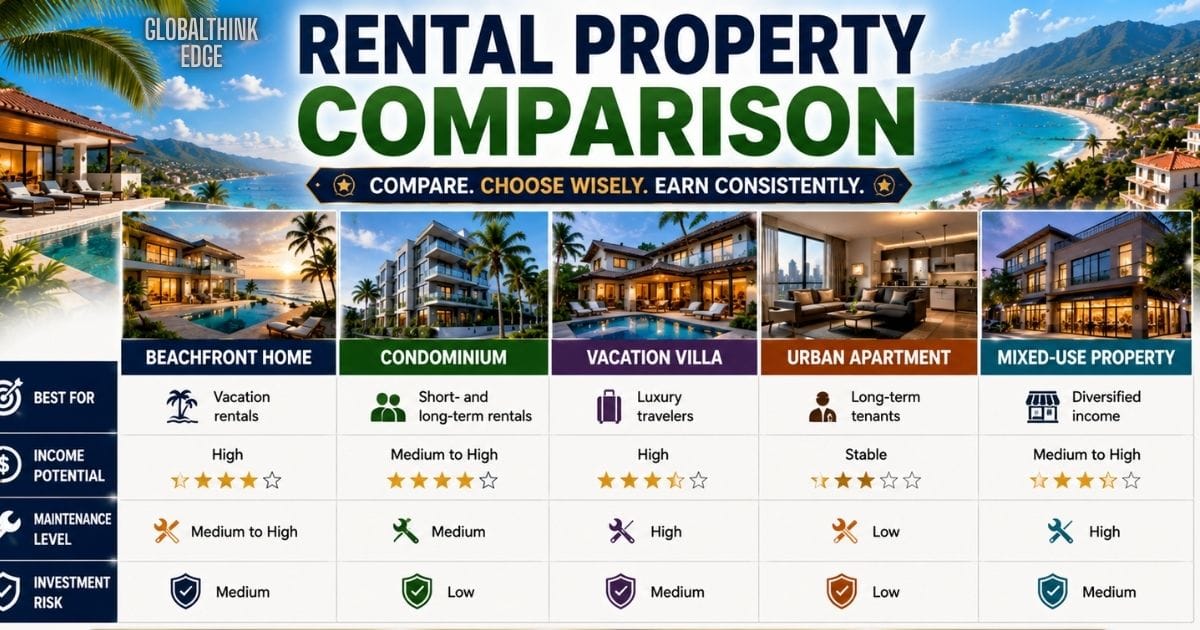
| Property Type | Best For | Income Potential | Maintenance Level | Investment Risk |
| Beachfront Home | Vacation rentals | High | Medium to High | Medium |
| Condominium | Short- and long-term rentals | Medium to High | Medium | Low |
| Vacation Villa | Luxury travelers | High | High | Medium |
| Urban Apartment | Long-term tenants | Stable | Low | Low |
| Mixed-Use Property | Diversified income | Medium to High | High | Medium |
Investment Checklist Before Buying
Before completing your purchase, confirm that you have:
Researched the local property market.
Compared multiple neighbourhoods.
Verified legal ownership documents.
Reviewed estimated rental income.
Calculated annual ownership costs.
Completed a professional inspection.
Planned for maintenance and emergencies.
Selected a suitable rental strategy.
Consulted qualified legal and financial professionals.
Completing this checklist helps reduce risk and supports a more confident investment decision.
Key Takeaways
Mexico continues to attract property investors because of growing tourism and expanding rental demand.
Selecting the right location is more important than purchasing the largest property.
Understanding legal requirements protects your investment.
Estimating total ownership costs leads to more accurate profit expectations.
Professional property management can improve guest satisfaction and occupancy.
Careful planning reduces investment risks and supports long-term financial growth.
Conclusion
Choosing to Buy Rental Property Mexico Tsalach Real Estate can be a rewarding investment when supported by thorough research, realistic financial planning, and professional guidance. Success is not determined solely by purchasing an attractive property; it depends on selecting the right location, understanding legal requirements, calculating ownership costs, and implementing an effective rental strategy.
Whether your goal is generating passive income, building long-term wealth, or expanding your real estate portfolio, careful preparation will help you make confident decisions. By evaluating market trends, performing proper due diligence, and managing your property professionally, you can reduce risks while maximising rental income and future property appreciation.
A thoughtful investment today can continue delivering financial benefits for years to come, making informed planning the foundation of lasting success in Mexico’s rental property market.
Frequently Asked Questions
Can foreigners legally buy rental property in Mexico?
Yes. Foreign buyers can purchase property in Mexico, although ownership structures and legal requirements may vary depending on the property’s location. Professional legal guidance helps ensure compliance with applicable regulations.
Which property type usually generates the highest rental income?
Beachfront homes and luxury vacation villas often produce higher nightly rates, while urban apartments generally provide more consistent long-term occupancy.
Is professional property management worth the cost?
For many investors, especially those living outside Mexico, professional management improves efficiency, protects the property, and enhances the guest experience.
What expenses should investors expect after purchasing?
In addition to the purchase price, investors should budget for taxes, insurance, maintenance, utilities, management fees, repairs, and marketing costs.
How can I improve rental profitability?
Choose a desirable location, maintain the property well, offer competitive amenities, respond quickly to guests, and regularly review local rental pricing.
