How Much Do Braces Cost? Complete Pricing Facts for 2026
Thinking about straightening your teeth? One of the first questions most people ask is how much do braces cost. The answer depends on factors such as the type of braces, treatment complexity, your location, and whether you have dental insurance.
Understanding how much do braces cost before starting treatment can help you choose the right option, avoid unexpected expenses, and plan your budget with confidence.
This article breaks down average prices, insurance coverage, financing options, hidden costs, and expert tips to help you make an informed decision in 2026.
Understanding the Average Cost of Braces
Orthodontic treatment is personalised, which means there is no single price that applies to everyone. In the United States, braces generally cost between $3,000 and $10,000, depending on the treatment method and the complexity of the case.
Several factors influence the final amount, including:
Type of braces selected
Severity of tooth or bite alignment issues
Orthodontist’s qualifications and experience
Geographic location
Length of treatment
Additional dental procedures required
Although braces represent a significant investment, they often improve more than just your smile. Properly aligned teeth are easier to clean, support better oral hygiene, improve bite function, and may help prevent costly dental problems later in life.
Typical Cost by Braces Type
| Braces Type | Estimated Cost | Best Suited For |
| Traditional Metal Braces | $3,000–$7,500 | Mild to complex cases |
| Ceramic Braces | $4,000–$8,500 | Patients wanting a less visible option |
| Lingual Braces | $8,000–$13,000 | Patients seeking maximum discretion |
| Clear Aligners | $3,500–$8,000 | Mild to moderate alignment issues |
These figures are general estimates. Your orthodontist will recommend a personalized treatment plan after examining your teeth and reviewing diagnostic images.
What Is Usually Included in the Cost of Braces?
Many people compare treatment prices without asking what those prices actually cover. A lower quote may exclude services that another clinic includes in its package.
Depending on the provider, the total treatment fee may include:
Initial consultation
Digital X-rays or 3D scans
Personalized treatment planning
Braces placement
Routine adjustment appointments
Progress evaluations
Braces removal
One set of retainers
Before starting treatment, request a written cost estimate so you understand exactly which services are included and whether additional fees may apply.
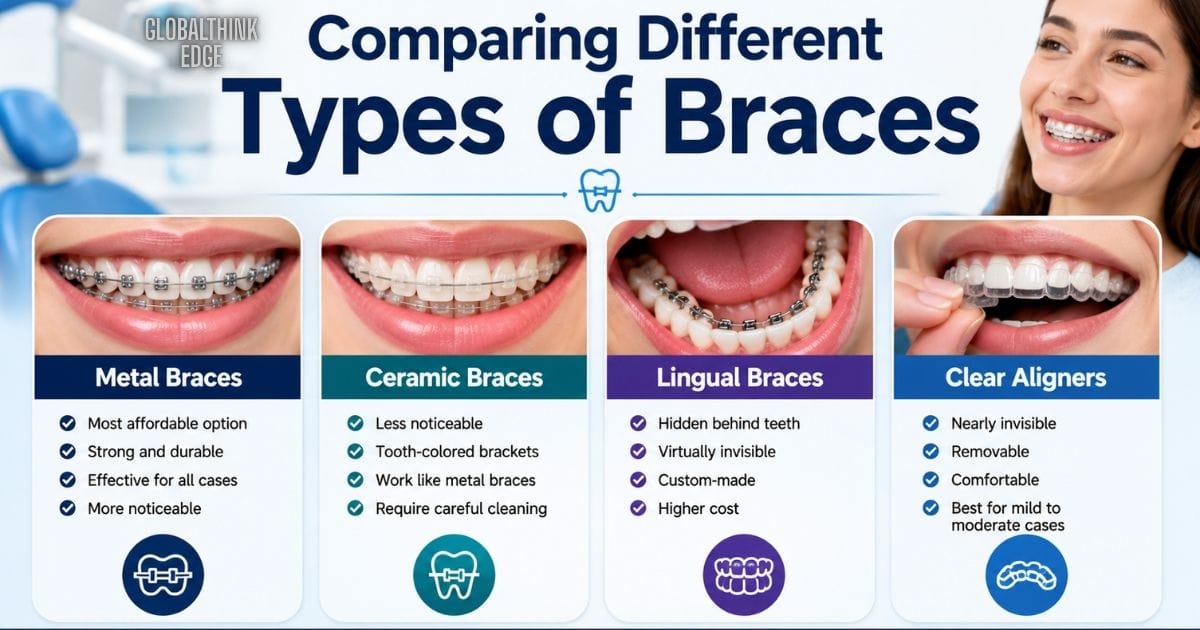
Comparing Different Types of Braces
Selecting the right braces involves balancing cost, appearance, comfort, and treatment effectiveness. Understanding the differences makes it easier to choose an option that fits both your dental needs and your budget.
Traditional Metal Braces
Metal braces remain the most widely used orthodontic treatment because they are reliable, durable, and generally the most affordable option.
Benefits
Lowest average cost
Suitable for nearly all orthodontic cases
Strong and durable materials
Highly predictable treatment outcomes
Things to Consider
More visible than other options
Regular adjustment appointments are required
Certain hard or sticky foods should be avoided
For many patients, metal braces offer the best value for long-term treatment.
Ceramic Braces
Ceramic braces function similarly to traditional metal braces but use tooth-coloured or clear brackets that blend more naturally with your smile.
They are popular among adults and older teenagers who want a less noticeable appearance while maintaining the effectiveness of fixed braces.
Although ceramic braces are more discreet, they usually cost more than metal braces and require careful cleaning to prevent staining.
Lingual Braces
Lingual braces are attached behind the teeth, making them virtually invisible from the front.
They are custom-made for each patient and are often chosen by professionals who prefer a hidden orthodontic solution.
Because of their specialized design and placement, lingual braces are usually the most expensive option and may require a longer adjustment period.
Clear Aligners
Clear aligners have become a popular alternative to traditional braces because they are removable and nearly invisible.
Patients can remove them while eating, brushing, and flossing, making oral hygiene much easier during treatment.
However, clear aligners work best when worn for the recommended number of hours each day and may not be suitable for every complex orthodontic condition.
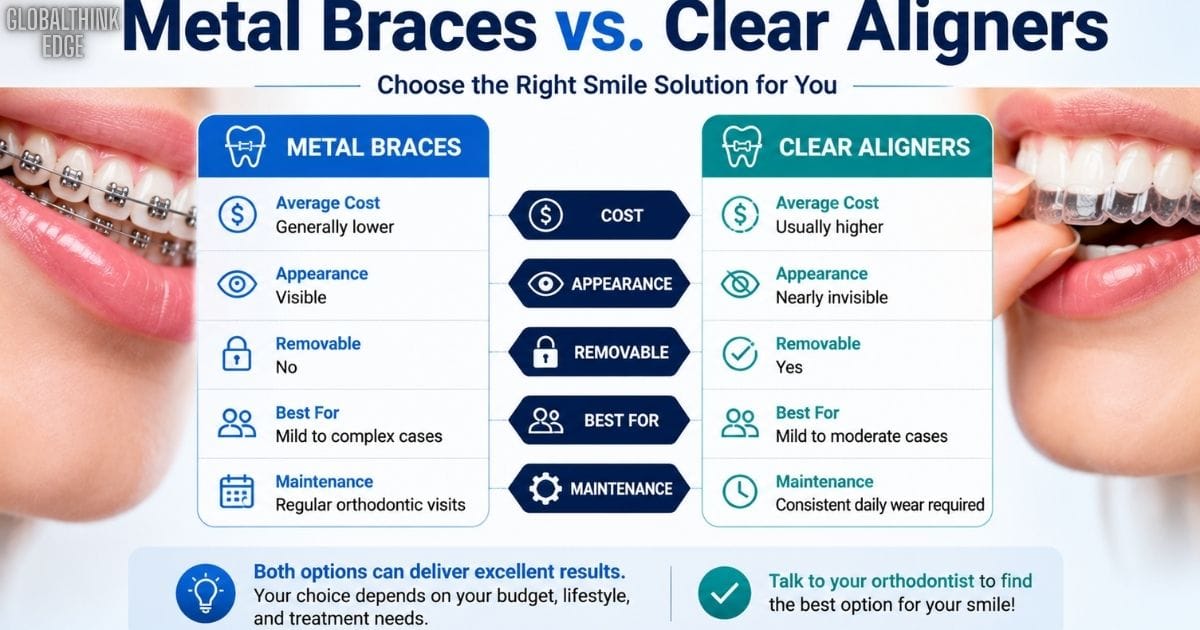
Metal Braces vs. Clear Aligners
Choosing between these two treatments often depends on your priorities.
| Feature | Metal Braces | Clear Aligners |
| Average Cost | Generally lower | Usually higher |
| Appearance | Visible | Nearly invisible |
| Removable | No | Yes |
| Best For | Mild to complex cases | Mild to moderate cases |
| Maintenance | Professional adjustments | Daily patient responsibility |
If affordability is your main concern, metal braces often provide the greatest value. If appearance and convenience are more important, clear aligners may justify the higher investment.
How Much Do Teeth Braces Cost for Different Age Groups?
Many patients also ask how much do teeth braces cost based on age. While the type of braces is the biggest pricing factor, age can influence treatment planning and overall expenses.
Children
Orthodontic evaluations are often recommended around age seven. Early assessments help identify developing bite or jaw problems before they become more complicated.
In some cases, early treatment can reduce the need for more extensive orthodontic work during the teenage years.
Teenagers
Teenagers are the most common orthodontic patients because most permanent teeth have erupted while jaw growth is still continuing.
Treatment during adolescence is often more predictable, making it an effective time to correct alignment and bite issues.
Adults
Adults can successfully improve their smiles at almost any age.
However, treatment may involve additional dental care, such as gum therapy or restorative procedures before braces can be fitted. These extra steps can increase the overall cost, but they also support healthier, longer-lasting results.
How Treatment Complexity Affects Braces Pricing
The condition of your teeth is just as important as your age when determining the cost of braces.
| Treatment Complexity | Example | Relative Cost |
| Mild | Small gaps or minor crowding | Lower |
| Moderate | Crooked teeth with moderate crowding | Medium |
| Complex | Severe bite problems, impacted teeth, or jaw alignment issues | Higher |
Patients with more complex orthodontic needs often require longer treatment, additional appliances, and more frequent adjustment appointments, all of which contribute to the final treatment cost.
Why Adult Orthodontic Treatment May Cost More
Unlike children and teenagers, adults have fully developed jaws, which can make tooth movement more challenging. Some adults may also need gum treatment, tooth extractions, or other restorative procedures before braces can be placed. While these additional treatments may increase the total cost, they help create a healthier foundation for successful orthodontic care.
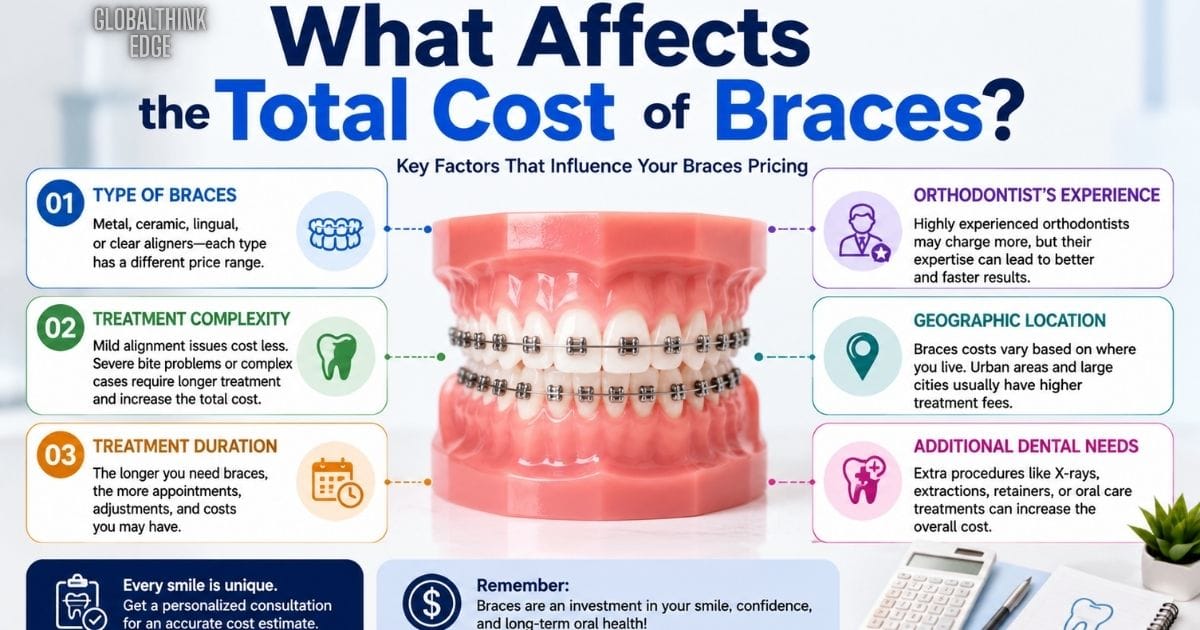
What Affects the Total Cost of Braces?
Several factors influence the amount you’ll pay beyond simply choosing a type of braces.
Treatment Duration
Most patients wear braces for 12 to 36 months. More complex cases usually require longer treatment, additional adjustment visits, and closer monitoring, all of which can increase the overall cost.
Orthodontist’s Experience
Orthodontists with extensive experience or advanced training may charge higher fees. However, their expertise often results in accurate treatment planning, efficient care, and reliable long-term outcomes.
Geographic Location
Brace pricing varies across the country. Clinics in metropolitan areas often charge more because of higher operating expenses, while smaller cities and towns may offer lower treatment costs.
Additional Dental Procedures
Some patients require services before braces can be fitted, including:
Tooth extractions
Professional cleaning
Gum disease treatment
Dental restorations
These procedures are separate from orthodontic treatment and should be included in your overall budget planning.
How Much Do Braces Cost With Insurance?
If you’re wondering how much do braces cost with insurance, the answer depends on your dental plan. Many insurance providers contribute toward orthodontic treatment, particularly for children, although adult coverage varies.
Insurance plans may include:
Partial payment of treatment costs
A lifetime orthodontic benefit limit
Waiting periods before coverage begins
Age-related eligibility requirements
Before starting treatment, request a detailed breakdown from both your insurance provider and orthodontist. This helps you understand exactly what your policy covers and how much you’ll need to pay yourself.
How Much Do Braces Cost Without Insurance?
Patients without insurance often pay the full treatment cost themselves, but many orthodontic practices now provide flexible payment options.
Common ways to manage treatment expenses include:
Monthly payment plans
Interest-free financing (when available)
Dental discount programs
Health Savings Accounts (HSA)
Flexible Spending Accounts (FSA)
Comparing financing options can make braces much more affordable without compromising the quality of care.
Braces Cost by Location
Where you receive treatment can significantly influence the final price. Local demand, clinic operating costs, and regional competition all play a role.
How Much Do Braces Cost in Texas?
If you’ve searched how much do braces cost in Texas, you’ll find that prices generally fall within the national average. However, treatment costs can differ between cities because living expenses and clinic fees vary.
Patients in larger metropolitan areas may pay slightly more than those in suburban or rural communities. Comparing treatment plans from multiple qualified orthodontists is often the best way to find quality care at a competitive price.
Additional Costs You Should Budget For
The advertised cost of braces doesn’t always include every service you’ll need throughout treatment.
Possible additional expenses include:
Initial consultation
Digital X-rays or 3D imaging
Tooth extractions (if required)
Emergency bracket or wire repairs
Replacement retainers
Missed appointment fees
Post-treatment follow-up visits
Before committing to treatment, ask your orthodontist for a written estimate that clearly explains which services are included and which may result in extra charges.
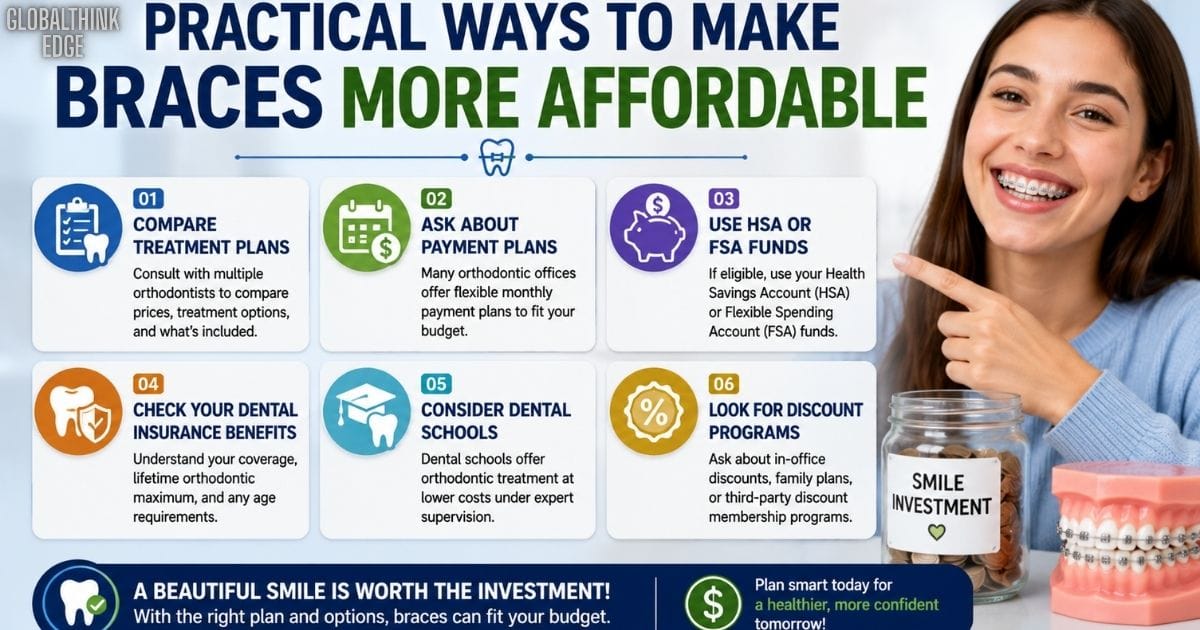
Practical Ways to Make Braces More Affordable
Although braces require a financial investment, there are several ways to reduce the overall cost.
You can save money by:
Comparing treatment plans from multiple orthodontists
Asking about interest-free payment options
Using HSA or FSA funds if eligible
Checking whether local dental schools provide supervised orthodontic care
Maximizing your dental insurance benefits before treatment begins
Planning ahead allows you to receive quality treatment while keeping costs manageable.
Common Mistakes That Can Increase Braces Costs
Some avoidable mistakes can extend treatment time and lead to additional expenses.
Try to avoid:
Missing adjustment appointments
Breaking brackets by eating hard or sticky foods
Neglecting daily brushing and flossing
Ignoring damaged wires or loose brackets
Losing or failing to wear your retainer after treatment
Following your orthodontist’s instructions carefully helps keep treatment on schedule and reduces the risk of unnecessary costs.
Understanding the Braces Payment Timeline
Many people assume the full treatment fee must be paid upfront. In reality, orthodontic practices often divide costs into manageable stages.
A typical payment timeline may look like this:
1. Initial consultation and examination
2. Diagnostic X-rays or digital scans
3. Down payment before treatment begins
4. Monthly instalment payments throughout treatment
5. Final payment and retainer fitting after braces are removed
Understanding this process makes it easier to plan your finances before starting treatment.
Are Braces Worth the Investment?
For many patients, braces provide benefits that extend well beyond appearance.
Properly aligned teeth can:
Improve chewing efficiency
Make brushing and flossing easier.
Reduce uneven tooth wear
Support healthier gums
Improve confidence and overall smile aesthetics
Considering both cosmetic and oral health benefits, many patients view braces as a valuable long-term investment.
Choosing the Right Orthodontist
Price is important, but it shouldn’t be the only factor when selecting an orthodontist.
Compare providers based on:
Professional qualifications
Years of orthodontic experience
Clear treatment recommendations
Transparent pricing
Flexible financing options
Patient reviews and reputation
When Should You Request a Cost Estimate?
Before making your final decision, schedule consultations with at least two or three orthodontists.
Ask each provider for a written estimate that outlines:
Total treatment cost
Services included
Payment options
Estimated treatment duration
Retainer policy
Follow-up care
A detailed comparison helps you choose the provider offering the best balance of quality, experience, and value.
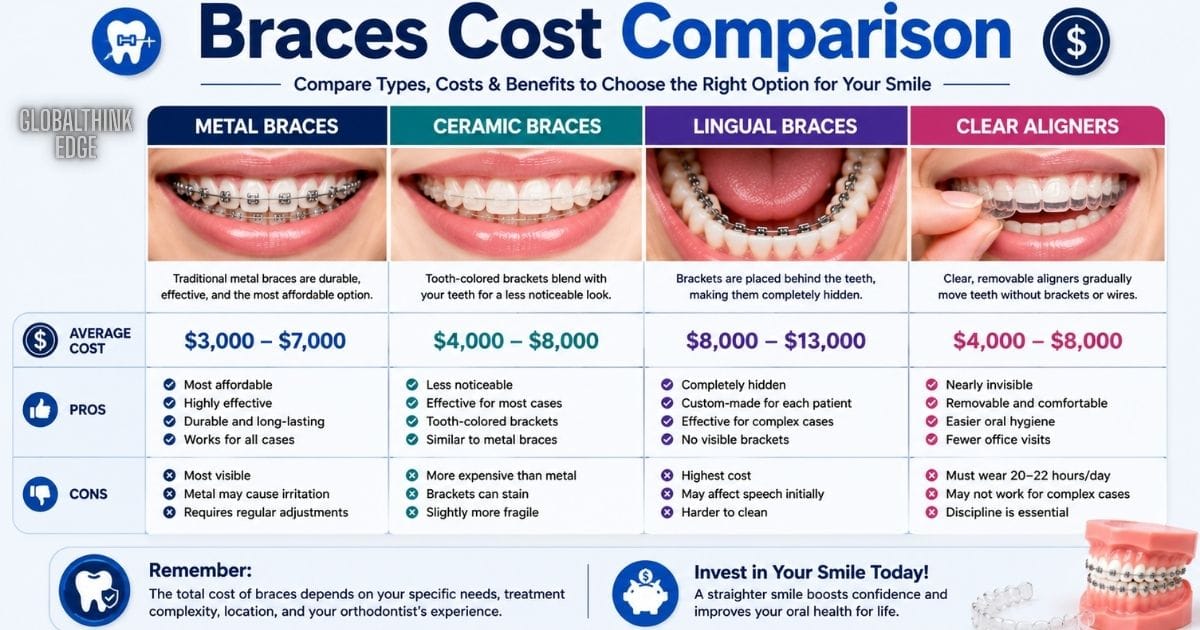
Braces Cost Comparison
| Braces Type | Visibility | Average Cost | Best For |
| Metal Braces | Visible | Lowest | Most orthodontic cases |
| Ceramic Braces | Less visible | Moderate to High | Patients wanting a discreet option |
| Lingual Braces | Hidden | Highest | Maximum aesthetics |
| Clear Aligners | Nearly invisible | Moderate to High | Mild to moderate alignment issues |
Frequently Asked Questions
Is 25 too late to get braces?
No. Healthy teeth and gums are more important than age. Many adults successfully complete orthodontic treatment and achieve excellent results.
Do braces hurt?
You may experience mild discomfort for a few days after braces are placed or adjusted, but it usually improves quickly.
How long does braces treatment take?
Most treatments last between 12 and 36 months, depending on the complexity of the case and how closely you follow your orthodontist’s instructions.
Which type of braces is the most affordable?
Traditional metal braces are generally the least expensive option while remaining highly effective for most orthodontic problems.
Can I pay for braces monthly?
Yes. Many orthodontic clinics offer monthly financing plans that spread the cost over the course of treatment.
Note: The prices mentioned in this guide are general estimates based on typical orthodontic treatment costs in 2026. Your actual cost may vary depending on your oral health, treatment needs, location, and the orthodontist you choose. A professional consultation is the best way to receive an accurate treatment plan and personalized cost estimate.
Final Thoughts
Understanding how much do braces cost involves more than comparing price tags. Your total investment depends on the type of braces, the complexity of your treatment, your location, insurance coverage, and any additional dental care required before or during treatment.
Rather than choosing the lowest quote, focus on finding an experienced orthodontist who offers transparent pricing, personalized care, and a treatment plan that matches your needs. By comparing estimates, asking the right questions, and exploring available financing options, you can make an informed decision that benefits both your smile and your long-term oral health.
