How Much Does Braces Cost? Clear Costs & Savings Explained
Understanding How Much Does Braces Cost
If you’re researching how much does braces cost, you’ve probably noticed that prices vary widely. That’s because orthodontic treatment isn’t one-size-fits-all. The final cost depends on factors such as the type of braces, the complexity of your dental condition, your location, the orthodontist’s expertise, and whether you have dental insurance.
Globally, braces typically cost between $2,000 and $10,000 or more. While that range may seem broad, it reflects the different treatment options available today and the personalized care each patient receives.
Rather than focusing only on the lowest price, it’s important to understand what you’re paying for. High-quality orthodontic treatment not only improves your smile but also supports better oral health, chewing function, and long-term confidence.
Why There Isn’t One Fixed Price for Braces
Every orthodontic treatment plan is unique. Some patients require only minor tooth movement, while others need comprehensive bite correction that can take several years.
Several factors influence the total price, including:
Type of braces selected
Severity of tooth misalignment
Length of treatment
Patient’s age
Orthodontist’s qualifications and experience
Geographic location
Technology used for diagnosis and planning
Retainers and follow-up care
Because of these variables, two patients receiving treatment at the same clinic may receive very different estimates.
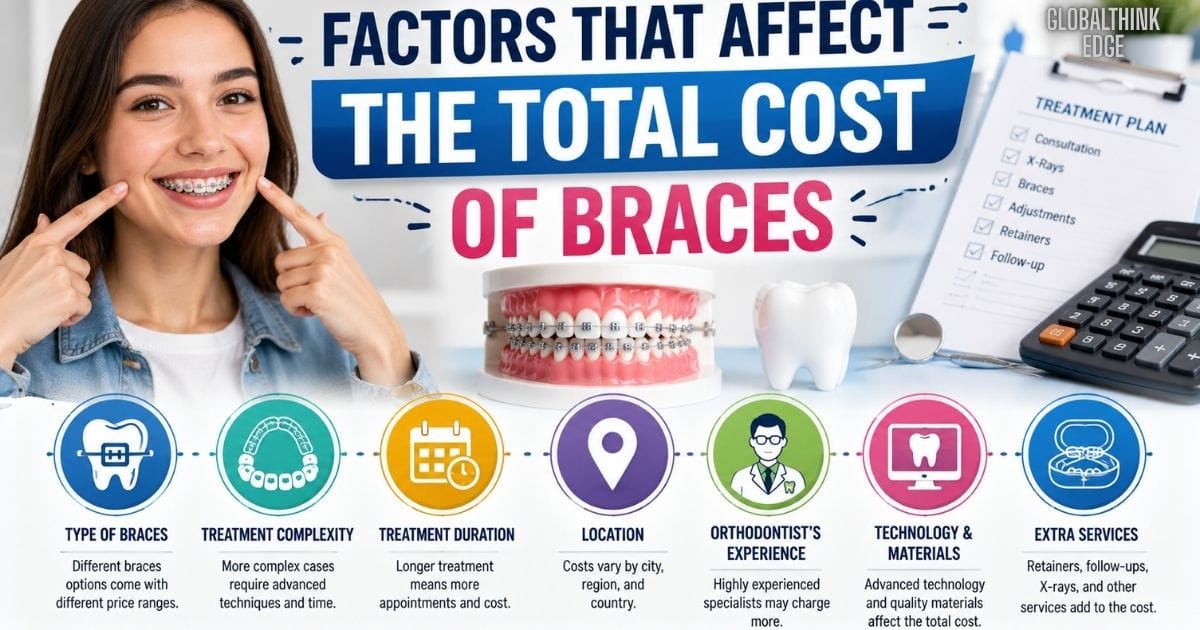
Factors That Affect the Total Cost of Braces
Understanding what drives the price helps you compare treatment plans more confidently.
Type of Braces
Traditional metal braces are generally the most affordable option. Ceramic braces, lingual braces, and clear aligners usually cost more because they use specialized materials or advanced technology.
Treatment Complexity
Correcting mild spacing issues typically costs less than treating severe crowding, bite problems, or jaw alignment concerns.
Treatment Duration
Most orthodontic treatments last between 12 and 36 months. Longer treatment usually means more adjustment appointments and higher overall costs.
Orthodontist’s Experience
Highly experienced orthodontists may charge more, but their expertise can improve treatment efficiency and overall results.
Location
Treatment costs differ from country to country and even between cities. Clinics in large metropolitan areas often charge more due to higher operating expenses.
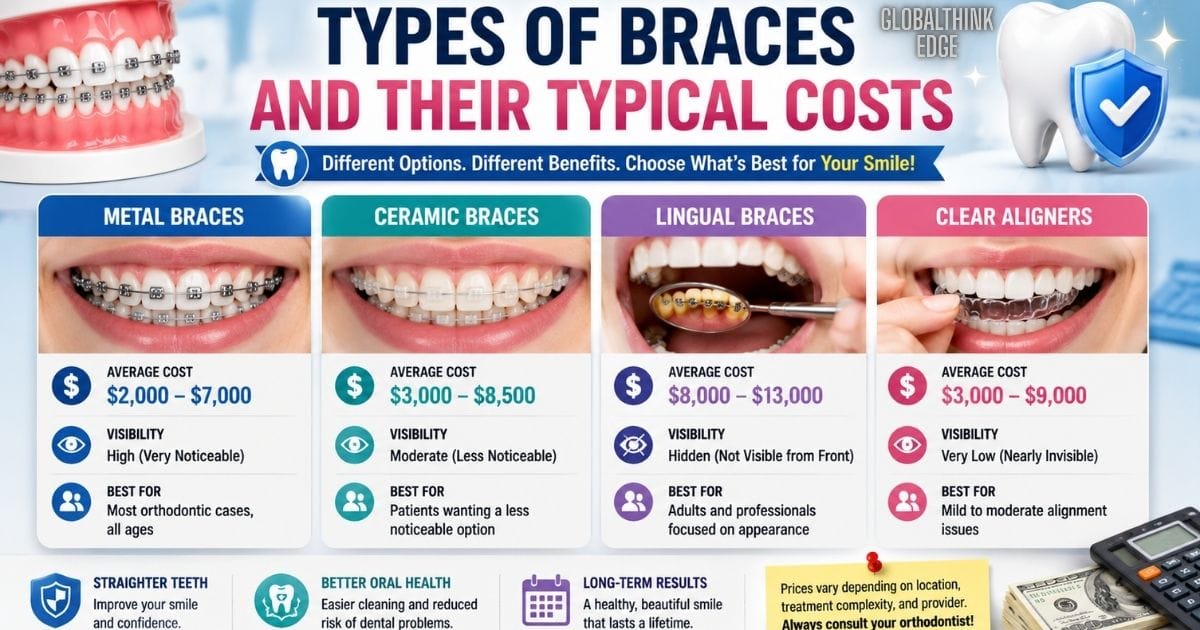
Types of Braces and Their Typical Costs
Today’s patients can choose from several orthodontic solutions depending on their budget, lifestyle, and cosmetic preferences.
| Type of Braces | Average Global Cost | Appearance | Best For |
| Metal Braces | $2,000–$7,000 | Visible | Most orthodontic cases |
| Ceramic Braces | $3,000–$8,500 | Tooth-colored | Patients seeking a discreet option |
| Lingual Braces | $8,000–$13,000 | Hidden behind teeth | Adults prioritizing appearance |
| Clear Aligners | $3,000–$9,000 | Nearly invisible | Mild to moderate alignment issues |
Each option has its own advantages. Your orthodontist can recommend the most suitable treatment after evaluating your teeth and bite.
How Much Does It Cost for Braces Without Insurance?
One of the most common questions patients ask is how much does it cost for braces without insurance.
Without insurance, you’ll typically pay the full treatment cost yourself. While this may sound expensive, many orthodontic clinics offer flexible payment options to make treatment more manageable.
Typical global price ranges include the following:
Metal braces: $2,000–$7,000
Ceramic braces: $3,000–$8,500
Clear aligners: $3,000–$9,000
Lingual braces: $8,000–$13,000
Some providers also offer interest-free monthly instalment plans, allowing patients to spread payments over the course of treatment.
Before committing to treatment, ask for a written estimate that clearly outlines every included service.
How Much Does Braces Cost With Insurance?
If you have dental insurance, your out-of-pocket expenses may be significantly lower.
How much does braces cost with insurance?
The answer depends on your specific policy. Some insurance plans cover a fixed lifetime amount for orthodontic treatment, while others pay a percentage of eligible costs.
For example:
Total treatment cost: $6,000
Insurance orthodontic benefit: $2,000
Estimated patient responsibility: $4,000
Keep in mind that insurance plans vary widely. Before beginning treatment, confirm:
Whether orthodontics are covered
Lifetime coverage limits
Waiting periods
Age restrictions
Annual benefit maximums
Whether clear aligners are included
Reviewing these details in advance helps avoid unexpected bills later.
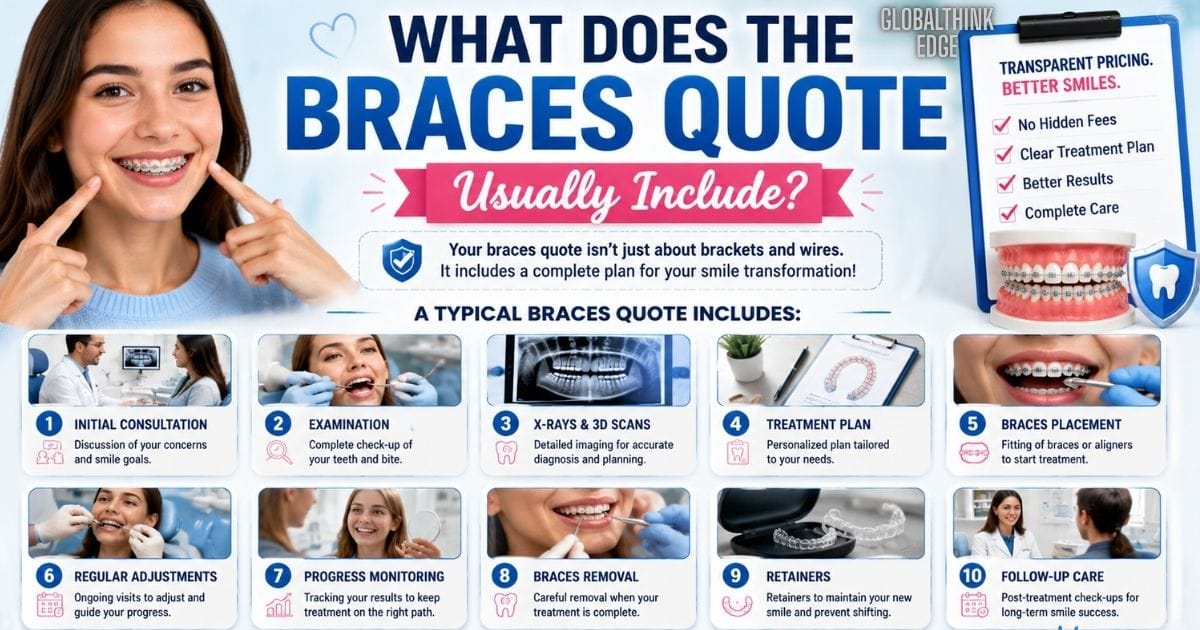
What Does the Braces Quote Usually Include?
Many people assume they’re paying only for the braces themselves. In reality, a comprehensive orthodontic treatment plan often includes several professional services.
A typical quote may cover:
Initial consultation
Oral examination
Digital X-rays or 3D scans
Personalized treatment planning
Braces placement
Regular adjustment appointments
Progress monitoring
Braces removal
Initial retainers
Final evaluation
Since every clinic structures pricing differently, always request an itemised treatment plan before making your decision.
Hidden Costs You Should Consider
One area that many first-page articles overlook is the possibility of additional expenses during treatment.
Potential extra costs include the following:
Tooth extractions before braces
Deep cleaning or gum treatment
Emergency repairs for broken brackets or wires
Lost or damaged retainers
Additional X-rays during treatment
Missed appointment fees
Replacement aligners, if applicable
Understanding these possible expenses helps you prepare a realistic budget and avoid financial surprises.
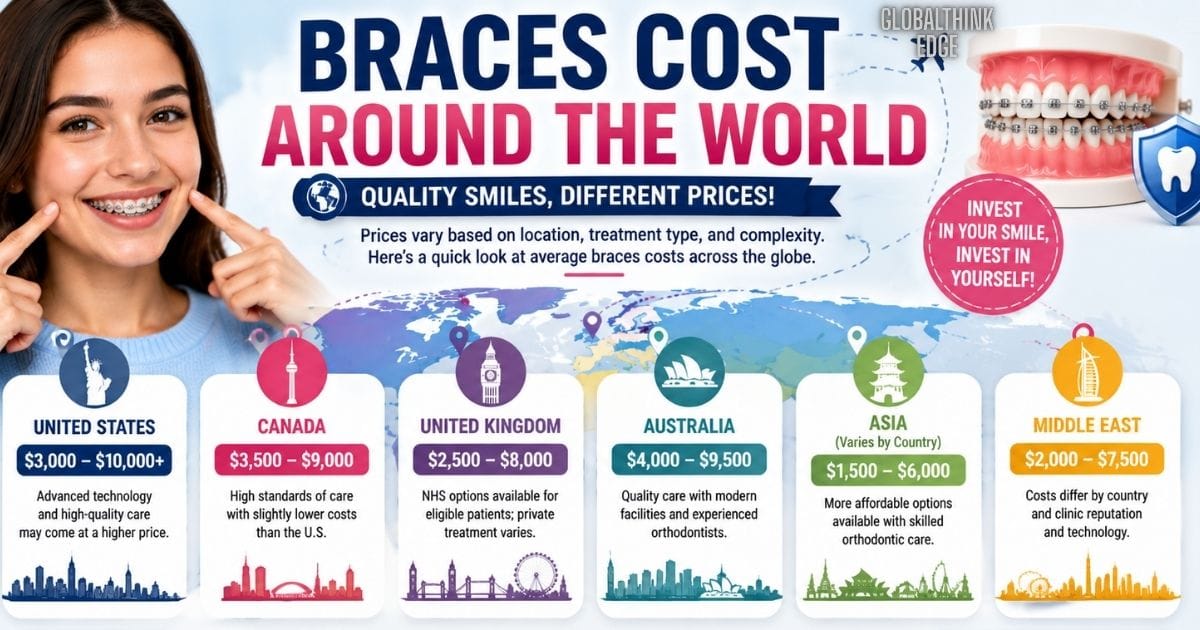
Braces Cost Around the World
| Region | Estimated Cost Range |
| United States | $3,000–$10,000 |
| Canada | $3,500–$9,000 |
| United Kingdom | $2,500–$8,000 |
| Australia | $4,000–$9,500 |
| Asia (varies by country) | $1,500–$6,000 |
| Middle East | $2,000–$7,500 |
These figures are estimates only. The actual cost depends on your treatment needs, local clinic pricing, and insurance coverage.
Braces Cost for Adults vs. Children
Orthodontic treatment is no longer just for teenagers. Millions of adults now choose braces to improve both their smile and oral health.
Children often begin treatment between the ages of 10 and 14, when permanent teeth have fully developed. Early orthodontic care can correct alignment problems before they become more serious.
Adults can achieve excellent results as well, although treatment may take slightly longer because their jawbones have fully matured. Adults are also more likely to choose ceramic braces or clear aligners for a less noticeable appearance.
While adult treatment can sometimes cost more due to case complexity, the overall pricing still depends on the individual’s orthodontic needs rather than age alone.
Are Braces Worth the Cost?
Although braces require a financial investment, they often provide benefits that extend far beyond appearance.
Properly aligned teeth are easier to clean, reducing the risk of plaque buildup, tooth decay, and gum disease. Correcting bite problems may also improve chewing efficiency and speech and reduce excessive wear on teeth.
Many patients also experience a noticeable boost in self-confidence after treatment.
Instead of viewing braces as a short-term expense, consider them a long-term investment in both oral health and overall well-being.
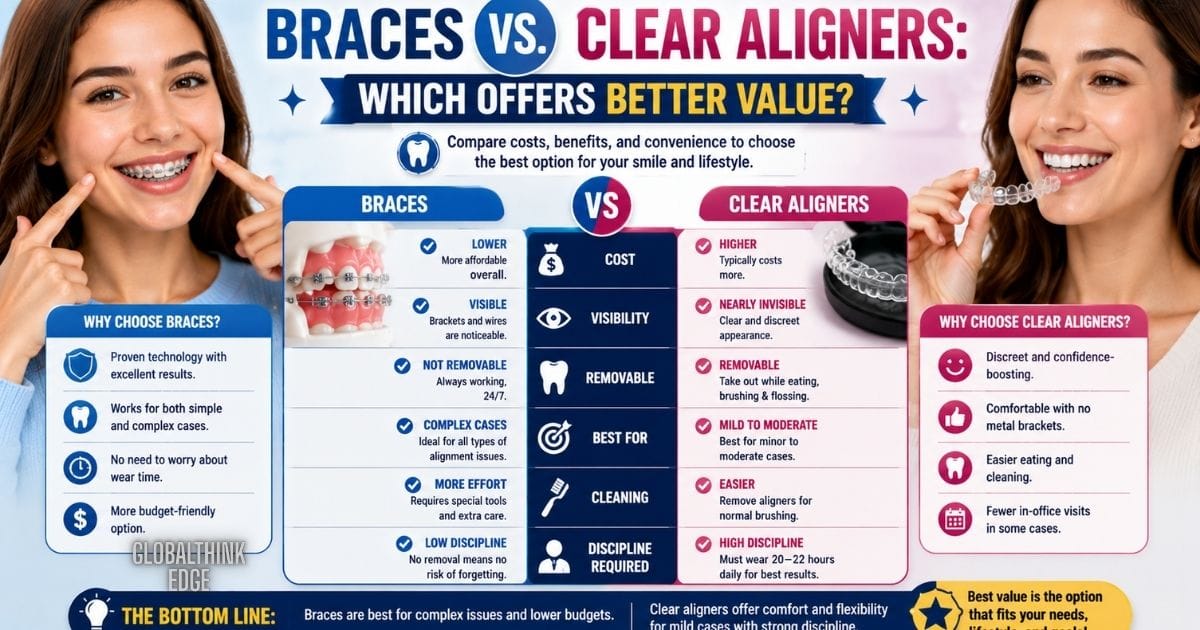
Braces vs. Clear Aligners: Which Offers Better Value?
Choosing between traditional braces and clear aligners involves more than comparing prices.
| Feature | Metal Braces | Clear Aligners |
| Average Cost | Lower | Higher |
| Visibility | Visible | Nearly invisible |
| Removable | No | Yes |
| Suitable for Complex Cases | Excellent | Best for mild to moderate cases |
| Cleaning | Requires extra care | Easier after removal |
| Discipline Required | Low | High (must wear 20–22 hours daily) |
Metal braces remain the most cost-effective option for complex orthodontic problems. Clear aligners offer greater convenience and aesthetics but require consistent patient compliance to achieve the best results.
Practical Ways to Make Braces More Affordable
Paying for orthodontic treatment doesn’t always mean covering the entire cost upfront. Many patients reduce expenses by exploring flexible payment options.
Consider these practical strategies:
Compare treatment plans from multiple qualified orthodontists.
Check whether your dental insurance includes orthodontic benefits.
Ask about interest-free monthly payment plans.
Use Health Savings Accounts (HSAs) or Flexible Spending Accounts (FSAs), where available.
Look for family discounts if more than one person needs treatment.
Explore treatment at accredited dental schools supervised by experienced orthodontists.
Ask whether seasonal promotions or new-patient discounts are available.
Remember that the cheapest option isn’t always the best. Focus on the overall quality of care, experience, and long-term results.
How to Choose the Right Orthodontist
Selecting the right orthodontist is just as important as choosing the type of braces.
Before making your decision, consider:
Professional qualifications and certifications
Years of orthodontic experience
Before-and-after treatment results
Patient reviews and testimonials
Modern diagnostic technology
Transparent pricing
Flexible financing options
Clear communication throughout treatment
A trusted orthodontist will explain your treatment plan, answer your questions honestly, and provide a detailed breakdown of expected costs.
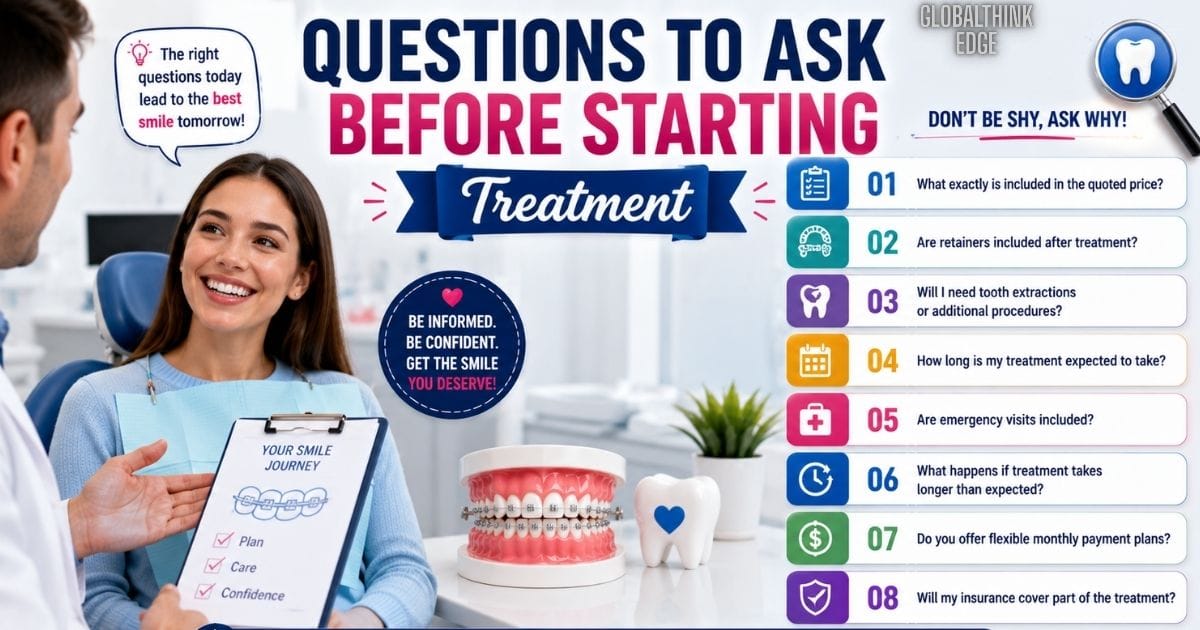
Questions to Ask Before Starting Treatment
Preparing a few questions before your consultation can help you avoid misunderstandings later.
Ask your orthodontist:
What exactly is included in the quoted price?
Are retainers included after treatment?
Will I need tooth extractions or additional procedures?
How long is my treatment expected to take?
Are emergency visits included?
What happens if treatment takes longer than expected?
Do you offer flexible monthly payment plans?
Will my insurance cover part of the treatment?
Having these answers in writing makes it easier to compare different providers.
Key Takeaways
Before choosing braces, remember these important points:
The total cost depends on your individual treatment needs.
Metal braces are generally the most affordable option.
Clear aligners and lingual braces usually cost more because of their appearance and technology.
Insurance can significantly reduce out-of-pocket expenses, but coverage varies by policy.
Always ask for an itemised treatment estimate before beginning treatment.
Hidden costs such as retainers, emergency repairs, and additional procedures should be considered when budgeting.
Choosing an experienced orthodontist often delivers better long-term value than simply selecting the lowest price.
Frequently Asked Questions
How much does it cost for braces?
Worldwide, braces generally cost between $2,000 and $10,000, depending on the type of braces, treatment complexity, and location.
How much does it cost for braces without insurance?
Without insurance, patients usually pay the full treatment cost, which commonly ranges from $2,000 to more than $10,000.
How much do braces cost with insurance?
Insurance may reduce your treatment costs by covering part of the expense. The exact amount depends on your provider’s orthodontic benefits and policy limits.
Are braces painful to get?
Placing braces is usually not painful. However, mild soreness or pressure is common for a few days after the braces are fitted or adjusted. This discomfort typically improves quickly.
How long does braces treatment take?
Most orthodontic treatments last between 12 and 36 months, although simple cases may finish sooner and complex cases may take longer.
Which type of braces is the cheapest?
Traditional metal braces are usually the most affordable orthodontic treatment while remaining highly effective for most alignment problems.
Can adults still get braces?
Yes. Adults of almost any age can benefit from orthodontic treatment if their teeth and gums are healthy. Many adults choose ceramic braces or clear aligners because they are less noticeable.
Will I need to wear a retainer after braces?
Yes. Wearing a retainer helps keep your teeth in their new position and reduces the risk of them shifting after treatment.
Final Thoughts
Understanding how much does braces cost requires looking beyond the initial price tag. The total investment depends on factors such as the type of braces, treatment complexity, insurance coverage, geographic location, and the services included in your care.
Rather than choosing the lowest quote, focus on receiving treatment from a qualified orthodontist who provides transparent pricing, personalized care, and long-term support. Comparing treatment plans, reviewing insurance benefits, and asking detailed questions before you begin can help you make a confident decision.
With the right orthodontic treatment, you’re investing in more than a straighter smile. You’re improving your oral health, enhancing daily comfort, and building confidence that can last a lifetime. A well-informed choice today can deliver lasting benefits for years to come.
