How Long Until a Tooth Infection Kills You? Shocking Facts
Understanding How Dangerous a Tooth Infection Can Become
If you’re wondering how long until a tooth infection kills you, the answer is that there is no exact timeline. Some infections stay confined to the tooth for weeks, while others can spread within days if left untreated. The speed depends on the severity of the infection, the type of bacteria, your overall health, and how quickly you receive treatment.
Although deaths from tooth infections are rare today, an untreated infection can spread to the jaw, neck, bloodstream, or even the brain, leading to life-threatening complications. The earlier a tooth infection is diagnosed and treated, the lower the risk of serious health problems.
In this guide, you’ll learn how tooth infections progress, the warning signs to watch for, when they become a medical emergency, and the most effective treatment options to protect your health.
What Is a Tooth Infection?
A tooth infection, also known as a dental abscess, develops when bacteria enter the inner part of a tooth through untreated decay, a crack, gum disease, or dental trauma. Once bacteria reach the dental pulp, they multiply and create a pocket of pus known as an abscess.
At first, the infection usually stays around the affected tooth. However, without treatment, it can spread into nearby gum tissue, the jawbone, facial spaces, and, in severe cases, the bloodstream.
Unlike temporary tooth sensitivity, an infection involves active bacterial growth. Because bacteria continue multiplying, delaying treatment increases the chance of serious complications.
Common Causes of a Tooth Infection
Several dental problems can lead to an infection, including:
Untreated cavities
Broken or cracked teeth
Deep gum disease
Failed dental fillings or crowns
Dental injuries
Poor oral hygiene
Weakened immune system
Even a small cavity can eventually reach the tooth’s pulp if ignored, allowing bacteria to invade deeper tissues.
How a Tooth Infection Progresses Over Time
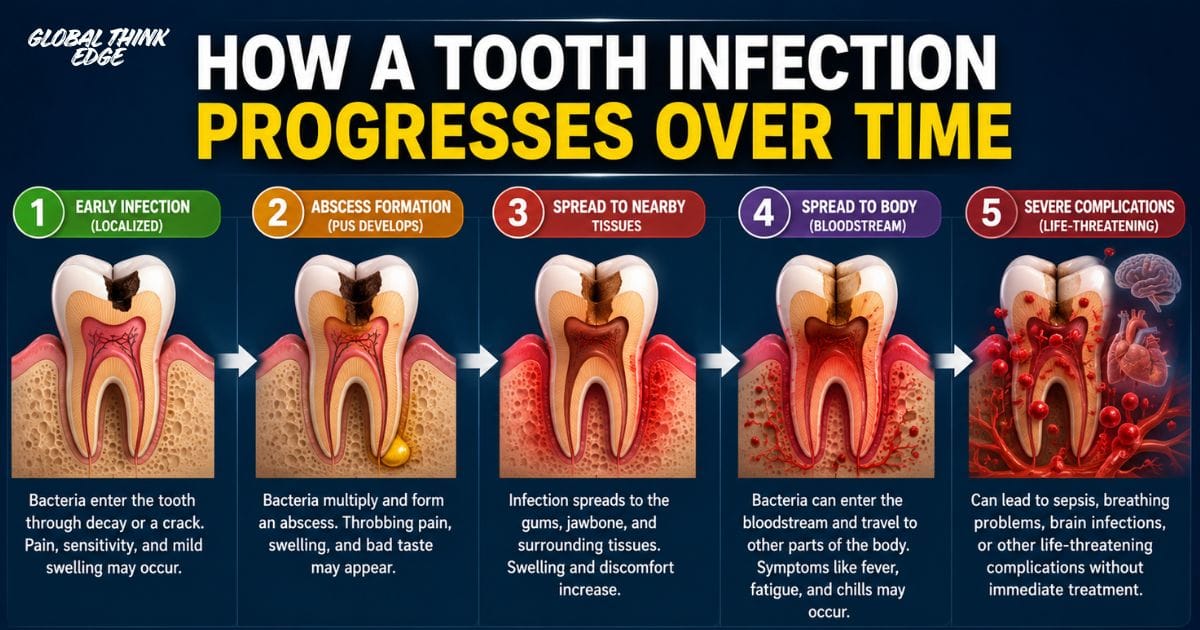
Every infection follows a slightly different path, but understanding the typical stages helps explain why early treatment matters.
Stage 1: Early Infection
The first stage often begins inside the tooth. Many people notice increasing sensitivity to hot or cold foods, discomfort while chewing, or mild, persistent tooth pain.
At this point, bacteria are usually confined to the tooth itself. Prompt dental treatment during this stage often prevents further complications.
Stage 2: Abscess Formation
As bacteria continue multiplying, the body responds by sending immune cells to fight the infection. This battle creates pus, leading to an abscess.
Common symptoms include:
Constant throbbing pain
Swollen gums
Bad taste in the mouth
Bad breath
Pain that radiates toward the ear or jaw
Some abscesses may begin draining on their own, temporarily reducing pain. However, drainage does not mean the infection has healed.
Stage 3: Infection Begins to Spread
If the abscess remains untreated, bacteria may move beyond the tooth into surrounding tissues.
You may notice:
Increasing facial swelling
Swollen jaw
Difficulty opening your mouth fully
Pain while swallowing
Tender lymph nodes beneath the jaw
These symptoms suggest the infection is no longer limited to the tooth and requires urgent dental evaluation.
Stage 4: Severe Infection
In advanced cases, bacteria may spread through deep tissue spaces or enter the bloodstream. This can result in life-threatening conditions such as sepsis or serious infections affecting the neck, brain, or heart.
Although uncommon, this stage is considered a medical emergency and requires immediate hospital care.
Signs of Tooth Infection You Should Never Ignore
Recognizing symptoms early can prevent a minor dental problem from becoming a serious health emergency.
Early Symptoms
Early warning signs often include:
Mild to moderate toothache
Sensitivity to temperature
Pain while biting
Red or swollen gums
Persistent bad breath
These symptoms usually indicate that treatment is needed before the infection worsens.
Moderate Symptoms
As the infection progresses, symptoms become more noticeable.
You may experience:
Severe throbbing pain
Visible gum swelling
Pus around the affected tooth
Fever
Swollen lymph nodes
Facial tenderness
At this stage, delaying treatment increases the risk of complications.
Severe Warning Signs
Some symptoms indicate the infection may be spreading beyond the mouth.
Seek emergency medical attention immediately if you experience:
Difficulty breathing
Trouble swallowing
Rapidly spreading facial swelling
High fever with chills
Confusion
Extreme weakness
Swelling extending into the neck
These symptoms may signal a serious infection that requires immediate hospital treatment rather than waiting for a regular dental appointment.
Symptoms of a Tooth Infection Spreading to the Body
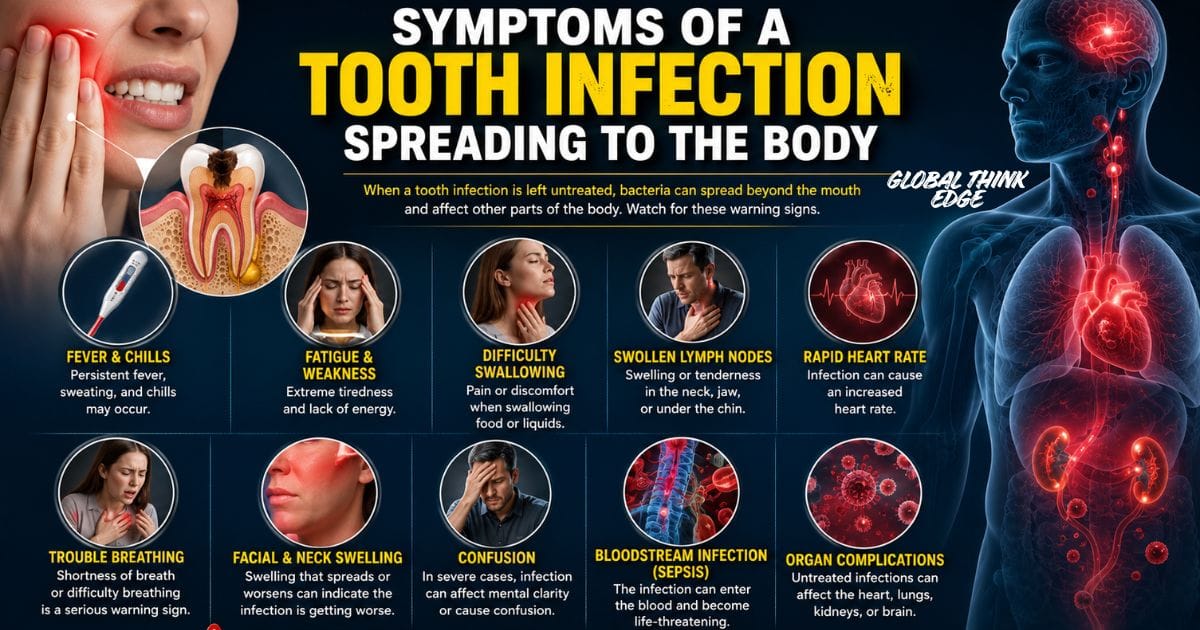
One of the biggest concerns with an untreated dental abscess is the possibility of bacteria entering the bloodstream or surrounding tissues.
Watch for these symptoms:
Persistent fever above 101°F (38.3°C)
Swelling that continues to grow
Difficulty swallowing food or liquids
Shortness of breath
Fast heartbeat
Severe fatigue
Dizziness
Confusion or changes in mental alertness
These symptoms should never be ignored. They may indicate a widespread infection that needs urgent medical evaluation.
Signs of Infection After Tooth Extraction
Although most tooth extractions heal without problems, infections can occasionally develop during recovery.
Normal healing usually includes mild discomfort, slight swelling, and gradual improvement over several days.
Warning signs of infection include:
Increasing pain instead of improving pain
Thick yellow or white discharge
Persistent bad taste or foul odor
Fever
Significant swelling after the third day
Difficulty opening the mouth
Redness that continues spreading around the extraction site
If these symptoms appear, contact your dentist promptly. Early treatment can prevent the infection from becoming more serious.
Factors That Increase the Risk of Serious Complications
Not every tooth infection becomes life-threatening. However, certain factors can make bacteria spread more quickly or reduce your body’s ability to fight the infection.
Higher-Risk Situations
Delaying dental treatment for several days or weeks
A weakened immune system
Diabetes that is not well controlled
Smoking or tobacco use
Poor oral hygiene
Previous untreated dental infections
Severe gum disease
People with these risk factors should seek dental care as soon as symptoms appear instead of waiting for the pain to worsen.
Can Your Body Fight Off a Tooth Infection on Its Own?
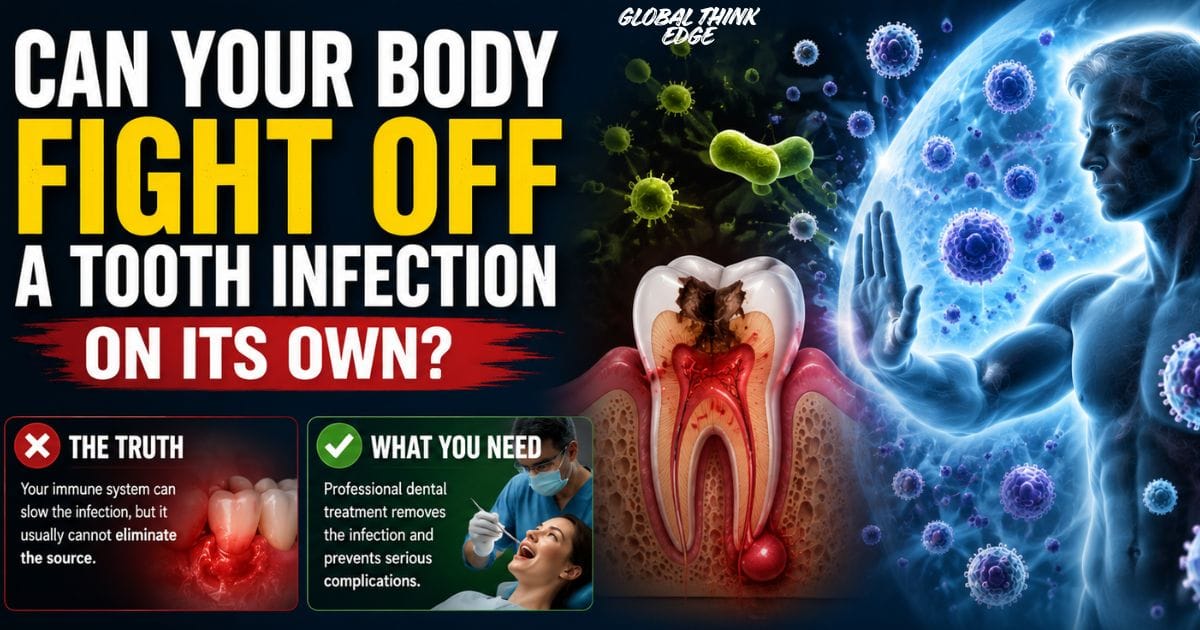
The immune system can slow the spread of bacteria, but it usually cannot eliminate the source of a tooth infection. Once bacteria reach the inner pulp or form an abscess, professional treatment is typically necessary.
Some people notice temporary pain relief if the abscess drains naturally. While this may reduce pressure, it does not remove the infection. The bacteria can continue to spread beneath the surface.
Are Home Remedies Effective?
Home remedies may provide short-term comfort but should never replace dental treatment.
They may help by:
Rinsing with warm salt water to keep the area clean
Taking over-the-counter pain relievers as directed
Applying a cold compress to reduce swelling
Staying hydrated
However, home remedies cannot cure a tooth infection or remove an abscess. Delaying professional care increases the risk of complications.
How Dentists Treat a Tooth Infection
Treatment depends on how far the infection has progressed and whether it has spread beyond the tooth.
Antibiotics
Dentists may prescribe antibiotics if the infection has spread or if there is noticeable swelling. Antibiotics help control bacterial growth but usually do not remove the source of the infection.
Root Canal Treatment
If the tooth can be saved, a root canal removes the infected pulp, disinfects the inside of the tooth, and seals it to prevent future infection.
Draining the Abscess
A dentist may make a small opening to drain pus from the abscess. This relieves pressure and helps reduce pain while addressing the infection.
Tooth Extraction
If the tooth cannot be restored, extraction may be the safest option to remove the infection completely.
Hospital Care
Severe infections that affect breathing, swallowing, or the bloodstream may require hospitalisation, intravenous (IV) antibiotics, and close medical monitoring.
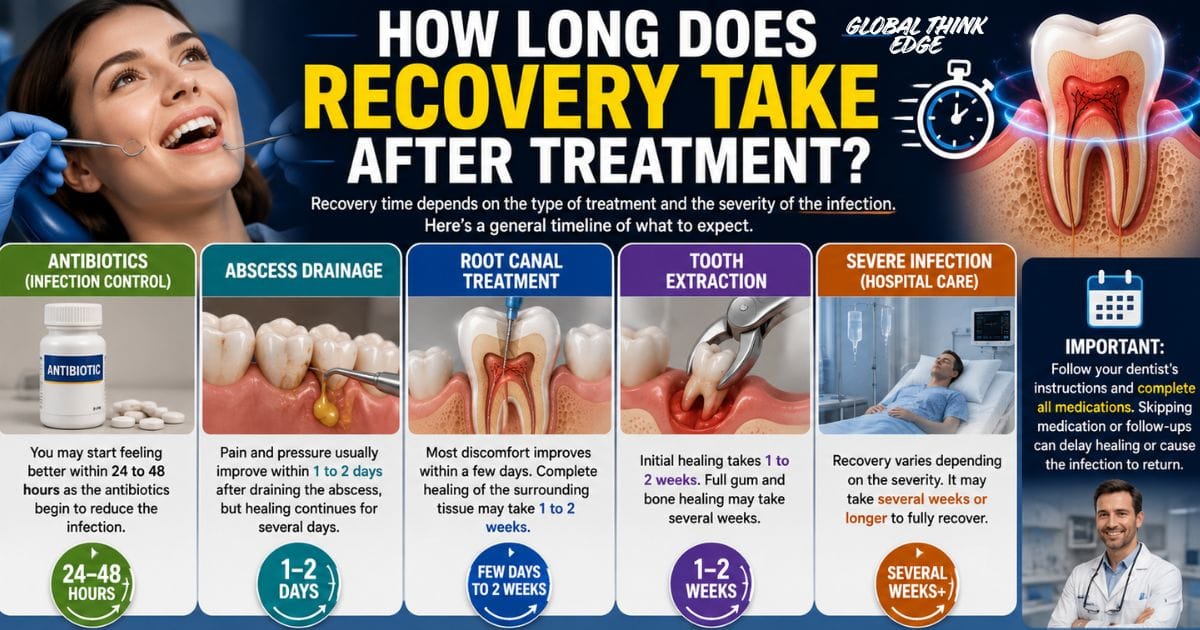
How Long Does Recovery Take After Treatment?
Recovery depends on the type of treatment and the severity of the infection.
| Treatment | Typical Recovery Time |
| Antibiotics begin working | 24–48 hours |
| Abscess drainage | Pain often improves within 1–2 days |
| Root canal | Most discomfort improves within a few days |
| Tooth extraction | Initial healing in 1–2 weeks |
| Severe infection requiring hospitalization | Recovery varies depending on the condition |
Even if symptoms improve quickly, it is important to complete the full course of antibiotics and attend any recommended follow-up appointments.
When Should You Go to the Emergency Room?
A dentist can manage most tooth infections. However, some symptoms require immediate emergency care because they may indicate that the infection is spreading rapidly.
Go to the emergency room if you have:
Difficulty breathing
Difficulty swallowing
Rapidly increasing facial or neck swelling
A high fever with chills
Confusion or unusual drowsiness
Severe dehydration
Chest pain or a rapid heartbeat along with signs of infection
Do not wait for a dental appointment if these symptoms develop. Prompt medical treatment can prevent serious complications.
Who Is Most at Risk?” section
People Who Should Seek Prompt Dental Care
The risk of complications is higher for:
Adults over 65
People with diabetes
Individuals receiving chemotherapy
Organ transplant recipients
Smokers
People with untreated gum disease
Anyone with a weakened immune system
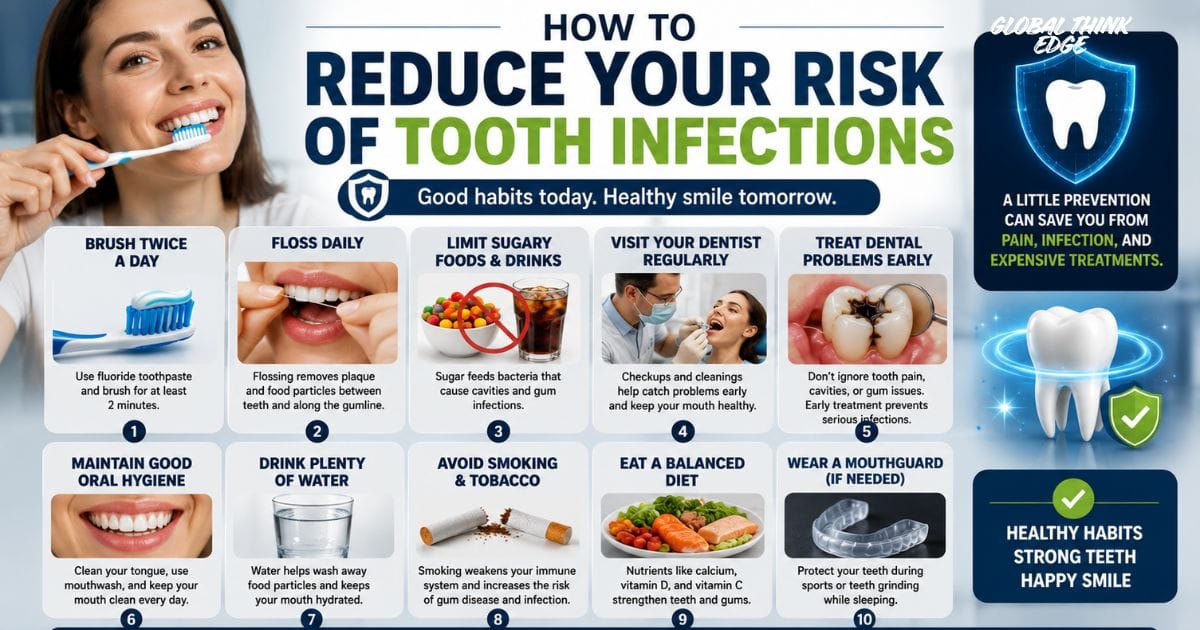
How to Reduce Your Risk of Tooth Infections
Good oral health habits are the best defence against dental infections.
Daily Prevention Tips
Brush your teeth twice a day with fluoride toothpaste.
Floss daily to remove plaque between teeth.
Limit sugary foods and drinks.
Schedule routine dental checkups and cleanings.
Treat cavities and cracked teeth early.
Replace damaged fillings or crowns when recommended.
Avoid smoking and tobacco products.
Preventive care is usually simpler, less expensive, and more comfortable than treating an advanced infection.
Tooth Infection: Early vs. Emergency Symptoms
| Early Symptoms | Emergency Symptoms |
| Mild toothache | Difficulty breathing |
| Tooth sensitivity | Difficulty swallowing |
| Slight gum swelling | Rapid facial or neck swelling |
| Pain while chewing | High fever with chills |
| Bad breath | Confusion or extreme weakness |
| Mild gum redness | Signs of sepsis or widespread infection |
Knowing the difference can help you decide when to schedule a dental visit and when to seek emergency medical care.
Key Takeaways
A tooth infection has no fixed timeline before becoming life-threatening.
Early treatment greatly reduces the risk of serious complications.
Difficulty breathing, swallowing, or rapidly spreading swelling requires emergency medical care.
Home remedies may ease discomfort but cannot cure a dental abscess.
Medical Disclaimer
This article is for educational purposes only and should not replace professional medical or dental advice. If you have severe tooth pain, facial swelling, fever, difficulty swallowing, or trouble breathing, seek immediate medical or dental care.
Conclusion
A tooth infection should never be ignored, even if the pain seems manageable. While there is no exact answer to how long until a tooth infection kills you, delaying treatment increases the risk that bacteria will spread beyond the tooth and lead to serious complications. The good news is that modern dental care can successfully treat most infections when they are diagnosed early.
If you notice persistent tooth pain, swelling, fever, or signs that the infection is spreading, arrange a dental evaluation without delay. Quick treatment not only relieves discomfort but also protects your overall health and helps prevent complications that could become life-threatening.
Frequently Asked Questions
Can a tooth infection kill you overnight?
This is extremely unlikely. However, severe untreated infections can worsen quickly and become dangerous if they spread to vital areas of the body.
How long can someone live with an untreated tooth infection?
There is no predictable timeline. Some infections progress slowly, while others spread within days. Because there is no way to know how an individual infection will behave, prompt treatment is always the safest choice.
Can antibiotics completely cure a tooth infection?
Not always. Antibiotics help control bacteria, but many infections also require a root canal, abscess drainage, or tooth extraction to remove the source.
Can a tooth infection spread without pain?
Yes. In some cases, pain decreases after an abscess drains, but the infection may continue spreading beneath the surface.
How do I know if the infection has reached my bloodstream?
Symptoms such as high fever, rapid heartbeat, confusion, severe fatigue, and widespread swelling may suggest a serious infection. Seek emergency medical care immediately if these occur.
Is facial swelling always an emergency?
Mild swelling should be evaluated by a dentist as soon as possible. Swelling that spreads quickly, affects the eyes or neck, or makes breathing or swallowing difficult is a medical emergency.
