
AUS 32 Diesel Exhaust Fluid: Expert Tips for Clean Emissions
Understanding AUS 32 Diesel Exhaust Fluid and Why It Matters
AUS 32 diesel exhaust fluid is a high-purity solution that helps modern diesel engines meet strict emissions regulations without sacrificing power or fuel efficiency. Also known as Diesel Exhaust Fluid (DEF), AdBlue, or Aqueous Urea Solution 32.5, it works alongside Selective Catalytic Reduction (SCR) technology to convert harmful nitrogen oxides (NOₓ) into harmless nitrogen and water vapor.
AUS 32 diesel exhaust fluid is injected into the exhaust stream, where it reacts with NOₓ inside the SCR system to break it down into nitrogen and water vapor-two harmless byproducts. This chemical process is what allows diesel engines to hit strict environmental standards without the power or efficiency trade-offs older emissions technologies required.
What Is AUS 32 Diesel Exhaust Fluid?
AUS 32 (Aqueous Urea Solution 32.5) is a precisely formulated solution consisting of the following:
| Component | Percentage |
| High-purity synthetic urea | 32.5% |
| Deionized water | 67.5% |
The solution is manufactured according to ISO 22241, the international quality standard that defines the purity, composition, storage, handling, and testing requirements for diesel exhaust fluid.
Unlike fuel additives, AUS 32 is never mixed with diesel fuel. Instead, it is stored in a separate tank and automatically injected into the exhaust system when needed.
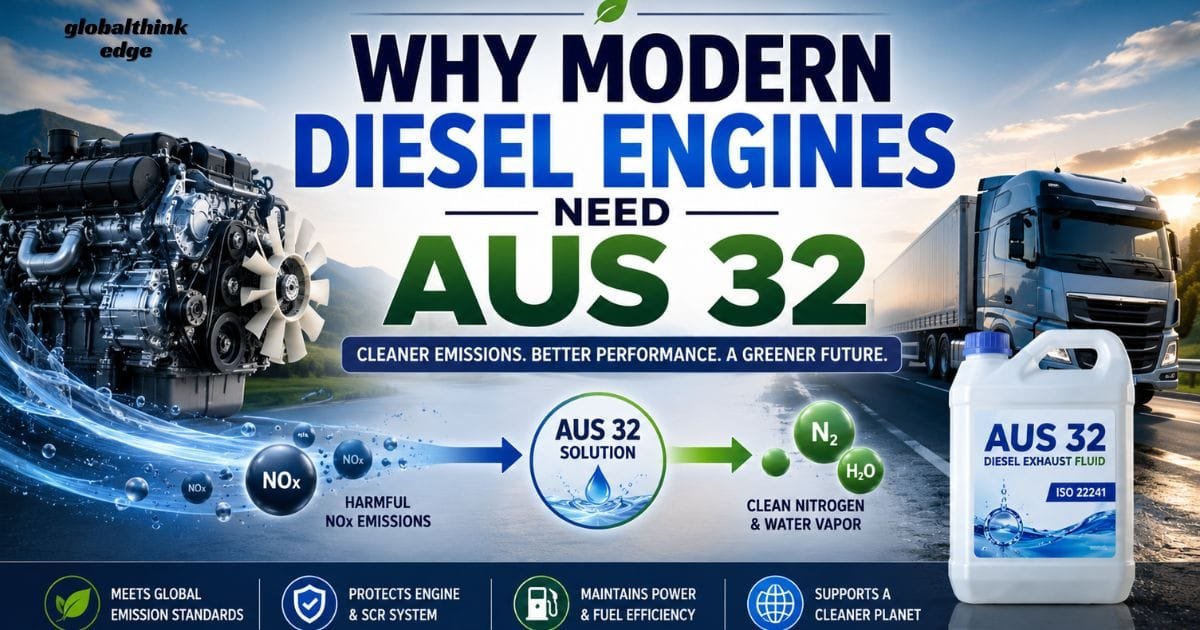
Why Modern Diesel Engines Need AUS 32
Diesel engines are known for producing excellent torque and fuel economy. However, they also generate nitrogen oxides (NOx), one of the major contributors to air pollution and smog.
To meet global emission standards such as
Euro VI
EPA regulations
Bharat Stage VI (BS6)
China VI
Other international diesel emission standards
Manufacturers introduced SCR technology, which depends on AUS 32 to function effectively.
Without this fluid, modern SCR-equipped engines cannot maintain their designed emission performance.
How AUS 32 Works Inside the SCR System
Many people assume DEF cleans the engine itself, but its primary purpose is to clean the exhaust gases, not the engine.
The process works in several stages:
The diesel engine produces exhaust gases.
Sensors detect NOx levels.
The SCR system injects a measured amount of AUS 32 into the exhaust stream.
Heat converts the urea into ammonia.
The ammonia reacts with nitrogen oxides inside the catalyst.
Harmful NOx transforms into harmless nitrogen and water vapor before leaving the tailpipe.
This chemical process significantly lowers emissions without reducing engine performance.
Key Characteristics of High-Quality AUS 32
Not every urea solution is suitable for SCR systems.
Premium AUS 32 offers several essential characteristics:
Ultra-high chemical purity
Accurate 32.5% urea concentration
Free from minerals and metals
Produced using deionized water
Stable under recommended storage conditions
Compatible with ISO 22241 requirements
Even small amounts of contamination can damage SCR components and reduce system efficiency.
AUS 32, DEF, AdBlue, and ARLA 32: Are They Different?
One of the most common sources of confusion is the variety of names used across different regions.
| Name | Common Region | Description |
| AUS 32 | Global industrial term | Official ISO designation |
| DEF | North America | Diesel Exhaust Fluid |
| AdBlue | Europe, Australia, many international markets | Registered commercial trademark for certified AUS 32 |
| ARLA 32 | Latin America and selected markets | Regional commercial name |
Although the names differ, they generally refer to the same standardized fluid when manufactured according to ISO 22241.
Why the Concentration Is Exactly 32.5%
Many users wonder why manufacturers chose 32.5% instead of a round number like 30% or 35%.
The answer lies in chemistry.
At this concentration, the solution provides:
Excellent freezing characteristics
Stable chemical composition
Efficient ammonia production
Reliable SCR performance
Consistent emission reduction
Researchers found this concentration delivers the most effective balance between performance and stability across a wide range of operating temperatures.
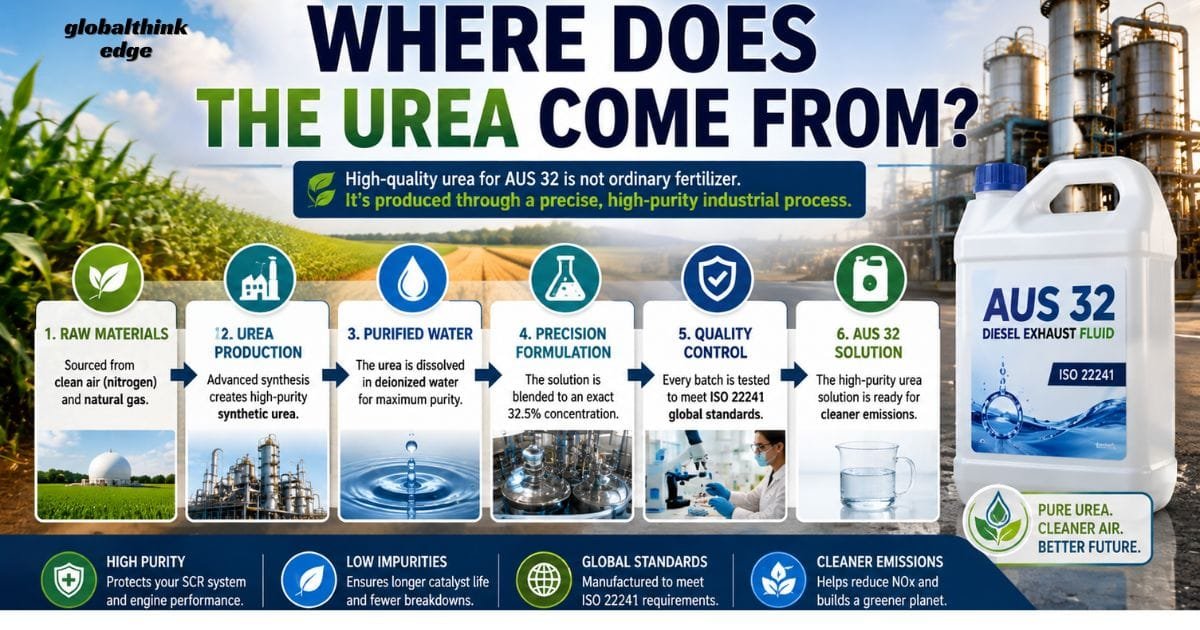
Where Does the Urea Come From?
A common misconception is that AUS 32 contains agricultural fertilizer.
While both products contain urea, the manufacturing standards are entirely different.
Automotive-grade urea is produced through highly controlled industrial processes that remove impurities capable of damaging sensitive SCR catalysts.
Agricultural fertilizer often contains additional substances that make it unsuitable for emission control systems.
For this reason, only certified automotive-grade urea should be used when producing AUS 32.
How AUS 32 Is Manufactured
Producing high-quality diesel exhaust fluid requires strict quality control from start to finish.
The manufacturing process typically includes:
1. Producing ultra-pure synthetic urea.
2. Purifying water through deionization.
3. Mixing both ingredients under controlled conditions.
4. Filtering the finished solution.
5. Laboratory testing for ISO compliance.
6. Filling contamination-free storage containers.
Every stage is designed to prevent the introduction of minerals, dust, oils, or metallic particles that could reduce SCR efficiency.
Common Applications of AUS 32
As emission regulations continue to tighten worldwide, AUS 32 has become essential across numerous industries.
It is widely used in:
Heavy-duty trucks
Long-haul transportation fleets
Agricultural machinery
Construction equipment
Mining vehicles
Public transportation buses
Marine diesel applications
Industrial generators
Logistics and distribution fleets
Modern diesel SUVs and pickup trucks equipped with SCR systems
Its broad adoption reflects the growing global commitment to reducing diesel emissions while maintaining engine performance.
Benefits Beyond Emission Compliance
Although environmental protection is its primary purpose, AUS 32 offers several operational advantages when used correctly.
Key benefits include the following:
Significant reduction in NOx emissions
Improved compliance with international regulations
Better compatibility with modern SCR technology
Maintains designed engine performance
Helps protect catalytic components
Supports cleaner air initiatives
Reduces the environmental impact of diesel transportation
Rather than restricting engine power, SCR systems allow manufacturers to optimize combustion efficiency while controlling emissions separately through the exhaust after-treatment process.

Best Practices for Storing and Handling AUS 32
Proper storage is just as important as using the correct fluid. Even certified AUS 32 can become unsuitable if it is contaminated or stored incorrectly.
Follow these best practices:
Store containers in a cool, shaded location.
Keep the container tightly sealed after each use.
Use dedicated equipment designed for DEF handling.
Prevent contact with fuel, oil, grease, or dust.
Avoid transferring the fluid into unclean containers.
Follow the manufacturer’s recommended storage temperature.
Because AUS 32 is highly sensitive to contamination, even a small amount of dirt or minerals can affect SCR system performance.
How Much AUS 32 Does a Diesel Vehicle Consume?
Consumption depends on several factors, including engine size, operating conditions, and vehicle load.
In most modern diesel vehicles, AUS 32 consumption is approximately 2–5% of diesel fuel consumption.
For example:
| Diesel Used | Estimated AUS 32 Consumption |
| 100 Liters | 2–5 Liters |
| 500 Liters | 10–25 Liters |
| 1,000 Liters | 20–50 Liters |
Heavy-duty trucks operating under high loads may consume more DEF than passenger vehicles.
Fortunately, modern vehicles continuously monitor fluid levels and notify the driver when a refill is needed.
Common Mistakes That Can Damage the SCR System
Many SCR-related problems are caused by improper handling rather than equipment failure.
Avoid these common mistakes:
Filling the DEF tank with diesel fuel.
Mixing water with AUS 32.
Using agricultural-grade urea.
Buying low-quality or uncertified products.
Ignoring contamination during storage.
Continuing to drive after repeated SCR warning messages.
These mistakes can lead to injector blockages, catalyst damage, expensive repairs, and reduced emission performance.
Can You Make AUS 32 Yourself?
Some fleet operators wonder whether producing DEF in-house can reduce operating costs.
In practice, manufacturing AUS 32 is not recommended unless the facility can consistently meet ISO 22241 quality requirements.
Producing compliant DEF requires:
High-purity synthetic urea
Laboratory-grade deionized water
Precision mixing equipment
Clean-room manufacturing conditions
Continuous quality testing
Strict contamination control
Without these controls, the finished product may damage SCR components and void equipment warranties. For most businesses, purchasing certified AUS 32 from a trusted supplier is the safer and more economical option.
Choosing a Reliable AUS 32 Supplier
Not all products available in the market meet international quality standards.
When selecting a supplier, look for:
ISO 22241 compliance
Consistent product quality
Reliable manufacturing processes
Proper packaging and labeling
Batch traceability
Good storage and distribution practices
Technical support for commercial users
A reputable supplier helps ensure consistent SCR performance and minimizes the risk of contamination.
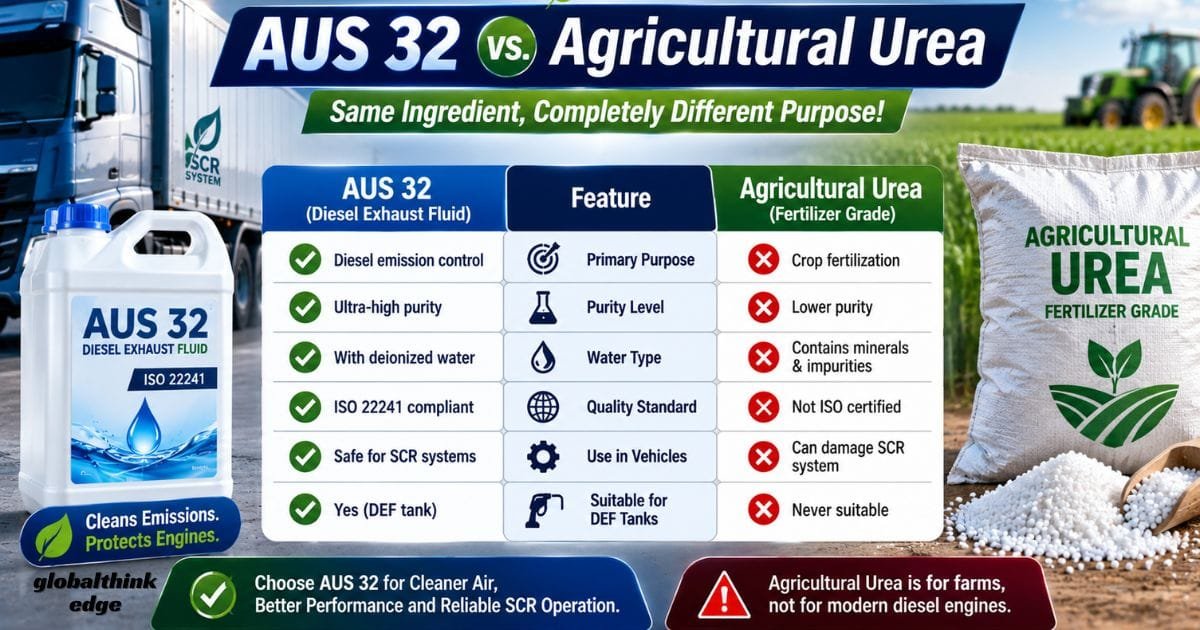
AUS 32 vs. Agricultural Urea
Although both products contain urea, they serve entirely different purposes.
| Feature | AUS 32 | Agricultural Urea |
| Primary Purpose | Diesel emission control | Crop fertilization |
| Purity | Ultra-high | Lower |
| Deionized Water | Yes | No |
| ISO 22241 Compliant | Yes | No |
| Safe for SCR Systems | Yes | No |
| Suitable for DEF Tanks | Yes | Never |
Using fertilizer-grade urea in an SCR-equipped vehicle can cause serious system damage and should always be avoided.
Frequently Asked Questions
Is AUS 32 the same as AdBlue?
Yes. AUS 32 is the official ISO name, while AdBlue is a registered brand name used in many countries. When both comply with ISO 22241, they perform the same function.
Can AUS 32 freeze?
Yes. AUS 32 freezes at approximately -11°C (12°F). Modern SCR systems are designed to thaw the fluid automatically, so freezing under normal conditions is not a concern.
Does AUS 32 improve fuel economy?
Its primary purpose is emission control rather than fuel savings. However, SCR technology allows manufacturers to optimize engine combustion while maintaining emission compliance, which may contribute to efficient overall engine operation.
Is AUS 32 hazardous?
It is generally considered non-flammable and safe to handle when used according to manufacturer guidelines. Basic protective practices, such as avoiding contamination and cleaning spills promptly, are recommended.
What happens if the DEF tank becomes empty?
Most modern diesel vehicles will display warning messages as the DEF level drops. If ignored, the vehicle may limit engine performance or prevent restarting until the tank is refilled with compliant AUS 32.
Expert Tips for Long-Term SCR Performance
To maximize the life of your emission control system:
Always refill with certified AUS 32.
Inspect the DEF tank cap for damage.
Avoid purchasing products with unclear manufacturing information.
Rotate stored stock to use older containers first.
Keep dispensing equipment clean and dedicated to DEF.
Address dashboard warnings promptly.
Follow the maintenance schedule recommended by the vehicle manufacturer.
These simple practices help reduce repair costs and ensure reliable SCR operation.
Conclusion
AUS 32 diesel exhaust fluid is far more than an emissions additive; it is a critical component of modern diesel technology. By converting harmful nitrogen oxide emissions into harmless nitrogen and water vapor, it enables vehicles and industrial equipment to meet stringent environmental standards without compromising engine performance.
Understanding the differences between AUS 32, DEF, and AdBlue, choosing ISO 22241-compliant products, storing the fluid correctly, and avoiding contamination are all essential for maintaining a healthy SCR system. Whether you operate a single diesel vehicle or manage an international fleet, using high-quality AUS 32 and following best practices will support cleaner emissions, regulatory compliance, and dependable long-term performance.
