Anvil Horn Technologies: Uses, Design & Key Facts
What Are Anvil Horn Technologies?
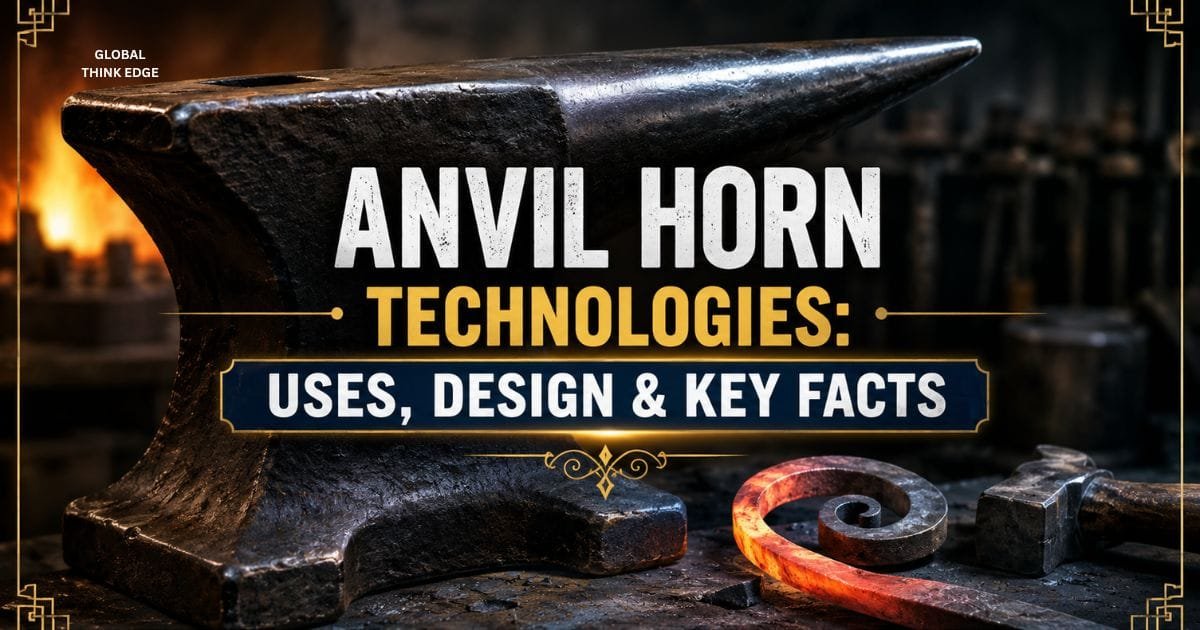
Anvil horn technologies refers to the design and practical use of the tapered horn on a blacksmith’s anvil. The horn provides a rounded working surface for bending, shaping, drawing, and expanding suitable metalwork.
The term anvil horn technology does not usually describe a separate machine or modern industrial technology. It mainly relates to the horn’s geometry and how metalworkers use that shape to control metal during forging.
A traditional anvil usually includes a flat face, horn, hardy hole, and pritchel hole. Each part has a different purpose, and the horn is mainly designed for curved work.
What Is an Anvil Horn Used For?
An anvil horn is primarily used to bend and form metal into curved shapes. It is useful for making rings, hooks, eyes, loops, scrolls, and other rounded forms.
It can also support selected drawing operations and help enlarge certain punched openings. Its tapered shape provides different working diameters along the same horn.
How Does an Anvil Horn Work?
An anvil horn works as a solid curved support beneath heated metal. The worker places the hot section over the appropriate part of the horn and uses controlled hammer blows to move the metal around the curve.
The taper allows the worker to change the working radius simply by moving the material along the horn.
A wider section produces a broader curve, while a narrower section can create a tighter curve.
Why Is the Horn Tapered?
The horn is tapered to provide different radii for different forming jobs. This makes the anvil more versatile because one horn can support many curve sizes.
The taper also gives the blacksmith better control when gradually forming a workpiece instead of forcing it into one fixed radius.
Main Uses of Anvil Horn Technology
1. Bending Metal
Bending is the most common use of an anvil horn.
A heated bar is placed over the horn and struck gradually until it reaches the required curve. The worker can rotate and reposition the metal between hammer blows.
This method works well for hooks, handles, brackets, rings, loops, and decorative shapes.
2. Making Rings and Curves
The horn provides a natural surface for creating circular and semi-circular forms.
The final diameter depends on the section of the horn used, the dimensions of the workpiece, and how much the metal is moved during forging.
Thicker stock may require several heats to achieve an even curve.
3. Forming Eyes
An eye is a loop formed at the end of a metal bar. Eyes are common in tools, hinges, hooks, and other forged parts.
The heated end can be bent around the horn to establish the basic shape. A punch or drift can then refine the opening when necessary.
4. Making Hooks
Hooks require controlled curves rather than simple flat bends. The horn provides the rounded support needed to create these shapes.
The worker can begin with a wider curve and gradually tighten it as the metal reaches the desired form.
5. Drawing Down Stock
The horn can assist with drawing down, which reduces a section of metal while increasing its length.
Its rounded surface changes the way metal moves under hammering. However, the flat face is often better for general drawing, so the horn should be used when its curved geometry offers an advantage.
6. Enlarging Punched Holes
The horn can help enlarge certain punched openings.
A hot workpiece can be positioned over the horn and worked gradually to expand the opening. This can help maintain a rounded shape.
For accurate hole dimensions, a suitable drift or dedicated forming tool may provide better control.
Anvil Horn vs. Flat Face
The horn is mainly for curved forming, while the flat face is the general-purpose forging surface.
| Feature | Anvil Horn | Flat Face |
| Shape | Rounded and tapered | Broad and flat |
| Main use | Curving and forming | General forging |
| Best for | Rings, hooks, eyes, bends | Flattening and straightening |
| Working radius | Changes along the horn | Flat |
| Hole work | Useful for selected openings | Better for supporting punching |
| Drawing | Useful for selected jobs | Common for general drawing |
Using the correct surface makes forging easier and improves control over the finished shape.
How Does Horn Shape Affect Metal Forming?
Horn geometry directly affects the radius of the finished curve.
A larger section of the horn supports a wider bend. A smaller section supports a tighter bend.
The transition between the flat face and horn also matters. A smooth transition makes it easier to move the workpiece between different working areas.
A properly finished surface can also reduce unwanted marks on the metal.
What Metals Can Be Worked on an Anvil Horn?
Anvil horns are commonly used with forgeable metals such as carbon steel and wrought iron. Other alloys can also be formed when their forging characteristics and working temperatures are understood.
Different metals respond differently to heat and hammering. The correct forging temperature therefore depends on the material rather than the anvil alone.
The thickness and shape of the workpiece also affect how easily it can be formed.
Forged vs. Cast Anvil Horns
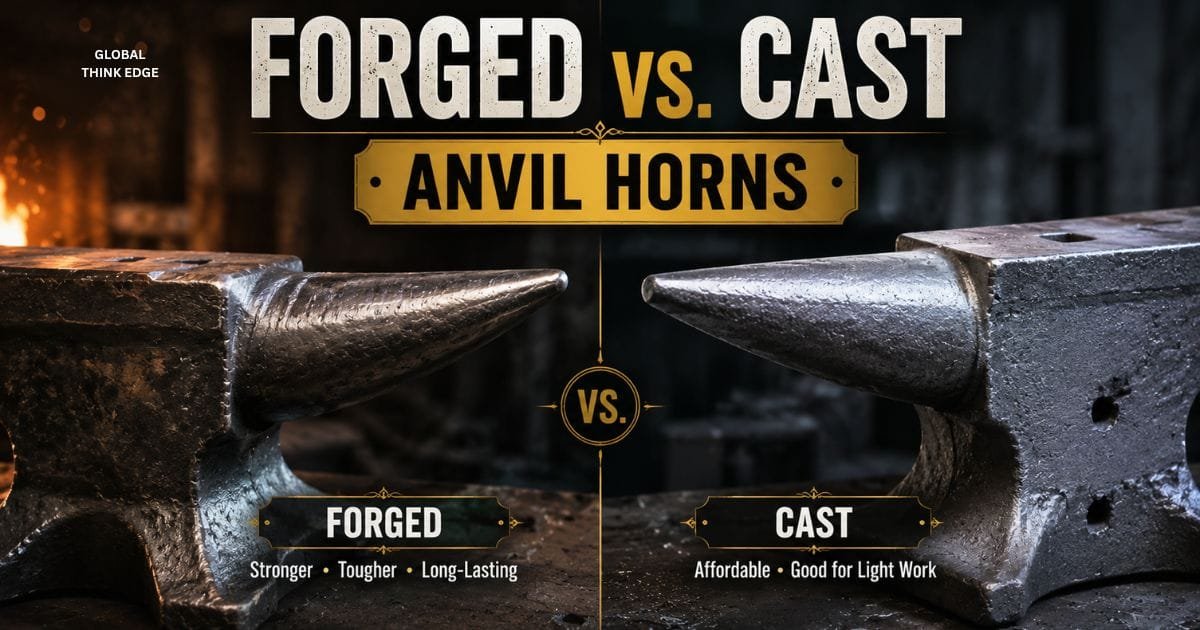
Forged and cast anvils can both have functional horns, but their construction and performance characteristics differ.
Forged anvils are made by mechanically working heated steel into shape. Cast anvils are produced by pouring molten material into a mold.
For demanding work, the overall anvil matters more than the horn alone. Steel quality, hardness, construction, horn geometry, and anvil size all affect performance.
A small horn can work well for light metalworking, while heavy forging requires equipment designed for repeated impact.
What Makes a Good Anvil Horn?
A good anvil horn should provide:
- A smooth working surface for controlled forming
- A useful taper for different bending radii
- Adequate strength for repeated hammering
- A smooth transition from the face to the horn
- Enough length for the intended work
- Suitable proportions for the anvil’s size
A larger horn is not automatically better. The correct size depends on the type of metalwork being performed.
Common Anvil Horn Mistakes
Using Too Much Force
Heavy hammer blows can make curves harder to control. Controlled strikes usually provide better results.
Choosing the Wrong Radius
Using the wrong section of the horn can produce a curve that is too wide or too tight. Select the area that best matches the intended shape.
Working Metal Too Cold
Cold metal is harder to form. Continuing to force it can waste effort and may damage the workpiece.
Ignoring the Shape During Forging
Check the workpiece regularly. Small corrections are easier before an incorrect curve becomes difficult to remove.
Using the Horn for Everything
The horn does not replace the flat face, punches, drifts, fullers, swages, or other specialized forging tools.
Anvil Horn Technology in Modern Metalworking
The basic anvil horn remains useful because its design is simple and effective. It provides a strong curved surface without requiring a complicated mechanism.
Modern workshops also use hydraulic presses, power hammers, forming machines, and CNC equipment. However, traditional forming remains practical for many small-scale and custom metalworking jobs.
Anvil horns are still relevant in blacksmithing, repair work, toolmaking, restoration, fabrication, and artistic forging.
How to Use an Anvil Horn Safely
Safe horn use requires controlled hammering, proper heating, and suitable workshop protection.
Hot metal can cause serious burns, while hammering can produce flying scale. Eye protection and suitable protective clothing are important.
Keep the area around the anvil clear and use properly matched tools. Do not continue forcing metal after it has cooled below a suitable working temperature.
For operations beyond the anvil’s intended capacity, use a purpose-built forming tool.
Key Takeaway
Anvil horn technologies are based on the tapered, curved design of an anvil horn and its use in controlled metal forming.
The horn is mainly used for bending and creating curved shapes such as rings, hooks, eyes, loops, and scrolls. It can also support selected drawing and hole-expansion operations.
Its tapered geometry is its biggest advantage because different sections provide different working radii.
For blacksmiths and metalworkers, the basic rule is simple: use the flat face for broad, flat forging and the horn when the work requires a controlled curve.
Final Verdict
Anvil horn technology is not a separate modern machine but a practical forging concept built around the tapered horn of an anvil. Its main value comes from giving metalworkers a strong, curved surface for controlled shaping.
The horn remains useful because it can handle several forming tasks with one simple design. Its changing radius makes it especially effective for bends, rings, hooks, eyes, loops, and other curved metalwork.
For anyone learning blacksmithing, understanding the horn’s geometry and knowing when to use it instead of the flat face can lead to cleaner shapes, better control, and more efficient forging.

Pingback: Glossywise Com: Features, Categories and Key Facts