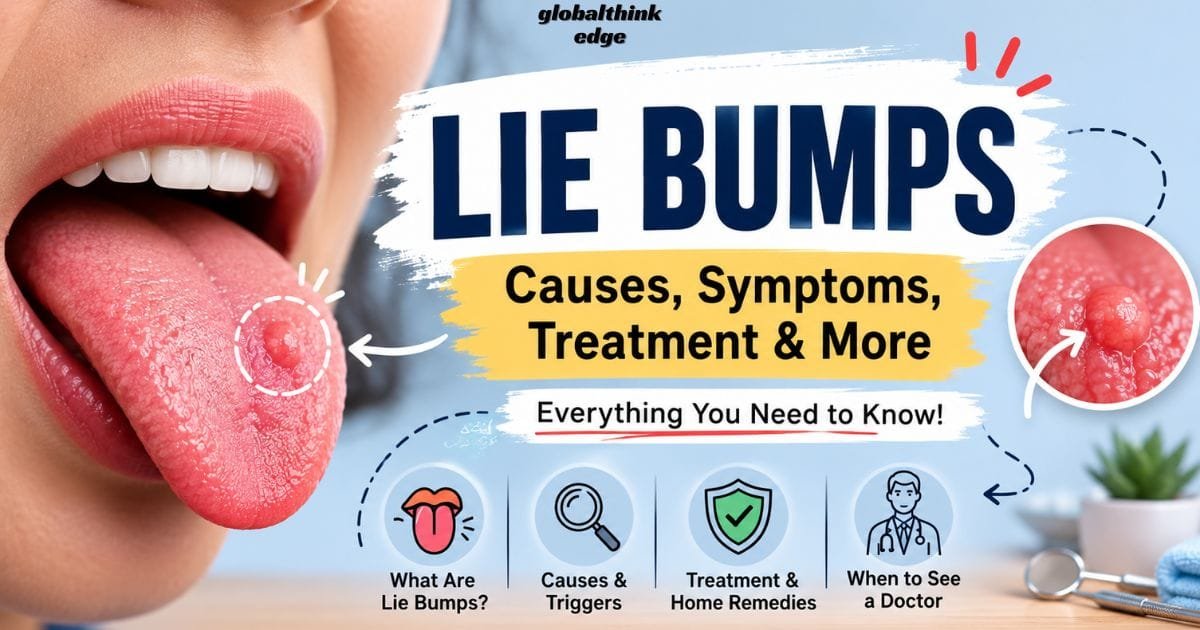
Lie Bumps: Causes, Symptoms, Treatment, and When to Worry
What Are Lie Bumps?
Lie bumps are small, painful bumps that suddenly appear on the tongue, often causing discomfort while eating, drinking, or speaking. Although many people believe they develop after telling a lie, this is only a myth. In reality, lie bumps are a harmless oral condition medically known as ‘transient lingual papillitis’ (TLP).
These tiny bumps form when one or more of the tongue’s papillae (taste buds) become irritated or inflamed. Most cases heal naturally within a few days without leaving any lasting damage. However, recurring bumps or symptoms that persist for more than two weeks may require evaluation by a dental professional or healthcare provider.
Understanding why lie bumps occur, how to identify them, and when they may indicate another oral condition can help you manage symptoms confidently while protecting your overall oral health.
Why Are They Called “Lie Bumps”?
The nickname “lie bumps” comes from an old folklore belief that a bump on the tongue appeared whenever someone told a lie. There is no scientific evidence supporting this idea. Modern research shows these bumps are linked to temporary inflammation rather than dishonesty.
Although the traditional name remains popular, dentists prefer the medical term transient lingual papillitis because it accurately describes the condition.
Are Lie Bumps Common?
Yes. Lie bumps are considered fairly common and can affect both children and adults. Many people experience them at least once during their lifetime, while others may develop them occasionally due to irritation or other triggers.
Fortunately, they are usually harmless and short-lived.
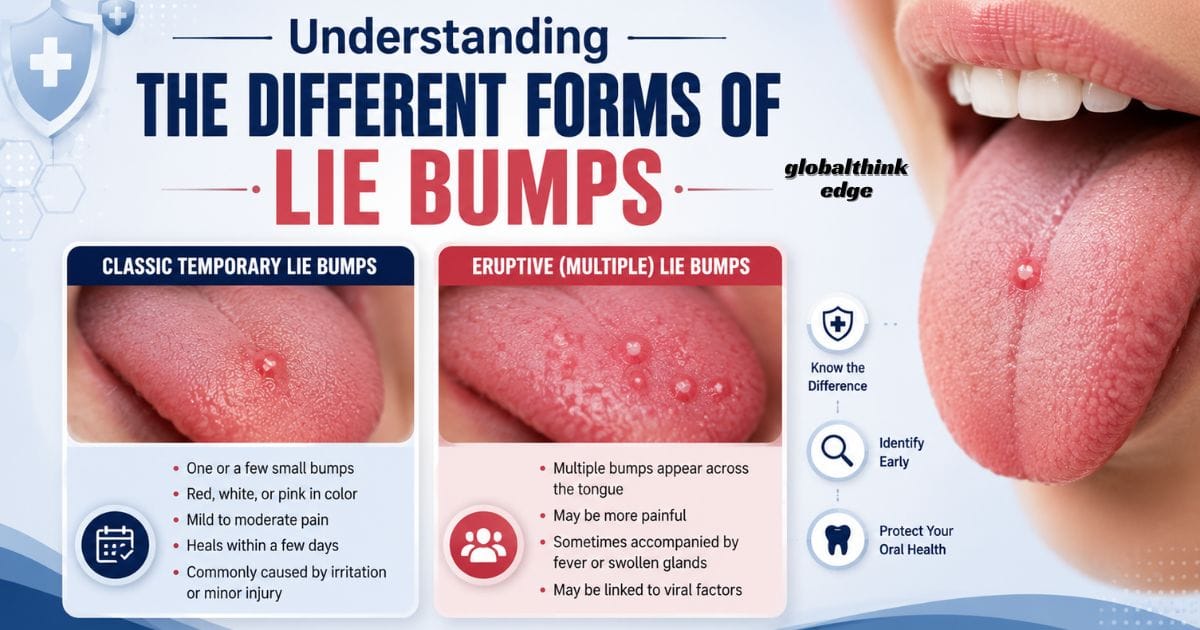
Understanding the Different Forms of Lie Bumps
Not every lie bump looks or behaves the same. Dentists generally recognize two common presentations.
Classic Temporary Lie Bumps
This is the most common form.
Characteristics include:
One or several small bumps
Red, white, or pink appearance
Mild to moderate pain
Usually disappear within a few days
People often notice these bumps after accidentally biting their tongue or eating spicy foods.
Eruptive Lie Bumps
This less common type usually appears as multiple painful bumps across the tongue.
Additional symptoms may include:
Fever (particularly in children)
Swollen glands
Increased sensitivity while eating
General discomfort
Unlike the classic form, eruptive transient lingual papillitis may spread among family members in rare situations, suggesting a possible viral association.
What Causes Lie Bumps on the Tongue?
The exact cause of transient lingual papillitis remains uncertain. However, researchers believe several factors may trigger inflammation of the tongue’s papillae.
Minor Tongue Injury
Accidentally biting your tongue or scraping it against sharp teeth, braces, or rough foods can irritate the delicate tissue and cause a lie bump on the tongue.
Common examples include:
Crunchy chips
Hard candy
Sharp food edges
Dental appliances
Spicy, Acidic, or Hot Foods
Foods that irritate the tongue may temporarily inflame the taste buds.
Examples include:
Chili peppers
Citrus fruits
Pineapple
Hot beverages
Vinegar-based foods
Reducing these foods while the tongue heals often helps relieve discomfort.
Emotional Stress
Stress affects more than mental health. It may also influence the body’s inflammatory response and immune system, increasing the likelihood of developing oral conditions, including lie bumps.
People often notice a lie bump during busy work periods, exams, or emotional stress.

Food Allergies and Sensitivities
Certain ingredients may irritate sensitive oral tissues.
Potential triggers include the following:
Cinnamon
Artificial flavourings
Certain fruits
Food preservatives
If bumps repeatedly occur after eating the same foods, keeping a food diary may help identify patterns.
Viral Infections
Some experts believe viral infections may contribute to eruptive transient lingual papillitis, especially when several family members develop symptoms around the same time.
More research is still needed to fully understand this possible connection.
Hormonal Changes
Temporary hormonal fluctuations may make some individuals more prone to inflammation throughout the body, including the tongue.
Although evidence remains limited, some patients report recurring lie bumps during hormonal changes.
Poor Oral Hygiene
Bacteria and food debris can increase irritation inside the mouth.
Maintaining good oral hygiene helps lower inflammation and supports faster healing.
Healthy habits include:
Brushing twice daily
Cleaning the tongue gently
Flossing every day
Using an alcohol-free mouthwash
Nutritional Factors
Low levels of certain nutrients, such as vitamin B12, folate, or iron, have been associated with tongue discomfort in some people.
Although these deficiencies do not directly cause lie bumps, correcting nutritional imbalances may improve overall oral health.
Signs and Symptoms of a Lie Bump
Most people recognize a lie bump because of its sudden appearance and tenderness.
Symptoms may include:
A small raised bump on the tongue
Pain while eating
Burning or tingling sensation
Red, white, or yellowish bump
Increased sensitivity to spicy or acidic foods
Mild swelling around the affected papilla
Temporary discomfort while speaking
Most lie bumps measure only a few millimetres and remain confined to one area of the tongue.
Can Lie Bumps Appear Anywhere on the Tongue?
Yes. Although they most commonly develop on the tip or sides of the tongue, they can appear almost anywhere that contains papillae.
Their location often depends on the source of irritation.
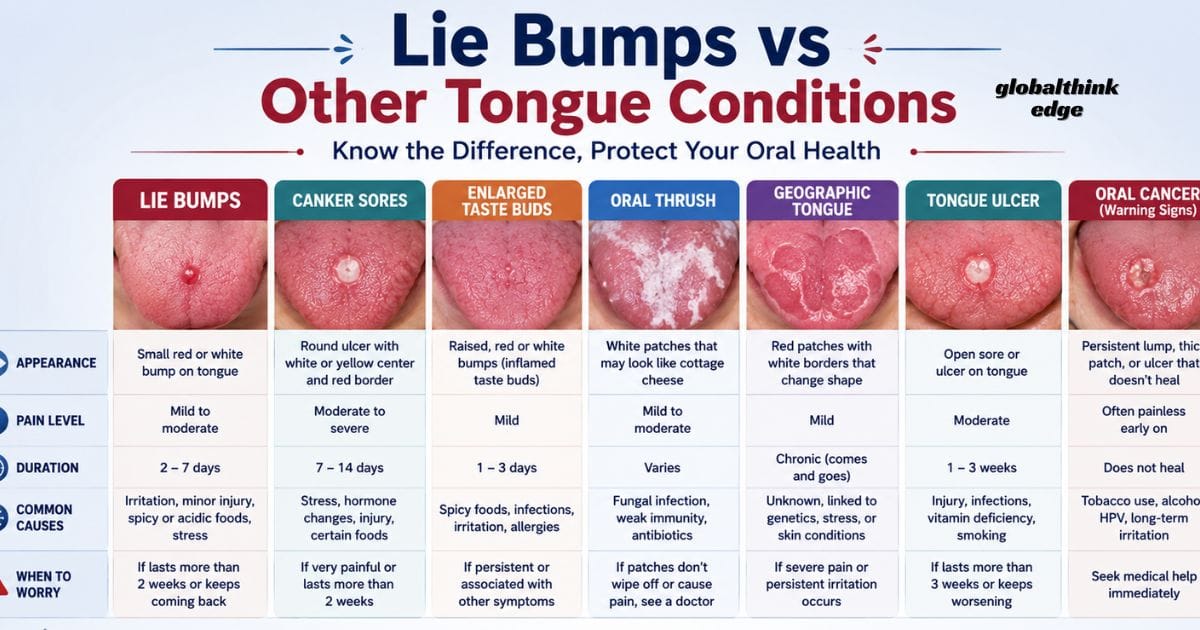
Lie Bumps vs Other Tongue Conditions
Not every bump on the tongue is a lie bump. Some conditions require different treatment and may need professional evaluation.
| Condition | Typical Appearance | Pain Level | Healing Time | Medical Attention Needed |
| Lie bumps | Small red or white bump | Mild to moderate | 2–7 days | Rarely |
| Canker sores | Round ulcer with white centre | Moderate to severe | 1–2 weeks | Sometimes |
| Oral thrush | White patches that wipe off | Mild | Varies | Yes |
| Geographic tongue | Smooth red patches with white borders | Usually mild | Recurring | Occasionally |
| Tongue ulcer | Open sore | Moderate | 1–3 weeks | If persistent |
| Oral cancer | Persistent lump or ulcer | Often painless early | Does not heal | Immediate evaluation |
Knowing these differences helps prevent unnecessary worry while ensuring serious conditions are not overlooked.
How Healthcare Professionals Diagnose Lie Bumps
Diagnosing a lie bump is usually straightforward. In most cases, a dentist or healthcare provider can identify the condition through a simple examination of the mouth.
They may ask questions such as:
When did the bump first appear?
Is it painful?
Have you experienced similar bumps before?
Have you recently eaten spicy foods or injured your tongue?
Are there any additional symptoms like fever or swollen glands?
A visual examination is often enough because lie bumps have a distinctive appearance and tend to resolve quickly.
If a bump lasts longer than two weeks, continues growing, bleeds easily, or looks unusual, your healthcare provider may recommend additional testing to rule out infections, nutritional deficiencies, or other oral conditions.
How to Get Rid of Lie Bumps Faster
Most lie bumps on the tongue heal without medical treatment. However, a few simple self-care measures can reduce pain and support the natural healing process.
Rinse with Warm Salt Water
A warm saltwater rinse is one of the easiest home remedies for soothing an irritated tongue. Salt helps keep the mouth clean and may reduce mild inflammation.
Mix half a teaspoon of salt in a glass of warm water and rinse for about 30 seconds, two to three times a day.
Stay well hydrated.
A dry mouth can worsen tongue irritation. Drinking enough water throughout the day keeps oral tissues moist and promotes healing.
Avoid Foods That Trigger Irritation
Until the bump heals, try to avoid foods that may increase discomfort, including:
Spicy dishes
Acidic fruits
Very hot drinks
Salty snacks
Hard or crunchy foods
Choosing softer foods for a few days can make eating much more comfortable.
Maintain Good Oral Hygiene
Keeping your mouth clean reduces irritation and lowers the risk of secondary infection.
Healthy habits include:
Brushing twice daily with a soft-bristled toothbrush
Flossing every day
Cleaning your tongue gently
Using an alcohol-free mouthwash if recommended
Use Ice Chips for Temporary Relief
Allowing a small ice chip to melt slowly in your mouth may numb the affected area and ease discomfort for a short time.
Avoid chewing the ice, as this may further irritate the tongue.
Consider Over-the-Counter Products
If pain is significant, your healthcare provider or pharmacist may recommend:
Oral numbing gels
Protective mouth gels
Mild pain relievers suitable for your age and health condition
Always follow the product instructions or professional advice.
Should You Pop a Lie Bump?
No. You should never try to squeeze, cut, or pop a lie bump.
Unlike a pimple, a lie bump does not contain material that needs to be removed. Attempting to pop it can:
Damage healthy tissue
Increase pain
Delay healing
Introduce bacteria
Raise the risk of infection
The safest approach is to leave the bump alone and allow it to heal naturally.
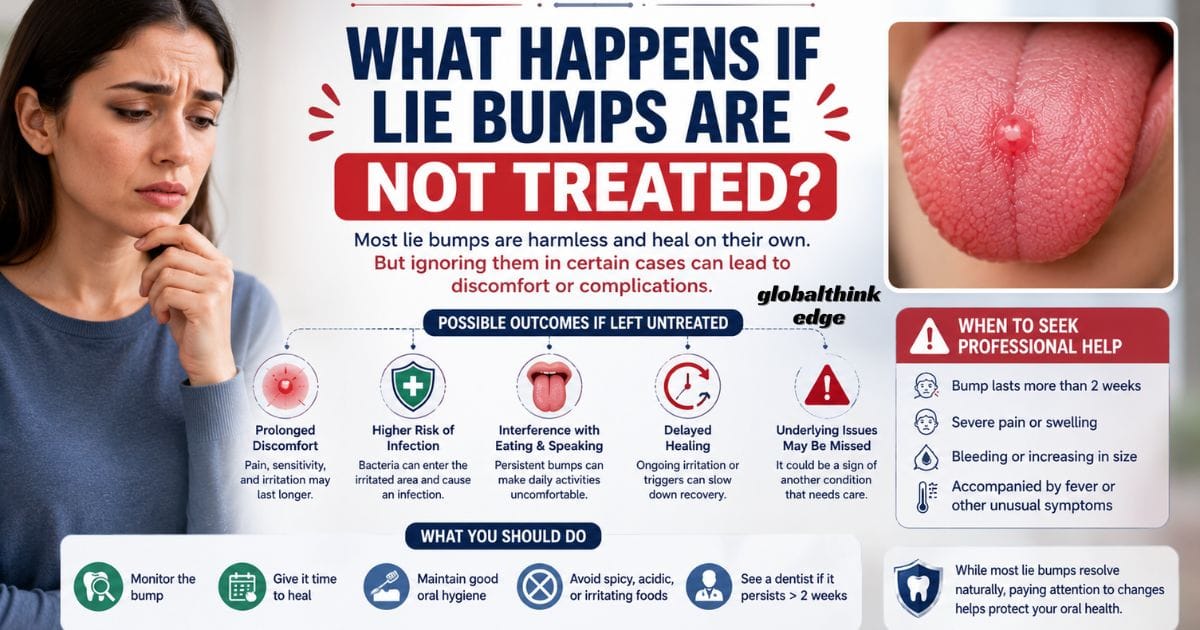
What Happens If Lie Bumps Are Not Treated?
In most cases, nothing serious happens.
Because transient lingual papillitis is usually self-limiting, the inflamed papilla gradually returns to normal without treatment.
However, persistent symptoms should not be ignored.
Seek professional advice if:
The bump lasts longer than two weeks.
It becomes larger instead of smaller.
It bleeds repeatedly.
You develop severe swelling.
Eating or swallowing becomes difficult.
Persistent tongue lesions may have causes unrelated to lie bumps and deserve proper evaluation.
How Long Does a Lie Bump Last?
Most people recover quickly.
A typical healing timeline is:
Mild cases: 1–3 days
Average cases: 3–7 days
Occasional prolonged cases: Up to 10 days
Recovery may take longer if the tongue continues to be irritated by spicy foods, accidental biting, smoking, or poor oral hygiene.
When Should You See a Dentist or Doctor?
Although lie bumps are generally harmless, certain warning signs require professional assessment.
Arrange an appointment if you notice:
Persistent Bumps
Any tongue bump lasting longer than two weeks should be examined.
Severe Pain
Pain that interferes with eating, drinking, or speaking may indicate another oral condition.
Difficulty Swallowing or Breathing
These symptoms require prompt medical attention because they are not typical of ordinary lie bumps.
Fever or Swollen Lymph Nodes
These symptoms may suggest an infection rather than simple tongue irritation.
Frequent Recurrence
If you develop lie bumps repeatedly, your dentist may look for underlying triggers such as chronic irritation, allergies, nutritional deficiencies, or other oral health concerns.
Can You Prevent Lie Bumps?
There is no guaranteed way to prevent them, but healthy habits may reduce your risk.
Practise Excellent Oral Hygiene
Regular brushing, flossing, and tongue cleaning help keep the mouth healthy.
Reduce Stress
Managing stress through regular exercise, adequate sleep, meditation, or relaxation techniques may reduce flare-ups in some people.
Avoid Personal Triggers
If certain foods or drinks repeatedly cause tongue irritation, limiting them may help prevent future episodes.
Stay Hydrated
Drinking enough water supports healthy oral tissues and reduces dryness.
Schedule Routine Dental Check-ups
Regular dental visits allow potential problems to be identified before they become more serious.
Are Lie Bumps Contagious?
The classic form of transient lingual papillitis is not considered contagious.
You cannot usually pass it to another person by the following methods:
Sharing food
Sharing utensils
However, researchers believe that one uncommon eruptive form may occasionally be associated with viral infections, particularly among children. Even so, this remains relatively uncommon.
Key Differences Between Lie Bumps and Other Tongue Problems
| Feature | Lie Bumps | Canker Sore | Oral Thrush | Oral Cancer |
| Appearance | Small raised bump | Open ulcer | White patches | Persistent lump or ulcer |
| Pain | Usually painful | Painful | Mild discomfort | Often painless initially |
| Duration | 2–7 days | 1–2 weeks | Varies | Persists |
| Contagious | No (classic form) | No | Sometimes | No |
| Usually Requires Treatment | Rarely | Sometimes | Yes | Yes |
Key Takeaways
Lie bumps are small, temporarily inflamed papillae on the tongue.
Their medical name is transient lingual papillitis.
They are not caused by telling lies.
Most cases heal naturally within one week.
Good oral hygiene and avoiding irritating foods can speed recovery.
Never attempt to pop a life bump.
Persistent, recurring, or unusual tongue lesions should always be evaluated by a healthcare professional.
Frequently Asked Questions
Are lie bumps caused by telling lies?
No. This is a long-standing myth. Lie bumps result from temporary inflammation of the tongue’s papillae, not dishonesty.
Why do I keep getting lie bumps?
Recurring bumps may be linked to stress, repeated tongue irritation, certain foods, allergies, or individual sensitivity. If episodes occur frequently, consult your dentist.
Can spicy food cause a lie bump on the tongue?
Yes. Spicy or acidic foods can irritate the tongue and trigger inflammation in some individuals.
Are lie bumps an infection?
Usually not. Most cases are caused by temporary inflammation rather than bacterial infection.
Can children develop lie bumps?
Yes. Children can experience transient lingual papillitis, and most recover within a few days.
Do lie bumps affect taste?
Some people notice temporary sensitivity or mild changes in taste because the affected papilla contains taste buds. Normal taste usually returns once the bump heals.
Can smoking make lie bumps worse?
Yes. Smoking and other tobacco products may irritate the tongue, delay healing, and increase discomfort.
Conclusion
Lie bumps are a common and usually harmless condition that can cause temporary discomfort but rarely lead to serious complications. Understanding their causes, recognising typical symptoms, and following simple home-care measures can help you recover more comfortably while avoiding unnecessary concern.
Although most lie bumps on the tongue disappear within a few days, it is important to pay attention to changes that fall outside the normal healing pattern. A bump that persists, grows, bleeds, or is accompanied by severe pain or other concerning symptoms should be examined by a dentist or healthcare provider.
By maintaining good oral hygiene, identifying personal triggers, staying hydrated, and seeking professional advice when necessary, you can protect your oral health and reduce the chances of future flare-ups. This balanced approach not only supports faster healing but also helps distinguish harmless lie bumps from conditions that may require medical treatment.
