Partnership Gaming: Winning Types, Benefits & Trends
What Is Partnership Gaming?
Partnership gaming means a business collaboration between game developers, publishers, brands, creators, esports teams, platforms, or technology companies. Partners combine audiences, technology, intellectual property (IP), content, funding, or distribution to achieve a shared goal.
These partnerships can take many forms. A brand may sponsor an esports team, a creator may promote a new game, or two companies may combine their IP to create new content.
The main purpose is simple: each partner brings something the other side needs.
How Does Partnership Gaming Work?
A gaming partnership starts with a shared business or audience goal. Partners then decide what each side will provide and what results they expect.
For example, a game publisher may want more players in a new market. A streaming platform may want more gaming content. Working together can help both sides reach those goals.
A typical partnership may define:
- Marketing and promotional duties
- Content and creator activities
- Sponsorship payments
- IP and trademark usage
- Streaming or broadcasting rights
- Revenue-sharing terms
- Exclusivity
- Campaign duration
- Performance targets
Clear agreements matter because gaming partnerships often involve several rights holders. WIPO notes that publishers, developers, teams, players, organizers, sponsors, and broadcasters can each hold different rights within the esports ecosystem.
Why Is Partnership Gaming Important?
Partnership gaming helps companies reach existing communities instead of building every audience from scratch. It can also reduce costs, add expertise, create new content, and open additional revenue channels.
For gaming companies, the benefits can include:
- Larger audience reach
- More marketing resources
- New distribution channels
- Creator exposure
- Additional revenue
- Access to technology
- Stronger brand recognition
For brands, gaming partnerships provide a way to become part of gaming culture rather than relying only on traditional advertising.
What Are the Main Types of Gaming Partnerships?
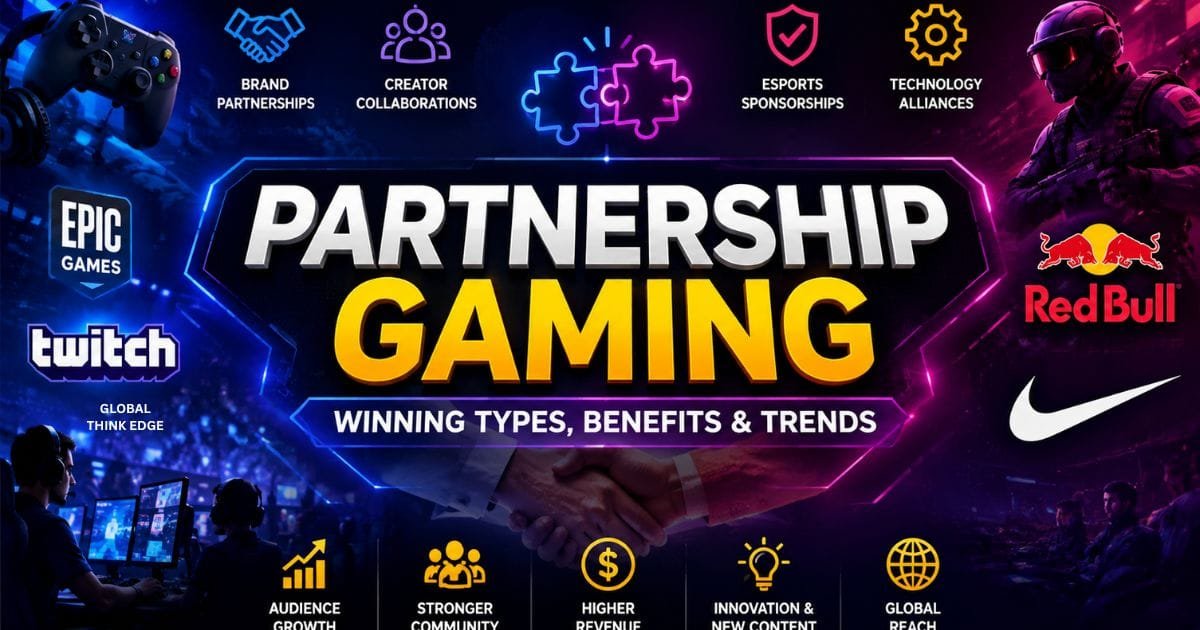
Partnership gaming covers several different models. The most common ones are brand, creator, IP, technology, platform, esports, and community partnerships.
Brand and Esports Partnerships
Brand partnerships connect companies with esports teams, tournaments, leagues, or players.
A sponsor may provide money, products, equipment, services, or other resources. In return, the brand can receive promotional rights through team jerseys, social media, broadcasts, events, or content.
These deals can become larger than simple logo placement. A brand might create a tournament activation, limited product, creator campaign, or live experience around the partnership.
WIPO identifies sponsorship as an important commercial relationship in esports and notes that agreements can cover trademarks, promotional activities, exclusivity, and content rights.
Creator and Streamer Partnerships
Creator partnerships let game companies reach players through people who already have trusted gaming audiences.
A developer may work with streamers, YouTubers, or social creators to promote a game through gameplay, livestreams, reviews, challenges, or special events.
The strongest creator partnerships fit the creator’s normal content. A forced promotion can feel like an advertisement, while a natural collaboration can become useful entertainment for the audience.
Creators can also provide feedback before launch and help developers understand community reactions.
IP and Game Collaboration Partnerships
IP partnerships combine recognizable intellectual property to create new gaming experiences or content.
The partnership may involve game characters, entertainment franchises, music, sports brands, celebrities, or other protected assets.
A recent example is Fortnite’s IP Partner Program, where Disney announced that The Simpsons would join the program. Epic said developers would receive an official toolkit for creating The Simpsons experiences using characters and locations from Springfield.
These collaborations can give games access to established fan bases while giving IP owners a new interactive channel.
Technology Partnerships
Technology partnerships allow gaming companies to use another company’s technical capabilities instead of developing everything internally.
These relationships can involve cloud infrastructure, payment systems, analytics, anti-cheat technology, game engines, artificial intelligence, distribution systems, or other services.
Technology partnerships can be especially useful when a game needs to scale quickly across regions or platforms.
Platform and Distribution Partnerships
Platform partnerships help games reach players through new distribution or viewing channels.
For example, Riot Games announced a 2026 partnership with KICK to expand global esports distribution. The agreement added KICK as a streaming platform for several Riot esports events and also created additional opportunities for creators.
This type of partnership benefits the game company through wider distribution while giving the platform more premium gaming content and creator opportunities.
Community Partnerships
Community partnerships focus on player groups, gaming communities, tournaments, and grassroots creators.
They can include community competitions, fan events, user-generated content, Discord activities, and local gaming campaigns.
This approach works well when the goal is deeper engagement rather than simple reach.
What Are the Benefits of Partnership Gaming?
The biggest benefit is shared growth. Each partner can use the other party’s audience, resources, expertise, technology, or reputation.
| Benefit | How It Helps |
| Audience growth | Reaches an established gaming community |
| Shared resources | Reduces the need to build everything alone |
| Brand credibility | Connects with trusted gaming names |
| New content | Creates events, videos, collaborations, and experiences |
| Revenue growth | Opens sponsorship, licensing, commerce, or distribution opportunities |
| Market expansion | Helps companies enter new regions or audiences |
| Innovation | Combines different skills and technologies |
The value is strongest when both sides have something meaningful to contribute.
How Do Gaming Partnerships Make Money?
Gaming partnerships can generate revenue through sponsorships, licensing, advertising, merchandise, media rights, commerce, and shared products.
For example, an esports team can earn from sponsorship and branded merchandise. A publisher can license game IP for another company’s products or experiences.
Streaming and media rights can also become commercial assets. WIPO explains that broadcasting agreements can determine who can distribute esports content, where it can be shown, and how it can be commercially used.
Data can also have commercial value. Some esports agreements cover access to game statistics and event data through controlled licensing arrangements or APIs.
What Makes a Gaming Partnership Successful?
A successful gaming partnership needs audience fit, clear responsibilities, useful content, legal protection, and measurable goals.
First, partners should define the purpose. The goal could be player acquisition, brand awareness, revenue, community growth, or market expansion.
Next, they should choose a partner with a relevant audience. A large following does not guarantee a successful campaign if the audience has little interest in the product.
The partnership should also provide something useful to players. Exclusive content, events, rewards, creator experiences, or new gameplay can make a collaboration feel more natural.
Finally, both sides should agree on measurable results. Depending on the campaign, useful metrics may include reach, engagement, conversions, new users, watch time, sales, or community participation.
What Are the Risks of Partnership Gaming?
The biggest risks are poor audience fit, unclear rights, weak contracts, forced marketing, and unclear performance expectations.
IP is particularly important. Game developers and publishers can control rights involving game code, characters, storylines, music, logos, and other assets. Teams and players can also have separate rights connected to their identities and content.
A contract should therefore explain who can use which asset, where it can be used, for how long, and whether the rights are exclusive.
WIPO also distinguishes licensing from assignment: a license gives another party permission to use IP under agreed conditions, while an assignment transfers ownership.
These details can prevent expensive disputes later.
Partnership Gaming vs. Sponsorship
Sponsorship is one form of partnership gaming, but the two terms are not identical.
A sponsorship usually centers on financial or resource support in exchange for promotional exposure.
A broader gaming partnership can involve technology, IP licensing, distribution, content creation, data, commerce, or long-term product collaboration.
This difference matters because a partnership may create a new product or experience, while a sponsorship may simply support an existing team or event.
What Is the Future of Partnership Gaming?
The future of partnership gaming is moving toward deeper collaborations rather than simple promotional deals.
Brands want meaningful access to gaming communities. Game companies want stronger distribution, content, technology, and commercial opportunities. Creators want partnerships that support their communities instead of interrupting them.
IP collaborations are also becoming more flexible. Programs such as Fortnite’s IP Partner Program show how established entertainment properties can be turned into tools for creating new player experiences.
At the same time, esports partnerships are expanding across streaming, creators, media, sponsorship, merchandise, and licensing. WIPO’s 2026 esports research highlights how these different commercial relationships depend on clearly managed IP rights.
Key Takeaway
Partnership gaming is a broad collaboration model that connects gaming companies with brands, creators, esports organizations, platforms, communities, and technology providers.
The best partnerships do more than display a logo. They combine audiences, resources, IP, technology, and content to create something useful for both businesses and players.
Clear goals, strong audience alignment, natural activations, measurable results, and well-defined IP rights are the main foundations of a successful gaming partnership.
Final Verdict
Partnership gaming is a strong way for gaming companies, brands, creators, and esports organizations to grow through shared audiences, content, technology, and IP. The best partnerships focus on audience fit and genuine player value, while clear contracts and IP rights help avoid costly problems.
