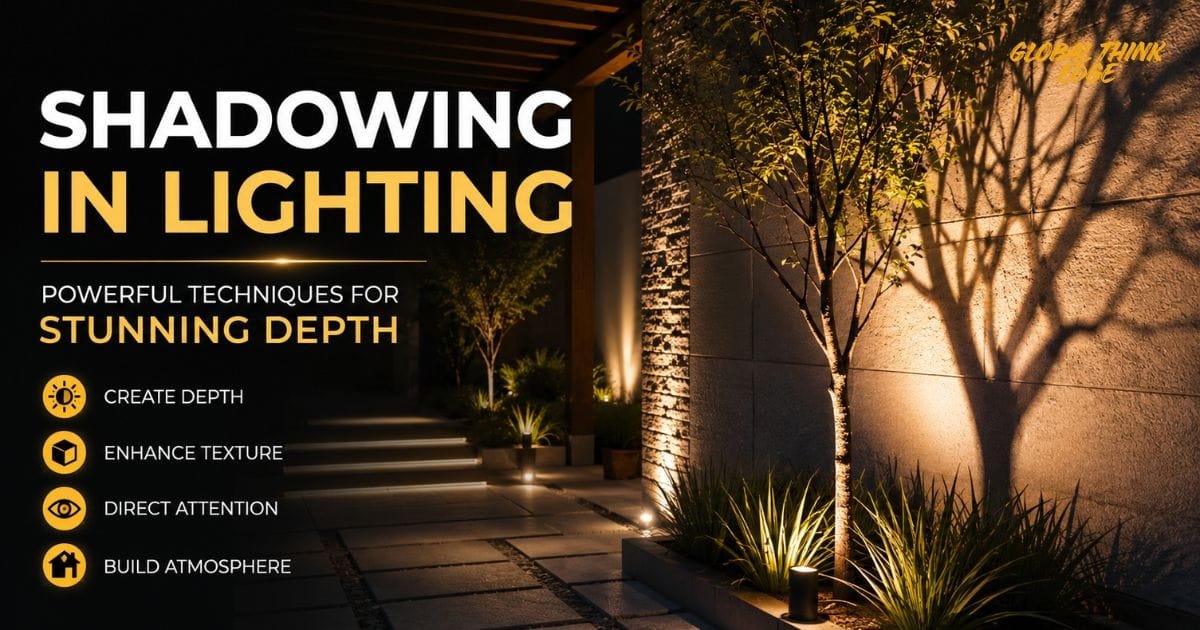
Shadowing in Lighting: Definitive Guide for Stunning Depth
What Is Shadowing in Lighting and Why Does It Matter?
Shadowing in lighting is the intentional use of light and darkness to create depth, highlight features, and improve visual interest. While many people focus on brightness alone, shadows play an equally important role in how a space, object, or landscape is perceived.
Effective shadowing can transform a flat environment into one that feels dynamic and visually engaging. Whether used in interior design, architecture, photography, or landscape lighting, shadows help reveal textures, shapes, and dimensions that would otherwise go unnoticed.
The Science Behind Light and Shadow
Every shadow begins when an object blocks a light source. The size, distance, and angle of the light determine how the shadow appears.
A large light source typically creates soft, gradual shadows. A smaller or more focused light source produces darker and sharper shadows. Understanding this relationship is essential for achieving professional lighting results.
Factors That Influence Shadow Formation
Light source size
Distance between the light and the object
Angle of illumination
Surface texture and color
Presence of reflective materials
Environmental conditions
These factors work together to determine whether shadows appear subtle, dramatic, soft, or highly defined.
Types of Shadows Used in Lighting Design
Attached Shadows
Attached shadows appear directly on the object itself. They help reveal form, curves, and depth.
Cast Shadows
Cast shadows are projected onto another surface when an object blocks light. These shadows often create the most noticeable visual effects.
Soft Shadows
Soft shadows have blurred edges and create a natural appearance. Designers often use them in residential and hospitality environments.
Hard Shadows
Hard shadows feature crisp edges and strong contrast. They are commonly used to create dramatic visual statements.
Layered Shadows
When multiple light sources interact, layered shadows can create unique patterns and artistic effects that enhance visual complexity.
How Shadowing in Lighting Enhances Lighting Design
Creating Visual Depth
Without shadows, objects can appear flat and lifeless. Strategic shadow placement adds dimension and makes spaces feel more realistic.
Highlighting Textures
Stone walls, wood surfaces, plants, and architectural details become more attractive when shadows emphasise their textures.
Directing Attention
Lighting designers often use shadows to guide the viewer’s eye toward important focal points while minimising distractions.
Building Atmosphere
The balance between light and darkness strongly influences mood. Soft shadows create comfort, while stronger shadows can add drama and sophistication.
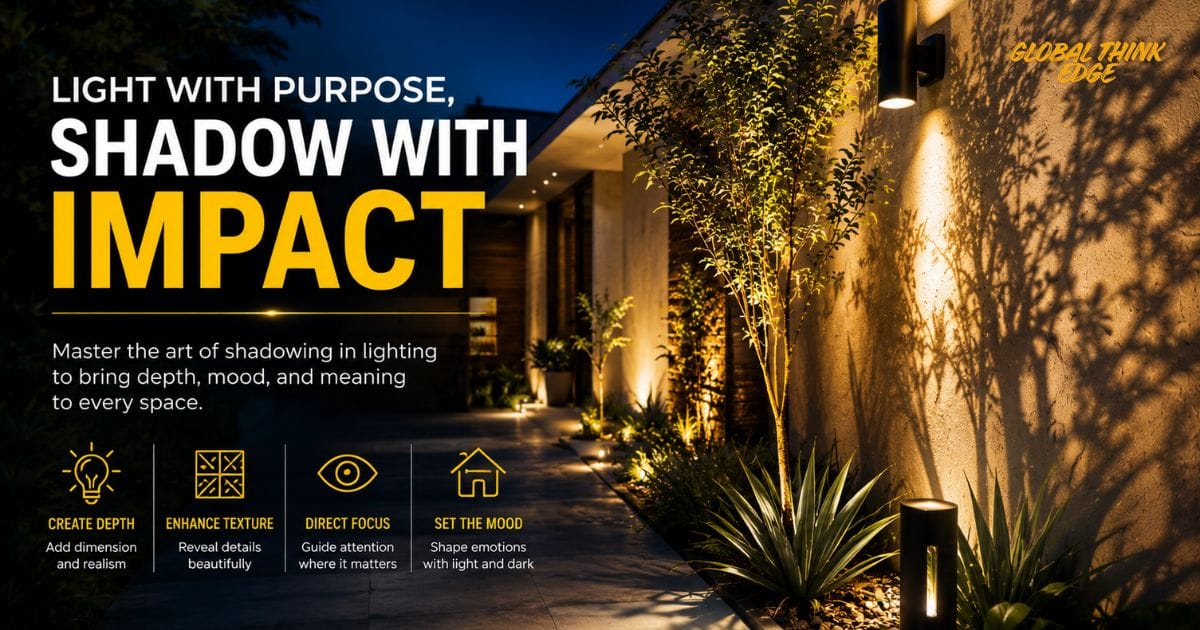
Professional Shadowing in LightingTechniques
Side Lighting for Texture
Positioning light from the side reveals surface details that frontal lighting often hides. This technique works exceptionally well for brick, stone, and landscape features.
Backlighting for Silhouettes
Backlighting places the light source behind the subject, creating striking silhouettes and dramatic visual effects.
Layered Lighting
Combining ambient, accent, and task lighting creates controlled shadow patterns that add depth without overwhelming a space.
Contrast Management
Professionals carefully balance bright and dark areas to avoid excessive glare while maintaining visual interest.
Shadowing in Lighting Different Applications
Interior Spaces
In homes and offices, shadowing can highlight artwork, architectural features, and decorative elements. It also helps create a more comfortable environment.
Landscape Lighting
Trees, shrubs, sculptures, and walls can produce beautiful shadow patterns when illuminated correctly. Landscape shadowing adds character and nighttime curb appeal.
Architectural Projects
Architects use shadowing to emphasise building forms and create memorable visual experiences after dark.
Photography and Visual Media
Photographers rely on shadow control to shape subjects, create mood, and add depth to images.
Choosing the Right Equipment for Better Shadow Control
Spotlights
Spotlights create focused beams that generate stronger and more defined shadows.
Floodlights
Floodlights spread light over a larger area and typically produce softer shadow effects.
LED Lighting Systems
Modern LED fixtures provide excellent control over brightness, colour temperature, and beam angles, making them ideal for advanced shadowing techniques.
Smart Lighting Technology
Smart lighting systems allow users to adjust intensity and direction, making it easier to create customised shadow effects for different situations.
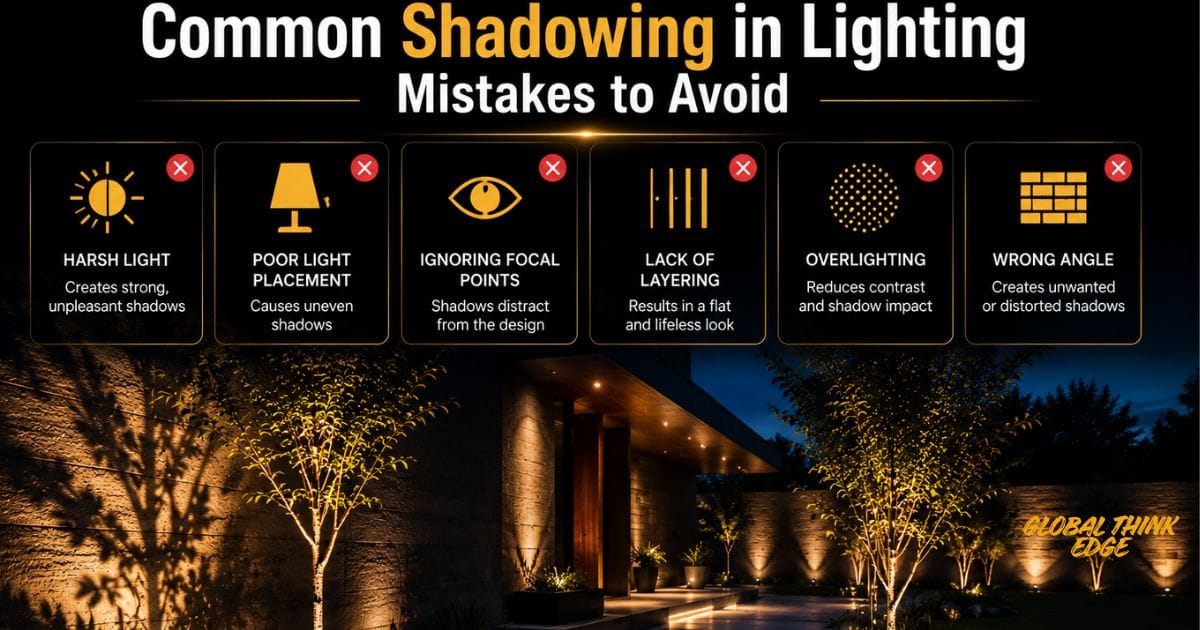
Common Shadowing in Lighting Mistakes to Avoid
Overlighting the Space
Too much light eliminates natural contrast and reduces visual depth.
Poor Fixture Placement
Incorrect positioning can create distracting or unwanted shadows.
Ignoring Reflective Surfaces
Glass, water, and polished materials can alter shadow behaviour and affect the overall design.
Using Only One Lighting Layer
Relying on a single light source often produces flat and unbalanced results.
The Psychological Impact of Shadows
Shadows influence how people experience a space. Balanced shadowing can create comfort, warmth, and visual harmony.
Excessive darkness may feel uninviting, while a complete lack of shadows can make a space appear sterile. Successful lighting design finds the ideal balance between illumination and contrast.
Emerging Trends in Shadow-Focused Lighting
Dynamic Lighting Systems
Advanced lighting technologies can adjust shadow patterns throughout the day based on changing conditions.
Sustainable Lighting Design
Energy-efficient fixtures allow designers to create dramatic effects while reducing energy consumption.
Artistic Shadow Installations
Modern designers increasingly use shadowing in lighting as creative design elements rather than treating them as by-products of lighting.
Conclusion
Shadowing in lighting is far more than the absence of light. It is a powerful design tool that creates depth, highlights textures, directs attention, and shapes emotional experiences. By understanding how shadows form and applying professional techniques, designers and homeowners can transform ordinary spaces into visually compelling environments. The most successful lighting designs embrace both light and darkness, using each to enhance the other.
Frequently Asked Questions
What is shadowing in lighting?
Shadowing in lighting is the deliberate use of shadows created by light sources to improve depth, contrast, and visual appeal.
How can I create softer shadows?
Use larger light-source diffusers or increase the distance between the light and the subject.
Why are shadows important in lighting design?
Shadows reveal texture, create dimension, establish mood, and guide visual attention.
Do LED lights produce good shadow effects?
Yes. LED fixtures offer precise control over beam angles and brightness, making them ideal for shadow management.
What is the best lighting technique for dramatic shadows?
Backlighting and focused spotlighting are among the most effective techniques for producing dramatic shadow effects.
