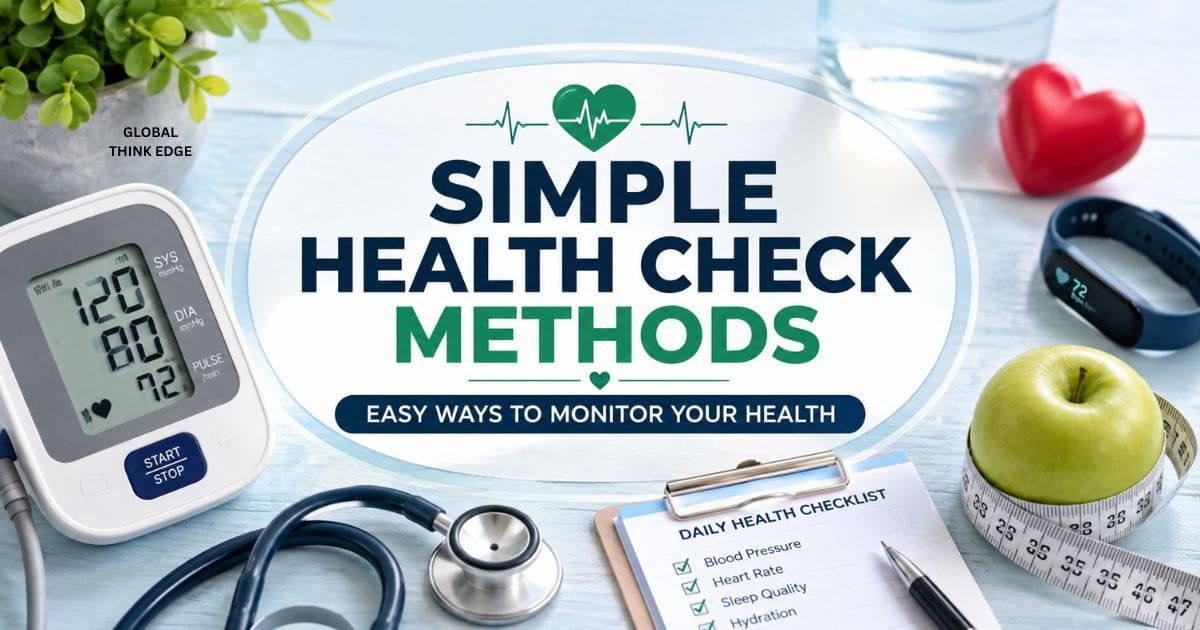
Simple Health Check Methods:Easy Ways to Monitor Your Health
What Are Simple Health Check Methods?
Simple health check methods are easy ways to monitor basic health signs and daily body changes at home. They include checking your resting heart rate, blood pressure, sleep, energy, digestion, appetite, skin, and moles.
These checks can help you notice changes early, but they do not replace a medical examination or laboratory testing. A useful approach is to track your normal patterns and seek professional advice when something changes or persists.
What Can You Check at Home?
You can monitor several basic health signs without special medical training:
- Resting heart rate
- Blood pressure
- Sleep quality
- Energy levels
- Appetite and digestion
- Weight changes
- Skin and mole changes
- New or persistent symptoms
The most useful information usually comes from patterns over time, not one unusual reading.
How Do You Check Your Resting Heart Rate?
You can check your resting heart rate by counting your pulse for 60 seconds while you are relaxed. For most adults, a resting heart rate between 60 and 100 beats per minute is generally considered normal.
To check it:
- Sit quietly for several minutes.
- Place two fingers on your wrist or neck pulse.
- Count the beats for one full minute.
- Record the result.
Exercise, stress, illness, caffeine, medications, and fitness level can affect your heart rate.
A reading outside your usual range does not automatically mean something is wrong. Repeated changes or a rate that concerns you should be discussed with a healthcare professional.
Why Track Resting Heart Rate?
Tracking your heart rate helps you understand your normal baseline. A sudden or persistent change may be useful information for your doctor, especially if it occurs with symptoms such as dizziness, fainting, chest discomfort, or unusual shortness of breath.
How Can You Check Blood Pressure at Home?
You can measure blood pressure at home with an automated upper-arm blood pressure monitor. Home monitoring is useful because high blood pressure often has no obvious symptoms.
For a more accurate reading:
- Rest quietly for at least five minutes first.
- Keep your back supported.
- Put both feet flat on the floor.
- Keep your legs uncrossed.
- Support your arm at heart level.
- Place the cuff on bare skin.
- Avoid talking during the measurement.
- Take readings at a consistent time when possible.
Avoid checking immediately after exercise, smoking, caffeine, or other activities that can temporarily affect your reading.
One high reading is not enough to diagnose hypertension. If your readings remain high, contact a healthcare professional for proper evaluation.
How Do You Check Sleep Quality?
You can check sleep quality by watching how easily you fall asleep, how often you wake up, and how rested you feel during the day.
Ask yourself:
- Do I fall asleep without major difficulty?
- Do I wake repeatedly during the night?
- Do I feel rested in the morning?
- Am I unusually sleepy during the day?
- Has my normal sleep pattern changed?
A simple sleep diary can help you identify patterns. Record your bedtime, wake time, nighttime awakenings, and how rested you feel.
Persistent sleep problems may require professional evaluation, particularly when they affect daytime activities or continue despite healthy sleep habits.
How Can Energy, Appetite, and Digestion Help You Monitor Health?
Changes in energy, appetite, and digestion can provide useful clues about your general health.
Track whether you experience:
- Unusual or lasting tiredness
- Major appetite changes
- Persistent bloating
- Ongoing abdominal discomfort
- Changes in bowel habits
- Unexplained weight changes
- Difficulty completing normal daily activities
Your daily pattern matters more than an occasional change. Stress, diet, poor sleep, illness, and changes in routine can all affect these areas.
If a change continues, becomes severe, or appears with other symptoms, discuss it with a healthcare professional.
What Does a Normal Pattern Look Like?
There is no single pattern that is normal for everyone. Your goal is to understand what is normal for you and recognize meaningful changes.
For example, a temporary change in appetite may not be concerning. A persistent unexplained appetite or weight change deserves more attention.
How Can You Check Your Skin and Moles?
You can check your skin regularly for new or changing spots, moles, rashes, or other unusual changes.
Pay particular attention to moles that change in:
- Shape
- Size
- Color
- Border
- Overall appearance
The ABCDE method is commonly used when checking moles:
- A—Asymmetry: One half looks different from the other.
- B — Border: The edges appear uneven or irregular.
- C — Color: The spot has different or changing colors.
- D — Diameter: The spot is larger than about 6 millimeters, although smaller lesions can also be important.
- E—Evolving: The spot changes over time.
A new or changing mole does not automatically mean cancer. However, noticeable changes should be checked by a qualified healthcare professional.
Which Medical Tests Are Useful for Basic Health Screening?
Home checks can show changes, but some health information requires laboratory testing. Common tests include a complete blood count, lipid profile, and blood sugar testing.
What Does a Complete Blood Count Check?
A complete blood count (CBC) measures different types of blood cells, including red blood cells, white blood cells, and platelets.
Doctors may use a CBC to investigate problems such as anemia, infection, or other blood-related concerns.
A CBC is not automatically required at the same interval for every person. Your healthcare professional can recommend it based on your symptoms, health history, and risk factors.
What Does a Lipid Profile Check?
A lipid profile measures blood fats such as
- Total cholesterol
- LDL cholesterol
- HDL cholesterol
- Triglycerides
These results help assess cardiovascular risk. High levels of certain blood lipids can contribute to plaque buildup in the arteries.
Your need for cholesterol testing depends on factors such as age, family history, existing health conditions, and overall cardiovascular risk.
What Does a Blood Sugar Test Check?
Blood sugar testing checks glucose levels and can help identify prediabetes or diabetes.
Common tests include
- Fasting blood glucose: Measures blood sugar after a period of fasting.
- HbA1c: Shows average blood glucose levels over roughly the previous two to three months.
Not everyone needs the same type or frequency of testing. A healthcare professional can determine which screening is appropriate based on your age and risk factors.
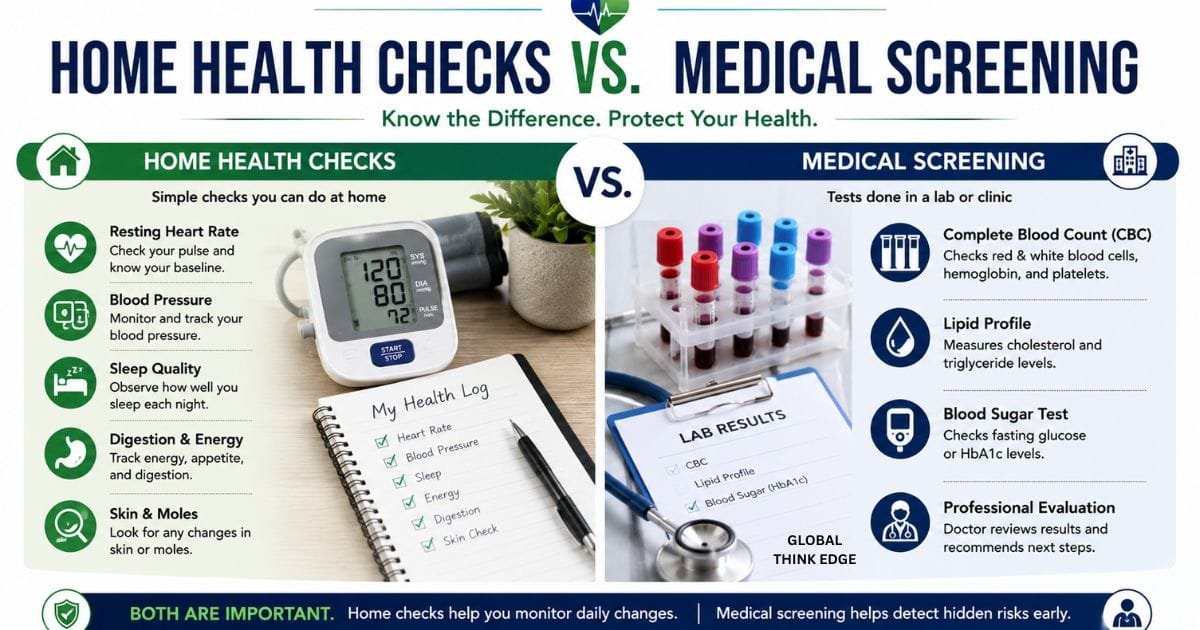
Home Health Checks vs. Medical Screening
| Check | Main purpose | Usually done |
| Resting heart rate | Measures heart rate at rest | Home |
| Blood pressure | Measures blood pressure | Home or clinic |
| Sleep tracking | Identifies sleep patterns | Home |
| Energy and digestion | Tracks daily changes | Home |
| Skin and mole checks | Finds visible changes | Home and professional exam when needed |
| CBC | Checks blood cell levels | Laboratory |
| Lipid profile | Measures cholesterol and triglycerides | Laboratory |
| Blood glucose/HbA1c | Checks blood sugar status | Laboratory or clinical setting |
The key difference is simple: home checks help you monitor changes, while medical screening provides clinical measurements used to assess specific health conditions.
How Often Should You Perform Simple Health Checks?
There is no universal schedule for every health check.
You can observe daily patterns such as sleep, energy, appetite, and digestion regularly. Blood pressure and heart rate may need more frequent monitoring if a healthcare professional recommends it.
Formal screening schedules depend on factors such as
- Age
- Family history
- Existing health conditions
- Medications
- Symptoms
- Personal risk factors
Do not perform unnecessary tests simply because they are available. The right screening plan depends on your individual health needs.
What Is the Best Way to Track Your Health?
The simplest method is to keep a basic health record. You can use a notebook, phone, or health app.
Record:
- Date and time
- Blood pressure, if monitored
- Resting heart rate
- Sleep quality
- Energy level
- Weight, if relevant
- New symptoms
- Important laboratory results
This makes it easier to recognize trends and gives your healthcare professional useful information during an appointment.
Avoid becoming overly focused on small daily changes. Health measurements naturally vary, so consistent patterns are usually more meaningful than isolated results.
When Should You See a Doctor?
You should contact a healthcare professional when a health change is persistent, worsening, unexplained, or affecting your normal activities.
Examples include ongoing fatigue, repeated abnormal blood pressure readings, unexplained weight changes, persistent digestive problems, or a changing skin lesion.
Seek urgent medical attention for serious symptoms such as severe chest pain, major breathing difficulty, fainting, sudden weakness, or possible signs of a stroke.
Key Takeaway
Simple health check methods help you monitor basic health signs without complicated equipment. The most practical checks include resting heart rate, blood pressure, sleep, energy, digestion, appetite, and skin changes.
Medical screening adds information that home monitoring cannot provide. Depending on your age and risk factors, tests such as a CBC, lipid profile, fasting glucose, or HbA1c may be appropriate.
The goal is not to diagnose yourself. It is to understand your normal baseline, notice meaningful changes, and know when professional medical advice is needed.
