Toe Sprain: Essential Recovery Tips for Faster Healing
Understanding a Toe Sprain and Why Early Care Matters
A toe sprain is a ligament injury that occurs when the tissues connecting the bones of a toe are stretched or torn. Unlike muscles or tendons, ligaments provide stability to joints. When they become damaged due to sudden twisting, bending, or impact, even simple activities like walking or climbing stairs can become painful.
Many people mistake a sprain for a minor injury and continue normal activities. However, untreated ligament damage can prolong healing, increase joint instability, and raise the risk of repeated injuries. Knowing how to recognize a toe sprain, provide proper first aid, and understand when medical evaluation is necessary can make a significant difference in recovery.
Whether your injury happened during sports, while exercising, or after accidentally stubbing your toe against furniture, this guide explains everything you need to know—from symptoms and diagnosis to treatment, rehabilitation, and prevention.
What Happens During a Toe Sprain?
Every toe contains small joints supported by strong ligaments. These ligaments keep the bones aligned while allowing smooth movement.
When excessive force pushes a toe beyond its normal range of motion, the ligaments stretch beyond their limit. Depending on the severity of the injury, the ligament fibres may stretch slightly, partially tear, or rupture completely.
Although any toe can be injured, the big toe is particularly vulnerable because it bears much of the body’s weight during walking, running, and jumping.
Commonly affected joints include:
The big toe joint
Middle toe joints
Small toe joints after side impacts
Toe joints stressed during athletic movements
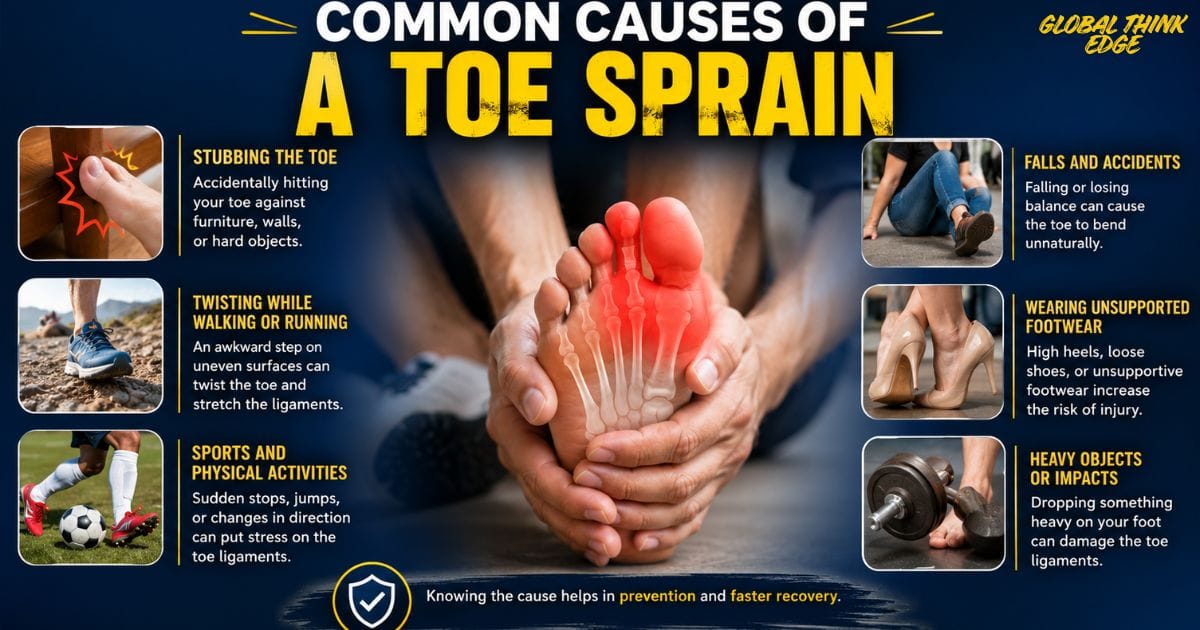
Common Causes of a Toe Sprain
A toe sprain can happen unexpectedly in everyday situations or during high-impact activities.
Sports Injuries
Athletes frequently experience toe sprains while playing football, soccer, basketball, tennis, or other sports that involve sudden stops, jumping, and rapid direction changes.
Stubbing the Toe
Accidentally kicking furniture, stairs, or heavy objects is one of the leading causes of ligament injuries in the toes.
Twisting While Walking
An awkward step on uneven ground may force the toe into an unnatural position, stretching the supporting ligaments.
Falls and Slips
Falls can place excessive pressure on the toes, especially when trying to regain balance.
Poor Footwear
Shoes that lack support or fit improperly increase the likelihood of toe injuries during daily activities.
Workplace or Household Accidents
Dropping heavy objects on the foot or slipping on wet floors can also damage toe ligaments.
Signs and Symptoms You Should Never Ignore
The symptoms of a toe sprain vary depending on the severity of ligament damage.
Common symptoms include:
Sudden pain immediately after injury
Swelling around the joint
Bruising that develops within hours
Tenderness when touching the toe
Difficulty walking comfortably
Pain while bending or straightening the toe
Reduced flexibility
Mild warmth around the injured joint
Feeling that the toe is unstable
Severe injuries may produce intense pain, significant swelling, and an inability to bear weight comfortably.
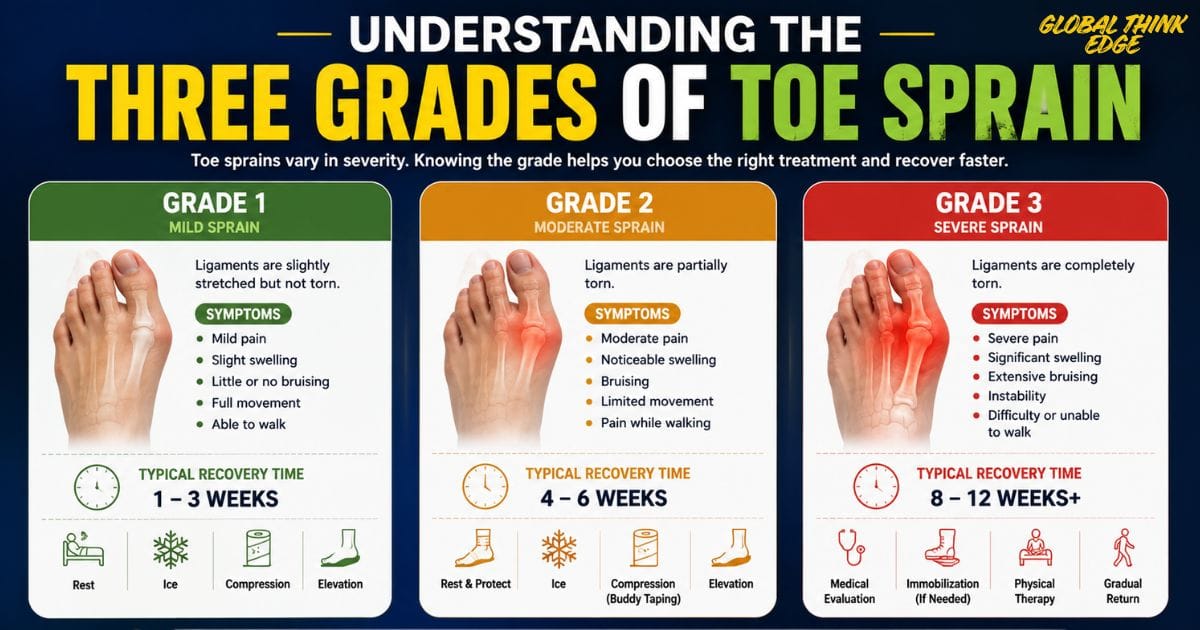
Understanding the Three Grades of Toe Sprain
Doctors classify ligament injuries into three grades to determine the most appropriate treatment plan.
Grade 1: Mild Ligament Stretch
A Grade 1 injury involves microscopic stretching without major tearing.
Symptoms usually include:
Mild pain
Minimal swelling
Little bruising
Walking remains possible
Joint stability is preserved
Recovery often occurs within two to three weeks with conservative treatment.
Grade 2: Partial Ligament Tear
A Grade 2 injury causes partial tearing of the ligament fibres.
Signs include:
Moderate pain
Noticeable swelling
Bruising
Reduced movement
Pain while walking
Mild joint instability
Healing generally requires four to six weeks.
Grade 3: Complete Ligament Tear
A Grade 3 toe sprain represents complete ligament rupture.
Symptoms may include:
Severe pain
Major swelling
Significant bruising
Joint instability
Difficulty bearing weight
Limited movement
Some Grade 3 injuries require evaluation by a foot and ankle specialist, and surgery may occasionally be recommended.
Toe Sprain vs. Broken Toe vs. Turf Toe
Many toe injuries produce similar symptoms, making self-diagnosis difficult.
| Feature | Toe Sprain | Broken Toe | Turf Toe |
| Main Injury | Damaged ligaments | Broken bone | Sprain of the big toe joint |
| Swelling | Common | Common | Common |
| Bruising | Often present | Usually present | Often present |
| Walking | Painful but possible | Often extremely painful | Painful during push-off |
| Deformity | Rare | Sometimes visible | Rare |
| X-ray Needed | Sometimes | Usually | Sometimes |
A healthcare provider may recommend imaging if a fracture or dislocation cannot be ruled out through physical examination.
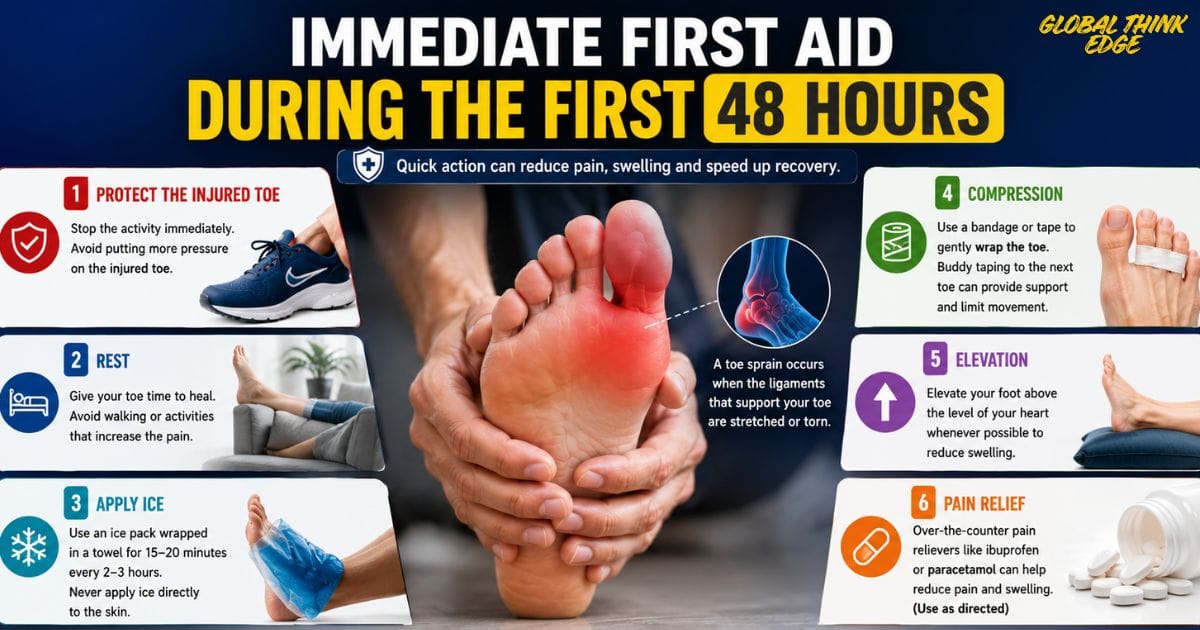
Immediate First Aid During the First 48 Hours
Quick action after a toe sprain can reduce swelling and speed recovery.
Protect the Injured Toe
Avoid movements that increase pain. If necessary, temporarily limit walking.
Rest Without Complete Immobilization
Rest is essential during the first few days, but prolonged inactivity may lead to stiffness. Gentle movement should begin once pain improves.
Apply Cold Therapy
Use an ice pack wrapped in a towel for 15–20 minutes every two to three hours during the first 48 hours.
Never place ice directly on the skin.
Compression
Light compression using medical tape or a supportive bandage may help control swelling.
Buddy taping the injured toe to a neighbouring healthy toe is often recommended for mild injuries after a healthcare professional confirms there is no fracture.
Elevation
Keeping the foot elevated above heart level whenever possible helps reduce fluid buildup and swelling.
Pain Relief
Over-the-counter pain relievers may reduce discomfort. Always follow dosage instructions and consult a healthcare provider if you have medical conditions or take other medications.
How Doctors Diagnose a Toe Sprain
Although many mild injuries heal at home, persistent pain deserves professional evaluation.
During the examination, a healthcare provider typically assesses:
Location of pain
Swelling pattern
Bruising
Joint stability
Range of motion
Walking ability
They may also ask questions such as:
How did the injury happen?
Did you hear or feel a popping sensation?
Can you bear weight?
Have you injured this toe before?
If symptoms suggest a fracture, dislocation, or severe ligament injury, imaging tests such as X-rays or, in selected cases, MRI may be recommended.
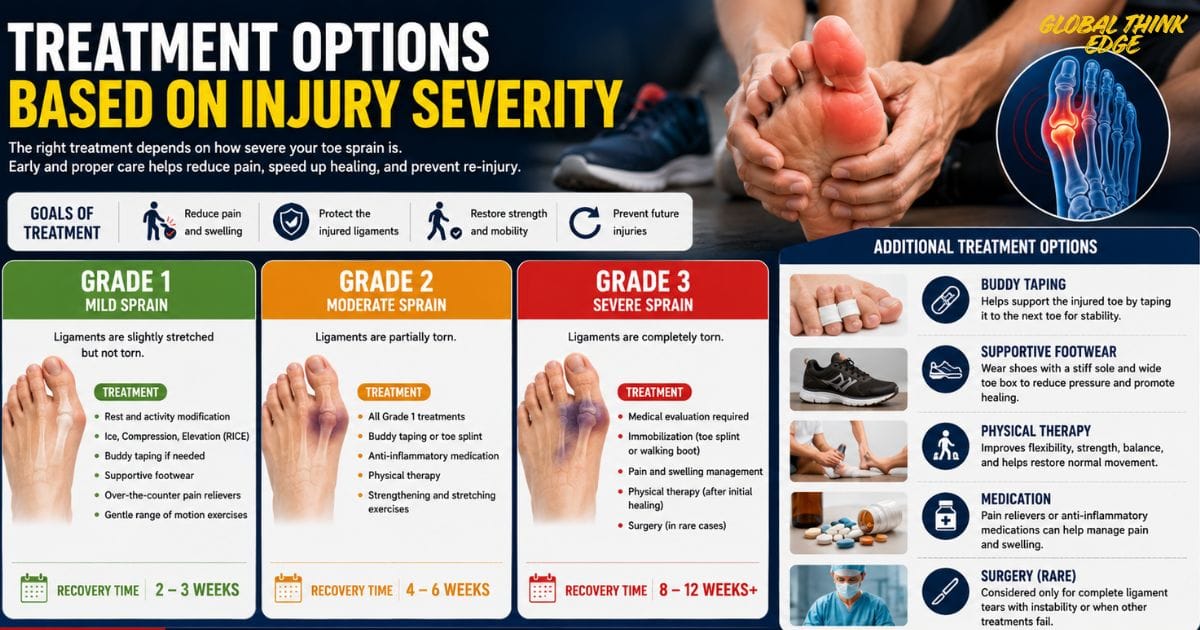
Treatment Options Based on Injury Severity
The best treatment for a toe sprain depends on the extent of ligament damage, your activity level, and how quickly treatment begins. Most mild to moderate injuries improve without surgery, but severe cases may require specialist care.
Home Care for Mild Injuries
If the ligaments are only slightly stretched, conservative treatment is often enough. Continue resting the injured toe, apply ice as needed, elevate the foot to control swelling, and avoid activities that trigger pain. Wearing shoes with a stiff sole can also protect the toe while it heals.
Buddy Taping
Buddy taping involves securing the injured toe to the neighbouring toe with medical tape. The healthy toe acts as a natural splint, helping reduce unnecessary movement.
Place a small piece of gauze or cotton between the toes before taping to prevent skin irritation. The tape should feel secure but never tight enough to reduce circulation.
Supportive Footwear
Avoid flip-flops, high heels, or flexible shoes during recovery. Shoes with a firm sole and a wide toe box reduce pressure on the injured joint and make walking more comfortable.
Physical Therapy
If stiffness or weakness remains after the initial healing period, a physical therapist may recommend exercises to improve flexibility, strength, and balance. Rehabilitation is especially important for athletes or people with recurrent injuries.
When Surgery Is Necessary
Surgery is uncommon but may be considered if there is the following:
Complete ligament rupture with severe instability
Associated fracture or joint dislocation
Failure to improve with conservative treatment
Chronic instability affecting daily activities
Recovery Timeline: How Long Does a Toe Sprain Take to Heal?
The healing time for a toe sprain varies depending on the severity of the injury and how well you follow your treatment plan.
| Injury Grade | Typical Recovery Time |
| Grade 1 | 2–3 weeks |
| Grade 2 | 4–6 weeks |
| Grade 3 | 8–12 weeks or longer |
Keep in mind that these are general estimates. Healing may take longer if you return to activity too early, have diabetes, smoke, or experience repeated injuries.
Factors That Affect Recovery
Age
Overall health
Severity of ligament damage
Early first aid
Proper footwear
Following rehabilitation exercises
Avoiding reinjury
Improvement is usually gradual. Mild discomfort may continue for several weeks even after daily activities become easier.
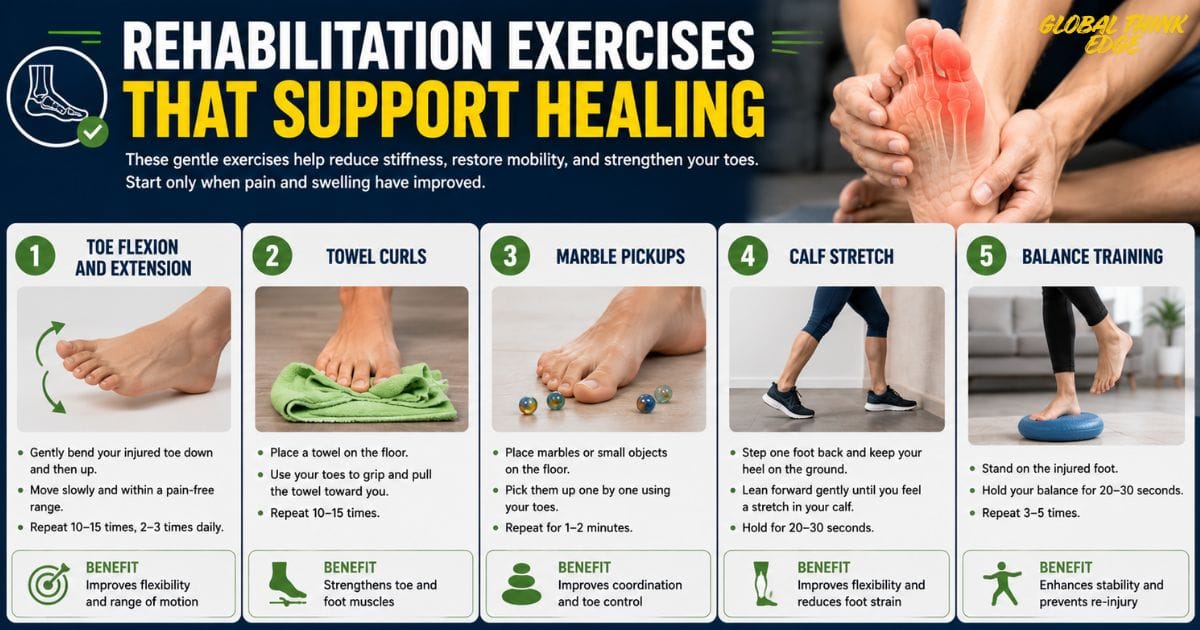
Rehabilitation Exercises That Support Healing
Once swelling and pain begin to decrease, gentle exercises can help restore normal movement and reduce stiffness. Start only if your healthcare provider says it is safe.
Toe Flexion and Extension
Slowly bend and straighten the injured toe without forcing the movement. Repeat several times each day.
Towel Curls
Place a towel on the floor and use your toes to pull it toward you. This strengthens the small muscles in the foot.
Marble Pickups
Pick up small marbles or similar objects using your toes. This simple exercise improves coordination and grip strength.
Calf Stretch
Stretching the calf muscles improves overall foot mechanics and reduces unnecessary strain on the toes.
Balance Training
Standing on one foot for short periods helps restore stability once pain has improved.
Stop exercising if sharp pain develops or swelling worsens.
Returning to Sports and Daily Activities
Returning too quickly is one of the most common reasons people reinjure a toe sprain.
Before resuming sports or high-impact exercise, make sure you can:
Walk without limping
Move the toe comfortably
Wear normal footwear without pain
Jump or change direction without discomfort
Complete strengthening exercises confidently
Athletes should gradually increase training intensity instead of returning to full competition immediately.
Common Mistakes That Delay Healing
Many people unintentionally slow recovery by making avoidable mistakes.
These include:
Ignoring persistent pain
Returning to sports too early
Wearing unsupportive shoes
Skipping rehabilitation exercises
Keeping the toe completely immobile for too long
Removing buddy tape before healing is complete
Assuming every toe injury is “just a bruise”
Listening to your body’s signals and following medical advice greatly improves recovery outcomes.
Tips to Help Prevent Future Toe Sprains
Although accidents cannot always be avoided, a few simple habits can lower your risk.
Wear properly fitted, supportive shoes.
Warm up before sports or exercise.
Strengthen your feet and ankles regularly.
Improve balance through simple stability exercises.
Replace worn-out athletic shoes.
Keep walkways free of clutter at home.
Be cautious on uneven surfaces.
Preventive measures are especially important if you have experienced a toe sprain before, as previously injured ligaments may be more vulnerable.
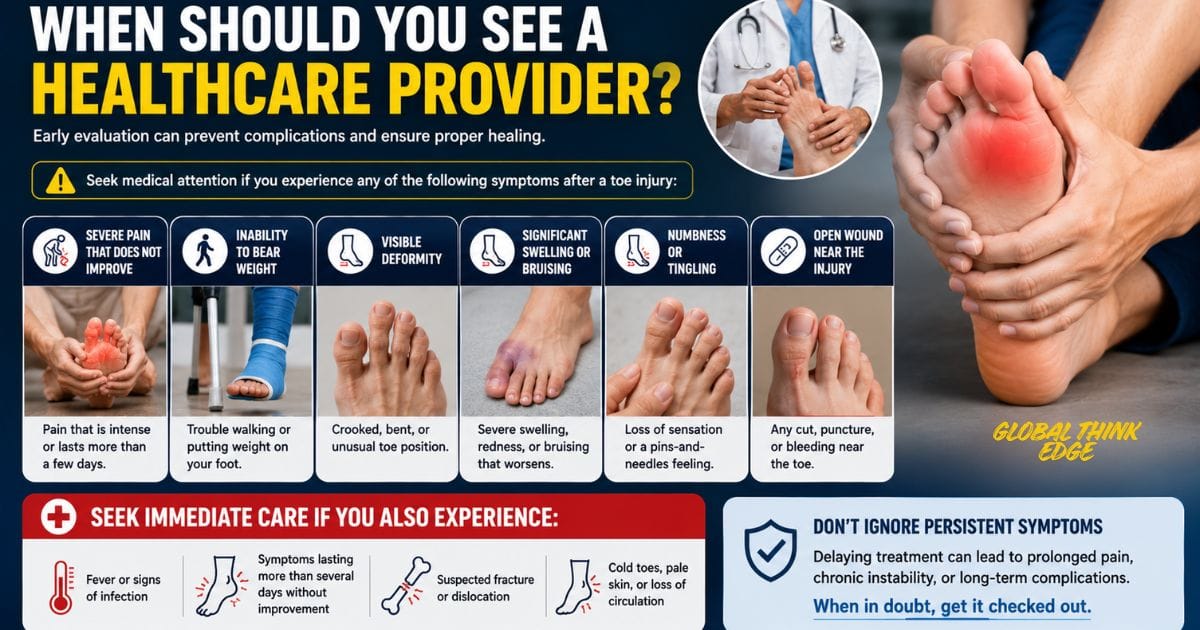
When Should You See a Healthcare Provider?
Seek medical attention promptly if you experience any of the following:
Severe pain that does not improve
Inability to bear weight
Visible deformity
Significant swelling or bruising
Numbness or tingling
An open wound near the injury
Fever or signs of infection
Symptoms lasting more than several days without improvement
Prompt evaluation helps rule out fractures, dislocations, and other conditions that require different treatment.
Key Takeaways
A toe sprain occurs when the ligaments supporting a toe joint are stretched or torn.
Most injuries result from stubbing the toe, twisting the foot, sports, or falls.
Early first aid, including rest, ice, compression, and elevation, can reduce pain and swelling.
Recovery depends on the severity of the injury, with most mild sprains healing within a few weeks.
Rehabilitation exercises help restore strength and reduce the chance of reinjury.
Persistent pain, deformity, or difficulty walking should always be assessed by a healthcare professional.
Conclusion
A toe sprain may seem like a minor injury, but proper care is essential for a full recovery. Recognizing the symptoms early, using appropriate first aid, and following a structured treatment plan can significantly reduce healing time and lower the risk of long-term complications.
Whether your injury occurred during sports or everyday activities, patience is key. Give the ligaments enough time to heal, complete your rehabilitation exercises, and return to normal activities gradually. If pain persists, swelling worsens, or you suspect a more serious injury, seek prompt medical evaluation to ensure the best possible outcome.
Frequently Asked Questions
Can I walk with a toe sprain?
Yes, many people can walk with a mild sprain, but walking may be painful. Avoid activities that increase discomfort and use supportive footwear during recovery.
How can I tell if my toe is sprained or broken?
Both injuries cause pain and swelling, but a broken toe is more likely to cause severe tenderness, deformity, or intense pain with movement. An X-ray is often needed for confirmation.
Does every toe sprain need buddy taping?
No. Buddy taping is helpful for many mild injuries but should not be used if a fracture, severe deformity, or open wound is suspected without medical advice.
Can I exercise while recovering?
Low-impact activities may be possible as healing progresses, but avoid running, jumping, or contact sports until your healthcare provider confirms it is safe.
Will my toe heal without treatment?
Many mild sprains improve with proper home care. However, severe ligament injuries or persistent symptoms should always be evaluated by a medical professional.
Can a toe sprain cause long-term problems?
If left untreated or repeatedly injured, ligament damage may lead to chronic pain, joint stiffness, reduced stability, or an increased risk of future sprains.
