What Is a Riser Desk? Best Features You Should Know
Understanding What a Riser Desk Is
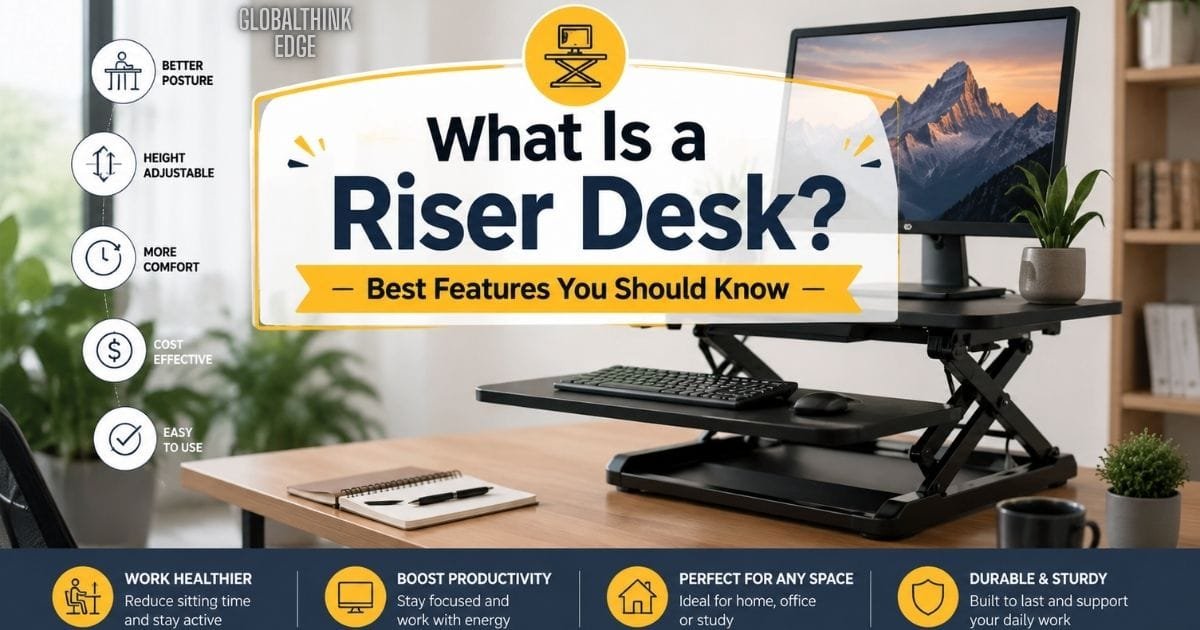
What is a riser desk, and why are so many people adding one to their workspace? If you’ve been searching for what is a riser desk, you’re likely looking for a simple way to improve comfort, posture, and productivity without replacing your existing desk.
A riser desk, also known as a desk riser or sit-stand converter, is an adjustable platform that sits on top of a standard desk. It lets you switch easily between sitting and standing, helping create a more ergonomic and flexible workspace.
Whether you work from home, spend long hours in an office, study, or game, a riser desk offers an affordable way to reduce prolonged sitting while making your workstation more comfortable and efficient. In this guide, you’ll learn how a riser desk works, its key benefits, the different types available, and how to choose the right one for your needs.
Why More People Are Using Riser Desks
Modern work revolves around computers. Many people spend six to ten hours each day in front of a screen, often without realising how little they move during that time.
A riser desk addresses this challenge by encouraging regular posture changes throughout the day. Instead of staying seated continuously, users can raise their workspace and continue working while standing.
Several reasons explain why these desks have become so popular:
They work with existing desks.
They cost less than replacing an entire desk.
Installation usually takes only a few minutes.
They support healthier working habits.
They fit both home and office environments.
They allow quick transitions between sitting and standing.
For people who want ergonomic improvements without investing in expensive office furniture, a riser desk offers a practical solution.
How Does a Riser Desk Work?
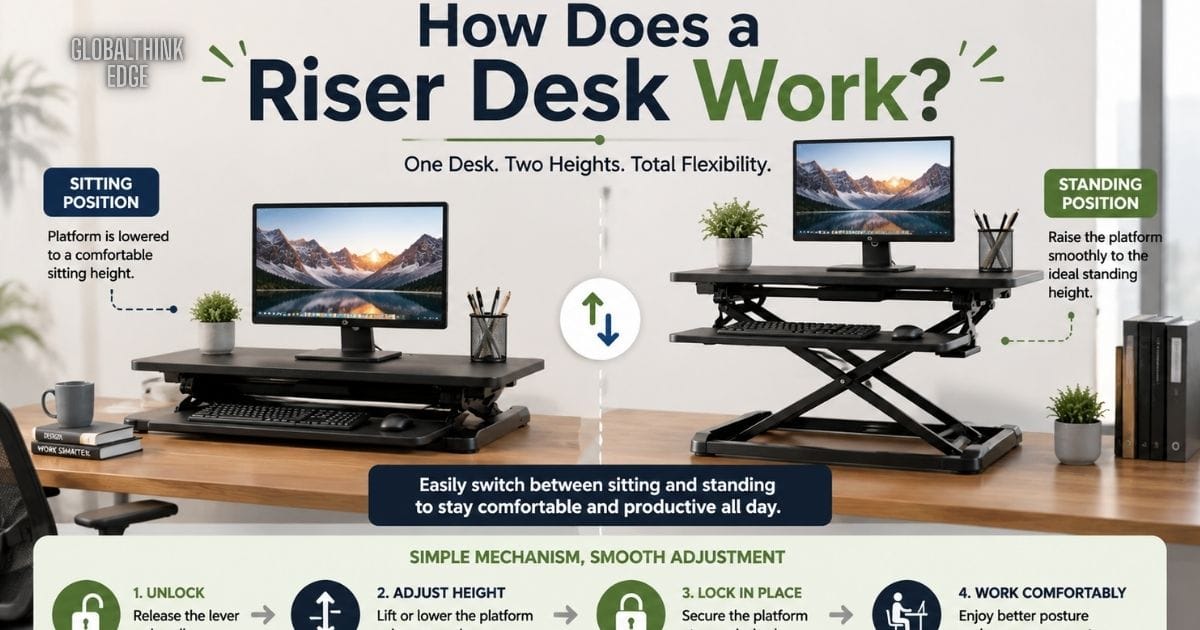
A riser desk uses an adjustable lifting mechanism to change the height of your working surface. Depending on the model, height adjustments may be made manually, with a gas-spring system, or through an electric motor.
When lowered, the platform functions like a normal desk. When raised, it positions your monitor, keyboard, and mouse at standing height, allowing you to continue working comfortably without changing your equipment.
A properly adjusted riser desk should allow the following:
Your monitor should remain at eye level.
Your elbows to rest close to a 90-degree angle.
Your wrists should stay straight while typing.
Your shoulders remain relaxed.
Your feet should stay flat on the floor when sitting.
The goal isn’t to stand all day. Instead, alternating between sitting and standing creates a more active work routine that supports better comfort throughout the day.
Exploring the Different Types of Riser Desks
Not every riser desk is built the same. Manufacturers offer several designs to suit different workspaces, budgets, and equipment.
Fixed Riser Platforms
These platforms provide a permanent raised surface but do not adjust in height. They are useful if your primary goal is to elevate your monitor instead of switching between sitting and standing.
Manual Adjustable Models
Manual riser desks use levers or locking systems that allow you to raise or lower the platform yourself. They are affordable, durable, and easy to maintain.
Gas-Spring Desk Converters
Gas-spring models use counterbalance technology to make lifting and lowering the platform almost effortless. They are among the most common choices because they combine convenience with reliability.
Electric Riser Desks
Electric models use a built-in motor to adjust the platform with the press of a button. They provide smooth, accurate height adjustments and are ideal for users who change positions frequently throughout the day.
Large and Dual-Monitor Riser Desks
Professionals who use multiple displays require more workspace. These larger platforms are designed to support dual monitors, additional accessories, and heavier equipment while maintaining stability.
Choosing the right style depends on your available desk space, daily workflow, and budget.
Benefits of Using a Riser Desk
A riser desk offers more than adjustable height. When used correctly, it can improve the overall working experience while supporting healthier daily habits.
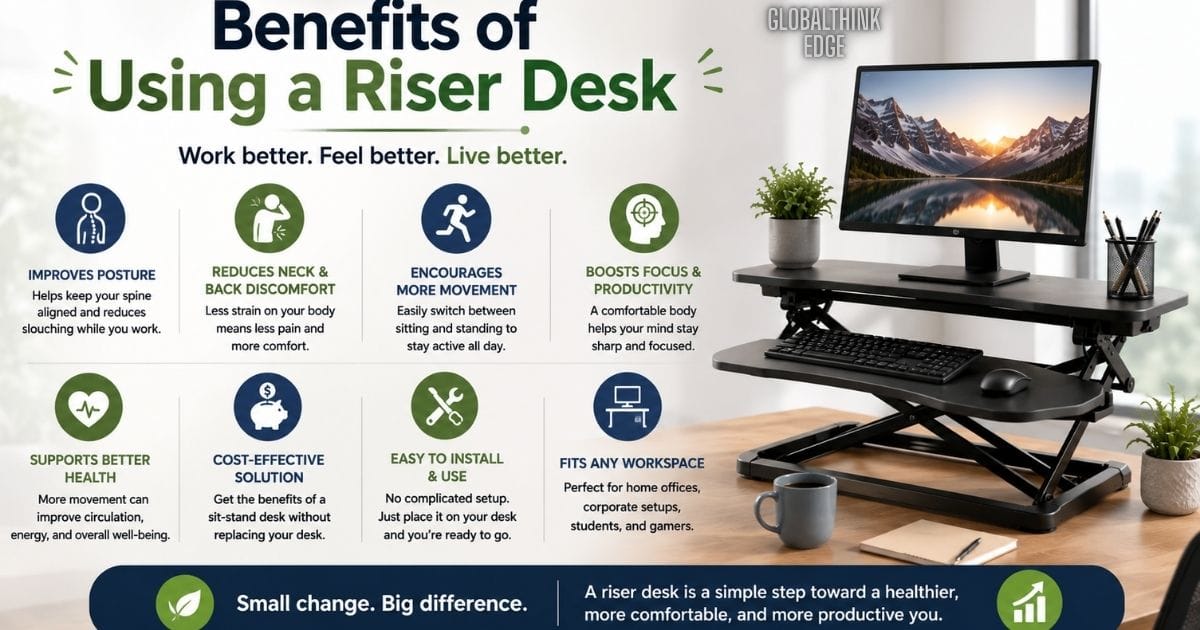
Promotes Better Posture
Many office workers naturally lean forward while looking at their screens. A properly adjusted riser desk keeps the monitor closer to eye level, encouraging a more natural head and neck position.
Helps Reduce Neck and Back Discomfort
Remaining in the same seated posture for long periods often leads to stiffness. Changing positions throughout the day distributes pressure more evenly across different muscle groups, helping reduce everyday discomfort.
Encourages More Movement
One of the biggest advantages of a riser desk is that it encourages regular movement. Instead of staying seated for hours, users can alternate positions while continuing their work without interruption.
Although standing is not a substitute for exercise, adding more movement to the workday supports a healthier routine.
Improves Comfort During Long Work Sessions
Professionals who spend extended hours on computers often appreciate the flexibility of changing positions whenever they begin feeling tired or uncomfortable. This adaptability can make long projects more manageable.
Supports Better Productivity
Physical discomfort often affects concentration. A workstation that allows comfortable posture changes can help users stay focused on tasks for longer periods without frequent interruptions.
Who Should Consider Using a Riser Desk?
A riser desk is suitable for many different users because it adapts to a variety of working environments.
Remote Workers
People working from home often rely on standard furniture that wasn’t designed for long computer sessions. A riser desk upgrades an existing setup without requiring a new desk.
Office Professionals
Employees who spend much of the day attending meetings, preparing reports, or responding to emails benefit from the flexibility of alternating between sitting and standing.
Students
Students who attend online classes or complete assignments on laptops can create a more comfortable study environment by adjusting their screen to an appropriate height.
Designers, Developers, and Content Creators
Creative professionals frequently spend uninterrupted hours at their workstations. A riser desk allows them to stay productive while reducing the discomfort associated with prolonged sitting.
Gamers
Gaming sessions often last several hours. A riser desk gives gamers the option to stand between matches or during casual gameplay while keeping their setup organised.
Riser Desk vs. Standing Desk: What’s the Difference?
Although these products share similar goals, they differ in several important ways.
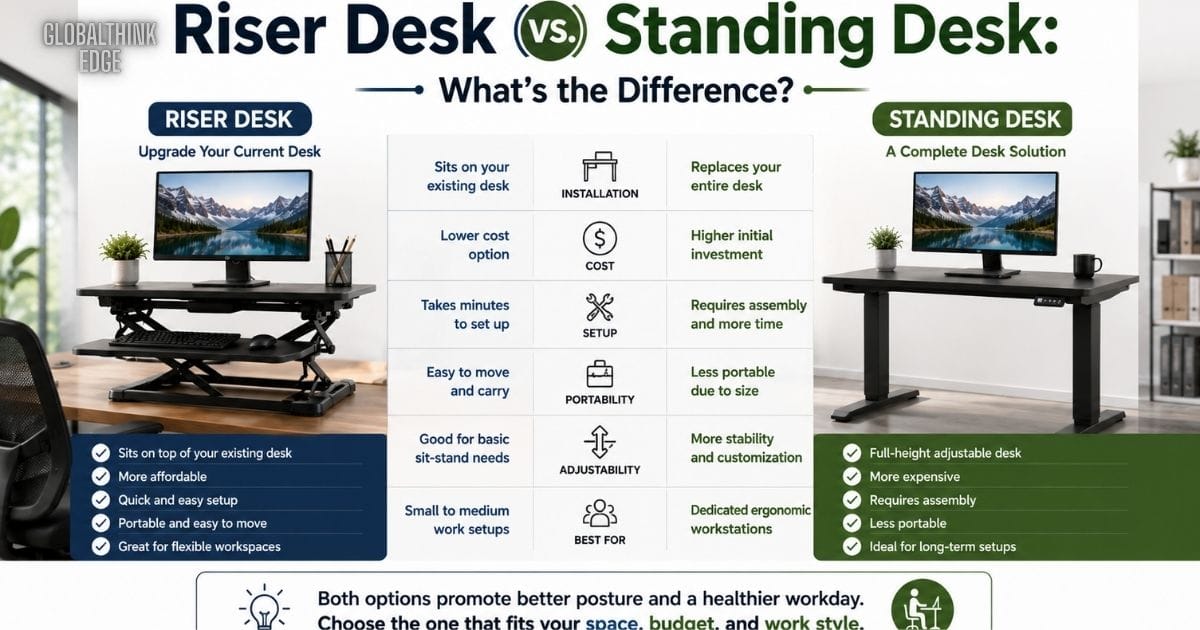
| Feature | Riser Desk | Standing Desk |
| Installation | Placed on an existing desk | Replaces the entire desk |
| Cost | More budget-friendly | Higher initial investment |
| Setup | Quick and simple | Requires assembly |
| Portability | Easy to move | Less portable |
| Best For | Upgrading an existing workspace | Building a dedicated ergonomic office |
For many users, a riser desk offers the ideal balance of affordability, convenience, and flexibility. However, individuals designing a permanent ergonomic workspace with maximum customisation may find a full standing desk better suited to their long-term needs.
What to Consider Before Buying a Riser Desk
Choosing the right riser desk involves more than comparing prices. The best option should fit your workspace, support your equipment, and make it easy to switch between sitting and standing throughout the day.
Height Adjustment Range
A quality riser desk should provide enough adjustment to match both your seated and standing positions. An adjustable range that suits your height helps maintain proper posture and prevents unnecessary strain.
Weight Capacity
Before buying, calculate the combined weight of your monitor, keyboard, laptop, and any other accessories. Selecting a riser desk with the right weight capacity improves stability and extends its lifespan.
Desktop Size
Consider how much workspace you need. Laptop users may prefer compact models, while professionals using dual monitors, speakers, or drawing tablets should look for larger platforms.
Stability and Build Quality
A stable work surface is essential for typing, writing, and using multiple monitors. Strong frames and durable materials reduce wobbling and provide a more comfortable working experience.
Keyboard Tray
Many riser desks include a dedicated keyboard tray. This feature helps keep your arms in a natural position and supports better wrist alignment during extended typing sessions.
Ease of Operation
Whether you choose a manual, gas-spring, or electric model, adjusting the desk should be quick and effortless. Smooth height adjustments encourage regular movement throughout the day.
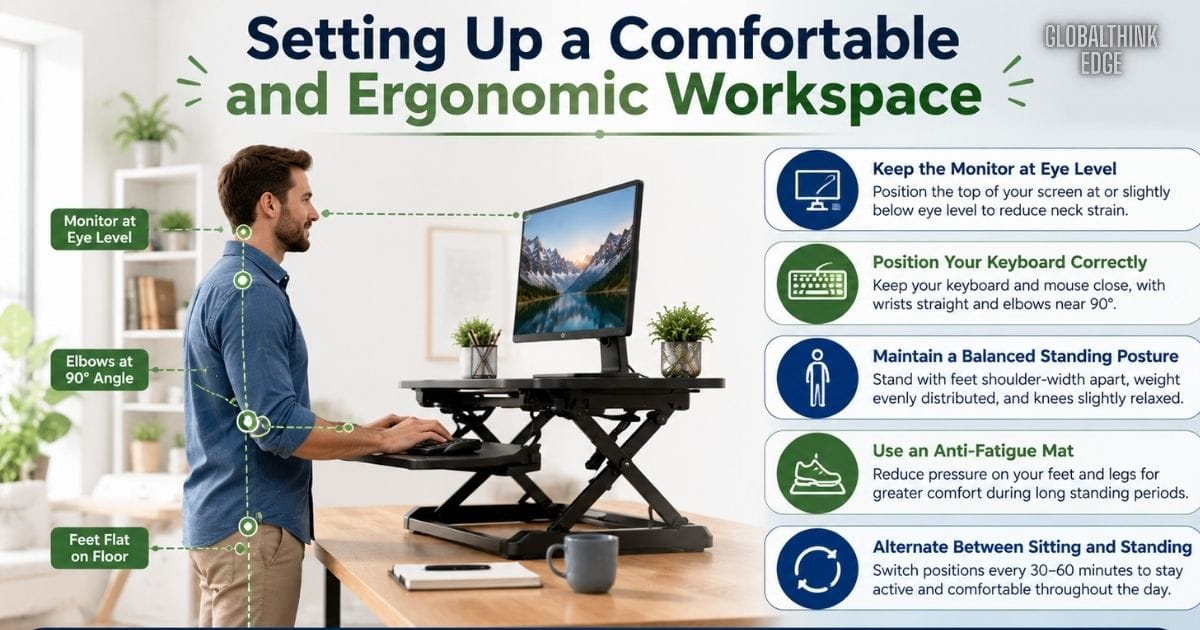
Setting Up a Comfortable and Ergonomic Workspace
Buying a riser desk is only the first step. Proper setup ensures you receive its full ergonomic benefits.
Keep the monitor at eye level.
Your eyes should naturally align with the upper portion of the screen. This position reduces neck bending and encourages a neutral posture.
Position Your Keyboard Correctly
Place your keyboard and mouse close enough that your elbows remain near your body. Your wrists should stay straight while typing rather than bending upward or downward.
Maintain a Balanced Standing Posture
Stand with your feet shoulder-width apart and distribute your weight evenly. Avoid locking your knees, as slight movement improves comfort during longer standing periods.
Use an anti-fatigue mat.
If you stand frequently, an anti-fatigue mat can reduce pressure on your feet and legs while improving overall comfort.
Alternate Between Sitting and Standing
A riser desk works best when you change positions regularly. Many experts recommend alternating every 30 to 60 minutes instead of remaining in one position for extended periods.
Common Mistakes That Reduce the Effectiveness of a Riser Desk
Even a high-quality riser desk cannot deliver its full benefits if it is used incorrectly.
Standing Too Long
Standing continuously may lead to fatigue. The objective is to create movement throughout the day, not replace prolonged sitting with prolonged standing.
Incorrect Screen Placement
A monitor positioned too low encourages neck strain, while one placed too high may cause shoulder discomfort. Adjust the screen until it sits comfortably at eye level.
Poor Desk Height
If the desk is too high, your shoulders may tense while typing. If it is too low, your wrists may bend awkwardly. Small adjustments can make a significant difference.
Ignoring Regular Breaks
A riser desk should complement an active work routine. Stretching, walking briefly, and changing posture throughout the day help improve circulation and reduce stiffness.
Exceeding the Weight Limit
Overloading the platform can reduce stability and affect the lifting mechanism. Always follow the manufacturer’s recommended weight capacity.
Keeping Your Riser Desk in Excellent Condition
Routine maintenance helps preserve performance and extends the life of your riser desk.
Wipe the surface regularly with a soft microfibre cloth.
Remove dust from moving parts and hinges.
Check screws and fasteners periodically.
Avoid placing heavy items on one side of the platform.
Follow the manufacturer’s maintenance instructions for manual or electric mechanisms.
A few minutes of regular care can keep your riser desk operating smoothly for years.
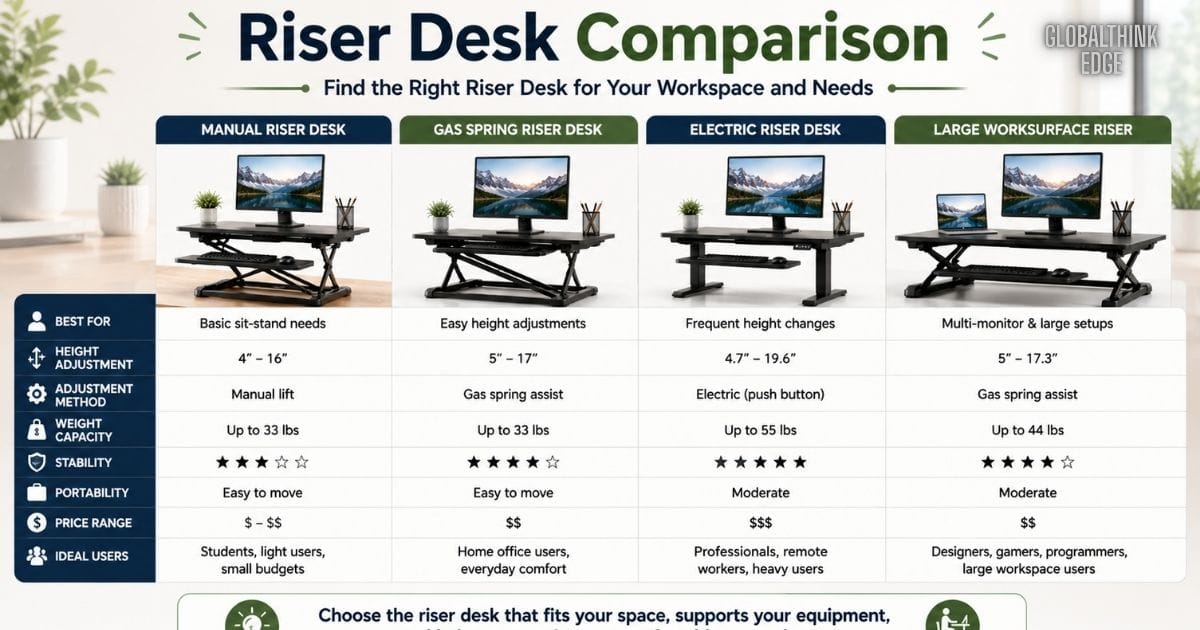
Riser Desk Comparison
| Feature | Manual Riser Desk | Gas-Spring Riser Desk | Electric Riser Desk |
| Cost | Low | Medium | High |
| Height Adjustment | Manual | Smooth gas-assisted | Motorized |
| Ease of Use | Good | Very Good | Excellent |
| Maintenance | Low | Low | Moderate |
| Best For | Budget users | Home and office use | Heavy daily use |
Key Takeaways
A riser desk transforms an existing desk into a sit-stand workstation.
It provides a cost-effective alternative to replacing your entire desk.
Different models suit different workspaces and budgets.
Proper ergonomic setup is just as important as choosing the right desk.
Alternating between sitting and standing helps create a more comfortable work routine.
Selecting the correct size, weight capacity, and adjustment mechanism improves long-term satisfaction.
Frequently Asked Questions
Is a riser desk worth buying?
Yes. A riser desk is a practical investment if you want to improve your workspace without purchasing a completely new standing desk. It offers flexibility, convenience, and ergonomic benefits at a lower cost.
Can a riser desk fit on any desk?
Most riser desks fit standard desks. However, you should measure your available space before purchasing to ensure there is enough room for the platform and your equipment.
Are riser desks suitable for dual monitors?
Yes. Many larger models are specifically designed to support dual-monitor setups. Always check the product’s dimensions and weight capacity before buying.
How often should I alternate between sitting and standing?
While personal preferences vary, changing positions every 30 to 60 minutes and taking short walking breaks throughout the day is a practical routine for many users.
Does a riser desk improve posture immediately?
A riser desk supports better posture when adjusted correctly. However, maintaining proper monitor height, keyboard placement, and healthy work habits is equally important.
Which is better: a riser desk or a standing desk?
A riser desk is ideal for upgrading an existing workstation on a budget. A full standing desk is better suited for those building a dedicated ergonomic workspace with greater customisation options.
Final Thoughts
Knowing what is a riser desk helps you make a smarter decision when upgrading your workspace. A riser desk offers an affordable way to switch between sitting and standing, improve comfort, and create a more ergonomic workstation without replacing your existing desk.
When choosing a riser desk, focus on the right size, stability, height adjustment, and weight capacity to match your daily needs. Used correctly, it can support better posture, encourage regular movement, and make long hours at your desk more comfortable and productive.
If you’re still wondering what is a riser desk and whether it’s worth buying, the answer depends on your work routine. For most people, it’s a practical investment that adds flexibility, improves everyday comfort, and helps build a healthier workspace for the long term.
