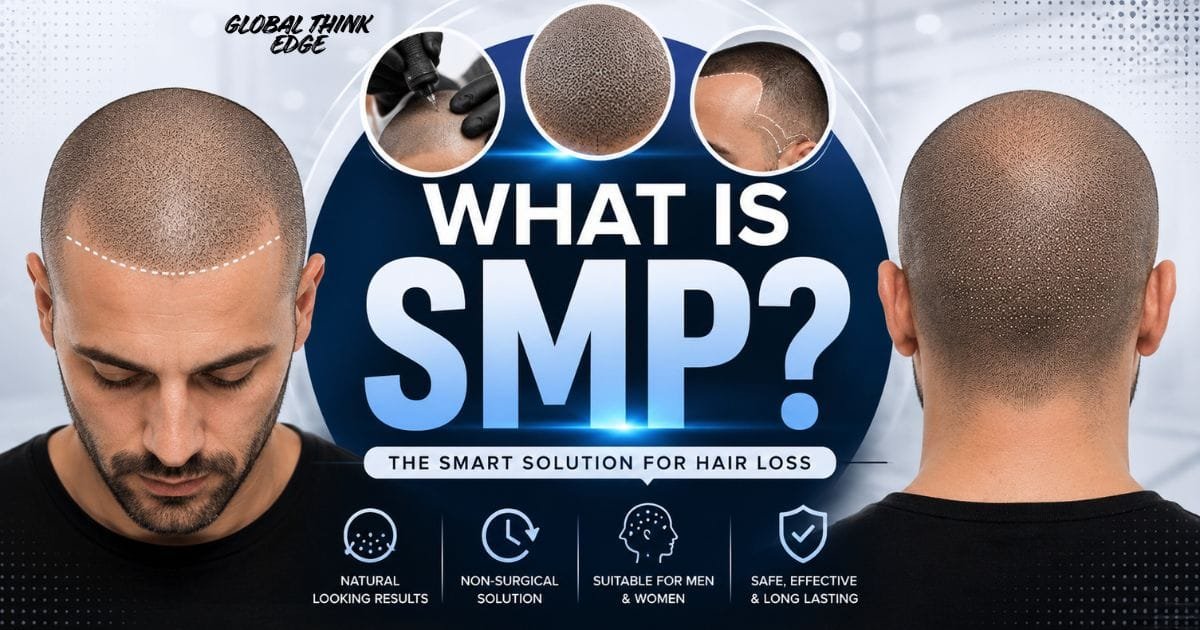
What Is SMP? 1 Smart Way to Restore Hair Naturally
Introduction: What Is SMP
If you’re searching for what is SMP, you’re probably looking for a hair loss solution that delivers natural-looking results without surgery. Scalp Micropigmentation (SMP) is a non-surgical cosmetic treatment that creates the appearance of real hair follicles by placing tiny pigment deposits on the scalp. It gives the look of a closely shaved head or makes thinning hair appear fuller, making it a popular choice for both men and women.
Unlike hair transplants or medications, SMP doesn’t regrow hair. Instead, it enhances the appearance of your scalp with immediate cosmetic improvement, minimal downtime, and long-lasting results. If you’re dealing with male pattern baldness, thinning hair, alopecia, or hair transplant scars, understanding what is SMP will help you decide whether this treatment is the right solution for your hair restoration goals.
Why More People Are Choosing SMP
Hair loss affects millions of people and often impacts confidence as much as appearance. While some individuals choose medications or surgical procedures, others prefer a treatment that is less invasive and delivers predictable cosmetic results.
SMP is growing in popularity because it offers several practical advantages:
No surgery or stitches
Minimal recovery time
Immediate visual improvement after treatment
Suitable for both men and women
Works with different skin tones and hair types
Can complement previous hair restoration procedures
Its versatility makes it an attractive option for people seeking a realistic improvement without the commitment of surgery.
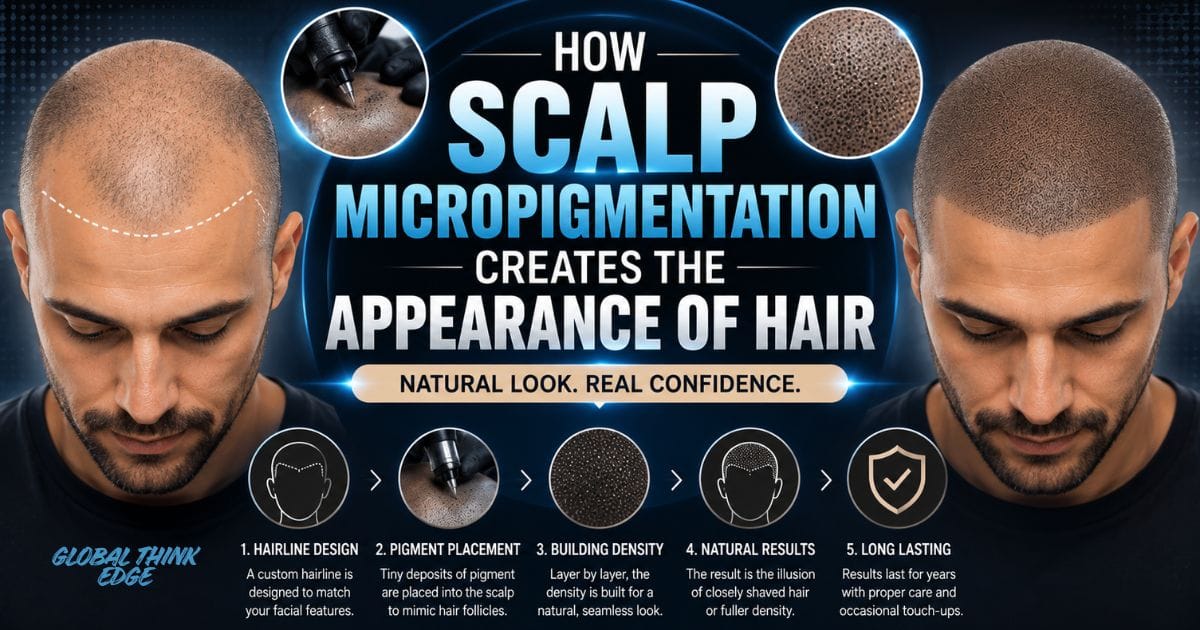
How Scalp Micropigmentation Creates the Appearance of Hair
Scalp micropigmentation works by placing thousands of carefully positioned pigment impressions into the upper layers of the scalp. Each impression resembles a tiny hair follicle, creating the illusion of natural hair growth.
An experienced practitioner carefully considers several factors during treatment, including:
Pigment Matching
The pigment is selected to complement your natural hair colour and skin tone. Proper colour matching helps ensure the treatment blends naturally rather than standing out.
Hairline Design
For clients with significant hair loss, the hairline is one of the most important aspects of the procedure. A well-designed hairline follows natural facial proportions instead of creating an unnaturally straight or overly defined edge.
Is SMP the Same as a Hair Tattoo?
Many people refer to the procedure as an SMP hair tattoo, but the two are not identical.
Although both involve placing pigment into the skin, scalp micropigmentation is specifically designed for cosmetic scalp restoration.
| Feature | Scalp Micropigmentation | Traditional Tattoo |
| Primary Purpose | Creates the appearance of hair follicles | Decorative body art |
| Pigment Placement | Upper skin layers | Deeper skin layers |
| Pigment Formula | Cosmetic pigments designed for the scalp | Standard tattoo ink |
| Technique | Tiny follicle-sized impressions | Lines and artistic shading |
| Overall Appearance | Natural shaved-hair effect | Visible artwork |
These differences help SMP maintain a subtle appearance that closely resembles natural hair instead of permanent tattoo art.
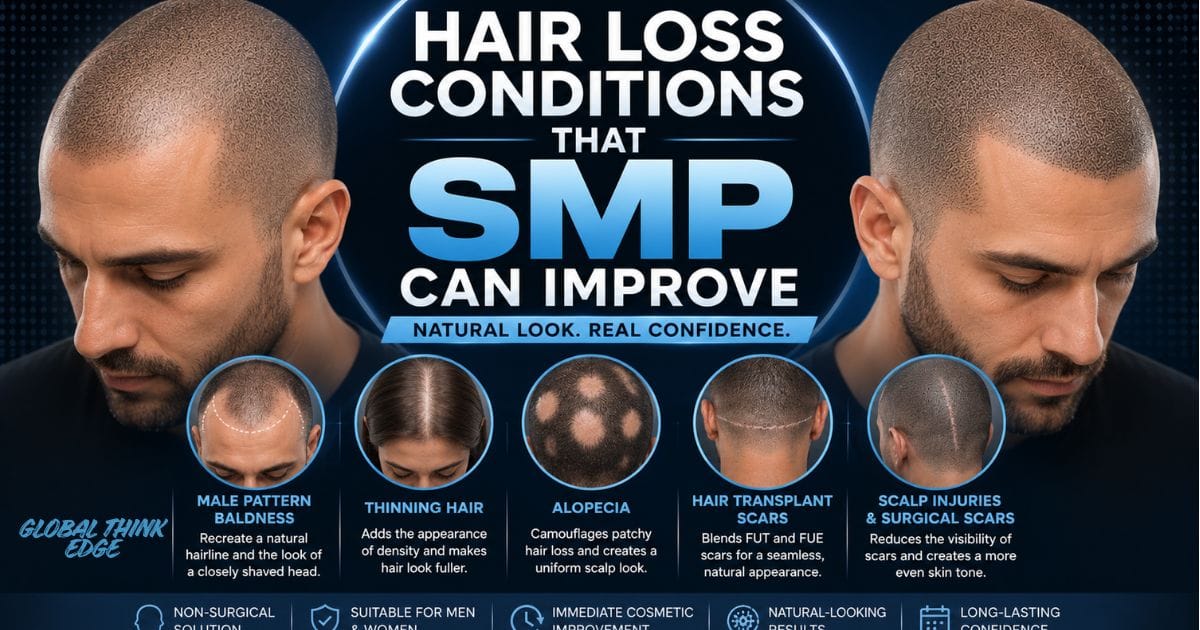
Hair Loss Conditions That SMP Can Improve
One reason SMP has become so popular is its ability to address several different types of cosmetic hair loss concerns.
Male Pattern Baldness
Men experiencing receding hairlines or complete baldness often use SMP to recreate the appearance of a freshly shaved hairstyle. A carefully designed hairline can restore facial balance while maintaining a realistic look.
Female Hair Thinning
Women typically experience diffuse thinning rather than complete baldness. SMP reduces the visibility of the scalp between existing hairs, making overall hair density appear significantly greater.
Alopecia
People living with different forms of alopecia frequently choose SMP to camouflage patchy hair loss or complete bald areas. While it doesn’t treat the underlying condition, it can dramatically improve cosmetic appearance.
Scalp Injuries and Surgical Scars
Scars caused by accidents or previous surgeries often differ in colour from the surrounding scalp. Carefully placed pigmentation helps reduce this contrast and create a more uniform appearance.
Who Is an Ideal Candidate for SMP?
Although SMP works for many individuals, the best results are achieved when the treatment matches the person’s expectations and hair loss pattern.
You may be a suitable candidate if you:
Have a receding hairline.
Experience thinning hair.
Are completely bald.
Have alopecia.
Want to camouflage hair transplant scars.
Prefer a non-surgical cosmetic solution.
Are you looking for a low-maintenance alternative to daily hair products?
SMP is suitable for both men and women and can be customised for different ages, skin tones, and hair colours.
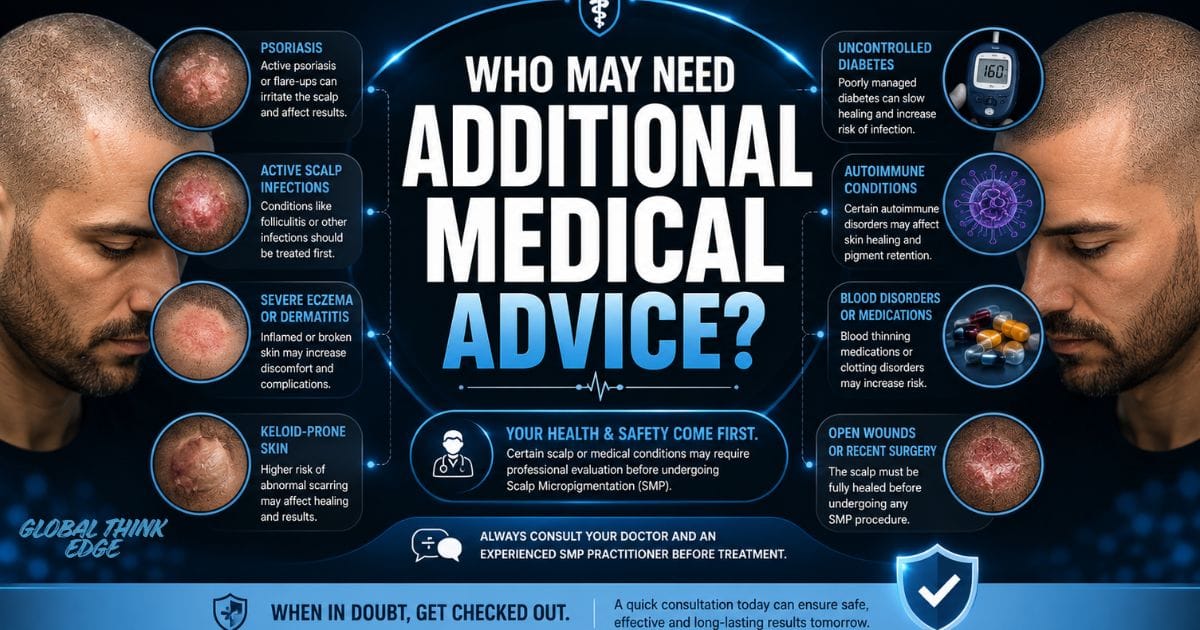
Who May Need Additional Medical Advice?
While SMP is generally considered suitable for many healthy adults, some individuals should seek medical guidance before treatment.
This includes people with:
Active scalp infections
Severe psoriasis or eczema affecting the scalp
Open wounds
Uncontrolled diabetes
A history of keloid scarring
Certain autoimmune skin conditions
A reputable practitioner will always conduct a consultation before recommending treatment and may advise postponing the procedure until any active scalp condition has resolved.
What Happens During an SMP Procedure?
Understanding the treatment process helps set realistic expectations.
Initial Consultation
Every successful SMP treatment begins with a detailed consultation.
During this appointment, the practitioner will:
Assess your scalp condition.
Review your medical history.
Discuss your cosmetic goals.
Recommend an appropriate hairline design.
Estimate the number of treatment sessions.
This planning stage plays a major role in achieving natural-looking results.
First Treatment Session
The scalp is cleaned thoroughly before treatment begins.
Using specialized equipment, the practitioner places thousands of tiny pigment impressions across the treatment area. Rather than completing the entire procedure in one visit, the first session establishes the foundation for future density.
Some clients experience mild redness immediately afterward, but this typically fades within a day or two.
Additional Sessions
Most people require two to four treatment sessions, usually spaced one to three weeks apart.
Each appointment builds upon the previous one by:
Increasing pigment density
Refining the hairline
Improving symmetry
Creating greater depth and realism
This gradual process allows the final result to look more natural than attempting full coverage in a single session.
Healing and Early Results
Healing is usually straightforward.
During the first week:
Mild redness gradually disappears.
Tiny scabs may form before naturally shedding.
The pigment often appears slightly lighter as the skin heals.
After all sessions are complete and the scalp has fully healed, the treatment develops its intended natural appearance.
How Long Does SMP Last?
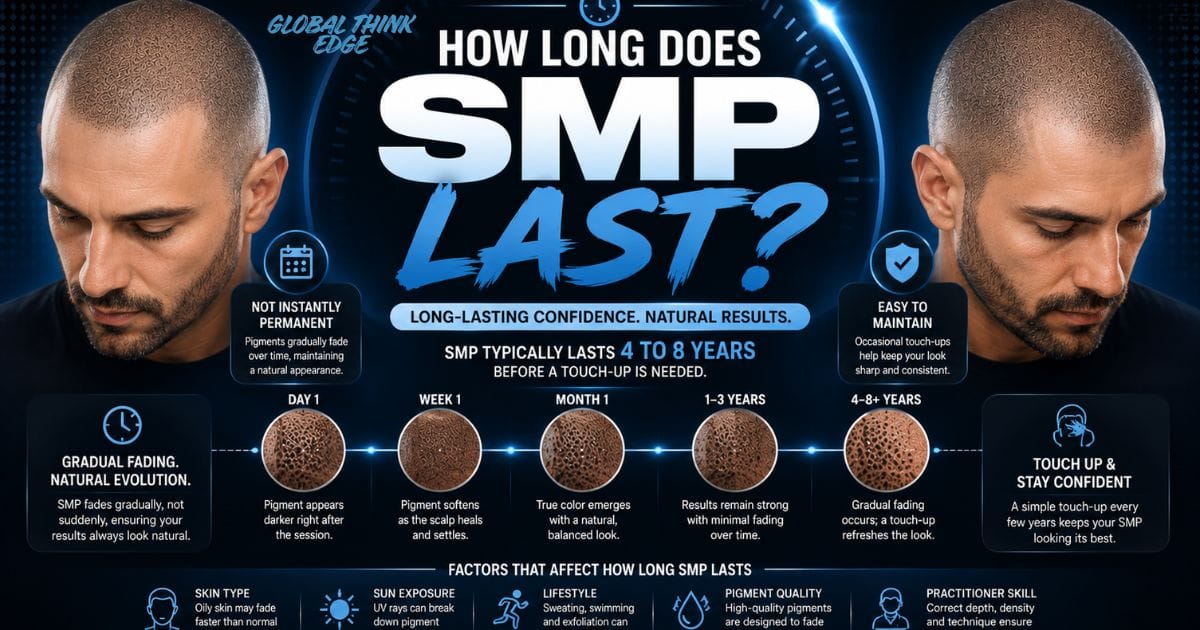
One of the biggest reasons people choose scalp micropigmentation is its long-lasting appearance. While SMP is not considered permanent in the same way as a traditional tattoo, it can maintain a natural look for four to eight years before a touch-up is typically needed.
The pigments gradually fade over time instead of changing dramatically in colour. This allows practitioners to refresh the treatment when necessary without completely redoing the procedure.
Factors That Affect How Long SMP Lasts
The lifespan of SMP varies from person to person. Several factors influence how quickly the pigment fades.
Skin Type
People with oily skin may notice slightly faster fading because excess oil can affect pigment retention. Dry and normal skin types often hold pigment for longer periods.
Sun Exposure
Frequent exposure to direct sunlight can cause pigments to fade more quickly. Wearing sunscreen or a hat when outdoors helps preserve the results.
Lifestyle Habits
Activities that involve heavy sweating, frequent swimming, or regular scalp exfoliation may gradually reduce pigment intensity over time.
Benefits of Choosing Scalp Micropigmentation
Scalp micropigmentation has become a trusted cosmetic solution because it offers several advantages for people experiencing different forms of hair loss.
Creates Immediate Visual Improvement
Unlike treatments that require months before noticeable changes appear, SMP produces visible cosmetic enhancement as soon as the sessions are completed.
No Surgery Required
There are no incisions, stitches, or lengthy recovery periods. Most people can return to their normal routine shortly after each appointment.
Suitable for Various Hair Loss Conditions
SMP is not limited to complete baldness. It can also improve the appearance of thinning hair, alopecia, scalp scars, and hair transplant results.
Understanding the Limitations of SMP
While SMP offers impressive cosmetic benefits, it is important to understand what it cannot do.
It does not grow new hair.
It cannot stop future hair loss.
Results depend heavily on practitioner experience.
Fading is expected over time.
Poor-quality work may require correction or removal.
Setting realistic expectations before treatment helps ensure long-term satisfaction.
Is SMP Safe?
Scalp micropigmentation is generally considered safe when performed by a trained professional using sterile equipment and high-quality pigments.
The procedure is minimally invasive because it affects only the upper layers of the skin. Most clients experience little more than temporary redness or mild sensitivity after each session.
However, choosing an experienced clinic is essential. Proper hygiene, disposable needles, and cosmetic-grade pigments significantly reduce the risk of complications.
Possible Side Effects
Although complications are uncommon, they can occur.
Potential side effects include:
Temporary redness
Mild swelling
Slight tenderness
Minor itching during healing
These effects usually resolve within a few days.
Possible Risks
As with any cosmetic procedure, there are risks if the treatment is not performed correctly.
These include:
Infection caused by poor hygiene
Allergic reactions to pigments
Uneven pigment placement
An unnatural hairline design
Pigment migration due to incorrect technique
Working with a reputable practitioner greatly reduces these risks.
Essential Aftercare for Better Results
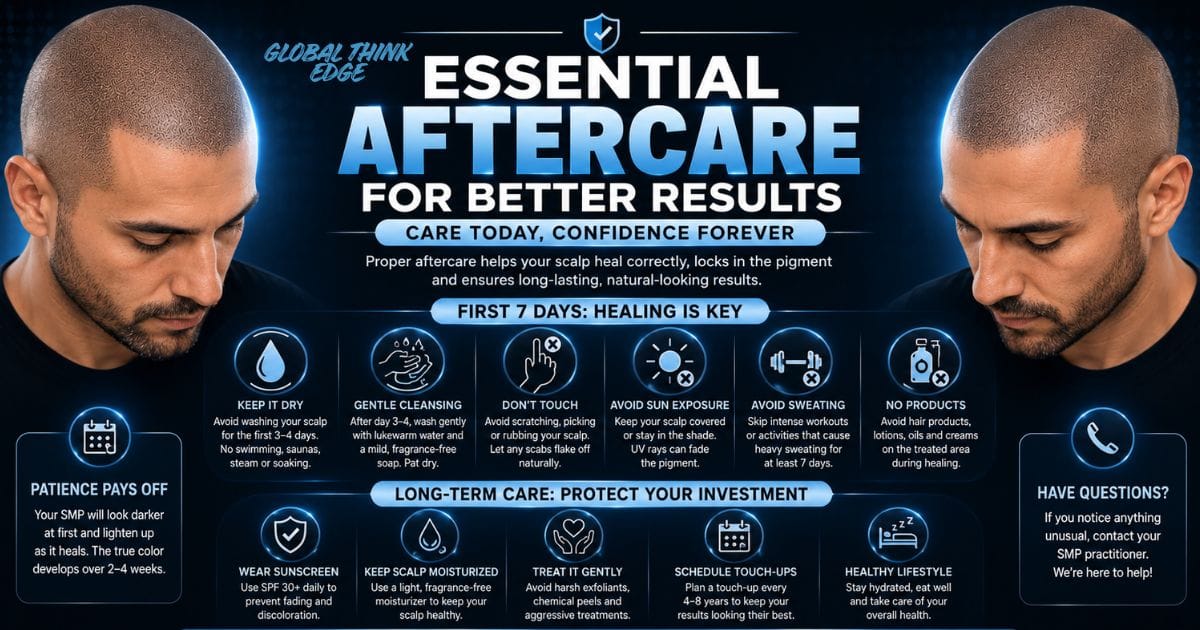
Following aftercare instructions is one of the most important parts of achieving long-lasting SMP results.
During the First Week
Immediately after treatment, your scalp needs time to heal.
Most practitioners recommend:
Keeping the scalp dry for several days.
Avoiding intense exercise that causes heavy sweating.
Staying out of swimming pools, saunas, and hot tubs.
Protecting the scalp from direct sunlight.
Avoiding scratching or picking at tiny scabs.
Following these instructions helps the pigment settle evenly.
Long-Term Maintenance
Once healing is complete, maintaining SMP is straightforward.
Good habits include:
Applying sunscreen to exposed areas.
Moisturising the scalp regularly.
Using gentle skincare products.
Avoiding harsh chemical exfoliants on the scalp.
Scheduling touch-ups when recommended.
These simple steps help preserve a natural appearance for years.
SMP Compared With Other Hair Loss Solutions
Choosing the right treatment depends on your goals, budget, and expectations. The following comparison highlights how SMP differs from other common hair restoration options.
| Feature | Scalp Micropigmentation | Hair Transplant | Hair Fibers | Hair System |
| Surgical Procedure | No | Yes | No | No |
| Promotes Hair Growth | No | Yes | No | No |
| Immediate Results | Yes | No | Yes | Yes |
| Daily Maintenance | Low | Low | High | Moderate |
| Long-Term Solution | Yes | Yes | No | Moderate |
| Covers Scars | Yes | Limited | No | No |
| Suitable for Thinning Hair | Yes | Yes | Yes | Yes |
Each option has its advantages. While hair transplants restore actual hair growth, SMP provides immediate cosmetic improvement without surgery.
What Influences the Cost of SMP?
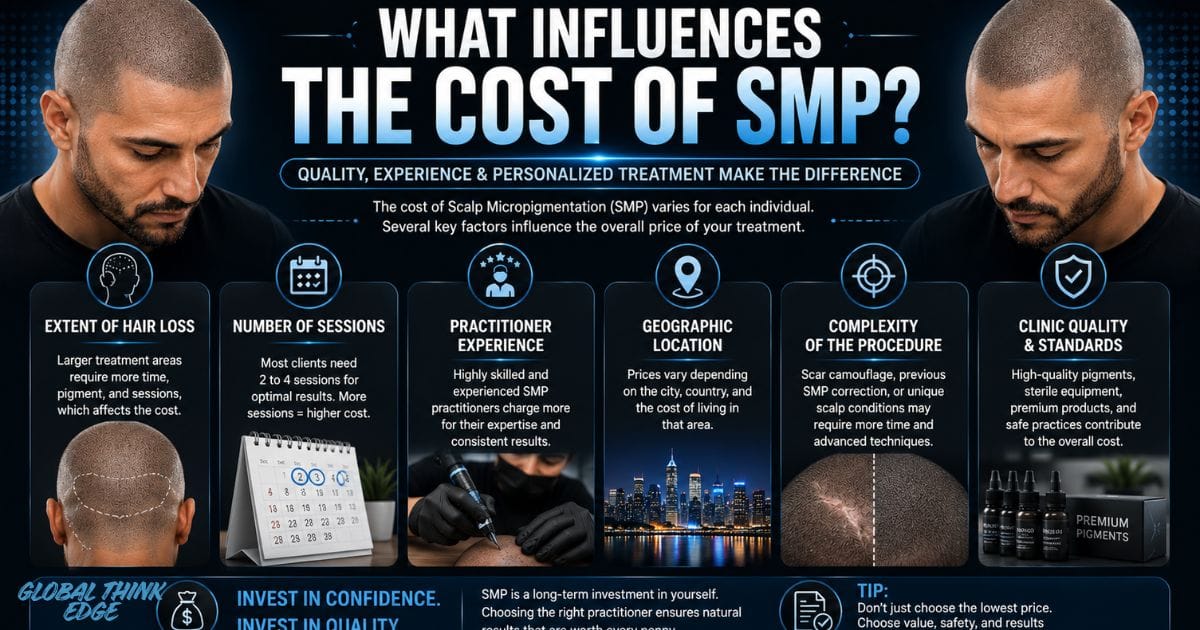
There is no single price for scalp micropigmentation because every treatment plan is customised.
Several factors affect the overall cost.
Extent of Hair Loss
Larger treatment areas require more time and additional pigment applications, increasing the total price.
Number of Sessions
Some clients achieve their desired results in two sessions, while others need four or more to build realistic density.
Practitioner Experience
Highly experienced practitioners often charge more because of their expertise, artistic skill, and consistent results.
Expert Tips Before Booking an SMP Treatment
Choosing the right clinic is just as important as choosing the treatment itself. Before making a decision, keep these practical tips in mind:
Review healed before-and-after photos rather than only immediate post-treatment images.
Ask how many SMP procedures the practitioner has completed.
Confirm that sterile, single-use needles and high-quality cosmetic pigments are used.
Read verified client reviews and testimonials.
Schedule a consultation to discuss your goals and ask questions before committing.
Avoid clinics that promise unrealistic or “perfect” results.
A skilled practitioner will explain both the benefits and the limitations of SMP, helping you make an informed decision with realistic expectations.
Choosing the Right SMP Practitioner
The quality of your scalp micropigmentation results depends as much on the practitioner’s expertise as it does on the procedure itself. Even though SMP is non-surgical, it requires technical precision, artistic skill, and a thorough understanding of facial proportions and hairline design.
Before booking an appointment, take time to research the clinic and ask questions during your consultation.
Look for Proven Experience
Experience matters because every scalp is different. A practitioner who has treated a wide range of hair loss patterns is more likely to create natural-looking results that suit your face shape, skin tone, and existing hair.
Ask how long they have been performing SMP and request to see examples of healed results.
Review Before-and-After Photos Carefully
A professional portfolio should include high-quality images taken in different lighting conditions. Focus on healed results rather than photos taken immediately after treatment, as fresh pigment can appear darker before it settles.
Pay close attention to:
Natural hairline design
Consistent pigment density
Smooth blending
Realistic follicle size
Common Myths About Scalp Micropigmentation
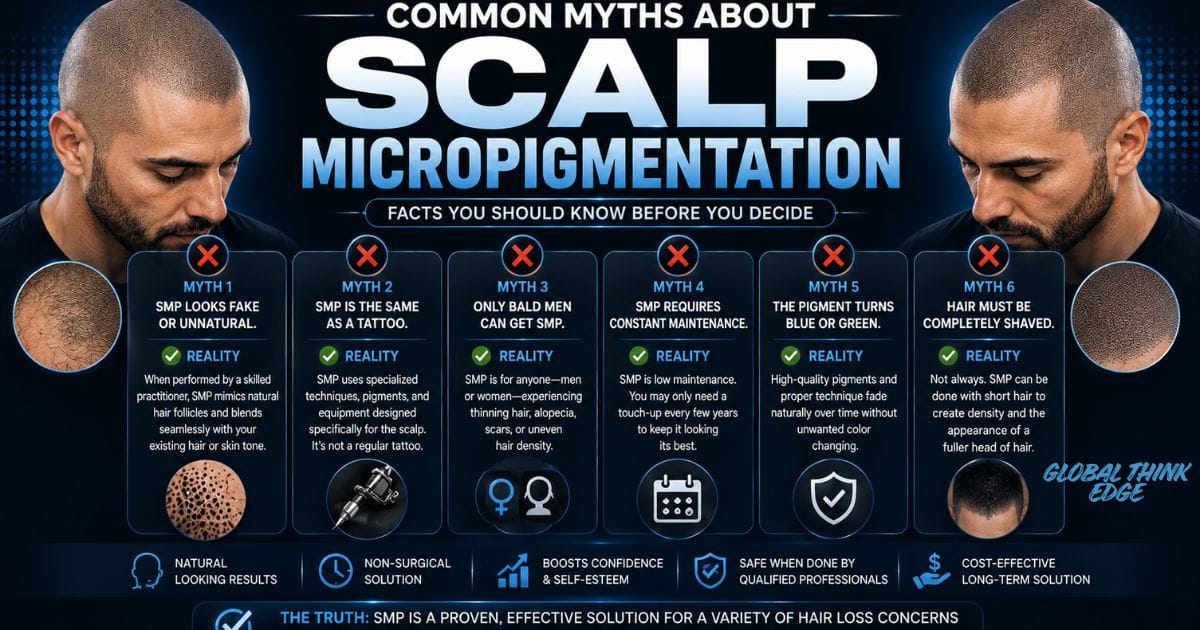
Despite its growing popularity, SMP is still surrounded by several misconceptions. Understanding the facts can help you make a more informed decision.
Myth 1: SMP Looks Fake
Reality: A professionally performed SMP treatment is designed to mimic natural hair follicles. Proper pigment selection, spacing, and hairline design create realistic results that are difficult to distinguish from closely shaved hair.
Myth 2: SMP Is the Same as a Regular Tattoo
Reality: While both procedures involve pigment placement, SMP uses different equipment, pigments, and techniques specifically developed for the scalp. The goal is subtle cosmetic enhancement rather than body art.
Myth 3: Only Bald Men Can Get SMP
Reality: SMP is suitable for men and women. It is commonly used to improve the appearance of thinning hair, alopecia, transplant scars, and uneven hair density.
Myth 4: SMP Requires Constant Maintenance
Reality: Daily maintenance is minimal. Most people only need occasional touch-up sessions every few years, depending on skin type, lifestyle, and sun exposure.
Myth 5: Hair Must Be Completely Shaved
Reality: Not everyone needs a fully shaved head. People with thinning hair often keep their existing hairstyle while using SMP to create the illusion of greater density.
Key Takeaways
If you’ve been asking what is SMP , the answer goes beyond simply calling it a hair tattoo. Scalp micropigmentation is a specialized cosmetic procedure that creates the appearance of natural hair follicles using carefully placed pigments.
It is designed for people who want to improve the look of baldness, thinning hair, alopecia, or scalp scars without undergoing surgery. While SMP does not regrow hair, it can provide a fuller, more defined appearance that looks natural when performed by a skilled professional.
The treatment is low maintenance, long-lasting, and suitable for many different hair loss concerns. However, achieving the best outcome depends on choosing an experienced practitioner, following proper aftercare, and maintaining realistic expectations.
Final Thoughts
Now that you understand what is SMP, it’s clear why this non-surgical treatment has become a popular choice for people experiencing hair loss. Whether you have baldness, thinning hair, alopecia, or hair transplant scars, scalp micropigmentation can deliver natural-looking, long-lasting results with minimal maintenance.
For the best outcome, choose an experienced practitioner, follow the recommended aftercare, and maintain realistic expectations. With the right approach, SMP can be a safe and effective way to restore the appearance of fuller hair and boost your confidence.
Frequently Asked Questions
Does SMP Hurt?
Most people describe the sensation as mild discomfort rather than significant pain. Pain tolerance varies from person to person, but the procedure is generally well tolerated.
How Many Sessions Are Needed?
Most clients require two to four sessions to achieve natural-looking density. The exact number depends on the treatment area and desired appearance.
Can Women Have SMP?
Yes. Women frequently choose SMP to reduce the visibility of thinning hair and create the appearance of greater hair density without changing their hairstyle.
Will SMP Fade Over Time?
Yes. Gradual fading is normal and expected. Most people schedule a touch-up after several years to refresh the pigment and maintain consistent results.
Will the Pigment Change to Blue or Green?
Modern cosmetic pigments used by experienced practitioners are designed to fade naturally. When applied correctly, they are far less likely to develop the unnatural colour changes associated with older tattoo inks.
Can I Shave My Head After SMP?
Yes. Many clients maintain a closely shaved hairstyle because it enhances the realistic appearance of the simulated hair follicles.
Is SMP Suitable for Grey Hair?
Yes. Practitioners can adjust pigment shades to complement grey or salt-and-pepper hair, helping the treatment blend naturally with your existing hair colour.
How Soon Can I Return to Work?
Most people return to work within one or two days, provided they follow the recommended aftercare instructions and avoid activities that may interfere with healing.
