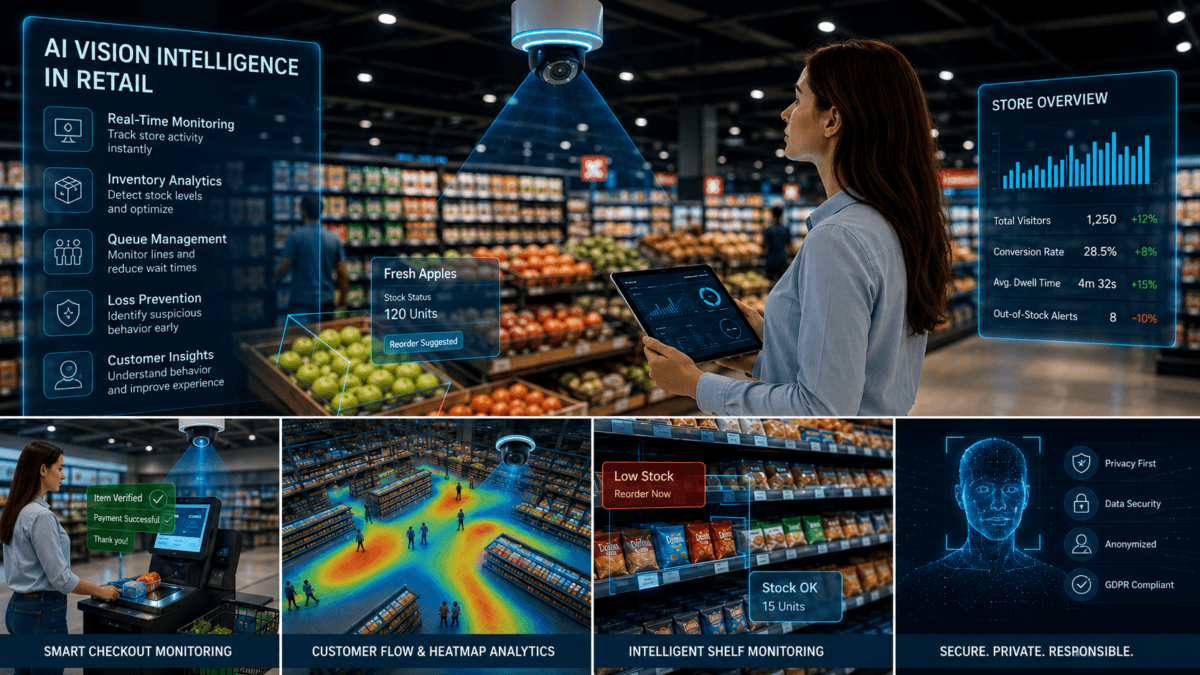
Computer Vision Retail News: Exciting Shifts in Store Tech
Why Computer Vision Is Making Headlines in Retail
Computer vision is a technology that enables cameras and AI systems to analyse visual data in real time, helping retailers improve operations, reduce losses, and deliver better customer experiences. Retailers are moving beyond traditional surveillance systems.
Using modern vision AI to monitor inventory, detect theft, optimise staffing, and support data-driven decision-making. As competition intensifies and customer expectations rise, computer vision has shifted from an experimental technology to a strategic investment for retail businesses of all sizes.
How Computer Vision Is Reshaping Retail Operations
Computer Vision Retail News uses artificial intelligence and machine learning algorithms to interpret images and video streams. Unlike conventional security cameras that simply record footage, AI-powered systems can identify patterns, recognise products, and generate actionable insights.
Retailers use this technology to monitor store activity continuously without relying solely on manual observation.
Real-Time Inventory Visibility
One of the most valuable applications of computer vision is inventory management.
Smart cameras can monitor shelves and instantly identify out-of-stock products. Store managers receive alerts when products need replenishment, helping retailers avoid lost sales opportunities.
This capability improves product availability while reducing the time employees spend performing manual inventory checks.
Queue Management and Customer Flow Analysis
Long checkout lines often lead to customer frustration and abandoned purchases.
Computer vision systems can detect growing queues and automatically notify staff members to open additional checkout counters. This proactive approach improves customer satisfaction while increasing operational efficiency.
Self-Checkout Monitoring and Loss Prevention
Self-checkout adoption continues to grow across the retail industry. However, it also introduces challenges related to theft, scanning errors, and inventory discrepancies.
Computer vision technology helps retailers address these concerns through automated monitoring.
Product Recognition and Barcode Validation
Advanced vision systems can compare scanned items with visual product recognition.
If a customer scans an incorrect barcode or fails to scan an item, the system can identify the discrepancy immediately. This process reduces shrink while maintaining a smooth checkout experience.
Faster Incident Investigation
Traditional investigations often require hours of manual video review.
Computer vision solutions automatically tag suspicious events and create searchable records. Security teams can locate incidents within minutes, significantly improving response times and reducing labour costs.
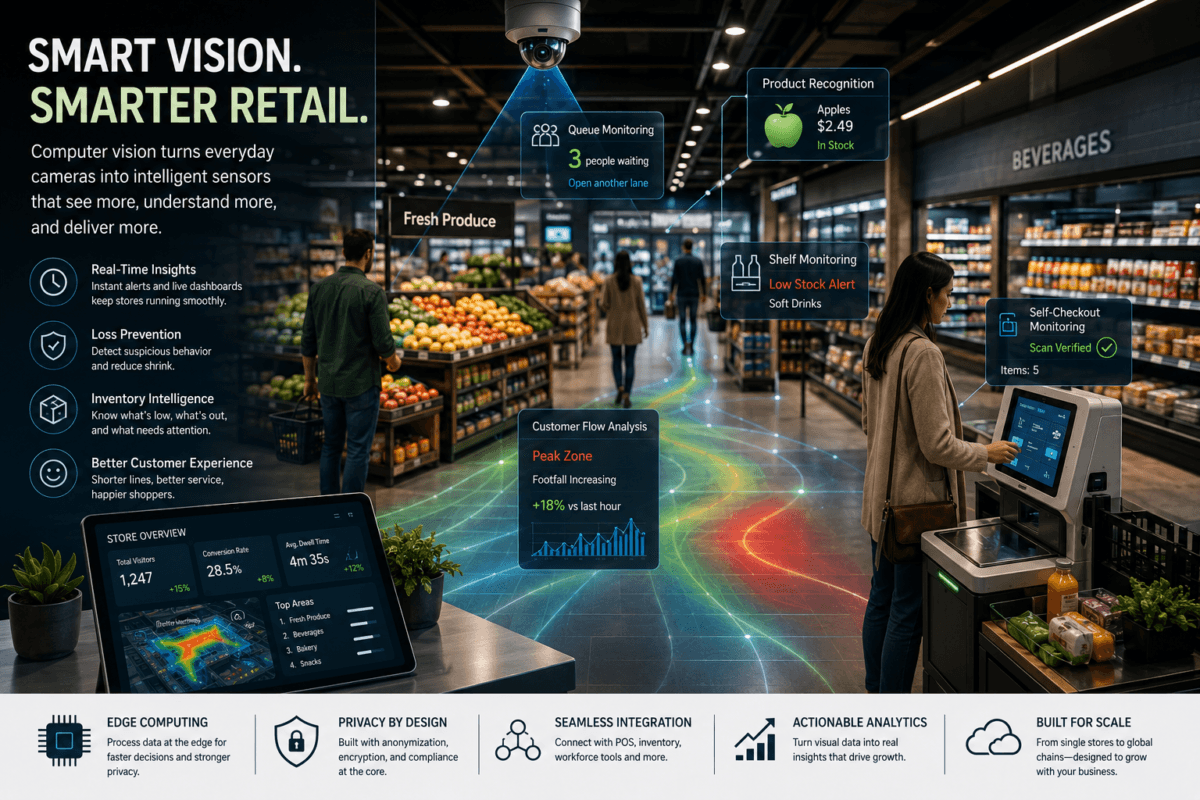
The Growing Role of Edge Computer Vision in Retail News in Retail AI
A major trend highlighted in recent computer vision retail news is the adoption of edge computing.
Edge computing allows data processing to occur near the camera rather than relying entirely on cloud infrastructure. This approach delivers faster results and reduces network latency.
Benefits of Edge-Based Vision Systems
Faster real-time decision-making
Reduced bandwidth consumption
Improved operational reliability
Enhanced data privacy
Lower long-term infrastructure costs
For retailers operating multiple locations, edge computing provides a scalable foundation for AI-powered operations.
Connecting Computer Vision Retail News With Retail Ecosystems
The true value of computer vision increases when integrated with existing retail systems.
Modern platforms connect vision data with:
Point-of-Sale Systems
Integration with POS systems enables retailers to validate transactions, analyse purchasing patterns, and identify checkout anomalies.
Inventory Management Platforms
Vision AI helps synchronise inventory data by continuously monitoring stock levels and shelf conditions.
Workforce Management Tools
Retail managers can use occupancy and traffic data to optimise employee scheduling and improve labour allocation.
Privacy and Ethical Considerations
As adoption increases, privacy remains a key concern for retailers and consumers.
Leading computer vision providers now prioritise privacy-by-design frameworks that protect customer information while maintaining operational visibility.
Privacy Best Practices
Data anonymisation
Facial blurring technologies
Secure data storage
Limited retention policies
Compliance with privacy regulations
These measures help organisations build customer trust while benefiting from AI-driven insights.
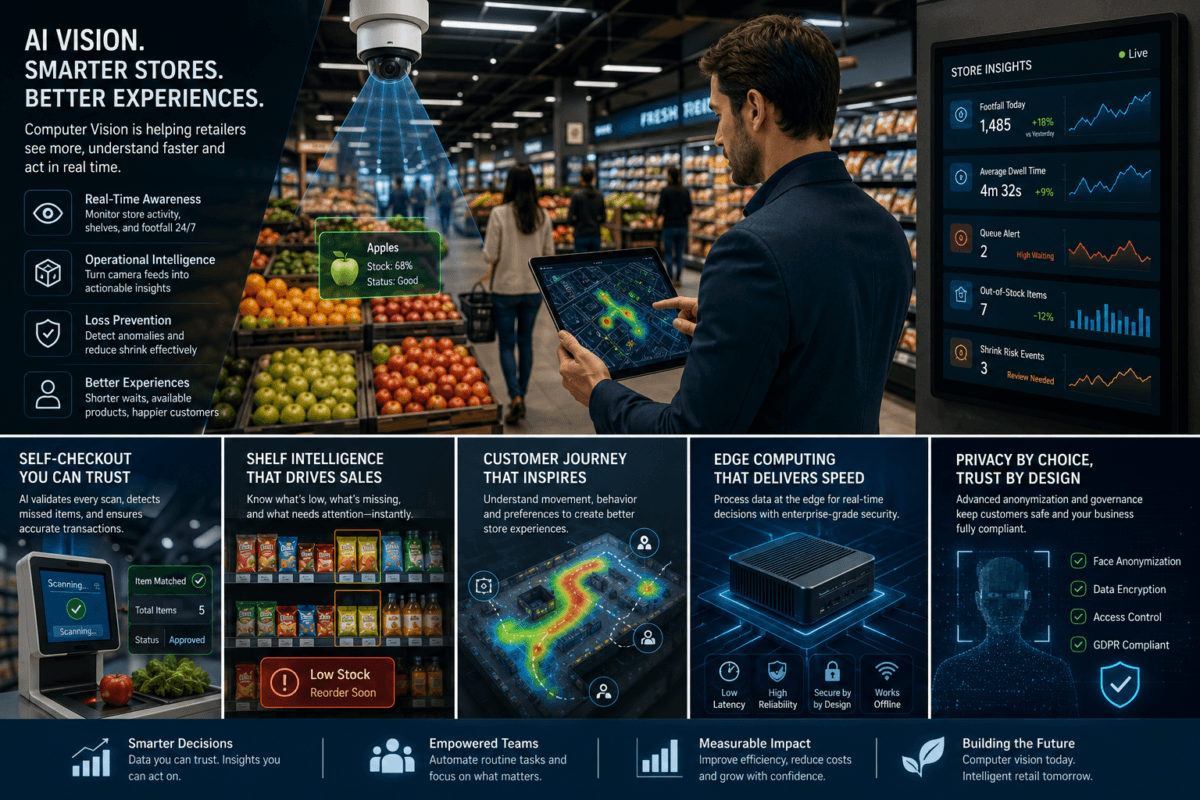
Emerging Trends Shaping Computer Vision Retail News
The Computer Vision Retail News technology landscape continues to evolve rapidly.
Several emerging developments are expected to influence the future of computer vision adoption.
Autonomous Retail Experiences
Cashierless stores and automated checkout systems continue gaining momentum. Computer vision serves as the foundation for these frictionless shopping environments.
Predictive Retail Analytics
Retailers are increasingly using vision-generated data to predict customer behaviour, forecast demand, and improve merchandising strategies.
Digital Twin Technology
Digital twins create virtual representations of physical stores. Combined with Computer Vision Retail News can test layouts, analyse traffic patterns, and optimise store performance before making real-world changes.
Why Retailers Are Investing in Computer Vision Today
Organisations investing in computer vision gain several competitive advantages.
These include improved inventory accuracy, reduced shrink, faster decision-making, enhanced customer experiences, and more efficient workforce management.
As AI technology becomes more accessible, retailers of all sizes can leverage computer vision solutions without major infrastructure changes.
Conclusion
Computer vision is transforming the retail industry far beyond traditional surveillance applications. Today’s solutions help retailers manage inventory, improve self-checkout accuracy, optimise staffing, reduce losses, and enhance customer experiences.
Recent computer vision retail news highlights a clear trend: retailers are increasingly integrating AI-powered vision systems into everyday operations. With advances in edge computing, predictive analytics, and autonomous retail technologies, computer vision is positioned to become a core component of future retail strategies.
Frequently Asked Questions
What is computer vision retail news?
Computer vision in retail uses artificial intelligence to analyse video and image data, helping stores improve operations, inventory management, security, and customer experiences.
How does computer vision reduce retail theft?
It detects suspicious activities, validates self-checkout transactions, identifies scanning errors, and automatically flags potential loss-prevention incidents.
Why is edge computing important for computer vision retail news?
Edge computing processes data closer to the source, reducing latency, improving response times, and enhancing privacy protection.
Can small retailers benefit from computer vision technology?
Yes. Many modern solutions are scalable and can be deployed using existing camera infrastructure, making adoption more affordable for smaller businesses.
What is the future of computer vision retail news?
Future developments include autonomous checkout systems, predictive analytics, digital twins, smarter inventory management, and increasingly personalised shopping experiences.
