
CPG Capital Raises: Proven Secrets to Secure Funding
Understanding CPG Capital Raises
CPG capital raises are a critical part of growing a consumer packaged goods business. Whether you sell food, beverages, beauty products, household goods, or wellness products, securing capital can help you expand production, increase distribution, and accelerate brand growth.
Today’s investment environment is more competitive than ever. Investors no longer focus solely on growth potential. They want profitable business models, strong unit economics, and evidence that a brand can scale sustainably. Understanding how capital raising works can significantly improve your chances of attracting the right funding partners.
Why Consumer Brands Need Capital
Most CPG capital raises businesses require substantial upfront investment. Product development, manufacturing, packaging, inventory, marketing, and retail placement all demand capital before meaningful revenue is generated.
A well-planned funding strategy allows brands to grow without sacrificing operational stability or missing market opportunities.

The Best Time to CPG Capital Raises
Many founders wait too long or raise capital too early. Both mistakes can limit growth and reduce investor interest.
Signs Your Brand Is Ready for Funding
Investors typically look for several indicators before committing capital:
Consistent sales growth
Strong customer demand
Positive customer reviews
Repeat purchase behavior
Growing retail or online distribution
Clear expansion opportunities
A brand that demonstrates these characteristics often attracts more investor attention than one relying solely on projections.
Avoiding Premature Fundraising
Raising capital before validating product-market fit can create unnecessary dilution and make future fundraising more difficult. Founders should focus on proving demand before seeking significant outside investment.
Exploring Funding Options for CPG Capital Raises Brands
Not every consumer brand needs venture capital. Understanding available funding options helps founders choose the most suitable path.
Bootstrapping
Bootstrapping involves funding the business through personal savings or company revenue. This approach allows founders to maintain complete ownership and decision-making authority.
Angel Investors
Angel investors provide early-stage funding in exchange for equity. Many also offer valuable mentorship, industry expertise, and networking opportunities.
Venture Capital
Venture capital firms invest in businesses with significant growth potential. These investors typically seek brands capable of rapid expansion and large market penetration.
Strategic Investors
Strategic investors often include manufacturers, distributors, retailers, or industry leaders. Their investment may provide operational advantages beyond funding.
Revenue-Based Financing
Revenue-based financing allows businesses to access capital while repaying investors through a percentage of future revenue. This option helps founders avoid excessive ownership dilution.
Inventory and Purchase Order Financing
Consumer brands often struggle with inventory costs. Specialized financing programmes can help fund large purchase orders and manufacturing runs.
Grants and Accelerator Programs
Industry accelerators and grant programmes can provide funding, mentorship, and valuable business development resources without requiring significant equity.
How CPG Capital Raises Funding Evolves Through Different Growth Stages
Early-Stage Validation
At this stage, founders focus on proving consumer demand. Funding usually comes from personal savings, friends and family, or angel investors.
Seed Stage Growth
Once traction becomes visible, brands may seek seed funding to improve marketing, expand inventory, and strengthen distribution channels.
Expansion Stage
Growing brands often require larger investments to support national distribution, retail partnerships, and operational scaling.
Institutional Funding
Established brands with strong revenue performance may attract venture capital or private equity firms looking for long-term growth opportunities.
What Investors Look for Before Investing
Understanding investor priorities is one of the most important aspects of successful CPG capital raises.
Product-Market Fit
Investors want proof that consumers genuinely want the product. Consistent demand and positive customer feedback indicate market validation.
Brand Differentiation
The consumer goods market is crowded. Brands must clearly communicate what makes their products different from competitors.
Distribution Strength
A strong distribution network demonstrates scalability and growth potential. Investors value brands that can efficiently reach customers.
Healthy Unit Economics
Strong margins and efficient operations reduce risk and increase investment attractiveness.
Leadership Team Quality
Experienced founders with clear vision and execution capability often inspire greater investor confidence.
Essential Metrics Investors Evaluate
Many fundraising efforts succeed or fail based on key performance indicators.
Customer Acquisition Cost (CAC)
This metric measures how much it costs to acquire a new customer. Lower acquisition costs generally indicate stronger business efficiency.
Customer Lifetime Value (LTV)
LTV estimates the total revenue generated by a customer over time. Investors prefer businesses with high lifetime value relative to acquisition costs.
Repeat Purchase Rate
Repeat purchases demonstrate customer satisfaction and brand loyalty.
Gross Margin
Gross margin indicates profitability after production costs. Higher margins provide greater flexibility for growth and marketing investments.
Inventory Turnover
Efficient inventory management helps reduce cash flow challenges and operational risks.
Retail Velocity
Retail velocity measures how quickly products sell through retail channels. Strong velocity often signals healthy consumer demand.
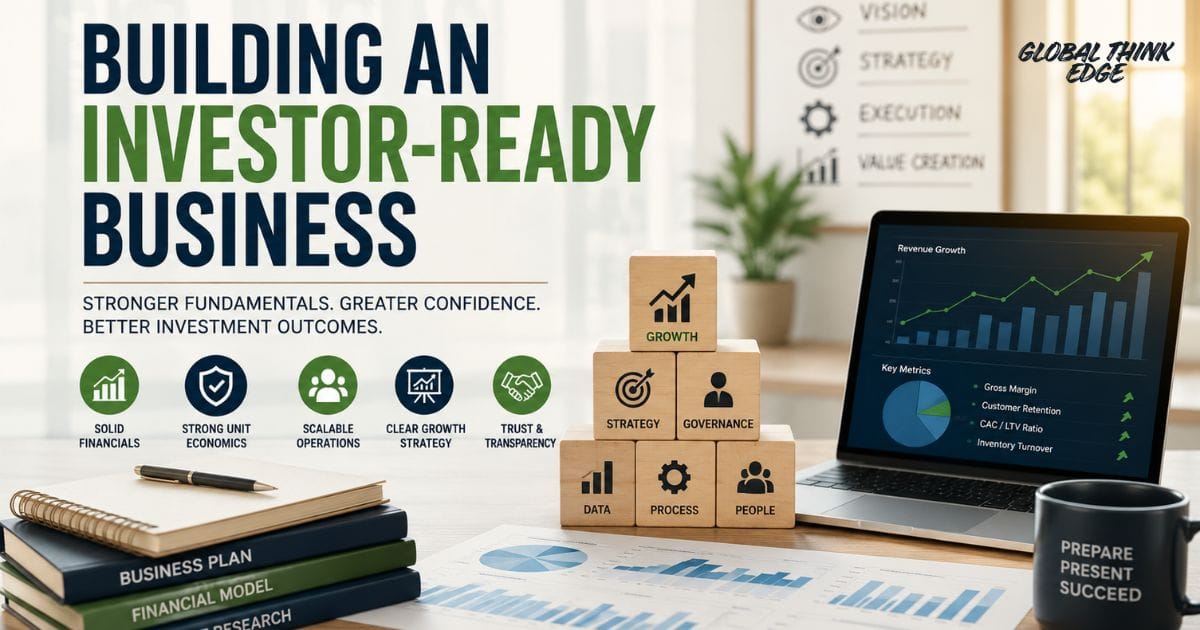
Building an Investor-Ready Business
Strengthen Financial Reporting
Investors expect accurate financial statements, cash flow reports, and revenue forecasts. Organised financial data improves credibility during fundraising discussions.
Develop Realistic Growth Projections
Aggressive projections without supporting evidence can undermine investor confidence. Use historical performance and market data to support future growth expectations.
Create Competitive Advantages
Strong branding, intellectual property, unique formulations, or exclusive partnerships can help establish long-term market advantages.
Demonstrate Scalability
Investors want confidence that increased demand can be supported without significant operational disruptions.
Creating a Winning Investor Pitch Deck
A well-crafted pitch deck is one of the most powerful fundraising tools.
Introduce the Problem
Clearly explain the consumer problem your product solves.
Present the Solution
Demonstrate how your product addresses market needs better than competing alternatives.
Showcase Market Opportunity
Provide data supporting the size and growth potential of the target market.
Highlight Traction
Include revenue growth, customer acquisition, retail partnerships, and performance metrics.
Explain Financial Performance
Investors expect transparency regarding margins, expenses, and profitability.
Define the Funding Request
Clearly state how much capital you are raising and how the funds will be used.
Finding the Right Investors
Securing funding is not only about raising capital. It is also about finding partners who support your long-term vision.
Research Investor Portfolios
Review previous investments to determine whether an investor specialises in consumer brands.
Prioritize Strategic Alignment
The best investors contribute expertise, industry relationships, and operational support in addition to capital.
Build Relationships Early
Successful fundraising often begins months before a formal CPG capital raises. Networking and relationship building can significantly improve fundraising outcomes.
Preparing for Due Diligence
Due diligence is the process investors use to verify business claims and assess risks.
Financial Due Diligence
Investors review revenue performance, profitability, cash flow, and financial controls.
Legal Due Diligence
Businesses should maintain organised contracts, trademarks, licences, and compliance documentation.
Operational Due Diligence
Manufacturing processes, supplier relationships, inventory management, and logistics capabilities are commonly evaluated.
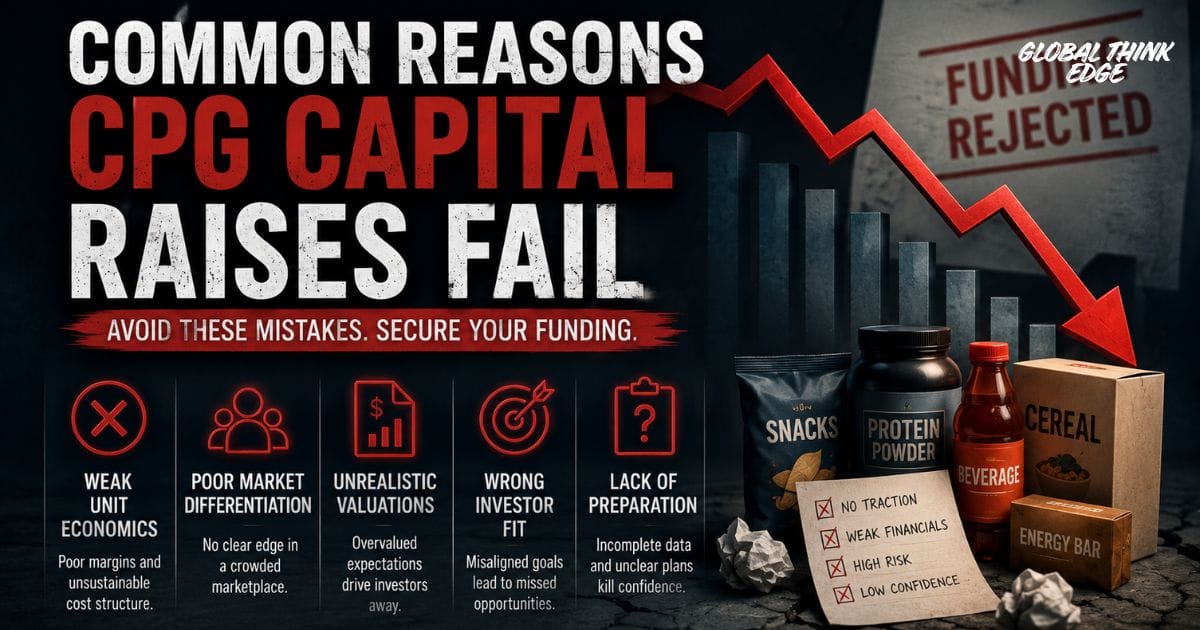
Common Reasons CPG Capital Raises Fail
Weak Financial Fundamentals
Poor margins and inconsistent revenue growth often discourage investors.
Lack of Differentiation
Products that fail to stand out in crowded categories struggle to attract funding.
Unrealistic Valuation Expectations
Overpricing a company can quickly eliminate investor interest.
Poor Fundraising Preparation
Incomplete financial records and unclear business strategies create unnecessary concerns.
Misaligned Investors
Choosing investors who do not understand the consumer goods industry can lead to challenges beyond the fundraising process.
Emerging Trends Shaping CPG Capital Raises
Profitability Is Becoming More Important
Investors increasingly favour sustainable growth and disciplined spending over aggressive expansion.
Data-Driven Decision Making
Brands that leverage consumer insights and analytics often gain a competitive advantage during fundraising.
Alternative Financing Continues to Grow
More founders are exploring non-dilutive funding solutions to preserve ownership.
Sustainability Matters
Environmentally responsible products and transparent business practices continue attracting investor attention.
Using Capital Effectively After Funding
Securing funding is only the beginning.
Expand Distribution Strategically
Focus on channels that align with customer demand and operational capacity.
Invest in Brand Growth
Marketing initiatives should support long-term customer acquisition and retention goals.
Improve Operational Efficiency
Investments in supply chain management, technology, and inventory planning can improve profitability.
Preserve Cash Flow
Effective cash management helps businesses navigate growth while maintaining financial stability.
Key Takeaways
CPG capital raises require preparation, discipline, and a clear growth strategy.
Investors prioritize product-market fit, profitability, and scalability.
Multiple funding options exist beyond traditional venture capital.
Strong financial reporting and investor readiness improve fundraising success.
Capital should be deployed strategically to maximise long-term growth and business value.
Frequently Asked Questions
How much capital should a CPG startup raise?
A startup should raise enough capital to reach its next major growth milestone while minimising unnecessary dilution.
Is venture capital the best option for every CPG Capital Raises brand?
No. Many successful brands use angel investment, revenue-based financing, grants, or strategic partnerships.
How long does a typical CPG Capital Raises fundraising process take?
Most fundraising efforts take between three and nine months depending on business readiness and investor interest.
What metric do investors care about most?
Investors evaluate multiple metrics, but strong unit economics, gross margins, and repeat purchase rates are particularly important.
What is the biggest fundraising mistake founders make?
CPG capital raises before achieving product-market fit remain one of the most common and costly mistakes.
Conclusion
CPG capital raises are essential for brands seeking sustainable growth in an increasingly competitive marketplace. Success depends on more than simply finding investors. Founders must demonstrate market demand, financial discipline, operational readiness, and a compelling vision for growth. By understanding investor expectations, selecting the right funding sources, and preparing thoroughly for fundraising, consumer brands can secure the capital needed to scale confidently and build long-term market leadership.
