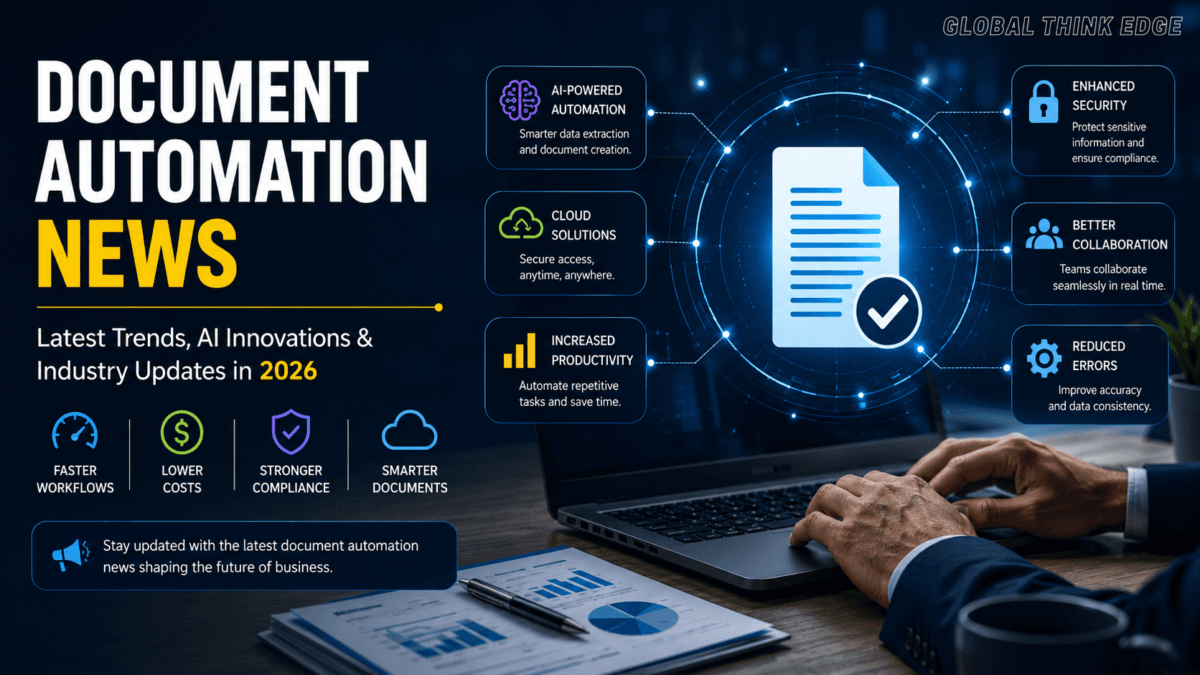
Document Automation News: Amazing AI Updates for 2026
Why Document Automation Is Dominating Business Conversations in 2026
Document automation news has evolved from a productivity tool into a critical business technology. Organizations now rely on automated document workflows to improve efficiency, reduce costs, and maintain compliance in an increasingly digital environment.
Recent developments in artificial intelligence, cloud computing, and intelligent document processing have accelerated adoption across industries. As companies search for faster and more accurate ways to manage information, document automation continues to make headlines worldwide.
Businesses that once depended on spreadsheets, manual templates, and repetitive copy-and-paste tasks are now embracing automated solutions that generate, process, and manage documents with minimal human intervention.
Understanding Modern Document Automation
Document automation news refers to the use of software and artificial intelligence to create, process, distribute, and store business documents automatically.
These systems can generate contracts, invoices, proposals, reports, compliance forms, and customer communications without requiring employees to perform repetitive manual tasks.
Modern platforms integrate with customer relationship management systems, enterprise software, and cloud applications to create seamless workflows that improve operational performance.
Major Developments Driving Document Automation News
Artificial Intelligence Is Reshaping Document Workflows
One of the most significant developments in 2026 is the integration of AI into document automation platforms.
Advanced AI models can now analyze data, generate business documents, summarise information, extract key details, and recommend workflow improvements. This capability significantly reduces processing times while improving accuracy.
Organizations are increasingly adopting AI-powered document generation to eliminate bottlenecks and support faster decision-making.
Intelligent Document Processing Gains Momentum
Intelligent Document Processing (IDP) has become a major focus for businesses handling large volumes of documents.
Unlike traditional automation systems, IDP combines machine learning, optical character recognition, and natural language processing to understand document content.
This technology enables organizations to process invoices, contracts, insurance claims, and legal documents with greater speed and precision.
Cloud-Based Solutions Continue Expanding
Cloud-native document automation platforms are experiencing rapid growth.
Businesses prefer cloud environments because they support remote work, simplify collaboration, and reduce infrastructure costs. Teams can access documents securely from anywhere while maintaining centralised control over workflows.
The growing popularity of hybrid work environments has further increased demand for cloud-based automation solutions.
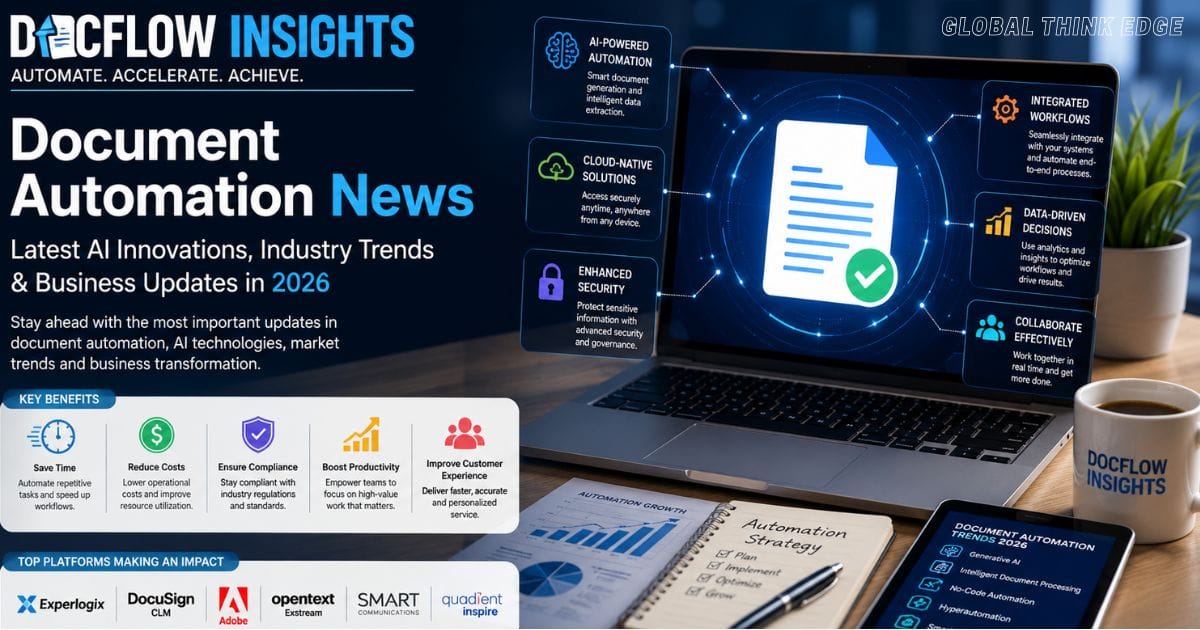
Key Benefits Businesses Are Experiencing
Improved Operational Efficiency
Automated workflows eliminate repetitive administrative tasks and allow employees to focus on strategic responsibilities.
Organizations can process thousands of documents in the time previously required for a small fraction of that workload.
Reduced Costs
Manual document handling often creates hidden expenses through labor costs, processing delays, and human errors.
Automation significantly lowers these costs while increasing productivity across departments.
Stronger Compliance and Risk Management
Regulatory requirements continue to become more complex across industries.
Document automation platforms help businesses maintain compliance by standardising document creation, tracking revisions, and maintaining detailed audit trails.
Enhanced Customer Experience
Faster document processing improves customer satisfaction.
Whether generating contracts, onboarding forms, or service agreements, automated systems reduce waiting times and provide a more professional experience.
Industries Leading Adoption in 2026
Financial Services
Banks and financial institutions use automation to streamline loan processing, account opening procedures, and compliance reporting.
Healthcare
Healthcare providers automate patient forms, insurance documentation, and administrative workflows to improve efficiency and reduce paperwork burdens.
Legal Services
Law firms increasingly rely on automated contract generation and document review systems to save time and improve accuracy.
Insurance
Insurance companies automate claims processing, policy generation, and customer communications to accelerate service delivery.
Emerging Trends Businesses Should Watch
Low-Code and No-Code Platforms
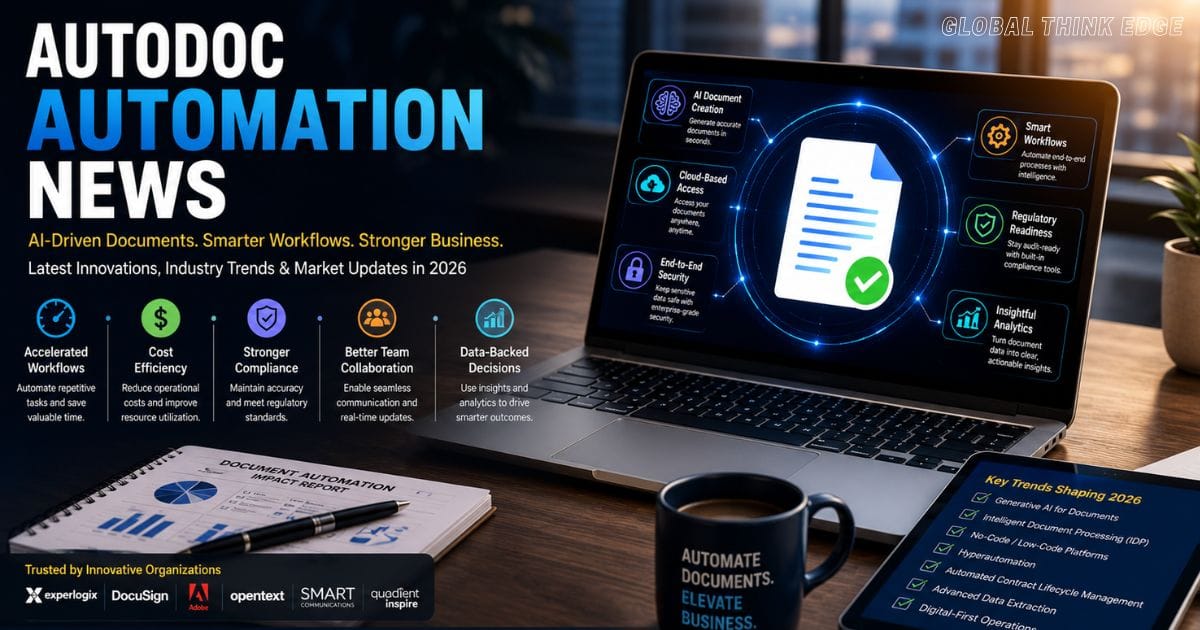
Companies are adopting low-code and no-code solutions that allow non-technical teams to create automated workflows without extensive programming knowledge.
Hyperautomation
Hyperautomation combines artificial intelligence, robotic process automation, and analytics to automate entire business processes rather than individual tasks.
Automated Contract Lifecycle Management
Businesses are investing heavily in systems that manage contracts from creation to renewal, reducing administrative complexity and improving compliance.
Predictive Workflow Intelligence
Advanced platforms now use predictive analytics to identify workflow inefficiencies and recommend improvements before problems occur.
Challenges That Still Require Attention
Despite rapid progress, organizations face several challenges when implementing document automation.
Data security remains a primary concern, particularly when handling sensitive customer information.
Integration with legacy systems can also create obstacles for businesses operating with outdated infrastructure.
Employee training is another critical factor. Companies must ensure teams understand how to use automation tools effectively to maximise return on investment.
What the Future Holds for Document Automation News
Industry experts expect document automation news to become even more intelligent over the next few years.
Future platforms will likely create highly personalized documents, make real-time workflow decisions, and integrate more deeply with enterprise systems.
Generative AI, advanced analytics, and autonomous business processes are expected to drive the next phase of innovation.
Organizations that invest early in automation technologies will be better positioned to improve efficiency, reduce operational costs, and maintain a competitive advantage.
Conclusion
Document automation news is no longer a future trend. It is a present-day business necessity.
The latest document automation news highlights a clear shift toward AI-powered workflows, intelligent document processing, cloud-based platforms, and compliance-focused solutions.
As technology continues to evolve, businesses that embrace modern document automation strategies will gain significant advantages in productivity, accuracy, customer experience, and long-term growth.
Frequently Asked Questions
What is document automation software?
Document automation news software automatically creates, manages, and processes business documents using predefined rules, templates, and artificial intelligence technologies.
Why is document automation news important in 2026?
It helps businesses improve efficiency, reduce costs, strengthen compliance, and support increasingly digital and remote work environments.
How does AI improve document automation news?
AI can generate content, extract information, analyze documents, automate workflows, and reduce human errors throughout the document lifecycle.
Which industries benefit the most from document automation news?
Financial services, healthcare, legal services, insurance, government agencies, and large enterprises are among the biggest beneficiaries.
What is the future of document automation?
The future includes AI-driven document creation, predictive workflow intelligence, hyperautomation, and autonomous business processes that require minimal human intervention.

Pingback: AI Document Automation News: Key Trends and Updates