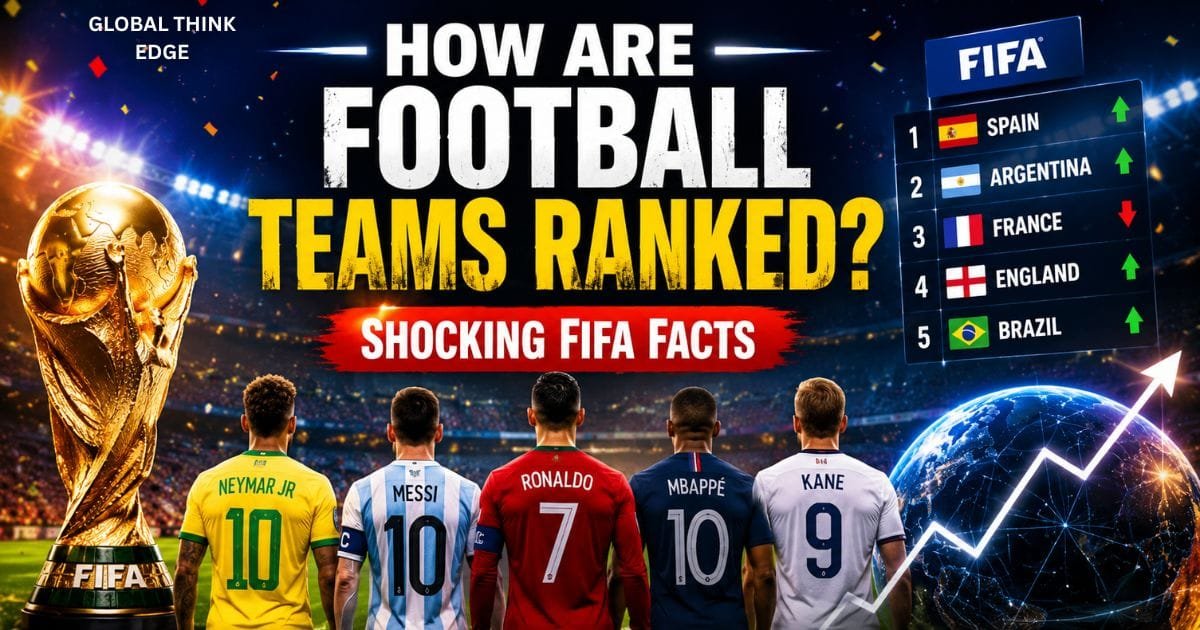
How Are Football Teams Ranked? Shocking FIFA Facts
How are football teams ranked?
Football teams are ranked according to the competition or ranking system being used. In domestic leagues, teams usually rank by points earned from wins and draws, followed by tie-breakers such as goal difference and goals scored. For national teams, FIFA uses a rating system that adds or subtracts points after international matches based on the result, opponent strength, and match importance.
That means there is no single ranking system for every football team. A Premier League club, for example, is ranked differently from a national team such as Spain or Brazil.
Understanding this difference is important because the phrase “football team ranking” can refer to league tables, FIFA world rankings, tournament standings, or club rankings.
How does a football team get ranked?
A team earns its position by accumulating results and, depending on the system, ranking points. The exact method changes between competitions.
In a domestic league, the calculation is straightforward:
Win: 3 points
Draw: 1 point
Loss: 0 points
The team with the most points normally finishes highest. If teams have the same number of points, the competition’s official tie-breakers determine their order.
In FIFA’s men’s world ranking, however, teams do not simply receive three points for winning an international match. FIFA uses an Elo-based system in which points are added or subtracted from a team’s existing total. The change depends partly on the strength of the opponent and the importance of the match.
How do football teams rank in a league?
League rankings are primarily based on points collected throughout the season. Every match affects the table, making consistency across many games more important than a single result.
For example, imagine two clubs have played 10 matches:
| Team | Wins | Draws | Losses | Points |
| Team A | 7 | 2 | 1 | 23 |
| Team B | 6 | 4 | 0 | 22 |
Team A ranks higher because it has one more point.
If both teams finish with the same points, the league’s published rules determine the next tie-breaker. In many competitions, goal difference is important, followed by goals scored or other head-to-head criteria.
Why goal difference matters
Goal difference is calculated by subtracting goals conceded from goals scored:
Goals For − Goals Against = Goal Difference
Suppose a club scores 60 goals and concedes 30. Its goal difference is +30.
A strong goal difference can become decisive when teams finish level on points. This is why teams often continue attacking even when they have already secured a comfortable victory.
However, the exact tie-break procedure is not universal. Some competitions prioritize head-to-head records, while others use goal difference or additional criteria.
How are FIFA national teams ranked?
FIFA ranks men’s national teams using the FIFA/Coca-Cola Men’s World Ranking. The current system uses the Elo model and operates by adding or subtracting points from a team’s existing rating after matches. FIFA introduced this model in 2018 after testing different approaches.
The basic idea is simple: a team gains more from an impressive result against a strong opponent than it would from beating a much weaker side.
A defeat can also reduce a team’s rating, although the impact depends on factors such as the opponent’s strength and the match context.
This creates a dynamic ranking rather than a simple win-loss record.
What affects FIFA ranking points?
Several factors influence how many ranking points a national team gains or loses.
1. Match result
Winning, drawing, or losing affects the team’s rating.
2. Opponent strength
Beating a highly ranked opponent is generally more significant than beating a lower-ranked team.
3. Match importance
Competitive matches carry different weightings from ordinary friendly matches. FIFA’s ranking procedure specifically distinguishes match categories and their importance.
4. Competition stage
Matches in major tournaments can have greater significance than ordinary international friendlies.
5. Existing team rating
The calculation considers the relative strength of the two teams. A result that goes against expectations can therefore have a larger ranking impact.
This approach prevents the ranking from treating every international match as equally important.

Which team is No. 1 in football?
If you mean the FIFA men’s national team ranking, Spain is currently No. 1 as of the latest official update on July 20, 2026. FIFA reported that Spain reclaimed the top position after winning the 2026 FIFA World Cup, moving ahead of the other leading national teams.
The important detail is the date. FIFA rankings change after international match periods, so the No. 1 team can change over time.
For that reason, an article or search result showing an older No. 1 team may no longer reflect the latest official ranking.
Check the latest FIFA Men’s World Ranking
What are the current FIFA rankings?
The latest official FIFA men’s ranking was updated on July 20, 2026, and the next official update is scheduled for October 7, 2026. FIFA identifies the ranking as the official standings for men’s national teams, with points determining each team’s position.
Because rankings can change after international matches, it is better to check FIFA’s official ranking page when you need the latest positions rather than relying on an undated list.
The ranking also provides information such as a team’s current position, points, previous result and movement compared with the previous update.
Are club teams ranked the same way as national teams?
No. Club teams and national teams operate under different ranking systems.
A national team represents a country and plays international matches. FIFA’s world ranking evaluates these teams using its rating model.
A club team, such as a domestic league club, competes in league and cup competitions. Its position in a league table normally depends on points accumulated during that competition.
European and global club rankings can also use separate systems based on results in continental competitions or other statistical models.
This distinction explains why there is no universal list that can accurately place every football club and every national team together.
| Ranking type | What is measured? | Typical basis |
| Domestic league | Club performance | Points, goal difference and tie-breakers |
| Tournament group | Performance in a specific event | Points and competition rules |
| FIFA men’s ranking | National-team strength | Rating points from international matches |
| Club ranking | Club performance | Competition results and ranking methodology |
Does winning more games always mean a higher ranking?
Not necessarily.
In a league, winning more matches usually gives a team more points and therefore a better position. However, two teams can have the same number of wins but finish differently because of draws, losses, and tie-breakers.
In FIFA’s ranking system, the situation is more nuanced. The number of victories alone does not determine a team’s position. The quality of the opposition, match importance, and the result relative to expectations all influence the rating change.
This is why a team can sometimes move significantly after one important international result.

Why can a team move up after beating a strong opponent?
FIFA’s ranking model considers the relative strength of the teams involved. A victory over a highly rated opponent can therefore produce a more meaningful change than a victory against a lower-rated team.
The logic is similar to an Elo rating system used in other competitive sports: beating a stronger opponent provides stronger evidence that a team is performing at a high level.
Likewise, losing to a team that is expected to be weaker can have a greater negative effect.
The system therefore looks beyond the simple question of “Did the team win?” and considers “Who did they play, and how important was the match?”
What is the difference between ranking and league position?
A league position tells you where a club stands within a particular competition at a specific point in the season.
A world ranking attempts to compare teams across different international opponents or competitions using a defined rating methodology.
For example, a club could sit first in its domestic league while another ranking system evaluates clubs differently based on continental results.
Similarly, Spain being No. 1 in the FIFA men’s world ranking means it currently has the highest FIFA rating among men’s national teams. It does not mean every Spanish club is automatically ranked No. 1 among clubs.

Why football rankings matter
Rankings provide a quick way to compare teams and track changes in performance over time. They can influence tournament seeding, qualification contexts, media analysis, and public expectations.
They also give fans a broader view of performance than a single match result.
However, rankings should not be treated as a perfect measurement of how a team will perform in every future match. Football remains unpredictable, and tactics, injuries, squad selection, home advantage, and current form can all influence an actual result.
Key takeaway
Football teams are ranked differently depending on the competition. League teams usually earn points from match results, while FIFA national-team rankings use a rating system that adds or subtracts points based on results, opponent strength, and match importance.
As of the latest official FIFA men’s update on July 20, 2026, Spain is ranked No. 1 following its 2026 World Cup triumph.
Frequently Asked Questions
How does a football team get ranked?
A football team gets ranked according to the rules of its competition. League clubs generally receive three points for a win, one for a draw and none for a loss. National teams in FIFA’s ranking system gain or lose rating points based on match results, opponent strength, and match importance.
How do the football teams rank?
Teams rank according to their accumulated points or rating values. In domestic leagues, points usually determine the table, with goal difference and other tie-breakers used when necessary. FIFA ranks national teams by their calculated rating points.
Which team is No. 1 in football?
For men’s national teams, Spain is currently No. 1 in the FIFA/Coca-Cola Men’s World Ranking as of the July 20, 2026, official update. Spain returned to the top after winning the 2026 FIFA World Cup.
What are the current FIFA rankings?
The latest official FIFA men’s rankings were published on July 20, 2026. FIFA’s next official men’s ranking update is scheduled for October 7, 2026.
Does goal difference decide every football ranking?
No. Goal difference is commonly used as a league tie-breaker, but ranking systems do not all use it. FIFA’s men’s world ranking uses a rating-point model rather than simply adding goals scored or subtracting goals conceded.
Is FIFA ranking the same as a league table?
No. FIFA ranking measures men’s national teams using an international rating system. A league table ranks clubs competing within a particular domestic competition, usually according to points earned during the season.
Can FIFA rankings change after one match?
Yes. A single international match can change a team’s FIFA rating and potentially its position, particularly when the result involves a highly ranked opponent or an important competitive match. The size of the change depends on FIFA’s ranking formula.
