What Does a Cavity Look Like? Warning Signs You Should Know
Understanding What a Cavity Looks Like
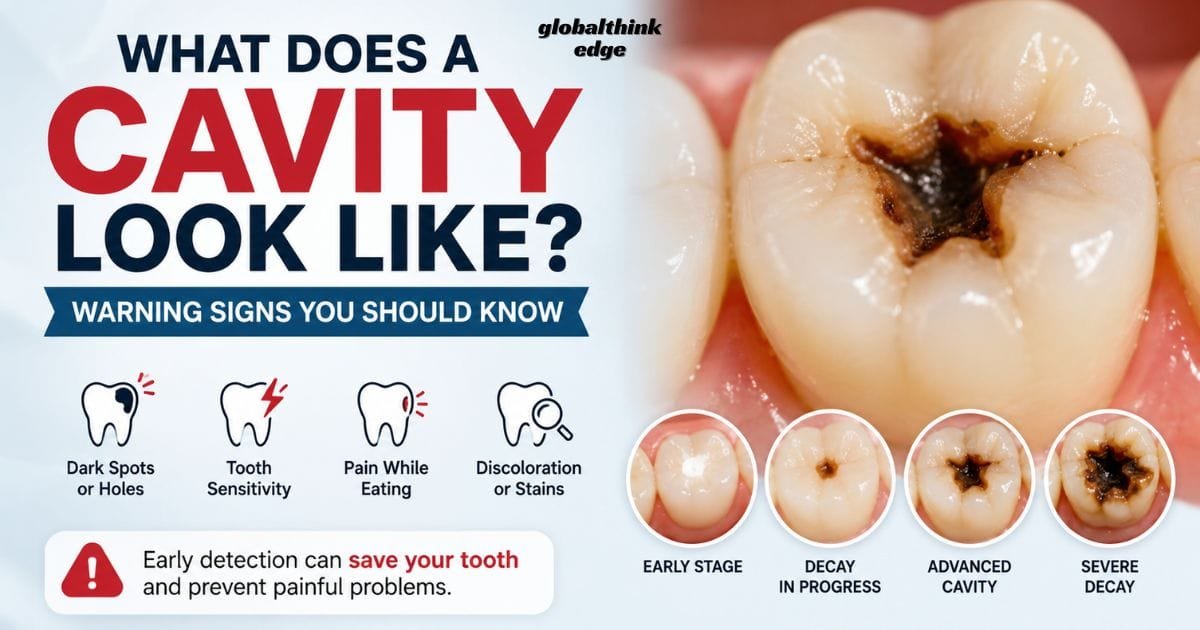
If you’ve ever noticed a dark spot, tiny hole, or rough patch on your tooth, you may have wondered, what does a cavity look like? The answer depends on how far the tooth decay has progressed. Some cavities begin as nearly invisible white spots, while others develop into noticeable brown or black holes that are easy to recognize.
The good news is that cavities are often treatable when detected early. Knowing what to look for can help you seek dental care before the damage becomes severe. In this guide, you’ll learn how cavities appear at different stages, how they differ from tooth stains, and when it’s time to visit a dentist.
What Is a Cavity and Why Does It Form?
A cavity is a permanently damaged area of a tooth caused by tooth decay. It develops when bacteria in your mouth feed on sugars and starches, producing acids that slowly wear away the protective enamel.
As enamel weakens, the tooth becomes vulnerable to further damage. Without treatment, decay can spread into deeper layers of the tooth, eventually reaching the nerves and causing significant pain.
Several factors contribute to cavity formation, including:
Poor oral hygiene
Frequent sugary snacks and drinks
Acidic beverages
Dry mouth
Lack of fluoride
Plaque buildup
Irregular dental checkups
Because tooth decay develops gradually, recognizing its early appearance is one of the best ways to avoid extensive dental treatment.
How Does a Cavity Change Over Time?
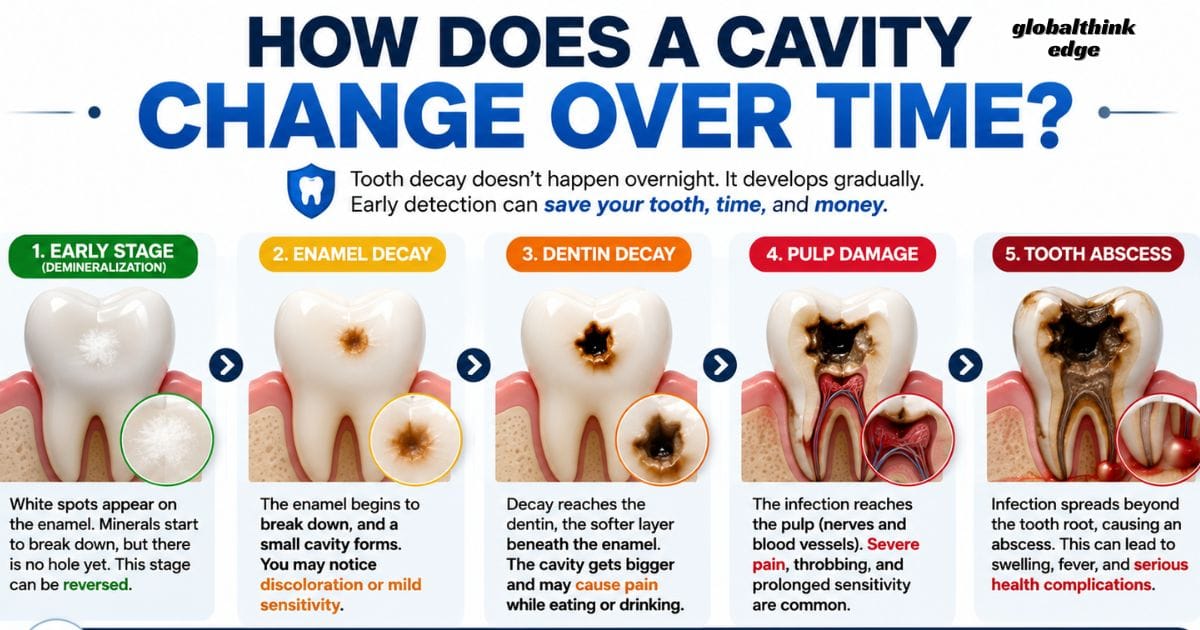
A cavity rarely appears overnight. Instead, it goes through several visible changes as tooth decay progresses.
In the beginning, minerals are lost from the enamel, creating a chalky white area. As bacteria continue damaging the tooth, the spot may turn yellow, brown, or black. Eventually, the weakened enamel breaks down, leaving behind a pit or hole.
This gradual progression explains why some cavities are barely visible while others become obvious.
What Does a Dental Cavity Look Like in the Early Stage?
Early cavities are surprisingly difficult to identify because they usually don’t look like holes.
Instead, you might notice:
Chalky white spots
Loss of the tooth’s natural shine
Slightly rough enamel
Small dull patches
Mild sensitivity to cold foods
At this stage, the enamel has begun losing minerals but hasn’t completely broken down.
Many people overlook these subtle changes because they don’t cause pain. However, this is often the easiest stage to manage with professional fluoride treatments and improved oral hygiene.
What Does a Cavity Look Like as It Progresses?
As the decay advances beyond the enamel, the appearance becomes much more noticeable.
Common signs include:
Brown or black discoloration
Small visible holes
Tiny pits on the tooth surface
Dark grooves
Crumbling enamel
Food becoming trapped in one area repeatedly
Some cavities remain hidden beneath the surface, especially those that develop between teeth. In these cases, only dental X-rays can reveal the damage.
A cavity doesn’t always appear completely black. Depending on its stage, it may look white, yellow, light brown, dark brown, or even grey.
What Does a Cavity Look Like on a Tooth?
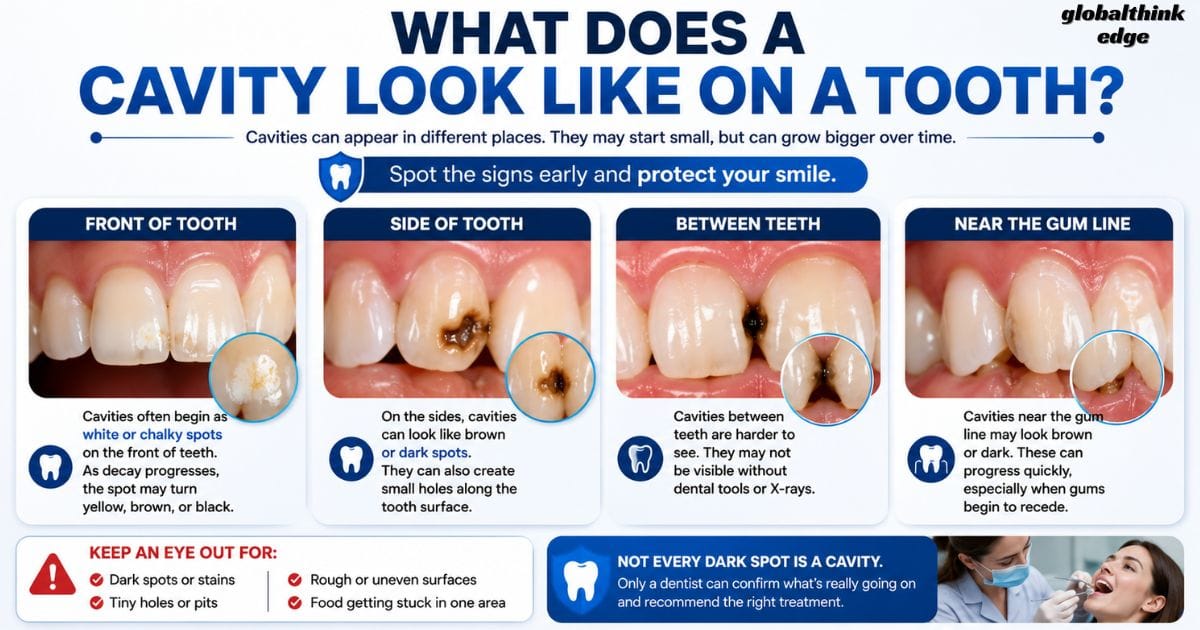
The appearance of a cavity depends on its location.
On the front teeth, cavities often begin as white spots near the gumline before turning darker over time. Because these teeth are highly visible, many people notice changes early.
On the sides of teeth, cavities can appear as narrow dark lines or tiny holes. These areas are harder to inspect without dental tools or mirrors.
Between teeth, decay is usually hidden from view. Even if your teeth look healthy from the outside, a cavity may already be developing underneath the contact points.
For this reason, dentists recommend routine examinations even when you don’t notice obvious damage.
What Does a Cavity Look Like on a Molar?
Molars are the teeth most likely to develop cavities because of their deep chewing grooves.
Food particles and plaque easily become trapped in these narrow pits, making them difficult to clean thoroughly with a toothbrush.
A cavity on a molar may appear as the following:
Black dots inside chewing grooves
Brown stains that don’t brush away
Tiny holes on the biting surface
Deep dark lines
Broken enamel around the grooves
Keep in mind that not every dark groove is a cavity. Some molars naturally have stained fissures that are harmless.
A dentist can determine whether the discolouration is simply staining or active tooth decay.
Different Types of Cavities and How They Look
Not all cavities form in the same place. Understanding the different types can help you recognize unusual changes in your teeth.
Pit and Fissure Cavities
These develop in the deep grooves of molars and premolars.
They usually appear as small dark spots that gradually widen into noticeable pits if left untreated.
Smooth Surface Cavities
These occur on the flat sides of teeth where plaque remains for long periods.
Initially, they appear as white chalky areas before slowly becoming darker.
Root Cavities
Root cavities develop when gums recede and expose the tooth root.
Unlike enamel, root surfaces are softer, allowing decay to spread more quickly.
These cavities often look yellowish, brown, or soft near the gumline.
Recurrent Cavities
Sometimes decay forms around existing fillings, crowns, or dental bridges.
These cavities usually appear as dark edges surrounding old dental work and may indicate that bacteria have entered underneath the restoration.
Cavity or Tooth Stain? How to Spot the Difference
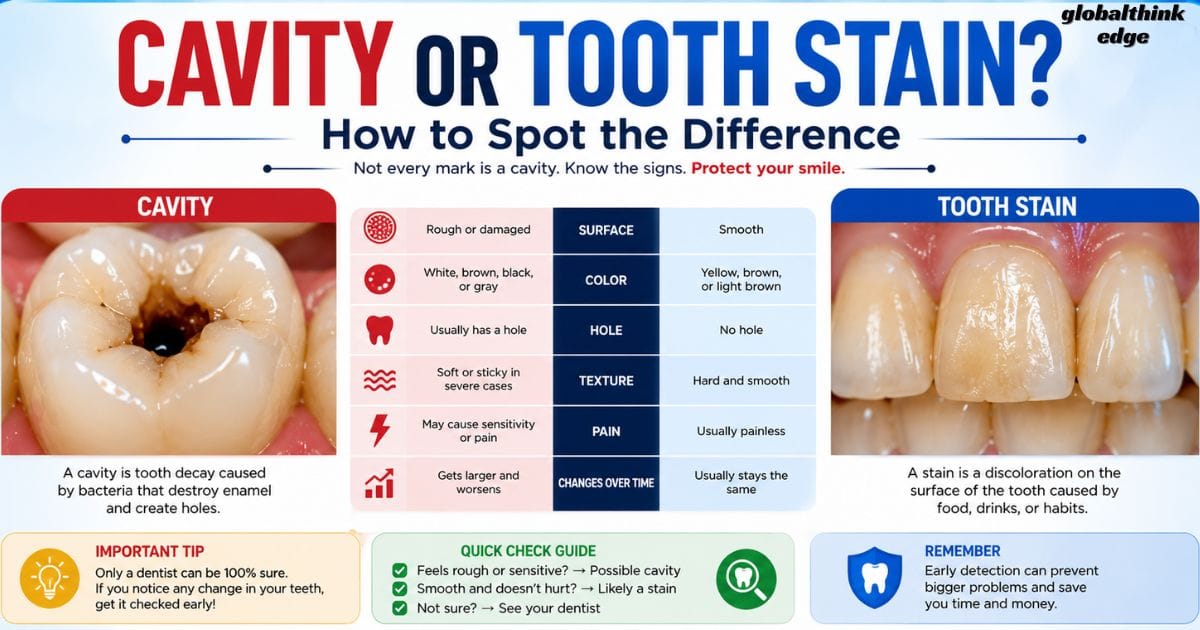
Many people mistake harmless stains for cavities.
The table below highlights the key differences.
| Feature | Cavity | Tooth Stain |
| Surface | Rough or damaged | Smooth |
| Color | White, brown, black, or grey | Usually brown or yellow |
| Hole Present | Often, yes. | No |
| Texture | Soft or sticky in advanced stages | Hard enamel |
| Pain | May cause sensitivity | Usually painless |
| Gets Larger | Yes | Usually remains unchanged |
Although this comparison can help, it isn’t always possible to diagnose a cavity at home. If a dark spot changes in size or becomes sensitive, schedule a dental examination to confirm the cause.
Common Symptoms That Often Mean You Have a Cavity
A cavity doesn’t always hurt in its early stages. As decay spreads deeper into the tooth, symptoms become more noticeable.
Watch for these warning signs:
Tooth sensitivity to hot, cold, or sweet foods
Pain when biting or chewing
A visible hole or dark spot on the tooth
Food frequently getting stuck in the same area
Persistent bad breath or an unpleasant taste
Sharp or throbbing toothache
Swelling around the affected tooth in severe cases
If any of these symptoms last for more than a day or two, it’s best to schedule a dental examination.
The Stages of Tooth Decay
Knowing how cavities progress can help you understand why early treatment is so important.
Stage 1: Demineralization
This is the earliest stage of decay.
The tooth develops chalky white spots as minerals begin leaving the enamel. At this point, there is no actual hole, and the damage may be reversible with fluoride treatment and good oral hygiene.
Stage 2: Enamel Decay
The enamel starts breaking down, and a small cavity forms.
You may notice light brown or dark discolouration, along with mild sensitivity.
Stage 3: Dentin Decay
Once decay reaches the dentin, it spreads much faster because dentin is softer than enamel.
Pain becomes more common, and the cavity often appears deeper and darker.
Stage 4: Pulp Damage
The infection reaches the inner pulp, where nerves and blood vessels are located.
This stage often causes severe toothache, prolonged sensitivity, and swelling.
Stage 5: Tooth Abscess
Without treatment, bacteria can create a pocket of infection around the tooth root.
An abscess may cause facial swelling, pus, fever, and intense pain. Immediate dental treatment is necessary.
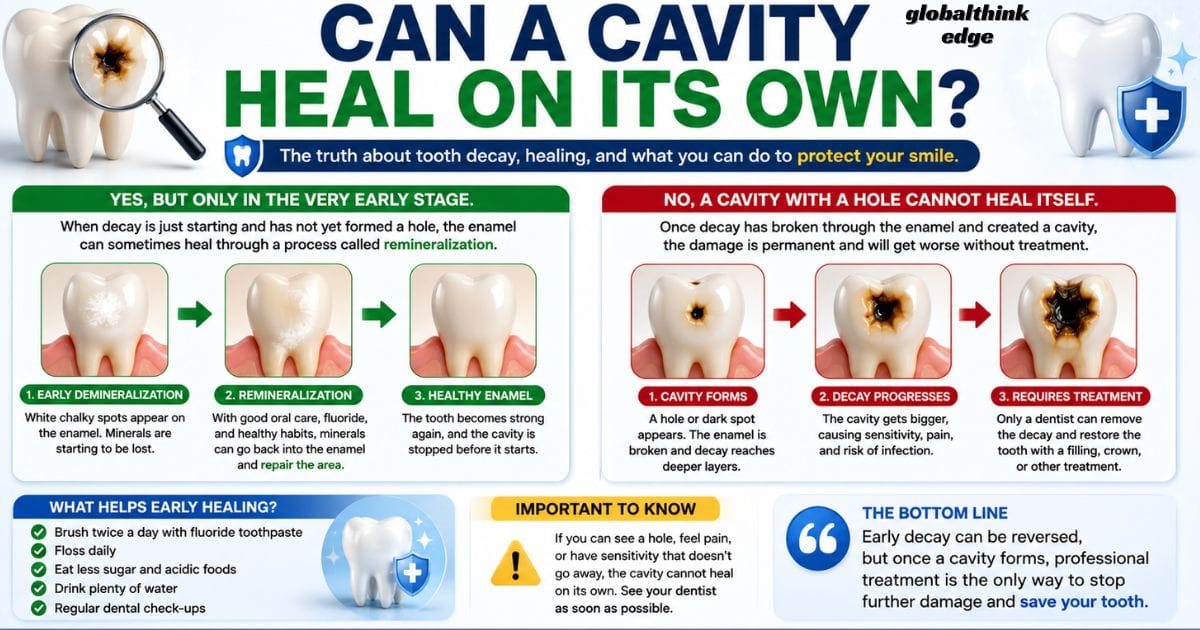
Can a Cavity Heal on Its Own?
A true cavity cannot repair itself once a hole has formed in the tooth.
However, very early enamel damage before a cavity develops can sometimes be reversed. Dentists often recommend:
Fluoride toothpaste
Professional fluoride treatments
Better brushing and flossing habits
Reducing sugary snacks and drinks
Drinking plenty of water
If decay has already created a visible hole, the tooth will usually require a filling or another restorative treatment.
How Dentists Diagnose Cavities
Not every cavity is visible during a routine glance in the mirror.
Dentists use several methods to identify tooth decay accurately, including:
Visual examination
Dental explorer to check soft areas
Bitewing X-rays for hidden cavities
Digital imaging
Laser cavity detection in some clinics
Regular dental checkups are especially important because cavities between teeth often develop without obvious symptoms.
Treatment Options for Cavities
Treatment depends on how much of the tooth has been affected.
Fluoride Treatment
Suitable for very early enamel damage before a cavity forms.
Dental Filling
The most common treatment for small and moderate cavities.
The decayed portion is removed and replaced with a durable filling material.
Dental Crown
If a large portion of the tooth is damaged, a crown restores its strength and appearance.
Root Canal Therapy
When decay reaches the pulp, the infected tissue is removed, and the inside of the tooth is sealed.
Tooth Extraction
If the tooth cannot be saved, extraction may be the only option. A replacement, such as a dental implant or bridge, may then be recommended.
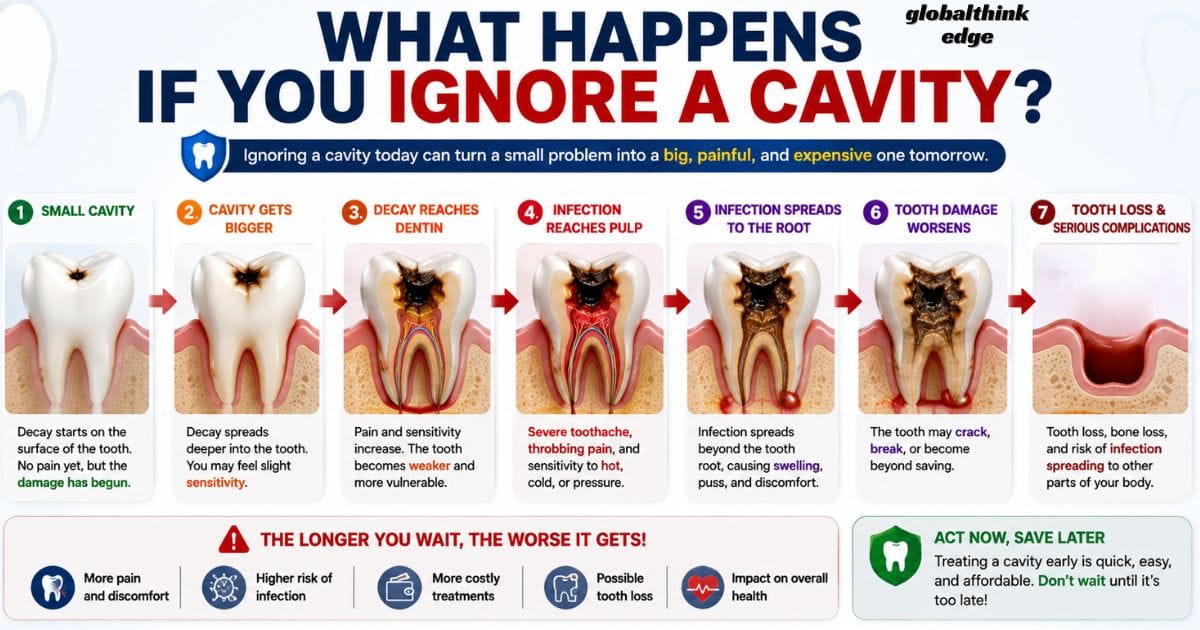
What Happens If You Ignore a Cavity?
Leaving a cavity untreated can lead to much more serious dental problems.
Possible complications include the following:
Larger cavities
Severe toothache
Tooth infection
Dental abscess
Broken teeth
Difficulty chewing
Tooth loss
More expensive and complex treatment
Early care is almost always simpler, faster, and less costly than waiting until the decay becomes severe.
How to Prevent Cavities
Good daily habits significantly reduce the risk of tooth decay.
Follow these simple steps:
Brush twice daily using fluoride toothpaste.
Floss every day.
Limit sugary foods and soft drinks.
Drink water after meals.
Visit your dentist every six months.
Consider dental sealants for children and adults with deep molar grooves.
Replace your toothbrush every three to four months.
Preventive care is the most effective way to keep your teeth healthy for years to come.
When Should You See a Dentist?
You should arrange a dental appointment if you notice:
A visible hole in your tooth
Persistent tooth sensitivity
Tooth pain that lasts more than a day
Brown or black spots that continue growing
Swelling around a tooth
Pain while chewing
Bad breath that doesn’t improve with brushing
Prompt treatment can prevent a small cavity from becoming a much larger problem.
Frequently Asked Questions
What does a stage 1 cavity look like?
A stage 1 cavity usually appears as a chalky white spot caused by mineral loss. There is no visible hole at this stage, and the damage may still be reversible.
Are cavities always black?
No. Cavities may appear white, yellow, brown, grey, or black depending on how advanced the decay is.
Can a cavity look like a tiny dot?
Yes. Early cavities often begin as a small dark or white spot before expanding into a larger hole.
How can I tell if it’s a cavity or just a stain?
A cavity often feels rough, may cause sensitivity, and can become larger over time. A stain is usually smooth, painless, and remains unchanged. Only a dentist can confirm the difference with certainty.
Do cavities always hurt?
No. Many cavities are painless in the beginning. Pain usually develops once the decay reaches the deeper layers of the tooth.
Are cavities contagious?
Cavities themselves are not contagious, but the bacteria that contribute to tooth decay can spread through saliva, especially among family members or by sharing utensils.
Key Takeaways
Cavities often begin as chalky white spots before turning brown or black.
Not every dark mark is a cavity; some are harmless stains.
Molars are more likely to develop cavities because of their deep grooves.
Early cavities may be reversible with fluoride and good oral care.
Visible holes, persistent sensitivity, or tooth pain should be evaluated by a dentist as soon as possible.
Regular dental checkups help detect hidden cavities before they become serious.
Conclusion
Recognising what does a cavity look like can help you act before minor tooth decay turns into a painful dental problem. While early cavities may appear as subtle white spots, advanced decay often causes dark discolouration, visible holes, and sensitivity. Paying attention to these changes and maintaining good oral hygiene can protect your teeth and reduce the need for extensive treatment.
If you’re unsure whether a spot on your tooth is a cavity or a stain, don’t rely on appearance alone. A professional dental examination is the most reliable way to diagnose tooth decay and recommend the right treatment before the damage progresses.
