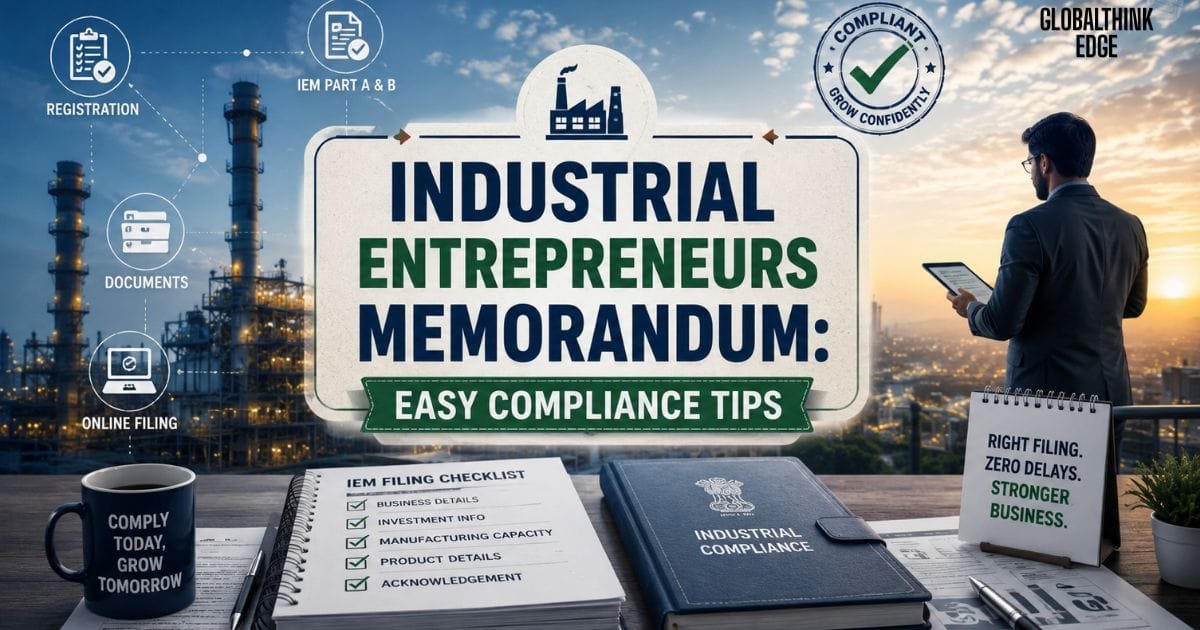
Industrial Entrepreneurs Memorandum: Easy Compliance Tips
If you’re planning to start or expand a manufacturing business, understanding the Industrial Entrepreneurs Memorandum (IEM) is crucial. The Industrial Entrepreneurs Memorandum has played an important role in India’s industrial compliance framework, helping eligible manufacturers meet regulatory requirements and understand filing obligations.
In this article, you’ll learn what the Industrial Entrepreneurs Memorandum is, who needs it, the difference between Part A and Part B, the documents required, the filing process, and how it fits into today’s industrial regulations. Whether you’re an entrepreneur, investor, or consultant, this guide provides the key information you need in one place.
What Is Industrial Entrepreneurs Memorandum?
The Industrial Entrepreneurs Memorandum (IEM) is a formal declaration that was introduced by the Government of India for certain manufacturing industries. Instead of obtaining an industrial license in many deregulated sectors, eligible businesses could submit an IEM to notify the government about their intention to establish or significantly expand an industrial undertaking.
The objective was to simplify industrial approvals while maintaining a record of major manufacturing investments across the country.
The Industrial Entrepreneurs Memorandum helped authorities monitor industrial growth, collect investment-related information, and promote ease of doing business without requiring unnecessary licensing in many sectors.
In simple terms, an IEM acted as an official notification rather than a traditional approval or permit for eligible industrial units.
Key Purposes of an Industrial Entrepreneurs Memorandum
Records new industrial investment proposals
Supports industrial policy implementation
Simplifies regulatory procedures
Encourages private sector manufacturing
Helps maintain government industrial databases
Improves transparency in industrial development
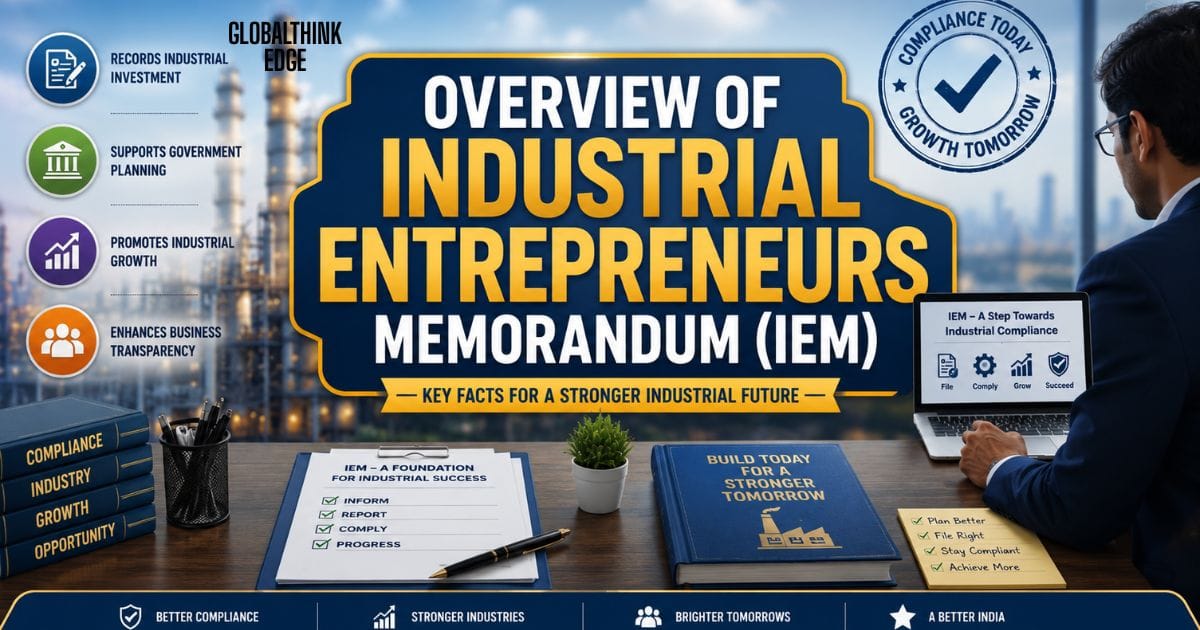
Overview of Industrial Entrepreneurs Memorandum (IEM)
India’s industrial sector has undergone several reforms since economic liberalisation. Before these reforms, many industries required extensive government licensing before manufacturing could begin.
As industrial policies became more business-friendly, licensing requirements were reduced for many sectors. Instead of requiring approval through industrial licences, eligible manufacturers could submit an Industrial Entrepreneurs Memorandum.
This change significantly reduced administrative burdens while allowing the government to maintain records of industrial activity.
The IEM system primarily supported:
Large manufacturing projects
Capacity expansion
New industrial units
Industrial modernization
Investment tracking
Today, many industrial approvals have transitioned to digital platforms and integrated government systems, making compliance more efficient than before.
Who Is an Industrial Entrepreneur?
An industrial entrepreneur is an individual, partnership, company, LLP, or other business entity that establishes, owns, or operates a manufacturing enterprise. Unlike traders or service providers, industrial entrepreneurs focus on producing goods through manufacturing processes.
Their responsibilities often include:
Setting up manufacturing facilities
Investing in machinery and infrastructure
Hiring skilled workers
Managing production operations
Meeting environmental and safety standards
Ensuring regulatory compliance
Industrial entrepreneurs contribute significantly to economic growth by creating employment opportunities, increasing exports, introducing innovation, and supporting domestic manufacturing.
Examples of Industrial Entrepreneurs
Industrial entrepreneurs may operate in sectors such as the following:
Engineering products
Chemicals
Pharmaceuticals
Automobile components
Electronics manufacturing
Food processing
Textile production
Packaging materials
Renewable energy equipment
Consumer goods manufacturing
Who Needs to File an Industrial Entrepreneurs Memorandum?
Historically, not every manufacturing business needed to submit an industrial entrepreneurs memorandum. Filing requirements generally depended on factors such as industry classification, investment size, and applicable government regulations.
Typically, businesses that established or expanded industrial undertakings in sectors exempt from industrial licensing but falling within specified investment thresholds were required to submit an IEM.
Eligibility generally included:
Large manufacturing companies
Companies making significant capital investments
Industrial expansion projects
New manufacturing facilities
Businesses operating in eligible deregulated industries
The exact applicability depended on the prevailing industrial policies issued by the Government of India.
Businesses were expected to review the latest regulatory notifications before beginning operations to determine whether filing an Industrial Entrepreneurs Memorandum was necessary.
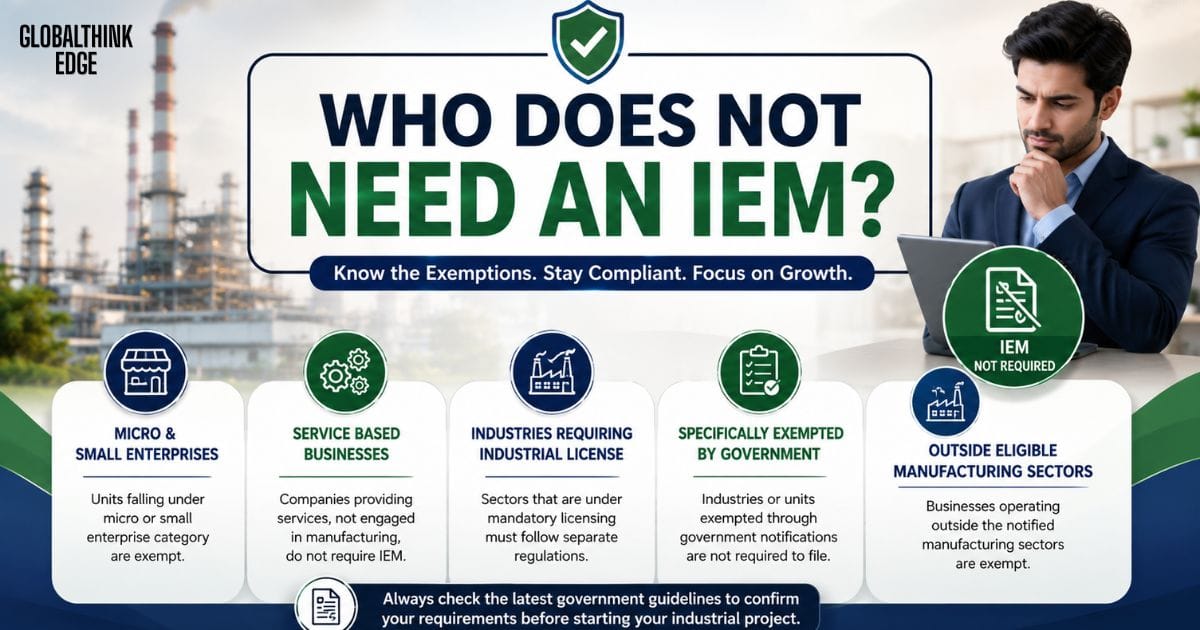
Who Does Not Need an IEM?
Several categories of businesses were generally exempt from filing an Industrial Entrepreneurs Memorandum.
These commonly included the following:
Microenterprises
Small manufacturing businesses covered under separate regulations
Service-based companies
Businesses operating outside eligible manufacturing sectors
Industries requiring separate industrial licensing
Units specifically exempted under government notifications
The exemption criteria could vary depending on changes in industrial policy, making it important for businesses to verify the latest requirements before starting a project.
Is an industrial entrepreneurs’ memorandum mandatory?
Whether an Industrial Entrepreneurs Memorandum was mandatory depended on the nature of the business and the applicable industrial regulations at the time.
For eligible manufacturing industries that did not require an industrial license, submitting an IEM often served as the prescribed compliance mechanism before establishing production facilities.
However, businesses operating under licensing requirements or within exempt categories typically followed different regulatory procedures.
Instead of assuming that filing was universally required, companies needed to evaluate the following:
Industry classification
Investment level
Manufacturing activity
Government notifications
Applicable industrial policies
Professional legal or regulatory advice was often recommended for large industrial projects to ensure complete compliance.
Is the Industrial Entrepreneur Memorandum Still Applicable Today?
India’s industrial regulatory environment has continued to modernise over recent years.
Many industrial services have now been integrated into digital governance initiatives, including the National Single Window System (NSWS), which simplifies interactions between businesses and multiple government departments.
As industrial policies evolve, businesses should always refer to the latest notifications issued by the relevant ministries to determine current filing requirements.
Rather than relying solely on historical procedures, entrepreneurs should verify the following:
Current industrial policy
Sector-specific regulations
Investment guidelines
Manufacturing approvals
Digital filing systems
Staying updated ensures businesses remain compliant while avoiding unnecessary delays in project implementation.
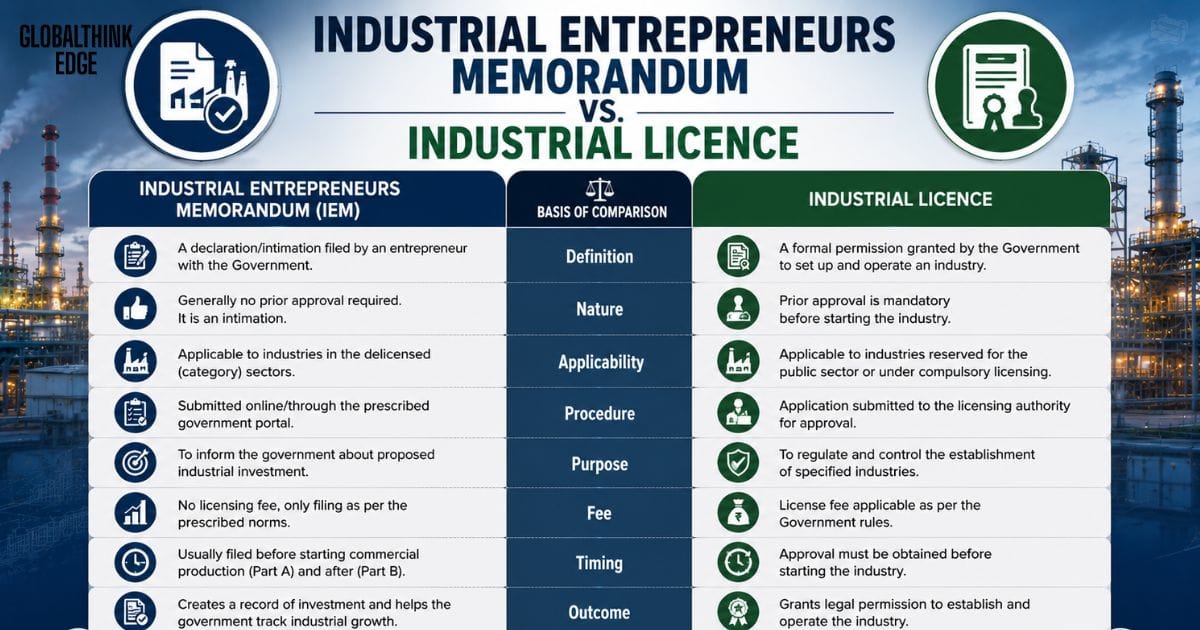
Industrial Entrepreneurs Memorandum vs. Industrial Licence
Although both the Industrial Entrepreneurs Memorandum (IEM) and an Industrial Licence (IL) relate to industrial regulation, they serve different purposes. Understanding the distinction helps businesses determine the appropriate compliance route.
| Feature | Industrial Entrepreneurs Memorandum (IEM) | Industrial License (IL) |
| Purpose | Notifies the government of industrial investment | Grants permission to operate in regulated industries |
| Approval Required | Generally no prior approval | Government approval required |
| Applicable Industries | Eligible deregulated manufacturing sectors | Industries subject to licensing regulations |
| Filing Authority | Relevant government portal/authority | Competent licensing authority |
| Compliance | Filing-based | Licence-based |
| Objective | Investment reporting and compliance | Regulatory control over specified industries |
Businesses should always verify which framework applies before commencing operations.
Industrial Entrepreneurs Memorandum Filing Process
The filing process was designed to simplify industrial compliance while maintaining government records of industrial investments.
Step 1: Determine Eligibility
Before filing, businesses should confirm whether their manufacturing activity falls within the industries covered by IEM provisions.
Step 2: Prepare Required Information
Collect all business and project-related information, including:
Company details
Manufacturing location
Proposed products
Investment estimates
Production capacity
Director or promoter information
Step 3: Submit IEM Part A
Part A is submitted before commercial production begins. It informs the government about the proposed industrial project.
Step 4: Receive Acknowledgement Receipt
Once the application is successfully submitted, an acknowledgement receipt is generated. Businesses should retain this document for future reference.
Step 5: Start Commercial Production
After completing the necessary regulatory requirements and establishing the manufacturing facility, commercial production can begin.
Step 6: Submit IEM Part B
Part B is filed after commercial production starts. It confirms that the industrial undertaking has commenced operations.
Step 7: Update or Amend Information (If Needed)
If significant project details change, businesses may need to update their filing according to applicable government procedures.
What Is IEM Part A?
IEM Part A is the initial filing submitted before setting up or expanding a manufacturing unit.
It typically includes the following:
Name of the company
Registered office details
Manufacturing location
Product information
Investment estimates
Installed production capacity
Promoter information
Submitting Part A allows the government to record the proposed industrial investment.
What Is IEM Part B?
Part B is submitted after commercial production has started.
Its purpose is to notify the government that the project has become operational.
Part B generally includes the following:
Date of commercial production
Final investment details
Production capacity
Operational status
Product confirmation
Submitting Part B helps maintain accurate industrial records.
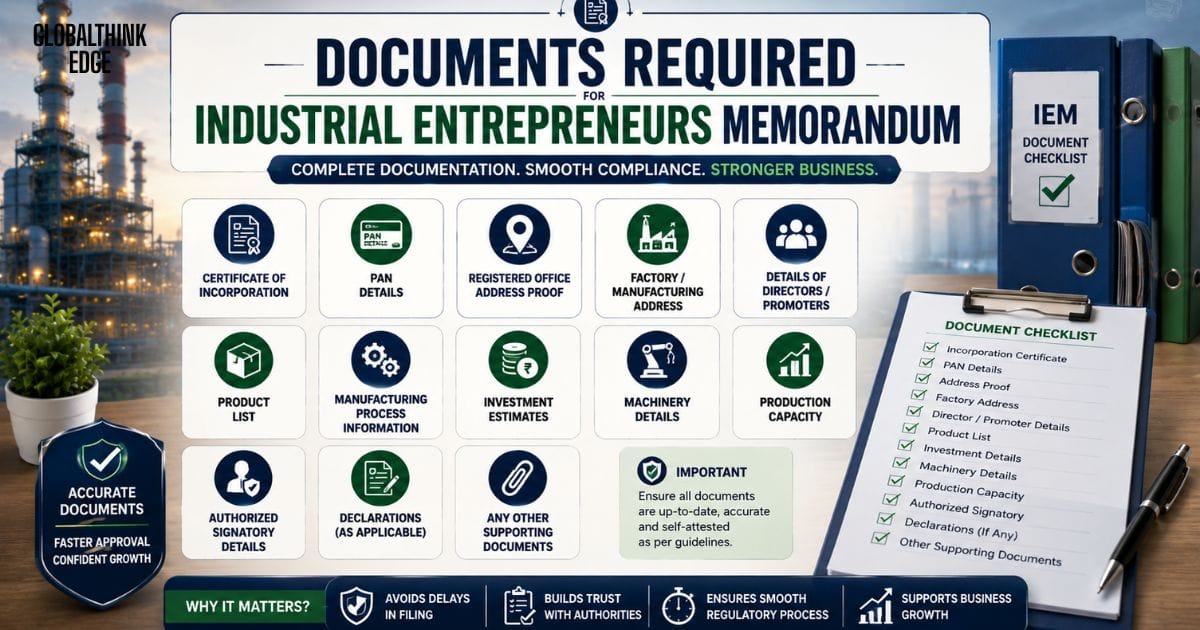
Documents Required for Industrial Entrepreneurs Memorandum
Although document requirements may vary depending on regulations, businesses commonly prepare:
Certificate of Incorporation
PAN details
Registered office address proof
Factory address
Details of directors or promoters
Product list
Manufacturing process information
Investment estimates
Machinery details
Production capacity
Authorized signatory details
Supporting declarations, where applicable
Preparing documents in advance helps avoid filing delays.
Acknowledgement Receipt After Filing IEM Part A
After successfully submitting Part A, an acknowledgement receipt is typically generated.
This receipt serves as confirmation that the filing has been recorded.
The acknowledgement generally contains:
Application number
Date of submission
Business details
Project information
Filing reference
Businesses should keep this document safely for future correspondence and compliance purposes.
Submitting Industrial Entrepreneurs Memorandum Through the National Single Window System
India has introduced digital initiatives to streamline business approvals.
The National Single Window System (NSWS) provides a centralised platform where businesses can access various approvals and regulatory services.
The general process includes:
Create an account.
Complete the business profile.
Enter project details.
Upload required information.
Review the application.
Submit electronically.
Track application status online.
Since government procedures may change, businesses should always follow the latest official guidance when using digital filing systems.
Best Industrial Entrepreneur Memorandum Consultants
Many businesses choose professional consultants to simplify regulatory compliance, especially for large manufacturing projects.
A reliable consultant can assist with:
Eligibility assessment
Documentation preparation
Online filing support
Regulatory compliance
Amendment requests
Follow-up with authorities
Project advisory services
How to Choose the Right Consultant
Consider the following before hiring:
Experience with industrial compliance
Knowledge of current regulations
Transparent pricing
Positive client feedback
Timely communication
Industry-specific expertise
Working with an experienced consultant can help reduce filing errors and improve compliance efficiency.
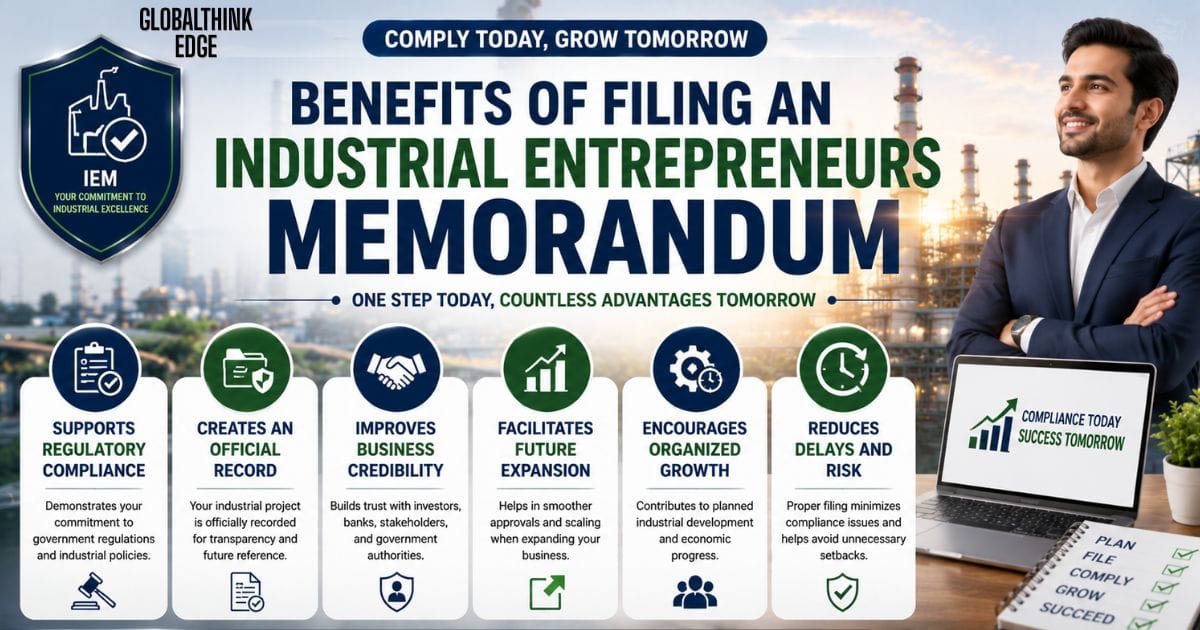
Benefits of Filing an Industrial Entrepreneurs Memorandum
Submitting an IEM offered several advantages for eligible manufacturing businesses.
Supports Regulatory Compliance
It demonstrated that the business followed applicable industrial procedures.
Creates an Official Record
Government authorities maintained information about industrial investments for planning and policy purposes.
Improves Business Credibility
Maintaining proper compliance documentation can strengthen confidence among investors, financial institutions, and stakeholders.
Facilitates Future Expansion
Existing records may simplify certain future regulatory interactions, depending on applicable rules.
Encourages Organized Industrial Growth
The system contributed to better monitoring of industrial development across different sectors.
Common Mistakes to Avoid While Filing an IEM
Even minor errors can create unnecessary delays. Businesses should avoid the following:
Providing incorrect company information
Using outdated project details
Misreporting investment values
Missing submission timelines
Uploading incomplete documentation
Failing to submit Part B after production begins
Ignoring regulatory updates
Not retaining acknowledgement records
Reviewing all information before submission helps minimise compliance issues.
Frequently Asked Questions (FAQs)
What is an industrial entrepreneurs memorandum?
The Industrial Entrepreneurs Memorandum (IEM) is a filing mechanism that was introduced for eligible manufacturing industries to notify the government about proposed industrial projects without obtaining an industrial licence in many deregulated sectors.
Is the Industrial Entrepreneurs Memorandum mandatory?
It depended on the applicable industrial policy, sector, and investment criteria. Businesses should always verify the latest government regulations before proceeding.
Who can file an industrial entrepreneurs memorandum?
Eligible manufacturing companies, industrial undertakings, and business entities meeting the prescribed requirements could file an IEM.
What is the difference between Part A and Part B?
Part A is filed before commercial production begins, while Part B is submitted after production has commenced.
Is an acknowledgement receipt proof of approval?
An acknowledgement receipt generally confirms that the filing has been received. Businesses should understand the specific legal implications under the applicable regulations.
Can an IEM be amended?
Yes. Amendments may be possible if project details change, subject to the applicable procedures.
Are consultants necessary?
Not always. However, professional consultants can be valuable for complex industrial projects or businesses unfamiliar with regulatory requirements.
Is the Industrial Entrepreneurs Memorandum still relevant?
India’s industrial compliance framework has evolved significantly. Businesses should rely on the latest official notifications and digital systems to determine current requirements.
Final Thoughts
In summary, the Industrial Entrepreneurs Memorandum remains an important topic for anyone involved in manufacturing or industrial investments in India. Understanding the Industrial Entrepreneurs Memorandum helps businesses stay informed about filing requirements, regulatory compliance, and current government procedures.
Before starting or expanding an industrial project, always verify the latest official regulations and seek professional guidance if needed. A clear understanding of the Industrial Entrepreneurs Memorandum can help you avoid compliance issues, reduce delays, and make better business decisions.
