Liner Technology: Best Expert Insights for 2026
Liner Technology: Best Expert Insights for 2026
Understanding Liner Technology and Why It Matters
Modern infrastructure depends on systems that remain strong, reliable, and cost-effective for decades. Whether it is a municipal sewer network, an industrial storage tank, or an oil pipeline, replacing damaged assets is often expensive and disruptive. Liner technology offers a practical alternative by restoring, protecting, or reinforcing existing structures without requiring complete replacement.
Today, liner technology plays an important role across construction, water management, oil and gas, mining, manufacturing, and healthcare. Advanced lining systems extend the service life of valuable assets, reduce maintenance costs, and improve operational safety. As industries continue to focus on sustainability and long-term performance, liner technology has become one of the most trusted engineering solutions available.
Unlike traditional repair methods that involve extensive excavation or dismantling, modern liners can often be installed with minimal disruption. This approach saves time, reduces environmental impact, and allows critical infrastructure to return to operation much faster.
What Is Liner Technology?
Liner technology refers to the use of specially designed materials that create a protective or structural layer inside an existing component or system. These liners may prevent corrosion, restore damaged surfaces, improve flow efficiency, or strengthen weakened structures.
Depending on the application, liner systems may be manufactured from:
Epoxy resin composites
High-density polyethylene (HDPE)
Polyurethane
Fiberglass-reinforced materials
PVC and other thermoplastics
Specialized rubber compounds
Each material is selected based on operating conditions, chemical exposure, pressure, temperature, and expected service life.
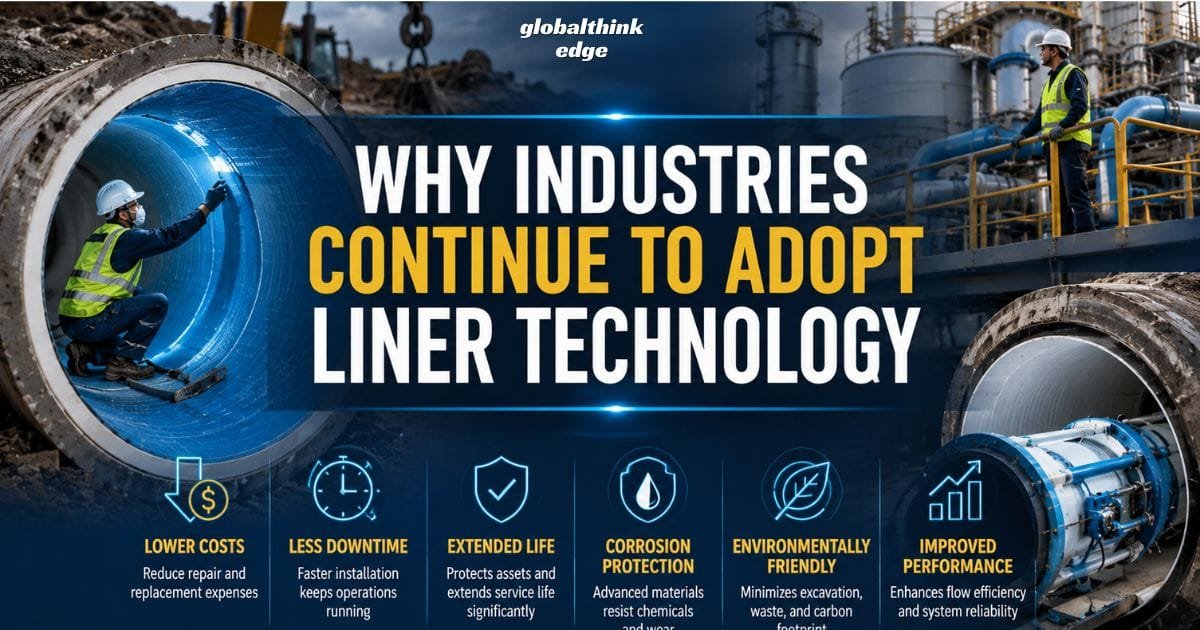
Why Industries Continue to Adopt Liner Technology
Businesses and public organizations increasingly prefer liner technology because it delivers measurable long-term value. Instead of replacing costly infrastructure, they can rehabilitate existing systems while minimizing downtime.
Some of the biggest advantages include the following:
Lower repair and replacement costs
Reduced construction time
Minimal excavation and disruption
Improved corrosion resistance
Longer equipment lifespan
Better environmental sustainability
Increased structural reliability
These benefits make liner systems suitable for both aging infrastructure and newly constructed facilities.
Where Liner Technology Is Used
The versatility of liner technology allows it to serve many industries that require durable protection against wear, corrosion, pressure, or environmental damage.
Pipeline Rehabilitation
One of the most recognized uses is underground pipeline restoration. Municipal water authorities and wastewater utilities frequently install internal liners to repair aging pipes without digging large trenches.
This trenchless approach restores structural strength while significantly reducing traffic disruption, labor costs, and project timelines.
Oil and Gas Industry
Oilfields operate under extreme temperatures, pressures, and chemical exposure. Specialized liners protect production tubing, downhole equipment, and transportation pipelines from corrosion and abrasion.
These protective systems improve operational reliability and reduce unexpected maintenance shutdowns.
Water and Wastewater Infrastructure
Water treatment facilities depend on durable lining materials to prevent leaks, contamination, and chemical damage.
Liner technology helps maintain clean water distribution while extending the operational life of reservoirs, tanks, and sewer systems.
Chemical Processing Plants
Industrial chemicals can rapidly damage untreated metal surfaces. High-performance liners create a protective barrier that resists aggressive chemicals and high temperatures.
This improves workplace safety while reducing equipment replacement costs.
Mining Operations
Mining equipment experiences continuous abrasion from rocks, minerals, and slurry transport.
Wear-resistant liner systems protect pipes, chutes, tanks, and processing equipment, reducing downtime caused by premature wear.
Medical and Healthcare Applications
Liner technology also supports healthcare innovation. Prosthetic socket liners improve comfort, reduce skin irritation, and provide better mobility for users.
Medical-grade liners are designed to balance flexibility, durability, and hygiene while ensuring a secure fit.
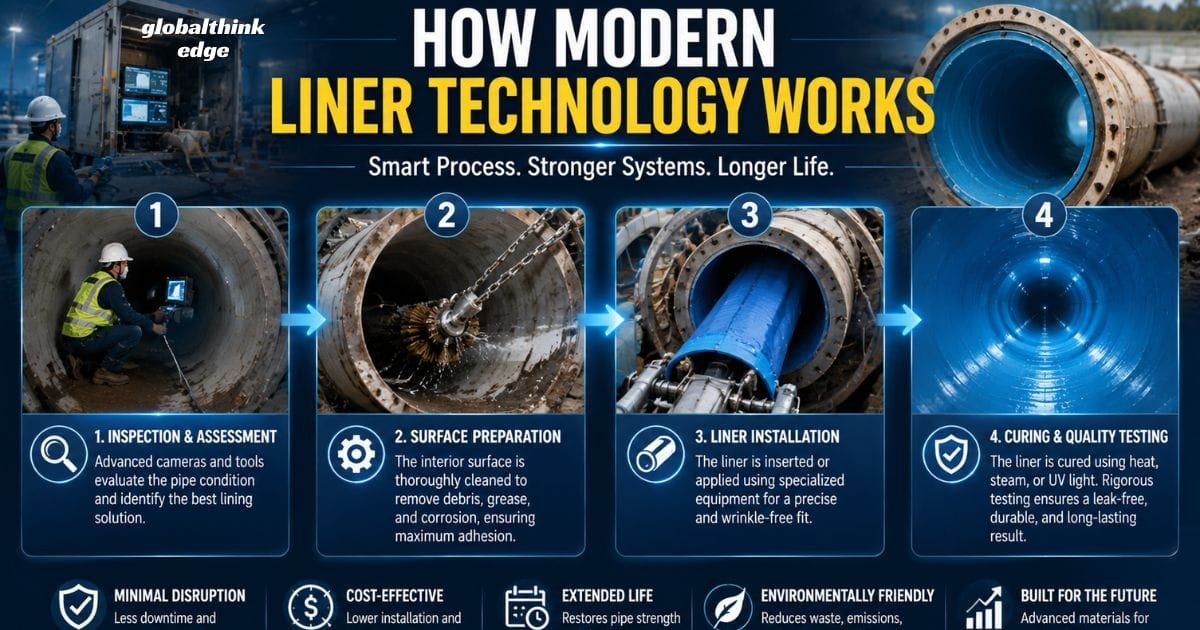
How Modern Liner Technology Works
Although liner systems vary by industry, the overall process follows a similar engineering approach.
Step 1: Inspection and Assessment
Engineers first inspect the structure using cameras, ultrasonic testing, laser scanning, or other advanced inspection tools.
The collected data determines whether rehabilitation is possible and identifies the most suitable liner material.
Step 2: Surface Preparation
Proper preparation is essential for successful installation.
Technicians remove corrosion, debris, grease, scale, and damaged materials to ensure the liner bonds securely to the existing surface.
Step 3: Liner Installation
Installation methods depend on the project.
Some systems are inserted as flexible tubes before curing in place, while others are sprayed, bonded, or mechanically installed.
Modern installation techniques are designed to minimize service interruptions.
Step 4: Curing and Quality Testing
Many liner systems require curing through heat, steam, ultraviolet light, or chemical reactions.
After installation, engineers perform pressure testing, leak detection, and structural inspections to confirm the liner meets performance standards.
Common Materials Used in Liner Technology
Choosing the right material is one of the most important decisions in any lining project.
Epoxy Composite Liners
Epoxy liners provide excellent chemical resistance and strong adhesion.
They are widely used in industrial pipelines, storage tanks, and wastewater systems where corrosion protection is essential.
Polyethylene (HDPE) Liners
HDPE offers outstanding durability, flexibility, and resistance to moisture.
These liners are commonly installed in water distribution systems, landfills, and mining operations.
Fiberglass-Reinforced Liners
Fiberglass composites combine lightweight construction with exceptional structural strength.
They are ideal for applications requiring long service life and high mechanical performance.
Polyurethane Liners
Polyurethane performs well under continuous abrasion and impact.
Industries handling abrasive materials frequently choose polyurethane to extend equipment lifespan.
Thermoplastic Liners
Modern thermoplastics resist chemicals, temperature fluctuations, and mechanical stress.
They provide reliable protection across multiple industrial environments while remaining relatively easy to install.
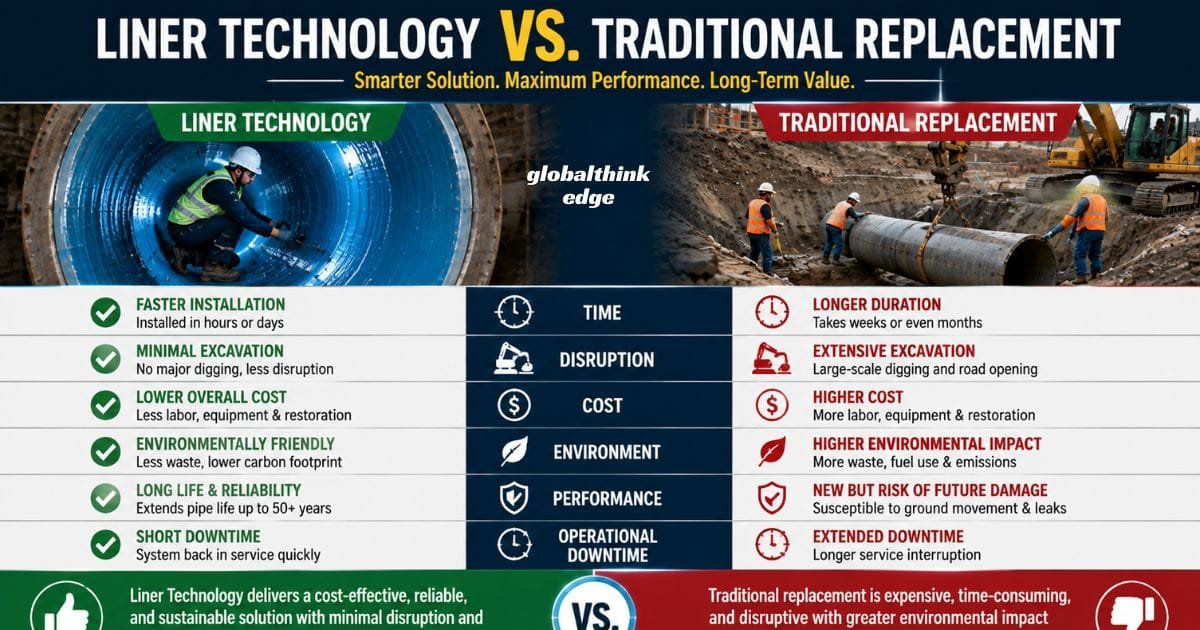
Liner Technology vs. Traditional Replacement
Organizations often compare rehabilitation with complete replacement before starting a project.
| Feature | Liner Technology | Traditional Replacement |
| Installation time | Faster | Longer |
| Excavation | Minimal | Extensive |
| Cost | Lower overall | Higher |
| Environmental impact | Reduced | Greater |
| Operational downtime | Short | Extended |
| Asset lifespan | Significantly extended | Completely renewed |
For many aging infrastructure systems, rehabilitation provides nearly the same functional benefits as replacement while requiring far fewer resources.
Understanding the Difference Between Linear Technology and Liner Technology
Many people searching online accidentally type Linear technology instead of Liner technology because the terms look similar.
However, they refer to completely different fields.
Liner technology focuses on protective lining systems used in pipelines, industrial equipment, construction, and infrastructure rehabilitation.
By contrast, Linear Technology was a well-known semiconductor company that designed analog integrated circuits for electronic devices. Its products supported power management, signal conditioning, and communication systems before the company became part of Analog Devices.
Understanding this distinction helps readers find the correct information and prevents confusion when researching industrial lining solutions.
Choosing the Right Liner System for Your Project
Selecting the best liner is about more than choosing a durable material. Engineers evaluate several technical and environmental factors to ensure the solution performs reliably for many years.
Operating Environment
Every application has unique conditions. Underground pipelines, industrial tanks, and medical devices all require different liner characteristics based on moisture, pressure, and exposure to external elements.
Chemical Compatibility
Some industries handle highly corrosive chemicals that can damage standard materials. Selecting a liner with proven chemical resistance helps prevent premature failure and costly repairs.
Temperature and Pressure
High-temperature or high-pressure environments require advanced liner materials that maintain their strength without cracking, deforming, or losing adhesion.
Structural Condition
The condition of the existing asset determines whether rehabilitation is appropriate. While many aging systems can be restored successfully, severely damaged structures may require partial replacement before a liner is installed.
Expected Service Life
Organizations should also consider long-term performance. Investing in a high-quality liner often reduces maintenance costs and delivers a better return on investment over the asset’s lifetime.
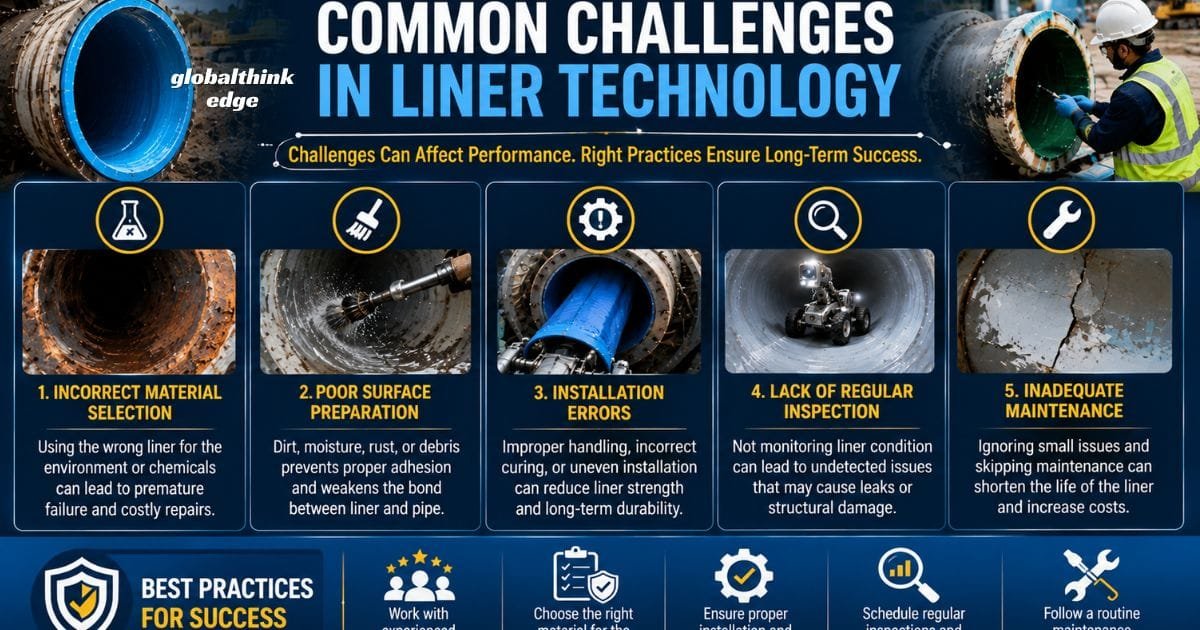
Common Challenges in Liner Technology
Although liner technology offers significant advantages, successful results depend on careful planning and proper installation.
Incorrect Material Selection
Using the wrong liner for a specific environment can reduce durability and lead to early deterioration. Material compatibility should always be evaluated before installation.
Poor Surface Preparation
Even the highest-quality liner may fail if the underlying surface is not cleaned and prepared correctly. Proper preparation creates a strong bond between the liner and the existing structure.
Installation Errors
Improper curing, uneven application, or inaccurate measurements can affect structural integrity. Experienced technicians and strict quality control help minimize these risks.
Lack of Regular Inspection
Liner systems require periodic inspections to detect wear, damage, or unexpected changes before they become serious maintenance issues.
Future Trends Shaping Liner Technology
Innovation continues to improve the efficiency, durability, and sustainability of modern liner systems.
Smart Monitoring Technologies
Embedded sensors now allow operators to monitor pressure, temperature, moisture, and structural performance in real time. Early detection helps prevent costly failures.
Sustainable Lining Materials
Manufacturers are developing environmentally friendly materials that reduce waste while maintaining excellent durability and corrosion resistance.
Robotics and Automation
Remote-controlled robotic systems can inspect and install liners inside pipelines and confined spaces with greater precision while improving worker safety.
Advanced Composite Materials
New composite materials combine lightweight construction with exceptional strength, making them suitable for demanding industrial applications where long-term reliability is essential.
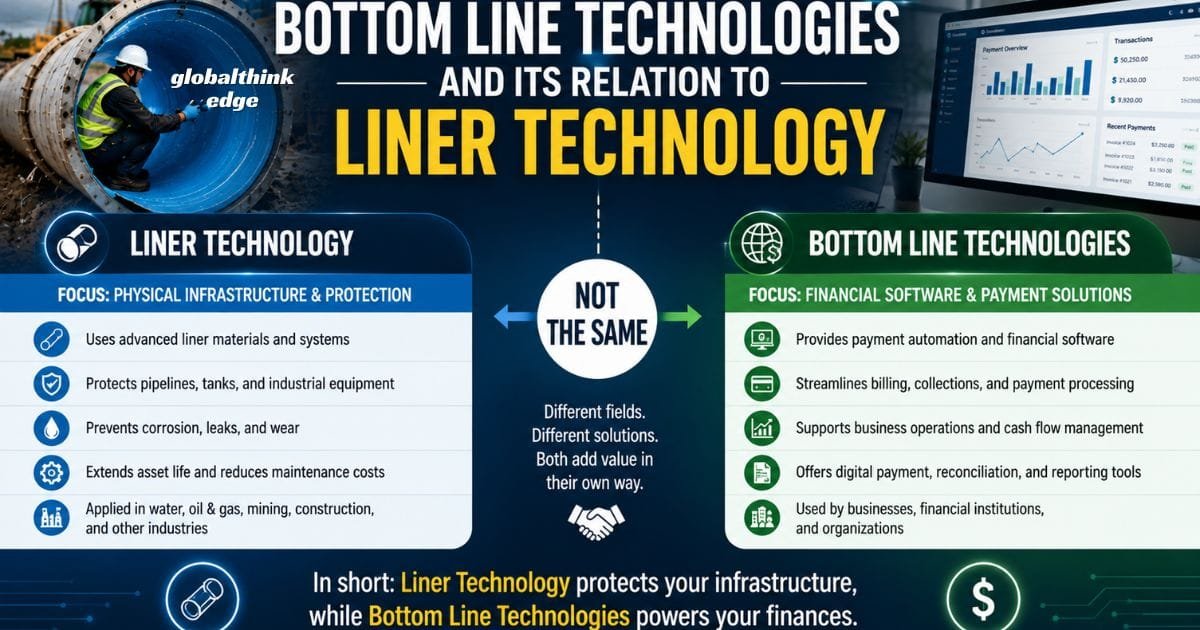
Bottom Line Technologies and Its Relation to Liner Technology
Another phrase that occasionally appears in search results is Bottom Line Technologies. Despite the similar wording, it is not related to liner technology.
Bottom Line Technologies is known for providing financial automation and payment software for businesses. It focuses on digital payment solutions, banking processes, and financial management rather than engineering or industrial lining systems.
Understanding this difference helps users avoid confusion when researching protective liner systems or pipeline rehabilitation technologies.
Key Takeaways
Liner technology restores and protects infrastructure without complete replacement.
Modern liner systems reduce repair costs, downtime, and environmental impact.
Industries such as water management, oil and gas, mining, healthcare, and manufacturing rely on advanced lining solutions.
Material selection should always match operating conditions, chemical exposure, and structural requirements.
Emerging technologies, including smart monitoring and advanced composites, are making liner systems even more efficient and reliable.
Frequently Asked Questions
What is liner technology used for?
Liner technology is used to repair, reinforce, and protect existing infrastructure such as pipelines, storage tanks, industrial equipment, sewer systems, and prosthetic devices. It extends service life while reducing replacement costs.
How long does a liner system last?
The lifespan depends on the material, operating environment, and installation quality. Many professionally installed liner systems can perform reliably for 30 to 50 years with proper maintenance.
Is trenchless liner installation better than replacing a pipe?
In many situations, yes. Trenchless rehabilitation minimizes excavation, lowers labor costs, reduces project duration, and causes less disruption while restoring the structural performance of existing pipelines.
Which industries benefit most from liner technology?
Water utilities, wastewater management, oil and gas, chemical processing, mining, manufacturing, construction, and healthcare all benefit from modern liner systems.
Is liner technology environmentally friendly?
Yes. Because it rehabilitates existing infrastructure instead of replacing it, liner technology reduces construction waste, limits excavation, lowers carbon emissions, and conserves valuable resources.
Is liner technology the same as Linear Technology?
No. Liner technology refers to protective and structural lining systems used in engineering and infrastructure. Linear Technology was a semiconductor company that specialized in analog integrated circuits and was unrelated to industrial linear solutions.
Conclusion
Liner technology has become an essential solution for organizations seeking to protect valuable infrastructure while controlling maintenance costs. By restoring existing assets instead of replacing them, modern liner systems deliver long-term durability, improved operational efficiency, and reduced environmental impact.
From trenchless pipeline rehabilitation and corrosion-resistant industrial equipment to healthcare applications and advanced composite materials, liner technology continues to evolve with industry demands. As smart monitoring, automation, and sustainable materials become more common, these systems will play an even greater role in extending the lifespan of critical infrastructure worldwide.
Whether you manage municipal utilities, industrial facilities, or large construction projects, investing in the right liner technology can improve reliability, reduce downtime, and provide lasting value for years to come.
