
Anvil Horn Technology: Best Expert Forging Applications
Understanding Anvil Horn Technology
Anvil horn technology is the foundation of precision metal shaping in both traditional blacksmithing and modern manufacturing. While many people associate an anvil with historical forges, today’s anvil horn has evolved into a highly engineered tool that supports industries ranging from custom metal fabrication to ultrasonic welding. Its unique tapered design allows craftsmen and manufacturers to bend, curve, and form metal with exceptional accuracy while minimizing material stress.
Unlike a flat work surface, the horn provides multiple bending radii, making it possible to create everything from decorative scrolls and rings to industrial components. Modern anvil horn technology also incorporates advanced materials, CNC machining, and optimized geometries to improve durability and consistency.
Whether you are a beginner, professional blacksmith, farrier, or manufacturing engineer, understanding how an anvil horn works can help you produce cleaner results, reduce waste, and improve workflow. This guide explores the technology behind anvil horns, their practical applications, and the innovations shaping their future.
Key Takeaways
Anvil horn technology enables precise bending, curving, and shaping of metal.
Modern horn designs combine traditional forging principles with advanced engineering.
Industries such as blacksmithing, construction, automotive, and manufacturing rely on anvil horns.
Proper horn selection and maintenance improve accuracy and tool longevity.
Emerging technologies like robotic forging and ultrasonic systems are expanding the role of anvil horn technology.
What Is Anvil Horn Technology?
Anvil horn technology refers to the design, engineering, and practical application of the horn section of an anvil for controlled metal forming. The horn is the smooth, rounded projection located at the front of most anvils. Its tapered shape allows metalworkers to create curves, rings, hooks, and custom profiles without damaging the workpiece.
Traditional blacksmiths use the horn to manually shape heated steel, while modern industries employ engineered horn systems in automated production environments. Advances in metallurgy, machining, and digital manufacturing have significantly improved the performance of modern anvil horns, making them stronger, more accurate, and more durable than earlier designs.
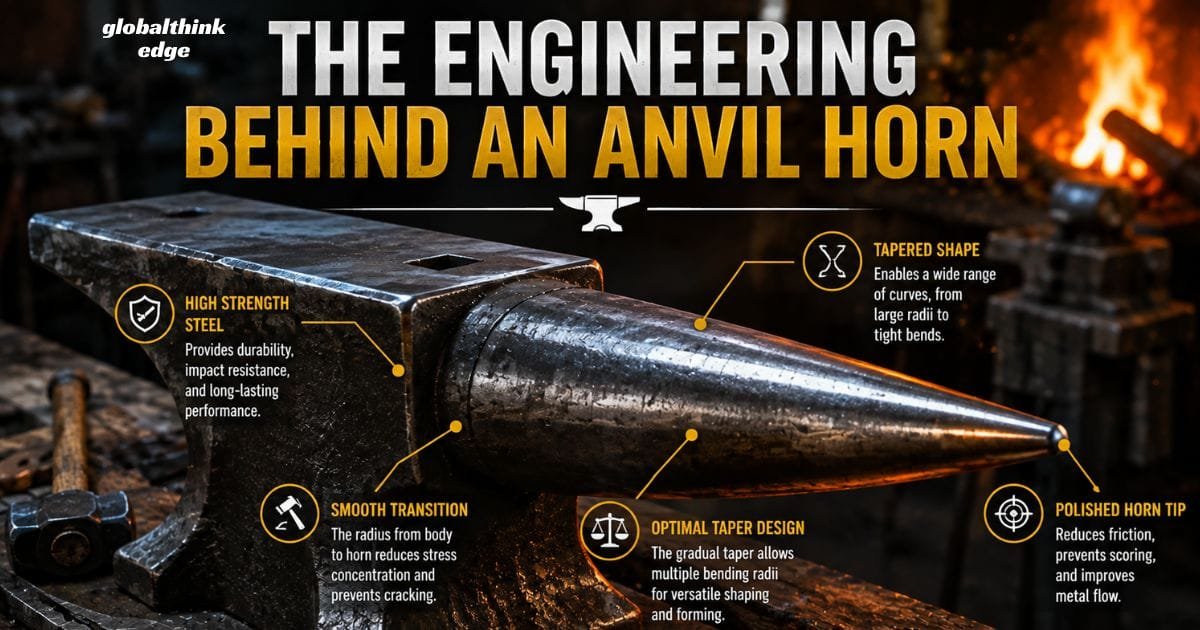
The Engineering Behind an Anvil Horn
Although an anvil appears simple, its design is based on engineering principles that improve metal-forming efficiency.
Why the Horn Has a Tapered Shape
A tapered horn offers multiple bending diameters in one tool. The wider base creates large-radius bends, while the narrow tip forms tighter curves and smaller rings.
This gradual transition allows metalworkers to shape various components without constantly switching tools.
Smooth Surface for Better Material Flow
The polished, rounded surface reduces friction and prevents sharp stress points from forming during bending.
As heated metal wraps around the horn, it stretches evenly, producing stronger and more attractive finished pieces.
Efficient Force Distribution
Hammer blows delivered over the horn distribute force across a wider area than a flat edge.
This reduces localized deformation and helps preserve the structural integrity of the material.
High-Performance Materials
Modern manufacturers produce premium anvil horns using hardened alloy steels with carefully controlled heat treatment.
These materials provide:
Excellent wear resistance
High impact strength
Better rebound
Long service life
Improved resistance to cracking
Where Anvil Horn Technology Is Used
The versatility of an anvil horn extends far beyond traditional blacksmith workshops. Today, it plays an important role in multiple industries.
Blacksmithing
Blacksmiths use the horn to produce decorative ironwork, knives, tools, architectural components, and artistic metal sculptures.
The curved surface allows gradual shaping while maintaining the strength of forged steel.
Farrier Services
Farriers depend on specially designed anvil horns to shape horseshoes that fit individual horses.
Proper shoe shaping improves hoof health, balance, and long-term performance.
Structural Metal Fabrication
Construction companies and fabrication workshops use horn-based forming techniques to manufacture curved steel brackets, frames, supports, and custom structural components.
Accurate bending reduces material waste and improves installation quality.
Artistic Metalworking
Artists use anvil horns to create decorative gates, railings, furniture, lighting fixtures, and custom sculptures.
The ability to form smooth curves gives each piece a professional finish.
Equipment Repair
Repair technicians frequently reshape bent rods, brackets, and machine parts before welding or reinstalling them.
This extends equipment life while lowering replacement costs.
Modern Anvil Horn Technologies
Traditional forging continues to evolve through engineering innovation. Modern anvil horn technologies combine craftsmanship with advanced manufacturing to deliver higher precision and greater efficiency.
CNC Precision Manufacturing
Computer Numerical Control (CNC) machining produces anvil horns with extremely accurate dimensions.
This precision ensures consistent bending results and improves quality control across production runs.
Advanced Heat Treatment
Modern heat-treatment processes increase surface hardness while maintaining internal toughness.
The result is an anvil horn that withstands repeated impacts without becoming brittle.
Robotic Forging Systems
Automation is transforming metalworking.
Industrial robots now use specially engineered horn-shaped forming dies for repetitive shaping operations.
These systems improve productivity while reducing operator fatigue.
CAD-Based Design Optimization
Engineers use computer-aided design (CAD) software and simulation tools to optimize horn geometry before manufacturing begins.
Digital testing reduces development costs and improves forming performance.
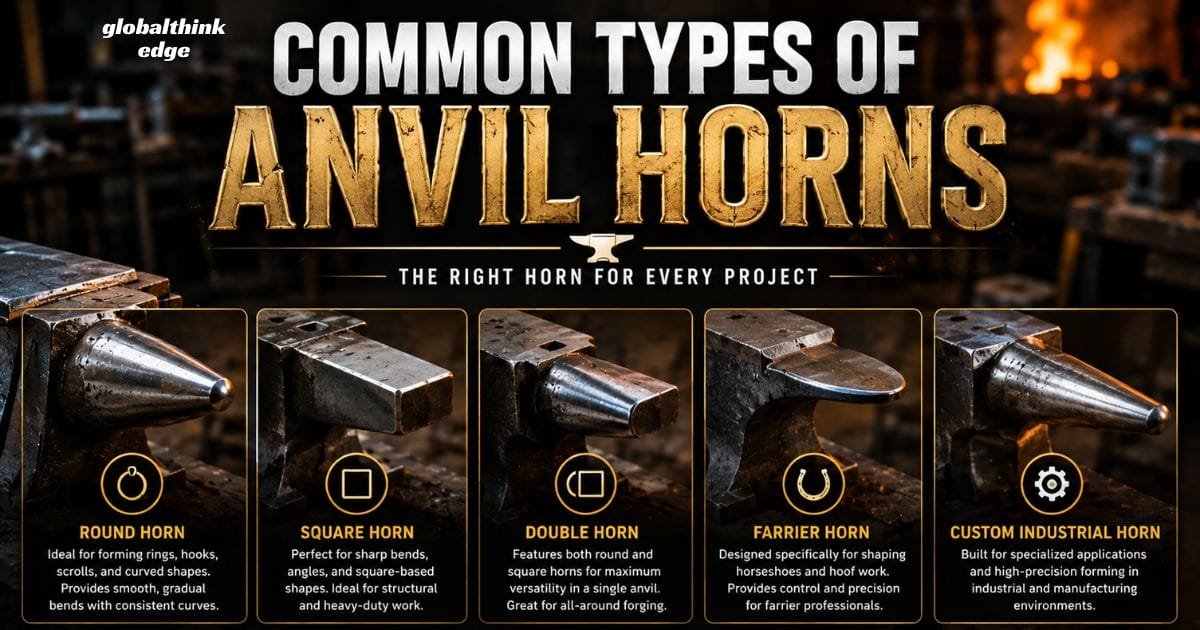
Common Types of Anvil Horns
Different projects require different horn designs. Selecting the appropriate type improves efficiency and precision.
Round Horn
The round horn is the most common configuration.
It excels at forming the following:
Rings
Hooks
Scrolls
Curved bars
Decorative ironwork
Square Horn
A square horn creates sharper bends and controlled angular shapes.
It is widely used in structural fabrication and heavy steel work.
Double-Horn Anvils
Double-horn anvils feature both round and square horns, providing maximum versatility for workshops that perform varied metal-forming tasks.
Farrier Horns
Farrier anvils include specially shaped horns optimized for horseshoe production and hoof adjustments.
Custom Industrial Horns
Large manufacturers often use application-specific horn designs developed for specialized forming operations.
These engineered horns improve repeatability while reducing production time.
Professional Metal-Shaping Techniques
Experienced metalworkers use the horn for much more than simple bends.
Creating Smooth Curves
The wider section of the horn produces gradual curves with excellent dimensional consistency.
Forming Rings and Loops
The narrow tip allows craftsmen to wrap heated metal into circular profiles without creating flat spots.
Decorative Scroll Forging
Architectural ironwork frequently includes decorative scrolls made by progressively bending heated steel around different sections of the horn.
Straightening Bent Steel
The horn also serves as an effective support for correcting distorted metal parts with controlled hammer blows.
Parts of an Anvil and Their Functions
Understanding the different parts of an anvil helps you use the right surface for each task while improving safety and efficiency.
Face
The face is the flat, hardened surface where most forging, flattening, and finishing work takes place. A quality anvil face offers excellent rebound, allowing hammer energy to transfer efficiently into the metal.
Horn
The horn is the rounded, tapered section used for bending, curving, shaping rings, forming hooks, and creating decorative scrolls. It is one of the most versatile components of any anvil.
Step
Some anvils include a step between the face and the horn. This section is commonly used for light cutting and specialized shaping tasks, although it should not replace dedicated cutting tools.
Hardy Hole
The square hardy hole accepts interchangeable tools such as bending forks, swages, cutters, and forming dies. This feature significantly increases the versatility of an anvil.
Pritchel Hole
The round punch hole is designed for punching holes, drifting, and rivet work. It provides clearance when driving punches through hot metal.
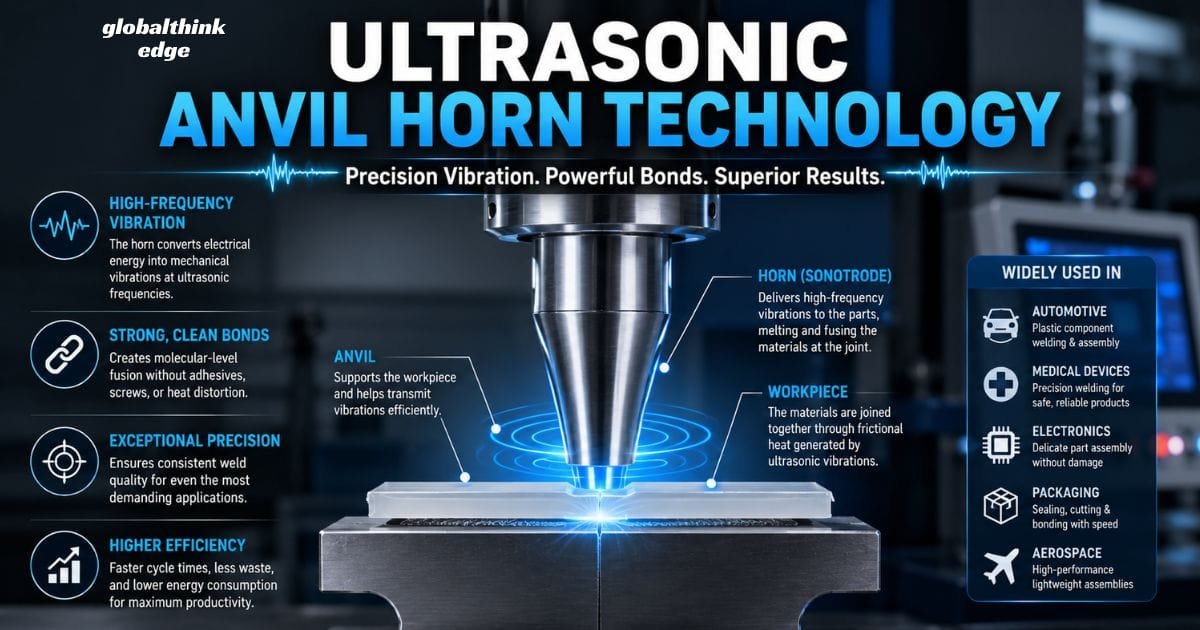
Ultrasonic Anvil Horn Technology
While traditional anvils are associated with blacksmithing, the term anvil horn technology also appears in modern ultrasonic welding systems.
In ultrasonic welding, a horn (also called a sonotrode) transfers high-frequency vibrations to plastic or thin metal components, while the anvil supports the workpiece. These vibrations generate frictional heat that creates strong, clean bonds without adhesives, rivets, or conventional welding.
Industries using ultrasonic anvil horn technology include:
Automotive manufacturing
Medical device production
Consumer electronics
Food packaging
Pharmaceutical packaging
Aerospace components
This advanced technology delivers consistent weld quality, faster production speeds, and minimal material distortion.
Benefits of Modern Anvil Horn Technology
Modern anvil horn technology offers several advantages over traditional metal-forming methods.
Produces accurate and repeatable bends.
Reduces material waste.
Improves productivity in manual and automated workshops.
Supports a wide variety of shaping operations.
Increases tool durability through advanced alloy construction.
Delivers smoother finished surfaces.
Helps maintain the structural integrity of metal during forming.
These benefits make it valuable for both handcrafted projects and large-scale industrial manufacturing.
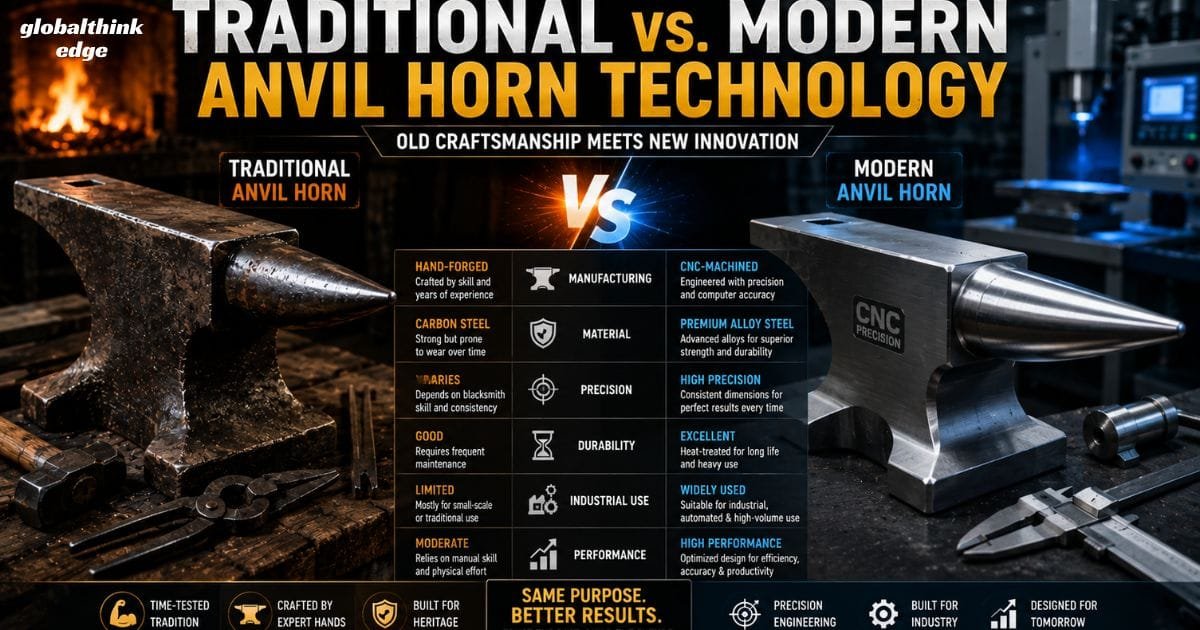
Traditional vs. Modern Anvil Horn Technology
| Feature | Traditional Anvil Horn | Modern Anvil Horn Technology |
| Manufacturing | Hand-forged | CNC-machined |
| Material | Standard forged steel | Premium alloy steel |
| Precision | Depends on operator skill | Highly consistent |
| Durability | Good | Excellent with heat treatment |
| Industrial Use | Limited | Widely used |
| Automation | Manual | Compatible with robotic systems |
| Productivity | Moderate | High |
Common Mistakes to Avoid
Even experienced users can reduce the quality of their work by making avoidable mistakes.
Hammering Cold Metal
Forging steel below the proper temperature increases the risk of cracking and uneven bends. Always work within the recommended forging temperature range.
Using the Horn as a Cutting Surface
The horn is designed for shaping, not cutting. Striking chisels directly on the horn may damage both the tool and the anvil.
Uneven Hammer Blows
Random or inconsistent hammer strikes create flat spots and irregular curves. Controlled, rhythmic blows produce cleaner results.
Overheating Thin Material
Excessive heat weakens thin stock and makes precise shaping more difficult.
Ignoring the Correct Horn Size
Different projects require different bending radii. Using the appropriate section of the horn produces smoother curves and reduces material stress.
Essential Safety Tips
Many articles discuss shaping techniques but overlook safety, which is equally important.
Always wear safety glasses to protect against flying scales.
Use heat-resistant gloves when handling hot metal.
Keep the anvil securely mounted to prevent movement.
Inspect hammers for loose heads before each session.
Maintain proper ventilation when forging indoors.
Keep your work area clean to avoid slips and accidents.
Never strike hardened tools together, as fragments can break away.
Following these practices helps create a safer and more productive workshop.
How to Choose the Right Anvil Horn
Selecting the correct anvil depends on your experience, budget, and intended projects.
Beginners
Choose a medium-weight anvil with a standard round horn that supports general-purpose forging.
Hobby Blacksmiths
Look for durable forged-steel anvils that offer good rebound and a well-machined horn.
Professional Smiths
Professionals benefit from heavier anvils with premium alloy construction, superior hardness, and precision-machined surfaces.
Farriers
Farrier anvils are specifically designed for efficient horseshoe shaping and hoof work.
Industrial Applications
Manufacturers should evaluate hardness, dimensional accuracy, material quality, and compatibility with automated production systems.
Maintaining an Anvil Horn
Routine maintenance protects your investment and ensures reliable performance.
Remove scale and debris after every project.
Apply a light coat of protective oil to prevent rust.
Store the anvil in a dry environment.
Inspect the horn regularly for dents or surface damage.
Avoid using the horn for tasks beyond its intended purpose.
Periodically check the mounting base for stability.
Well-maintained anvils often remain in service for decades.
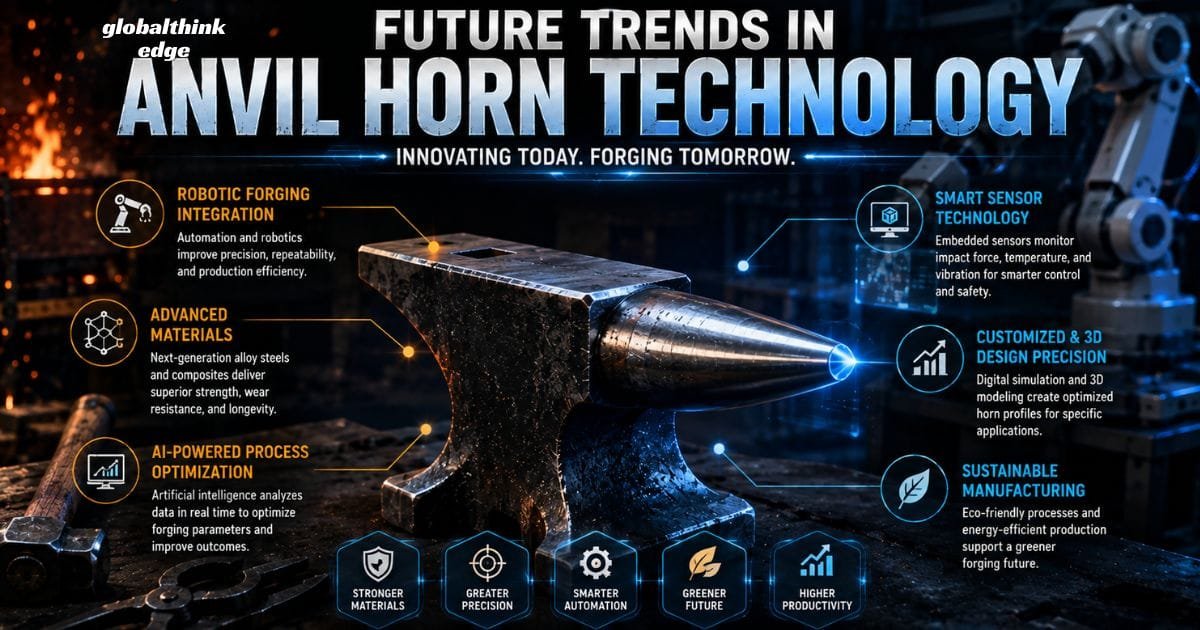
Future Trends in Anvil Horn Technology
As manufacturing technologies continue to evolve, anvil-horn technology is becoming smarter and more efficient.
Emerging innovations include:
AI-assisted forging systems.
Robotic metal-forming stations.
Smart sensors that monitor impact force.
Advanced wear-resistant alloy materials.
Digital simulation for optimized horn geometry.
Sustainable manufacturing processes that reduce waste and energy consumption.
These developments combine traditional craftsmanship with modern engineering to meet the demands of today’s manufacturing industry.
Frequently Asked Questions
What is an anvil horn used for?
An anvil horn is primarily used to bend, curve, and shape heated or cold metal into rings, hooks, scrolls, horseshoes, and custom components.
Why is an anvil horn tapered?
The tapered shape provides multiple bending diameters, allowing users to create both large curves and tight bends using a single tool.
Can beginners use an anvil horn?
Yes. With proper training, safety equipment, and basic forging techniques, beginners can safely learn to use an anvil horn.
What industries use anvil horn technology?
Blacksmithing, construction, automotive manufacturing, aerospace, artistic metalworking, repair workshops, and ultrasonic welding all benefit from anvil horn technology.
How is ultrasonic anvil horn technology different?
Traditional anvils shape metal using hammer force, while ultrasonic systems use high-frequency vibrations to weld plastics and thin metals with exceptional precision.
Conclusion
Anvil horn technology has evolved from a traditional blacksmithing tool into an essential part of modern metalworking and advanced manufacturing. Its carefully engineered design allows users to bend, shape, and form metal with greater precision while preserving material strength. Whether used in a small forge, a farrier’s workshop, or a high-tech production facility, the anvil horn remains a versatile solution for creating accurate, repeatable results. By understanding its design, choosing the right type, following safe operating practices, and maintaining it properly, both beginners and professionals can maximize performance and extend the life of their equipment. As automation, robotics, and smart manufacturing continue to advance, anvil horn technology will remain a key innovation in the future of metal fabrication.
